RESOURCE

vlc-news-philippines-cancels-rice-import-permit-15102026

Market updates

Philippines Cancels Permit for Controversial 12,480-Metric-Ton Rice Shipment from Viet Nam

The Philippine Department of Agriculture (DA) said it had ordered the cancellation of the Sanitary and Phytosanitary Import Clearance (SPSIC) for a 12,480-metric-ton rice shipment from Viet Nam before the vessel arrived. The case involves reported discrepancies in rice specifications and an expired import contract, highlighting the risks that can arise when shipping schedules do not align with import requirements in the destination market. 1. Developments at the Port of Arrival According to the Philippine Department of Agriculture (DA) and the Philippine News Agency (PNA), the vessel MV Tay Son 2, carrying 12,480 metric tons of rice from Viet Nam, arrived at the Port of Davao on September 14, 2026. According to these sources, the vessel’s captain refused to submit the shipment for inspection by the Philippine Bureau of Plant Industry (BPI). On September 17, 2026, the vessel departed Davao before the matter had been resolved. Philippine authorities subsequently prevented the cargo from being unloaded at another location and brought the vessel to the Port of General Santos before ordering it to return to Davao for further handling. 2. Rice Specifications and Import Requirements The case involves two issues: reported discrepancies in rice specifications and the status of the import contract and permit. 2.1. Reported Discrepancy in Rice Specifications The importer, Planters Product, Inc. (PPI), reported a discrepancy between the purchase order and the specifications communicated for the shipment: Specifications under the purchase order: 25% broken rice Reported specifications for the shipment: 5% broken rice In agricultural trade, the percentage of broken grains is an important commercial specification. However, the discrepancy remains based on information reported by the importer and has not been confirmed by an official inspection, as the physical inspection process was not completed. 2.2. Expired Contract and Canceled Import Permit In addition to the rice specifications, the delivery timeline and the status of the import documentation were also highlighted by the DA: Estimated time of arrival (ETA): July 2026 Actual arrival: Mid-September 2026 According to the DA, the import contract had expired and the SPSIC had been canceled before the vessel arrived. The vessel’s arrival also coincided with the period when the Philippines was preparing for the wet-season rice harvest. According to published information, import policy during this period was also linked to efforts to limit downward pressure on domestic palay prices. Operational Note: Even when goods meet quality requirements, a shipment may still face customs clearance difficulties if it fails to meet import requirements or if the relevant permit is no longer valid. 3. Proposed Measures for Handling the Shipment According to published information, the Bureau of Customs of the Philippines (BOC) was still considering the final course of action for the shipment. The proposed measures included: Proposed Measure Proposing Authority / Status Return to the Country of Origin The BPI was reported to have recommended returning the shipment to Viet Nam. Seizure and Penalties The DA proposed considering seizure of the shipment and the application of penalties under relevant regulations, subject to the competent authority’s findings and decision. Final Decision The BOC was reviewing the official course of action for the shipment. 4. Conclusion The controversial rice shipment in the Philippines highlights how international trade depends not only on product quality and contractual terms but also on shipping schedules, the validity of import documentation, and regulatory requirements in the destination market. When these elements are no longer aligned, shipments already in transit may face unexpected complications during arrival and customs clearance. Vantage Logistics will continue to provide updates on notable developments in logistics, import-export activities, and international supply chains, offering businesses additional insight into factors that may affect global trade. Contact Vantage Logistics for tailored transport solutions and competitive quotations. Please provide details on cargo type, market, origin, destination, and estimated timeline.   Vantage Logistics Corp – South East Asia (S.E.A) Logistics Provider One-Stop Shop For Integrated Logistics Services Head Office Viet Nam – Suite 6.01, Floor 6th, Block A, RiverGate Residence, 151-155 Ben Van Don, Khanh Hoi Ward, HCMC, Viet Nam Branch Thailand, Laos, Cambodia, Malaysia, Indonesia, Singapore Contact Us Email in**@*****om.vn Hotline +84-909-026-261 Website https://vantage-logistics.com Send your shipment enquiry today and receive a tailored transport plan from the Vantage Logistics team.

15/10/2026

View More
vlc-news-asean-east-asia-trade-15102026

Market updates

ASEAN–East Asia Trade Reaches USD 1.4 Trillion, Up 13.7% in 2025

According to preliminary data from the ASEAN Secretariat, two-way trade between ASEAN and its three East Asian partners (China, Japan, and South Korea) reached USD 1.4 trillion in 2025, representing a 13.7% year-on-year increase. Notably, China–ASEAN trade continued its upward trajectory in the first seven months of 2026, underscoring a sustained expansion in cross-regional trade volumes worth monitoring. 1. Regional Trade Volume and Foreign Direct Investment (ASEAN+3) Trade and investment flows between ASEAN and its three East Asian partners maintain a substantial footprint. In 2025, Foreign Direct Investment (FDI) inflows from China, Japan, and South Korea into ASEAN totaled USD 44.8 billion. Key ASEAN–East Asia Trade & Investment Indicators Indicator Value Growth / Share ASEAN – (China, Japan, South Korea) Trade in 2025 USD 1.4 Trillion Up 13.7% vs 2024 FDI from 3 East Asian Partners into ASEAN in 2025 USD 44.8 Billion Accounted for 18.2% of total ASEAN FDI China – ASEAN Trade (First 7 Months of 2026) USD 744.41 Billion Up 24.7% year-on-year The scale of merchandise trade and investment capital highlights the vital economic linkage between East Asia and Southeast Asia. However, assessing actual freight demand requires a granular evaluation of specific commodity structures, export-import markets, and active transport corridors. 2. Direct Impacts on Transport Networks and Logistics Infrastructure Expanding trade volumes underscore the critical role of regional transport connections. Depending on industry-specific cargo characteristics and delivery requirements, flexible logistics solutions are being actively deployed: Intra-Asia Ocean Freight Connections: For multi-leg shipments, vessel schedule reliability, transit times, and feeder network connectivity are pivotal factors for supply chain managers. Major gateway hubs such as Shanghai, Ningbo, Busan, and Yokohama maintain dense feeder linkages with Southeast Asian ports within ocean carrier networks Integrated Logistics and Multimodal Transport: Depending on lead-time sensitivity, combining ocean freight, Cross-Border Trucking, and inland warehousing offers expanded routing options. Real-world operational efficiency hinges heavily on border crossing clearance times, transit schedules, and the coordination capability of the logistics operator Rules of Origin (C/O) and Customs Compliance: When leveraging Free Trade Agreements such as RCEP, AKFTA, or AJCEP, enterprises must accurately determine rules of origin and prepare compliant documentation to qualify for preferential tariffs. Duty exemption eligibility depends on the specific conditions of each product line and destination market 3. Monitoring Southeast Asian Trade Dynamics and Logistics Connectivity Expanding trade and investment flows reflect an increasingly integrated economic relationship between East Asia and Southeast Asia. This growth in cross-border trade creates momentum for expanding logistics connectivity, helping strengthen supply chain coverage across the region.   Contact Vantage Logistics for tailored transport solutions and competitive quotations. Please provide details on cargo type, market, origin, destination, and estimated timeline. Vantage Logistics Corp – South East Asia (S.E.A) Logistics Provider One-Stop Shop For Integrated Logistics Services Head Office Viet Nam – Suite 6.01, Floor 6th, Block A, RiverGate Residence, 151-155 Ben Van Don, Khanh Hoi Ward, HCMC, Viet Nam Branch Thailand, Laos, Cambodia, Malaysia, Indonesia, Singapore Contact Us Email in**@*****om.vn Hotline +84-909-026-261 Website https://vantage-logistics.com Send your shipment enquiry today and receive a tailored transport plan from the Vantage Logistics team.

15/10/2026

View More

Market updates

SINGAPORE STRENGTHENS PRODUCT SAFETY CONTROLS: WHAT VIETNAMESE EXPORTERS NEED TO KNOW

Singapore is strengthening its product safety controls through two key regulations: the Consumer Protection (Safety Requirements) Regulations (CPSR) and the Consumer Goods (Safety Requirements) Regulations (CGSR). For exporters, these requirements go beyond product compliance. They can also affect delivery schedules, logistics costs, and supply chain reliability. 1. Singapore Strengthens Product Safety Requirements According to information published by Vietnam’s Ministry of Industry and Trade, Singapore applies two main regulatory frameworks for product safety. – CPSR: Covers 33 categories of controlled goods, including electrical and electronic products, household appliances, and gas appliances. Products within scope must meet applicable safety requirements, complete registration, and carry the SAFETY Mark before being supplied or sold in Singapore. – CGSR: Covers general consumer goods such as toys, clothing, furniture, and sports equipment, which must comply with the relevant safety standards. Non-compliant products may be subject to sales restrictions or recalls. Businesses that violate applicable requirements may also face penalties. For exporters, checking compliance requirements before shipment is essential. Addressing documentation or registration issues early can help avoid costly adjustments after cargo has already left the port of origin. 2. Potential Impact on Southeast Asia’s Trade and Logistics Singapore plays an important role in Southeast Asia’s trade and logistics network. Tighter product safety controls may require exporters, importers, and distributors to review their procedures for placing goods on the Singapore market. Several potential risks deserve attention: – Delivery delays: Incomplete documentation or missing certificates may affect cargo acceptance and delivery schedules. – Additional logistics costs: Delays in resolving compliance issues may lead to storage, port handling, or additional transportation costs. – Disrupted distribution plans: Late deliveries can affect inventory planning, distribution schedules, and commitments to business partners. These requirements do not automatically apply across all ASEAN markets. However, they highlight the importance of understanding the specific regulations of each destination country when planning regional trade and distribution. 3. What Should Vietnamese Exporters Prepare? For Vietnamese businesses exporting to Singapore, compliance checks should take place before shipment arrangements are finalized. Exporters should determine whether their products fall under CPSR or CGSR, verify the applicable safety standards and registration requirements, and clarify responsibilities with their Singaporean importers. Documentation preparation should also be factored into the shipping schedule. If an issue is discovered only after cargo arrives at the destination port, businesses may need to manage several challenges simultaneously, including delivery delays, additional costs, and changes to distribution plans. A reliable shipping plan therefore involves more than selecting the right route or sailing schedule. It also requires anticipating potential obstacles before the cargo reaches its destination. 4. Managing Risks Through Early Planning Not every risk in international shipping can be eliminated, but many disruptions can be reduced through early preparation. Reviewing cargo information, documentation, shipping schedules, and destination requirements helps all parties make better-informed decisions. For shipments to Singapore, close coordination among exporters, importers, agents, and logistics providers helps maintain visibility over shipment readiness, address changes, and adjust plans when necessary. At Vantage Logistics, international transportation planning takes into account the practical requirements of each shipment and the coordination needed among relevant parties. This approach helps businesses manage potential disruptions and maintain better control over delivery schedules. As market requirements evolve, careful preparation does more than protect an individual shipment. It also helps businesses maintain reliable supply chains and build lasting partnerships across international markets.

15/10/2026

View More
vlc-vn-sea-food-export-outlook-2(1)

Market updates

Viet Nam’s Seafood Exports Target USD 12 Billion In 2026 – Part 1: U.S. Tariffs on Vietnamese Shrimp

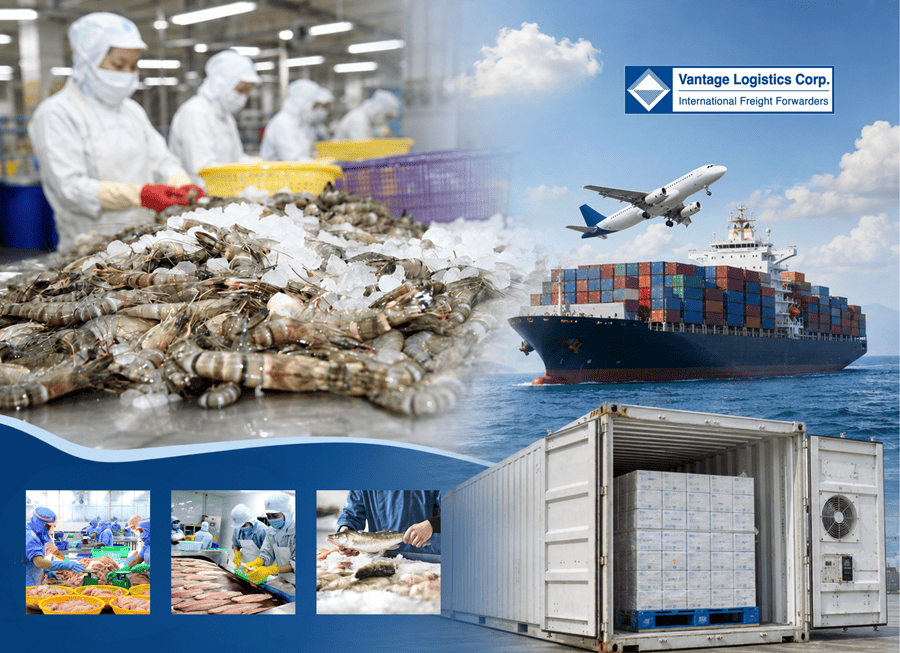
The United States Announces Preliminary Anti-Dumping Duties on Viet Namese Shrimp Under POR20 Viet Nam’s seafood industry is entering a strong recovery phase, with export turnover expected to reach USD 11.5–12 billion in 2026. Shrimp continues to drive sector growth, while new developments from the United States’ POR20 anti-dumping review are creating additional competitive opportunities for selected Viet Namese exporters. However, ongoing trade volatility and rising cold-chain transportation pressures continue to place higher demands on export logistics operations. Seafood exports maintain growth momentum Following a period affected by inflation and weakening global consumer demand, Viet Nam’s seafood sector is showing clear signs of recovery. Seafood export turnover reached approximately USD 10.04 billion in 2024. In 2025, the figure increased to around USD 11.29 billion, representing growth of more than 12%. During the first four months of 2026, seafood exports continued to rise by approximately 14–15% year-on-year, reaching nearly USD 4 billion. At the current pace, the industry is moving toward the government’s USD 11.5 billion target and could approach the USD 12 billion mark if demand in key markets continues to improve. Product categories recording positive growth include shrimp, pangasius, shellfish, and value-added processed seafood products. Growth is being supported by recovering import demand in the United States, China, and ASEAN markets, along with a shift in sourcing toward suppliers capable of meeting stricter traceability requirements and maintaining stable delivery performance. Shrimp remains the primary growth driver Within Viet Nam’s seafood export structure, shrimp continues to account for more than 40% of total sector export value. In the first four months of 2026, shrimp exports reached approximately USD 1.5 billion, up around 15% compared to the same period last year. Processed shrimp products continue to maintain advantages in multiple markets due to their ability to meet increasingly strict technical and quality standards. Many Vietnamese exporters are now focusing on processed shrimp, peeled shrimp, value-added products, and product lines supplied to retail and foodservice systems in the United States, Japan, and Europe. Meanwhile, major competitors such as India, Ecuador, and Indonesia continue to face pressure related to tariffs, quality control, and product positioning. This creates opportunities for Vietnamese exporters to expand market share in higher-value product segments rather than competing solely on low pricing. The United States announces preliminary anti-dumping duties on Vietnamese shrimp On May 8, 2026, the U.S. Department of Commerce announced its preliminary results in the 20th administrative review (POR20) of anti-dumping duties applied to frozen warmwater shrimp imported from Viet Nam. The preliminary findings indicate that duty levels for many Vietnamese exporters are significantly lower than in previous review periods. Specifically: Two mandatory respondents received preliminary duty rates of 76% and 10.76% Twenty-seven companies qualified for separate rates of approximately 56% Companies not eligible for separate-rate status continue to face duties of 76% Compared to previous review cycles, the latest results are considered more favorable for exporters with stronger compliance, traceability systems, and transparent export documentation. Earlier, in the final results of POR19 announced in early 2026, separate-rate companies saw anti-dumping duties reduced sharply from 35.29% to approximately 4.58%. Lower overall duty levels are helping exporters: Improve pricing competitiveness Maintain orders in the U.S. market And plan exports more effectively over the long term However, trade risks remain as the United States continues to maintain strict monitoring measures on imported shrimp products. Trade volatility continues to pressure cold-chain operations In addition to tariff-related issues, the seafood industry continues to face major disruptions from volatility in the global shipping market. Changes in shipping routes, transshipment schedules, and refrigerated container availability continue to impact logistics costs during the first half of 2026. For frozen seafood products, logistics extends beyond transportation and directly affects: Cargo quality Storage duration Delivery speed The ability to maintain export contracts Many exporters are currently dealing with: Seasonal shortages of refrigerated containers Longer transshipment waiting times Stricter temperature-control requirements throughout the shipping process Growing demands for shipment visibility and logistics data transparency As a result, optimizing vessel schedules, selecting suitable transport routes, and maintaining cold-chain stability are becoming critical factors in export efficiency. Cold-chain logistics becomes a competitive factor for exporters Increasing requirements related to traceability, quality control, and delivery performance are turning logistics into a critical part of seafood exporters’ competitive strategy. Rather than focusing solely on pricing, many exporters are prioritizing: delivery schedule stability, supply chain risk management, container storage cost optimisation, and shipment visibility throughout the transportation process. These capabilities are especially important in demanding markets such as the United States, Japan, and Europe, where product quality and supply chain transparency requirements continue to tighten. As seafood exports recover, demand for specialised cold-chain logistics solutions is expected to increase further, particularly across the Mekong Delta and Viet Nam’s major seafood processing hubs. Vantage Logistics supports seafood exporters in global markets As Viet Nam’s seafood industry moves toward the USD 12 billion export milestone, exporters require not only production capacity but also stable logistics operations to remain competitive in major international markets. >> Read more: Part 2: China Becomes As The Largest Import Market   Contact Vantage Logistics for tailored transport solutions and competitive quotations. Please provide details on cargo type, market, origin, destination, and estimated timeline. Vantage Logistics Corp – South East Asia (S.E.A) Logistics Provider One-Stop Shop For Integrated Logistics Services Head Office Viet Nam – Suite 6.01, Floor 6th, Block A, RiverGate Residence, 151-155 Ben Van Don, Khanh Hoi Ward, HCMC, Viet Nam Branch Thailand, Laos, Cambodia, Malaysia, Indonesia, Singapore Contact Us Email in**@*****om.vn Hotline +84-909-026-261 Website https://vantage-logistics.com Send your shipment enquiry today and receive a tailored transport plan from the Vantage Logistics team....

15/05/2026

View More
vlc-vn-sea-food-export-outlook-2

Market updates

Viet Nam’s Seafood Exports Target USD 12 Billion In 2026 – Part 1: U.S. Tariffs on Vietnamese Shrimp

Viet Nam’s seafood industry is entering a strong recovery phase, with export turnover expected to reach USD 11.5–12 billion in 2026. Shrimp continues to drive sector growth, while new developments from the United States’ POR20 anti-dumping review are creating additional competitive opportunities for selected Vietnamese exporters. However, ongoing trade volatility and rising cold-chain transportation pressures continue to place higher demands on export logistics operations. Seafood exports maintain growth momentum Following a period affected by inflation and weakening global consumer demand, Viet Nam’s seafood sector is showing clear signs of recovery. Seafood export turnover reached approximately USD 10.04 billion in 2024. In 2025, the figure increased to around USD 11.29 billion, representing growth of more than 12%. During the first four months of 2026, seafood exports continued to rise by approximately 14–15% year-on-year, reaching nearly USD 4 billion. At the current pace, the industry is moving toward the government’s USD 11.5 billion target and could approach the USD 12 billion mark if demand in key markets continues to improve. Product categories recording positive growth include shrimp, pangasius, shellfish, and value-added processed seafood products. Growth is being supported by recovering import demand in the United States, China, and ASEAN markets, along with a shift in sourcing toward suppliers capable of meeting stricter traceability requirements and maintaining stable delivery performance. Shrimp remains the primary growth driver Within Viet Nam’s seafood export structure, shrimp continues to account for more than 40% of total sector export value. In the first four months of 2026, shrimp exports reached approximately USD 1.5 billion, up around 15% compared to the same period last year. Processed shrimp products continue to maintain advantages in multiple markets due to their ability to meet increasingly strict technical and quality standards. Many Vietnamese exporters are now focusing on processed shrimp, peeled shrimp, value-added products, and product lines supplied to retail and foodservice systems in the United States, Japan, and Europe. Meanwhile, major competitors such as India, Ecuador, and Indonesia continue to face pressure related to tariffs, quality control, and product positioning. This creates opportunities for Vietnamese exporters to expand market share in higher-value product segments rather than competing solely on low pricing. The United States announces preliminary anti-dumping duties on Vietnamese shrimp On May 8, 2026, the U.S. Department of Commerce announced its preliminary results in the 20th administrative review (POR20) of anti-dumping duties applied to frozen warmwater shrimp imported from Viet Nam. The preliminary findings indicate that duty levels for many Vietnamese exporters are significantly lower than in previous review periods. Specifically: Two mandatory respondents received preliminary duty rates of 76% and 10.76% Twenty-seven companies qualified for separate rates of approximately 56% Companies not eligible for separate-rate status continue to face duties of 76% Compared to previous review cycles, the latest results are considered more favorable for exporters with stronger compliance, traceability systems, and transparent export documentation. Earlier, in the final results of POR19 announced in early 2026, separate-rate companies saw anti-dumping duties reduced sharply from 35.29% to approximately 4.58%. Lower overall duty levels are helping exporters: Improve pricing competitiveness Maintain orders in the U.S. market And plan exports more effectively over the long term However, trade risks remain as the United States continues to maintain strict monitoring measures on imported shrimp products. Trade volatility continues to pressure cold-chain operations In addition to tariff-related issues, the seafood industry continues to face major disruptions from volatility in the global shipping market. Changes in shipping routes, transshipment schedules, and refrigerated container availability continue to impact logistics costs during the first half of 2026. For frozen seafood products, logistics extends beyond transportation and directly affects: Cargo quality Storage duration Delivery speed The ability to maintain export contracts Many exporters are currently dealing with: Seasonal shortages of refrigerated containers Longer transshipment waiting times Stricter temperature-control requirements throughout the shipping process Growing demands for shipment visibility and logistics data transparency As a result, optimizing vessel schedules, selecting suitable transport routes, and maintaining cold-chain stability are becoming critical factors in export efficiency. Cold-chain logistics becomes a competitive factor for exporters Increasing requirements related to traceability, quality control, and delivery performance are turning logistics into a critical part of seafood exporters’ competitive strategy. Rather than focusing solely on pricing, many exporters are prioritizing: Delivery schedule stability Supply chain risk management Container storage cost optimization And shipment visibility throughout the transportation process These capabilities are especially important in demanding markets such as the United States, Japan, and Europe, where product quality and supply chain transparency requirements continue to tighten. As seafood exports recover, demand for specialized cold-chain logistics solutions is expected to increase further, particularly across the Mekong Delta and Viet Nam’s major seafood processing hubs. >> Read more: Part 2: China Becomes As The Largest Import Market   Contact Vantage Logistics for tailored transport solutions and competitive quotations. Please provide details on cargo type, market, origin, destination, and estimated timeline. Vantage Logistics Corp – South East Asia (S.E.A) Logistics Provider One-Stop Shop For Integrated Logistics Services Head Office Viet Nam – Suite 6.01, Floor 6th, Block A, RiverGate Residence, 151-155 Ben Van Don, Khanh Hoi Ward, HCMC, Viet Nam Branch Thailand, Laos, Cambodia, Malaysia, Indonesia, Singapore Contact Us Email in**@*****om.vn Phone +84-28 382 67312 Hotline +84-909-026-261 Website https://vantage-logistics.com Send your shipment enquiry today and receive a tailored transport plan from the Vantage Logistics team....

15/05/2026

View More
vantage-logistics-us-china-dialogue-2 (1)

Market updates

US-China Dialogue Draws Global Logistics Industry Attention

U.S. President Donald Trump’s visit to China is drawing significant attention from the international trade and logistics sectors. As global supply chains continue to restructure, signals from renewed dialogue between the world’s two largest economies could influence trans-Pacific shipping, manufacturing activity across Asia, and regional logistics demand. According to international media reports, President Donald Trump began his state visit to Beijing from May 13–15, 2026, at the invitation of Chinese President Xi Jinping. The visit marks the first trip to China by a sitting U.S. president since 2017. Based on the published schedule, both sides are expected to discuss trade, regional developments, and several geopolitical issues. Although no new economic agreement has been announced, markets are closely monitoring signals related to U.S.-China trade relations and their potential impact on global supply chains. U.S.-China Trade Relations Continue To Influence Global Logistics The visit takes place as Washington and Beijing continue maintaining a temporary trade truce established in late 2025. Prior to this, both sides had reached several interim agreements related to tariffs and export controls aimed at easing pressure on bilateral trade and international supply chains. Despite ongoing strategic competition, the United States and China remain central players in global trade, particularly across sectors such as: electronics, industrial machinery, raw materials, energy, consumer goods, manufacturing components. As a result, high-level dialogue between the two countries continues to influence market sentiment, supply diversification strategies, container shipping demand, and cargo volumes across international trade routes. For the logistics industry, policy and trade stability between the two economies remains an important factor in maintaining supply chain continuity worldwide. Asian Supply Chains Are Shifting Toward Multi-Hub Networks Over the past several years, the “China+1” strategy has encouraged companies to expand manufacturing operations into Southeast Asia in order to reduce reliance on a single market. However, international businesses are no longer simply looking for one alternative production base outside China. Instead, many companies are building multi-hub supply chain networks that connect China, ASEAN, South Asia, the Middle East, and major international logistics centers. This shift is increasing demand for: multimodal transportation and cross-border logistics, international warehousing and transshipment networks, cargo consolidation and supply chain coordination services. Supported by large-scale manufacturing capacity, established industrial ecosystems, and globally connected port infrastructure, Asia continues to strengthen its role as a major global production center. The expansion of multi-hub supply chains is not only increasing trans-Pacific shipping volumes, but also driving stronger intra-Asia logistics demand. Trade flows between China, ASEAN, and neighboring regions are growing alongside continued industrial expansion across the region. Markets Continue Monitoring Signals From Washington And Beijing Although the high-level meetings in Beijing have not yet resulted in major policy announcements, global manufacturing and logistics markets continue closely tracking developments related to tariffs, investment flows, and regional trade activity. As global trade conditions remain volatile, the ability to build flexible logistics networks and maintain cross-regional connectivity is becoming increasingly important for companies involved in international supply chains.   Contact Vantage Logistics for tailored transport solutions and competitive quotations. Please provide details on cargo type, market, origin, destination, and estimated timeline. Vantage Logistics Corp – South East Asia (S.E.A) Logistics Provider One-Stop Shop For Integrated Logistics Services Head Office Viet Nam – Suite 6.01, Floor 6th, Block A, RiverGate Residence, 151-155 Ben Van Don, Khanh Hoi Ward, HCMC, Viet Nam Branch Thailand, Laos, Cambodia, Malaysia, Indonesia, Singapore Contact Us Email in**@*****om.vn Phone +84-28 382 67312 Hotline +84-909-026-261 Website https://vantage-logistics.com Send your shipment enquiry today and receive a tailored transport plan from the Vantage Logistics team....

14/05/2026

View More
vantage-logistics-vn-the-2nd-largest-rice-exporter

Market updates

Viet Nam Among The World’s Largest Rice Exporters: Challenges And Opportunities For Agricultural Logistics

Viet Nam’s rice exports continue to maintain significant scale in the global market, driving stronger demand for inland transportation, port operations and agricultural logistics services. According to the Viet Nam Food Association, the country exported approximately 8.06 million tons of rice in 2025, generating around USD 4.1 billion in export value. With this result, Vietnam surpassed Thailand to become the world’s second-largest rice exporter by volume, behind only India. The development further reinforces Vietnam’s growing role in global food supply chains, particularly across Asian and African markets where rice import demand remains stable. Rice Export Activities Drive Southern Logistics Networks Large agricultural export volumes are creating additional demand across logistics networks in the Mekong Delta and Southern Viet Nam, especially during peak harvest seasons. A standard agricultural export supply chain typically includes: Road transportation from farming areas to processing facilities Warehousing, cargo consolidation and storage Customs clearance and phytosanitary procedures Container transportation to seaport systems Vessel schedule coordination for intra-Asia and international routes As export demand remains high, pressure on transport capacity, empty container availability and port operational efficiency is expected to intensify during peak periods. In particular, Cat Lai Port and Cai Mep Port continue to play important roles in agricultural exports to Asia, the Middle East and Africa. Documentation Pressure From Major Import Markets The Philippines remains one of Viet Nam’s largest rice import partners. In addition, Malaysia, China and several African markets continue maintaining stable purchasing demand. This trend is directly supporting growth in intra-Asia shipping services, feeder vessel operations, container transportation and bulk cargo shipping. However, international markets are increasingly tightening regulations related to food safety, traceability and customs compliance. As a result, exporters are facing stricter requirements regarding documentation accuracy and real-time cargo visibility. Infrastructure And Supply Chain Coordination Remain Critical Although Viet Nam’s trade position continues strengthening, logistics efficiency remains one of the most important factors affecting delivery schedules and overall cost competitiveness. During peak export periods, operational pressure is often concentrated on several key supply chain components, including: Inland transport capacity Localised congestion at major seaports Warehouse capacity and storage conditions Availability of specialised agricultural containers Export shipment scheduling and coordination For exporters, proactive transport planning and close cargo flow monitoring remain essential for reducing risks associated with DEM/DET charges and operational delays.   Contact Vantage Logistics for tailored transport solutions and competitive quotations. Please provide details on cargo type, market, origin, destination, and estimated timeline. Vantage Logistics Corp – South East Asia (S.E.A) Logistics Provider One-Stop Shop For Integrated Logistics Services Head Office Viet Nam – Suite 6.01, Floor 6th, Block A, RiverGate Residence, 151-155 Ben Van Don, Khanh Hoi Ward, HCMC, Viet Nam Branch Thailand, Laos, Cambodia, Malaysia, Indonesia, Singapore Contact Us Email in**@*****om.vn Phone +84-28 382 67312 Hotline +84-909-026-261 Website https://vantage-logistics.com Send your shipment enquiry today and receive a tailored transport plan from the Vantage Logistics team....

14/05/2026

View More
vantage-logistics-us-china-dialogue-2 (1)

Market updates

U.S.-China Dialogue Draws Global Logistics Industry Attention

U.S. President Donald Trump’s visit to China is drawing significant attention from the international trade and logistics sectors. As global supply chains continue to restructure, signals from renewed dialogue between the world’s two largest economies could influence trans-Pacific shipping, manufacturing activity across Asia, and regional logistics demand. According to international media reports, President Donald Trump began his state visit to Beijing from May 13–15, 2026, at the invitation of Chinese President Xi Jinping. The visit marks the first trip to China by a sitting U.S. president since 2017. Based on the published schedule, both sides are expected to discuss trade, regional developments, and several geopolitical issues. Although no new economic agreement has been announced, markets are closely monitoring signals related to U.S.-China trade relations and their potential impact on global supply chains. U.S.-China Trade Relations Continue To Influence Global Logistics The visit takes place as Washington and Beijing continue maintaining a temporary trade truce established in late 2025. Prior to this, both sides had reached several interim agreements related to tariffs and export controls aimed at easing pressure on bilateral trade and international supply chains. Despite ongoing strategic competition, the United States and China remain central players in global trade, particularly across sectors such as: electronics, industrial machinery, raw materials, energy, consumer goods, manufacturing components. As a result, high-level dialogue between the two countries continues to influence market sentiment, supply diversification strategies, container shipping demand, and cargo volumes across international trade routes. For the logistics industry, policy and trade stability between the two economies remains an important factor in maintaining supply chain continuity worldwide. Asian Supply Chains Are Shifting Toward Multi-Hub Networks Over the past several years, the “China+1” strategy has encouraged companies to expand manufacturing operations into Southeast Asia in order to reduce reliance on a single market. However, international businesses are no longer simply looking for one alternative production base outside China. Instead, many companies are building multi-hub supply chain networks that connect China, ASEAN, South Asia, the Middle East, and major international logistics centers. This shift is increasing demand for: Multimodal transportation and cross-border logistics International warehousing and transshipment networks Cargo consolidation and supply chain coordination services Supported by large-scale manufacturing capacity, established industrial ecosystems, and globally connected port infrastructure, Asia continues to strengthen its role as a major global production center. The expansion of multi-hub supply chains is not only increasing trans-Pacific shipping volumes, but also driving stronger intra-Asia logistics demand. Trade flows between China, ASEAN, and neighboring regions are growing alongside continued industrial expansion across the region. Markets Continue Monitoring Signals From Washington And Beijing Although the high-level meetings in Beijing have not yet resulted in major policy announcements, global manufacturing and logistics markets continue closely tracking developments related to tariffs, investment flows, and regional trade activity. As global trade conditions remain volatile, the ability to build flexible logistics networks and maintain cross-regional connectivity is becoming increasingly important for companies involved in international supply chains.   Contact Vantage Logistics for tailored transport solutions and competitive quotations. Please provide details on cargo type, market, origin, destination, and estimated timeline. Vantage Logistics Corp – South East Asia (S.E.A) Logistics Provider One-Stop Shop For Integrated Logistics Services Head Office Viet Nam – Suite 6.01, Floor 6th, Block A, RiverGate Residence, 151-155 Ben Van Don, Khanh Hoi Ward, HCMC, Viet Nam Branch Thailand, Laos, Cambodia, Malaysia, Indonesia, Singapore Contact Us Email in**@*****om.vn Phone +84-28 382 67312 Hotline +84-909-026-261 Website https://vantage-logistics.com Send your shipment enquiry today and receive a tailored transport plan from the Vantage Logistics team....

14/05/2026

View More
vantage-logistics-vn-largest-rice-exporter

Market updates

Viet Nam Among The World’s Largest Rice Exporters: Challenges And Opportunities For Agricultural Logistics

Viet Nam’s rice exports continue to maintain significant scale in the global market, driving stronger demand for inland transportation, port operations and agricultural logistics services. According to the Viet Nam Food Association, the country exported approximately 8.06 million tons of rice in 2025, generating around USD 4.1 billion in export value. With this result, Vietnam surpassed Thailand to become the world’s second-largest rice exporter by volume, behind only India. The development further reinforces Vietnam’s growing role in global food supply chains, particularly across Asian and African markets where rice import demand remains stable. Rice Export Activities Drive Southern Logistics Networks Large agricultural export volumes are creating additional demand across logistics networks in the Mekong Delta and Southern Viet Nam, especially during peak harvest seasons. A standard agricultural export supply chain typically includes: Road transportation from farming areas to processing facilities Warehousing, cargo consolidation and storage Customs clearance and phytosanitary procedures Container transportation to seaport systems Vessel schedule coordination for intra-Asia and international routes As export demand remains high, pressure on transport capacity, empty container availability and port operational efficiency is expected to intensify during peak periods. In particular, Cat Lai Port and Cai Mep Port continue to play important roles in agricultural exports to Asia, the Middle East and Africa. Documentation Pressure From Major Import Markets The Philippines remains one of Viet Nam’s largest rice import partners. In addition, Malaysia, China and several African markets continue maintaining stable purchasing demand. This trend is directly supporting growth in intra-Asia shipping services, feeder vessel operations, container transportation and bulk cargo shipping. However, international markets are increasingly tightening regulations related to food safety, traceability and customs compliance. As a result, exporters are facing stricter requirements regarding documentation accuracy and real-time cargo visibility. Infrastructure And Supply Chain Coordination Remain Critical Although Viet Nam’s trade position continues strengthening, logistics efficiency remains one of the most important factors affecting delivery schedules and overall cost competitiveness. During peak export periods, operational pressure is often concentrated on several key supply chain components, including: Inland transport capacity Localized congestion at major seaports Warehouse capacity and storage conditions Availability of specialized agricultural containers Export shipment scheduling and coordination For exporters, proactive transport planning and close cargo flow monitoring remain essential for reducing risks associated with DEM/DET charges and operational delays.   Contact Vantage Logistics for tailored transport solutions and competitive quotations. Please provide details on cargo type, market, origin, destination, and estimated timeline. Vantage Logistics Corp – South East Asia (S.E.A) Logistics Provider One-Stop Shop For Integrated Logistics Services Head Office Viet Nam – Suite 6.01, Floor 6th, Block A, RiverGate Residence, 151-155 Ben Van Don, Khanh Hoi Ward, HCMC, Viet Nam Branch Thailand, Laos, Cambodia, Malaysia, Indonesia, Singapore Contact Us Email in**@*****om.vn Phone +84-28 382 67312 Hotline +84-909-026-261 Website https://vantage-logistics.com Send your shipment enquiry today and receive a tailored transport plan from the Vantage Logistics team....

14/05/2026

View More
vlc-news-India-asean-trade-1

Market updates

India Strengthens Integration With ASEAN Manufacturing Networks, Driving Regional Logistics Demand

Economic ties between India and ASEAN are entering a deeper phase of integration as global businesses continue diversifying supply chains beyond China. From electronics, automotive manufacturing and semiconductors to renewable energy and pharmaceuticals, expanding cooperation between India and Southeast Asian manufacturing hubs is expected to increase demand for industrial logistics, international freight and regional supply chain connectivity in the years ahead. India–ASEAN Trade and Investment Continue to Expand In recent years, India has strengthened its economic presence in Southeast Asia through trade, investment and manufacturing cooperation. With Viet Nam alone, bilateral trade reached nearly USD 16.5 billion in 2025, while both countries are now aiming to raise trade turnover to USD 25 billion in the coming years. In early May 2026, at the Viet Nam–India Business Forum held in Mumbai, leaders from both countries reaffirmed plans to expand cooperation across manufacturing, technology, energy and supply chain development. Logistics and connectivity infrastructure were highlighted as critical factors supporting future trade and investment growth. Beyond Viet Nam, India is also increasing industrial cooperation with several ASEAN manufacturing centres, including: Thailand’s automotive and auto parts industry Malaysia’s semiconductor and electronics ecosystem Indonesia’s EV battery and energy materials supply chain This trend reflects how ASEAN is gradually evolving into an interconnected multinational manufacturing network rather than a collection of separate domestic markets. Regional Manufacturing Networks Expand Across Strategic Industries Ongoing shifts in global supply chains are accelerating manufacturing connectivity between South Asia and Southeast Asia across multiple industries. Electronics and Semiconductors Viet Nam and Malaysia continue expanding their roles in global electronics and semiconductor supply chains, while India is increasing investment in chip production, software development and electronics manufacturing to reduce import dependence and strengthen domestic production capacity. This is expected to drive demand for transportation of electronic components, high-value technology equipment and time-sensitive cargo requiring strict delivery coordination. Automotive and Electric Vehicles Thailand remains ASEAN’s major automotive manufacturing hub, while Indonesia and Viet Nam continue expanding their electric vehicle and battery industries. Notably, VinFast’s EV manufacturing project in Tamil Nadu carries a total committed investment of approximately USD 2 billion. Phase 1 is expected to involve USD 500 million over the first five years, marking a new milestone in manufacturing connectivity between Viet Nam and India. The expansion of the regional EV industry is expected to increase logistics demand for: Industrial components Batteries and energy equipment Heavy and oversized cargo Project cargo transportation Pharmaceuticals and Agriculture India remains one of the world’s largest pharmaceutical manufacturing centres, while ASEAN continues increasing imports of raw pharmaceutical materials, finished medicines and medical equipment. At the same time, agricultural and processed food trade between South Asia and Southeast Asia is also expanding, driving demand for cold storage, cold chain logistics and refrigerated container transportation for import and export activities. Regional Logistics Demand Expected to Increase Deeper integration between India and ASEAN manufacturing networks is expected to support rising demand across multiple logistics sectors, including: Sea freight between South Asia and Southeast Asia Industrial and project logistics Multimodal transportation Logistics for energy and manufacturing industries Customs coordination and cross-border supply chain management Cold chain logistics for pharmaceuticals and food products As businesses continue restructuring manufacturing networks and sourcing strategies across Asia, logistics connectivity between industrial centres in ASEAN and South Asia will play an increasingly important role in maintaining regional supply chain continuity and operational efficiency. The expansion of manufacturing integration between India and ASEAN is creating growing demand for international logistics solutions capable of supporting flexible connectivity across multiple markets and industries.   Contact Vantage Logistics for tailored transport solutions and competitive quotations. Please provide details on cargo type, market, origin, destination, and estimated timeline. Vantage Logistics Corp – South East Asia (S.E.A) Logistics Provider One-Stop Shop For Integrated Logistics Services Head Office Viet Nam – Suite 6.01, Floor 6th, Block A, RiverGate Residence, 151-155 Ben Van Don, Khanh Hoi Ward, HCMC, Viet Nam Branch Thailand, Laos, Cambodia, Malaysia, Indonesia, Singapore Contact Us Email in**@*****om.vn Phone +84-28 382 67312 Hotline +84-909-026-261 Website https://vantage-logistics.com Send your shipment enquiry today and receive a tailored transport plan from the Vantage Logistics team....

13/05/2026

View More
vantage-logistics-India–ASEAN-trade (1) - Copy

Market updates

India Strengthens Integration With ASEAN Manufacturing Networks, Driving Regional Logistics Demand

In recent years, India has strengthened its economic presence in Southeast Asia through trade, investment and manufacturing cooperation. With Viet Nam alone, bilateral trade reached nearly USD 16.5 billion in 2025, while both countries are now aiming to raise trade turnover to USD 25 billion in the coming years. In early May 2026, at the Viet Nam–India Business Forum held in Mumbai, leaders from both countries reaffirmed plans to expand cooperation across manufacturing, technology, energy and supply chain development. Logistics and connectivity infrastructure were highlighted as critical factors supporting future trade and investment growth. Beyond Viet Nam, India is also increasing industrial cooperation with several ASEAN manufacturing centers, including: Thailand’s automotive and auto parts industry Malaysia’s semiconductor and electronics ecosystem Indonesia’s EV battery and energy materials supply chain This trend reflects how ASEAN is gradually evolving into an interconnected multinational manufacturing network rather than a collection of separate domestic markets. Regional Manufacturing Networks Expand Across Strategic Industries Ongoing shifts in global supply chains are accelerating manufacturing connectivity between South Asia and Southeast Asia across multiple industries. Electronics and Semiconductors Viet Nam and Malaysia continue expanding their roles in global electronics and semiconductor supply chains, while India is increasing investment in chip production, software development and electronics manufacturing to reduce import dependence and strengthen domestic production capacity. This is expected to drive demand for transportation of electronic components, high-value technology equipment and time-sensitive cargo requiring strict delivery coordination. Automotive and Electric Vehicles Thailand remains ASEAN’s major automotive manufacturing hub, while Indonesia and Viet Nam continue expanding their electric vehicle and battery industries. Notably, VinFast’s EV manufacturing project in Tamil Nadu carries a total committed investment of approximately USD 2 billion. Phase 1 is expected to involve USD 500 million over the first five years, marking a new milestone in manufacturing connectivity between Viet Nam and India. The expansion of the regional EV industry is expected to increase logistics demand for: Industrial components Batteries and energy equipment Heavy and oversized cargo Project cargo transportation Pharmaceuticals and Agriculture India remains one of the world’s largest pharmaceutical manufacturing centres, while ASEAN continues increasing imports of raw pharmaceutical materials, finished medicines and medical equipment. At the same time, agricultural and processed food trade between South Asia and Southeast Asia is also expanding, driving demand for cold storage, cold chain logistics and refrigerated container transportation for import and export activities. Regional Logistics Demand Expected to Increase Deeper integration between India and ASEAN manufacturing networks is expected to support rising demand across multiple logistics sectors, including: Sea freight between South Asia and Southeast Asia Industrial and project logistics Multimodal transportation Logistics for energy and manufacturing industries Customs coordination and cross-border supply chain management Cold chain logistics for pharmaceuticals and food products As businesses continue restructuring manufacturing networks and sourcing strategies across Asia, logistics connectivity between industrial centers in ASEAN and South Asia will play an increasingly important role in maintaining regional supply chain continuity and operational efficiency. The expansion of manufacturing integration between India and ASEAN is creating growing demand for international logistics solutions capable of supporting flexible connectivity across multiple markets and industries.   Contact Vantage Logistics for tailored transport solutions and competitive quotations. Please provide details on cargo type, market, origin, destination, and estimated timeline. Vantage Logistics Corp – South East Asia (S.E.A) Logistics Provider One-Stop Shop For Integrated Logistics Services Head Office Viet Nam – Suite 6.01, Floor 6th, Block A, RiverGate Residence, 151-155 Ben Van Don, Khanh Hoi Ward, HCMC, Viet Nam Branch Thailand, Laos, Cambodia, Malaysia, Indonesia, Singapore Contact Us Email in**@*****om.vn Phone +84-28 382 67312 Hotline +84-909-026-261 Website https://vantage-logistics.com Send your shipment enquiry today and receive a tailored transport plan from the Vantage Logistics team....

13/05/2026

View More
vlc-news-rice-export (800 x 500 px)-1

Market updates

Rice Market Fluctuations and Proposed Export Deregulation: Opportunities for Small and Medium Enterprises

Fluctuations in the global rice market alongside proposals to relax export conditions are driving a new phase of transition for Vietnamese enterprises. As profit margins face increasing pressure and international competition intensifies, supply chain optimization is becoming a decisive factor in export efficiency. In May 2026, the Ministry of Finance proposed the complete removal of rice export business licences from the list of 58 conditional business lines targeted for reduction. Concurrently, a draft Decree led by the Ministry of Industry and Trade to replace Decree 107/2018/ND-CP is also aiming for the maximum simplification of administrative procedures. If approved, these policy shifts could enable many Small and Medium Enterprises (SMEs) to engage directly in the export chain. This transformation will consequently drive greater demand for international freight forwarding, customs clearance, warehousing, and integrated logistics services. Asian Rice Market Fluctuations in 2026: Margin Pressures and the Need for Export Logistics Optimisation This wave of policy reform comes at a time when the Asian rice market in 2026 is undergoing significant adjustments. Supply from major exporting nations like India and Thailand has steadily stabilised, whilst import demand from several traditional regions, particularly Africa, has slowed down. This shift means that profit margins for exporters are no longer as substantial as they were during previous price peaks. In an environment of increasingly fierce price competition, supply chain efficiency has become vital to maintaining a competitive edge. Consequently, many enterprises have begun shifting their focus from volume-based competition to operational optimisation to tightly control key cost components: Selecting shipping routes and managing schedules flexibly to respond to freight rate volatility. Managing container equipment and optimising cargo release times to minimise demurrage and detention (DEM/DET) charges. Maintaining strict control over international documentation and phytosanitary processes to avoid unforeseen risks at destination ports. In a market where price competition is tightening, even a minor operational delay or unexpected logistics expense can significantly erode the profit margin of an export shipment. Proposed Relaxation of Rice Export Conditions: Expanding Opportunities for SMEs Should the proposals to abolish licences completely or reduce infrastructural barriers – such as the requirement to own a minimum 500-tonne warehouse or maintain mandatory reserve thresholds – be enacted, the market will likely see a surge of new small-scale exporters and agricultural cooperatives. This transition mirrors the management models of other agricultural commodities like coffee or cashew nuts, which the Viet Nam Chamber of Commerce and Industry (VCCI) has long advocated for. Nevertheless, entering the international trade arena directly presents notable challenges for SMEs lacking extensive market experience. On Viet Nam’s primary export routes–including the Philippines, Indonesia, Malaysia, and the Middle East–enterprises frequently contend with long transit times, seasonal equipment shortages, and increasingly stringent phytosanitary and international documentation standards. Unlike large corporations with in-house logistics ecosystems, SMEs tend to seek out comprehensive third-party logistics (3PL) partners to delegate core operational phases: Securing stable freight capacity and flexibly coordinating container equipment. Handling end-to-end customs procedures, Certificates of Origin (C/O), and phytosanitary certificates. Managing port-side operational risks and tracking shipment progress in real time. For rice exporters, seamless coordination between freight forwarding, documentation, and delivery schedules is becoming essential to sustaining operational efficiency amidst continuous market shifts. Integrated Logistics: The New Competitive Advantage in Vietnamese Rice Exports During periods of favourable market conditions, enterprises can compete successfully based primarily on product sourcing and volume. However, as profit margins narrow, supply chain efficiency becomes the clear differentiator between exporters. The ability to maintain consistent delivery schedules, react swiftly to freight rate fluctuations, control incidental expenses, and optimize transit times directly impacts an enterprise’s capacity to retain clients and expand its export footprint. This reality is accelerating the trend among exporters to seek integrated logistics models, moving away from utilizing multiple individual suppliers for separate operational stages. Vantage Logistics: Accompanying Exporters Through Market Transitions As an established provider in international freight forwarding and logistics, Vantage Logistics Corporation (VLC) delivers integrated supply chain solutions tailored to the operational scale of agricultural and containerised cargo exporters. Vantage Logistics’ service ecosystem encompasses: Multimodal International Transport: Accessing a dependable network of major shipping lines to secure vessel space and container equipment during peak export seasons. Professional Customs & Documentation Services: Managing swift clearance and ensuring precise processing of export documentation and phytosanitary requirements specific to agricultural products. Domestic Logistics & Inland Freight: Optimising the transport leg from production areas and processing mills to Viet Nam’s major ports safely and cost-effectively. With a focus on accuracy, transparency, and deep local market insights, Vantage Logistics supports exporters in strengthening their supply chains, controlling operational costs, and adapting efficiently to evolving policy landscapes.   Contact Vantage Logistics for tailored transport solutions and competitive quotations. Please provide details on cargo type, market, origin, destination, and estimated timeline. Vantage Logistics Corp – South East Asia (S.E.A) Logistics Provider One-Stop Shop For Integrated Logistics Services Head Office Viet Nam – Suite 6.01, Floor 6th, Block A, RiverGate Residence, 151-155 Ben Van Don, Khanh Hoi Ward, HCMC, Viet Nam Branch Thailand, Laos, Cambodia, Malaysia, Indonesia, Singapore Contact Us Email in**@*****om.vn Hotline +84-909-026-261 Website https://vantage-logistics.com Send your shipment enquiry today and receive a tailored transport plan from the Vantage Logistics team....

12/05/2026

View More
1 … 15 16 17 18 19 … 43