 LOGIN
LOGIN 

 Sea Freight
  Air Freight
  Intermodal
  Customs Brokerage
  Project Logistics
  Warehouse Services
  Trucking
  Insurance
  Logistics Infrastructures
  Consulting & Assistance
  NVOCC
NVOCC  Barge & Coastal Feeder
  GSA / PCSA Airlines
  Perishable / Refrigerated Logistics
  Dangerous Good Logistics
  Oil & Gas Logistics
  Offshore Services
  Rice Logistics
  Global Sales Logistics
  Parcel / Courier Logistics
  Cross-Docking & End-To-End Warehousing
  On Board Courier
  Buying Agent
Logistics Infrastructures
Viet Nam’s export supply chains are increasingly shaped by investments in ports, inland container depots (ICDs), and multimodal transport networks. As cargo volumes continue to grow, logistics infrastructure is evolving to connect production zones, river systems, and deep-sea ports more efficiently.
Companies operating within this network are adapting their services to integrate transport, warehousing, and port connectivity into a unified logistics framework.


Viet Nam Logistics Infrastructure Drives Trade Flows
Viet Nam logistics infrastructure is under increasing pressure as trade volumes expand. Industrial production in the south and central regions depends on efficient connections between manufacturing zones and major ports such as the Cai Mep – Thi Vai Port Complex and Ho Chi Minh City.
The national logistics network integrates multiple infrastructure layers:
- Inland container depots (ICDs) near industrial clusters
- River barge routes connecting production areas
- Coastal feeder shipping between regional ports
- International sea and air freight services
This multimodal structure reduces congestion and improves cargo flow from inland production centres to export gateways.
Cargo from the Mekong Delta often moves by barge to logistics hubs before being transferred to international vessels, reducing road congestion and handling costs.
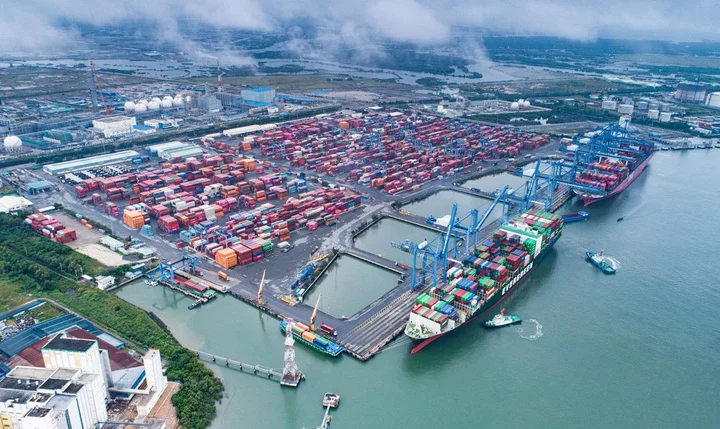
Cai Mep – Thi Vai Port Complex
Port and Logistics Hubs in Viet Nam Logistics Infrastructure
Port and logistics hub development is a core component of Viet Nam logistics infrastructure. Cargo from provinces such as Ben Tre, Dong Nai, and Binh Duong is typically routed through ICD systems before reaching major ports.
These hubs support:
- Container consolidation and distribution
- Inventory storage and handling
- Customs clearance processing
- Coordination with shipping lines and port operators
This structure allows exporters to access global shipping networks without direct exposure to port congestion.
Logistics providers such as Vantage Logistics Corporation coordinate between cargo sources and infrastructure systems to optimise routing and container availability.
Multimodal Transport in Viet Nam Logistics Infrastructure
Multimodal transport is a defining feature of Viet Nam logistics infrastructure. Supply chains combine:
- Trucking networks linking industrial zones to ports
- Barge transport across the Mekong river system
- Coastal feeder routes connecting north and south
- International sea and air freight services
Ports including Hai Phong, Da Nang, Quy Nhon, and Ho Chi Minh City form key domestic shipping corridors.
This model enables flexible routing based on cargo type, urgency, and infrastructure capacity.
Infrastructure for Project Cargo and Energy Logistics
Viet Nam logistics infrastructure also supports industrial and energy projects requiring specialised handling.
Key capabilities include:
- Heavy-lift and oversized cargo transport
- Route surveys and engineering planning
- Coordination between ports and inland transport
Renewable energy logistics involves moving turbines, solar equipment, and industrial modules from ports to project sites, often requiring specialised trailers with capacities exceeding hundreds of tonnes.
Regional Integration Strengthens Viet Nam Logistics Infrastructure
Viet Nam logistics infrastructure is increasingly connected to regional supply chains across Southeast Asia.
Cross-border routes connect Viet Nam with: Cambodia, Thailand, Laos and China
Barge transport between Viet Nam and Cambodia enables direct cargo movement from inland areas to export ports, reducing transit time and cost.
Integrated Platforms in Viet Nam Logistics Infrastructure
As Viet Nam logistics infrastructure becomes more complex, integrated logistics platforms are critical.
These platforms combine:
- International freight
- Customs brokerage
- Warehousing and inventory management
- Trucking and distribution
Vantage Logistics Corporation operates across these functions, handling over 250,000 TEUs annually and 2.5 million kilograms of airfreight, with network coverage across Viet Nam and Cambodia.
This integrated model improves visibility and reduces coordination gaps.
Logistics Infrastructure as a Competitive Advantage
Viet Nam logistics infrastructure will remain a key factor in export competitiveness. Priorities include:
- Expanding port capacity
- Upgrading inland transport
- Strengthening ICD systems
- Enhancing cross-border connectivity
Businesses that align with integrated infrastructure networks can reduce costs and improve delivery reliability.
Optimise your supply chain with a logistics model built on Viet Nam logistics infrastructure.
Contact Vantage Logistics Corporation to design a multimodal logistics solution tailored to your cargo flow!

Compliance, licensing, and trust.

Global partnerships and guaranteed capacity.

End‑to‑end solutions under one platform.

Certificates



Associations




Need help finding the right solution

Frequently Asked Questions
We offer comprehensive domestic and international transport solutions, including sea, air, road, and multimodal services tailored to customer needs.
You can reach us via:
- phone: +84-28 382 67312 – hotline: +84-909-026-261
- email: info@vlc.com.vn
- or submit a request directly on our website.
Our team will provide a detailed response promptly.
Yes, our team assists with documentation, customs procedures, and compliance to ensure smooth international shipments.
Yes, we offer cargo insurance options to protect your goods against potential risks during transit.
We are committed to eco-friendly logistics, including optimized routing, reduced emissions, and green packaging solutions.


 Vantage News

