MARKET UPDATES

Market updates

SINGAPORE STRENGTHENS PRODUCT SAFETY CONTROLS: WHAT VIETNAMESE EXPORTERS NEED TO KNOW

Singapore is strengthening its product safety controls through two key regulations: the Consumer Protection (Safety Requirements) Regulations (CPSR) and the Consumer Goods (Safety Requirements) Regulations (CGSR). For exporters, these requirements go beyond product compliance. They can also affect delivery schedules, logistics costs, and supply chain reliability. 1. Singapore Strengthens Product Safety Requirements According to information published by Vietnam’s Ministry of Industry and Trade, Singapore applies two main regulatory frameworks for product safety. – CPSR: Covers 33 categories of controlled goods, including electrical and electronic products, household appliances, and gas appliances. Products within scope must meet applicable safety requirements, complete registration, and carry the SAFETY Mark before being supplied or sold in Singapore. – CGSR: Covers general consumer goods such as toys, clothing, furniture, and sports equipment, which must comply with the relevant safety standards. Non-compliant products may be subject to sales restrictions or recalls. Businesses that violate applicable requirements may also face penalties. For exporters, checking compliance requirements before shipment is essential. Addressing documentation or registration issues early can help avoid costly adjustments after cargo has already left the port of origin. 2. Potential Impact on Southeast Asia’s Trade and Logistics Singapore plays an important role in Southeast Asia’s trade and logistics network. Tighter product safety controls may require exporters, importers, and distributors to review their procedures for placing goods on the Singapore market. Several potential risks deserve attention: – Delivery delays: Incomplete documentation or missing certificates may affect cargo acceptance and delivery schedules. – Additional logistics costs: Delays in resolving compliance issues may lead to storage, port handling, or additional transportation costs. – Disrupted distribution plans: Late deliveries can affect inventory planning, distribution schedules, and commitments to business partners. These requirements do not automatically apply across all ASEAN markets. However, they highlight the importance of understanding the specific regulations of each destination country when planning regional trade and distribution. 3. What Should Vietnamese Exporters Prepare? For Vietnamese businesses exporting to Singapore, compliance checks should take place before shipment arrangements are finalized. Exporters should determine whether their products fall under CPSR or CGSR, verify the applicable safety standards and registration requirements, and clarify responsibilities with their Singaporean importers. Documentation preparation should also be factored into the shipping schedule. If an issue is discovered only after cargo arrives at the destination port, businesses may need to manage several challenges simultaneously, including delivery delays, additional costs, and changes to distribution plans. A reliable shipping plan therefore involves more than selecting the right route or sailing schedule. It also requires anticipating potential obstacles before the cargo reaches its destination. 4. Managing Risks Through Early Planning Not every risk in international shipping can be eliminated, but many disruptions can be reduced through early preparation. Reviewing cargo information, documentation, shipping schedules, and destination requirements helps all parties make better-informed decisions. For shipments to Singapore, close coordination among exporters, importers, agents, and logistics providers helps maintain visibility over shipment readiness, address changes, and adjust plans when necessary. At Vantage Logistics, international transportation planning takes into account the practical requirements of each shipment and the coordination needed among relevant parties. This approach helps businesses manage potential disruptions and maintain better control over delivery schedules. As market requirements evolve, careful preparation does more than protect an individual shipment. It also helps businesses maintain reliable supply chains and build lasting partnerships across international markets.

15/10/2026

View More
vlc-news-Intra-Asia Freight Rates-09102026 (2)

Market updates

Intra-Asia Freight Rates Surge 177% Amid Asian Port Congestion

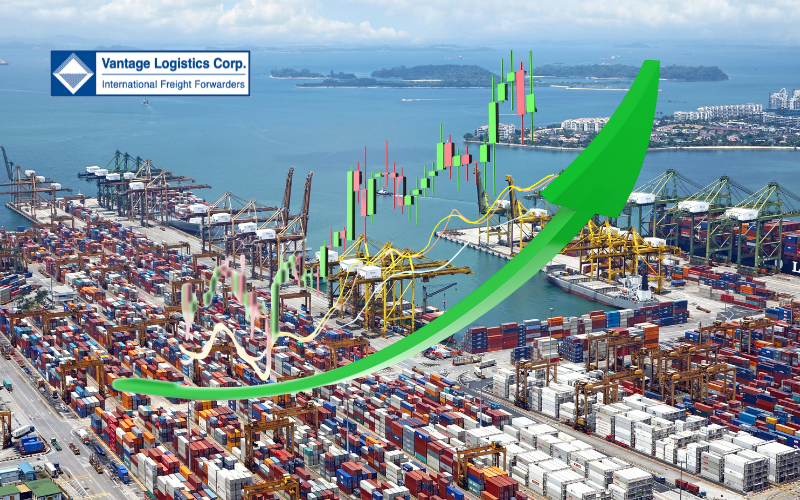
According to a Linerlytica report on October 5, 2026, intra-Asia container freight rates have surged by 177% compared to late February 2026, driven by mounting congestion across various Asian ports and ongoing pressure on feeder vessel capacity. This development requires import-export businesses to pay closer attention to vessel schedules, space availability, and actual transit times. Intra-Asia Rates Hit Post-COVID Peak According to Linerlytica’s latest report, intra-Asia container freight rates have skyrocketed by 177% since the end of February, hitting their highest level since the peak of the COVID-19 pandemic. The primary driver behind this surge is severe port congestion at major gateways such as Singapore, Port Klang (Malaysia), and the Ho Chi Minh City – Cai Mep port cluster in recent times. Additionally, lingering delays at Chinese ports since July have continued to disrupt the regional cargo flow. On a global scale, ports in South Asia, Southeast Asia, and East Asia currently account for 64% of total worldwide port congestion. Furthermore, while some European loop vessels are starting to resume transits via the Suez Canal, the majority must still sail around the Cape of Good Hope, placing additional strain on terminal operations across several Asian hubs. Intra-Asia Container Freight Rates Up 177% (Source: Linerlytica) Feeder Vessel Supply Fails to Keep Pace with Market Demand Aside from port congestion, the intra-Asia market is also under immense pressure from a shortage of feeder vessel capacity. Data from Linerlytica shows that only five new Bangkok-max vessels have been delivered from the beginning of 2026 up to the report’s release. This shortage has exacerbated the crunch in intra-Asia transport capacity. As vessels face longer waiting times at ports, actual operating efficiency drops directly threatening schedule reliability and booking availability for subsequent sailings. However, the actual impact varies across routes. Businesses need to proactively verify freight rates, space availability, vessel schedules, and empty container supplies on a case-by-case basis, depending on the specific route, carrier, and booking timing. How Can Businesses Proactively Control Their Shipping Plans? For companies shipping cargo between Viet Nam, China, and ASEAN, skyrocketing freight rates combined with port congestion create high risks of schedule delays, rollovers, or required transshipment alterations. Consequently, actual transit times may extend well beyond initial projections. To safeguard order delivery schedules, businesses should keep three core considerations in mind: Carefully verify transport capacity before locking in bookings: Immediately confirm space availability, estimated schedules, and transshipment points with the carrier or logistics provider. Review costs per shipment: Constantly update actual applicable freight rates, associated surcharges, and fee-liability terms should schedule change. Buffer your delivery timelines: Build in extra buffer time for shipments with strict deadlines while preparing alternative routing options just in case. In today’s volatile intra-Asia market, looking solely at low freight rates at the time of booking is no longer enough. Businesses must comprehensively evaluate schedule reliability, transshipment route flexibility, and cargo arrival timelines to safely and proactively manage their supply chains. Facing challenges with your intra-Asia shipping routes? Contact Vantage Logistics to consult on optimal transport solutions and tailored delivery plans.   Contact Vantage Logistics for tailored transport solutions and competitive quotations. Please provide details on cargo type, market, origin, destination, and estimated timeline. Vantage Logistics Corp – South East Asia (S.E.A) Logistics Provider One-Stop Shop For Integrated Logistics Services Head Office Viet Nam – Suite 6.01, Floor 6th, Block A, RiverGate Residence, 151-155 Ben Van Don, Khanh Hoi Ward, HCMC, Viet Nam Branch Thailand, Laos, Cambodia, Malaysia, Indonesia, Singapore Contact Us Email in**@*****om.vn Hotline +84-909-026-261 Website https://vantage-logistics.com   Send your shipment enquiry today and receive a tailored transport plan from the Vantage Logistics team.

09/10/2026

View More
vlc-news-FDI-ASEAN-09102026 (1)

Market updates

ASEAN FDI Hits Record US$243.9 Billion as Regional Supply Chains Expand

Southeast Asia attracted US$243.9 billion in foreign direct investment (FDI) in 2025, up 9.7% year on year. Much of the new investment is flowing into manufacturing, electronics, semiconductors and related industries, helping expand supply chains across multiple markets in the region. ASEAN Attracts Record FDI According to UNCTAD and ASEAN, FDI inflows into the region reached US$243.9 billion in 2025, equivalent to around 15% of global FDI. Singapore led the region with US$150.9 billion, followed by Indonesia at US$21.4 billion, Viet Nam at US$20.4 billion, Thailand at US$19.1 billion and Malaysia at US$15.4 billion. Investment is spread across multiple manufacturing, technology and service hubs rather than concentrated in a single country. This reflects a broader trend among international businesses toward building multi-location supply chains that draw on the strengths of different ASEAN markets. As economies across the region take on different stages of production, connectivity between markets is becoming increasingly important to trade and logistics. Manufacturing and Technology Draw More Investment One of the most notable shifts in FDI in recent years has been the renewed momentum in manufacturing. According to Invest ASEAN, manufacturing’s share of total FDI into ASEAN rose from 9% in 2023 to 20% in 2024. Electronics, semiconductors, automotive, industrial components and technology continue to attract new projects across the region. Investment is not limited to complete manufacturing facilities. Businesses are also expanding activities such as assembly, testing, packaging, component supply and production support services. These developments are helping industrial networks across the region become more interconnected and specialized. Rather than concentrating all operations in one country, businesses are increasingly distributing production stages across markets with distinct advantages in cost, workforce, infrastructure and industrial capabilities. One Supply Chain, Multiple Manufacturing Hubs Shifting investment is helping shape a new production model in ASEAN. A single product may pass through several countries before it is ready for export: Raw materials and components are sourced from one market Assembly or processing takes place in another country Testing or final production stages are handled at a different manufacturing hub in the region The finished product is then exported to global markets Under this model, goods do not move only from factories to seaports for export. Intermediate goods – including components, raw materials and semi-finished products – also move between ASEAN countries. As a result, regional supply chains are becoming more interconnected, with production and goods flows spanning multiple markets. FDI Is Generating New Intra-Regional Cargo Flows For the logistics industry, the impact of FDI goes beyond the number of new factories or the amount of capital invested. More importantly, investment can create new cargo flows as production expands across markets. When different stages of manufacturing take place in different countries, demand for transporting raw materials, components and semi-finished goods between ASEAN markets can also grow. Intra-regional transport routes are therefore becoming increasingly important. Alongside exports to major markets such as the United States, Europe and Northeast Asia, cargo moving between ASEAN countries forms another important part of the region’s trade flows. This trend can increase demand for port connectivity, warehousing, distribution centers, cross-border road transport and integrated logistics services. ASEAN Moves Toward a Multi-Location Production Model ASEAN economies are becoming part of an increasingly interconnected regional production network. Singapore continues to serve as a financial and services hub. Malaysia has established strengths in electronics and semiconductors, while Thailand remains an important industrial manufacturing center. Viet Nam is expanding its electronics and export-oriented manufacturing base, while Indonesia is attracting investment in processing industries and electric vehicle supply chains. These markets do not operate in isolation. Production in one country can supply inputs for manufacturing in another. ASEAN’s value therefore lies not only in the size of individual markets or their production costs, but also in the ability to connect manufacturing hubs into a broader regional network. From Investment Flows to Cargo Flows ASEAN has attracted record investment in manufacturing and related industries. The next question is not simply how much further investment will grow, but how it will shape cargo flows between the region’s manufacturing hubs. As supply chains become more distributed across countries, logistics opportunities increasingly depend not only on capabilities in individual markets, but also on the ability to connect the region as a whole.   Contact Vantage Logistics for tailored transport solutions and competitive quotations. Please provide details on cargo type, market, origin, destination, and estimated timeline. Vantage Logistics Corp – South East Asia (S.E.A) Logistics Provider One-Stop Shop For Integrated Logistics Services Head Office Viet Nam – Suite 6.01, Floor 6th, Block A, RiverGate Residence, 151-155 Ben Van Don, Khanh Hoi Ward, HCMC, Viet Nam Branch Thailand, Laos, Cambodia, Malaysia, Indonesia, Singapore Contact Us Email in**@*****om.vn Hotline +84-909-026-261 Website https://vantage-logistics.com Send your shipment enquiry today and receive a tailored transport plan from the Vantage Logistics team.

09/10/2026

View More

Market updates

SINGAPORE STRENGTHENS PRODUCT SAFETY CONTROLS: WHAT VIETNAMESE EXPORTERS NEED TO KNOW

Singapore is strengthening its product safety controls through two key regulations: the Consumer Protection (Safety Requirements) Regulations (CPSR) and the Consumer Goods (Safety Requirements) Regulations (CGSR). For exporters, these requirements go beyond product compliance. They can also affect delivery schedules, logistics costs, and supply chain reliability. 1. Singapore Strengthens Product Safety Requirements According to information published by Vietnam’s Ministry of Industry and Trade, Singapore applies two main regulatory frameworks for product safety. – CPSR: Covers 33 categories of controlled goods, including electrical and electronic products, household appliances, and gas appliances. Products within scope must meet applicable safety requirements, complete registration, and carry the SAFETY Mark before being supplied or sold in Singapore. – CGSR: Covers general consumer goods such as toys, clothing, furniture, and sports equipment, which must comply with the relevant safety standards. Non-compliant products may be subject to sales restrictions or recalls. Businesses that violate applicable requirements may also face penalties. For exporters, checking compliance requirements before shipment is essential. Addressing documentation or registration issues early can help avoid costly adjustments after cargo has already left the port of origin. 2. Potential Impact on Southeast Asia’s Trade and Logistics Singapore plays an important role in Southeast Asia’s trade and logistics network. Tighter product safety controls may require exporters, importers, and distributors to review their procedures for placing goods on the Singapore market. Several potential risks deserve attention: – Delivery delays: Incomplete documentation or missing certificates may affect cargo acceptance and delivery schedules. – Additional logistics costs: Delays in resolving compliance issues may lead to storage, port handling, or additional transportation costs. – Disrupted distribution plans: Late deliveries can affect inventory planning, distribution schedules, and commitments to business partners. These requirements do not automatically apply across all ASEAN markets. However, they highlight the importance of understanding the specific regulations of each destination country when planning regional trade and distribution. 3. What Should Vietnamese Exporters Prepare? For Vietnamese businesses exporting to Singapore, compliance checks should take place before shipment arrangements are finalized. Exporters should determine whether their products fall under CPSR or CGSR, verify the applicable safety standards and registration requirements, and clarify responsibilities with their Singaporean importers. Documentation preparation should also be factored into the shipping schedule. If an issue is discovered only after cargo arrives at the destination port, businesses may need to manage several challenges simultaneously, including delivery delays, additional costs, and changes to distribution plans. A reliable shipping plan therefore involves more than selecting the right route or sailing schedule. It also requires anticipating potential obstacles before the cargo reaches its destination. 4. Managing Risks Through Early Planning Not every risk in international shipping can be eliminated, but many disruptions can be reduced through early preparation. Reviewing cargo information, documentation, shipping schedules, and destination requirements helps all parties make better-informed decisions. For shipments to Singapore, close coordination among exporters, importers, agents, and logistics providers helps maintain visibility over shipment readiness, address changes, and adjust plans when necessary. At Vantage Logistics, international transportation planning takes into account the practical requirements of each shipment and the coordination needed among relevant parties. This approach helps businesses manage potential disruptions and maintain better control over delivery schedules. As market requirements evolve, careful preparation does more than protect an individual shipment. It also helps businesses maintain reliable supply chains and build lasting partnerships across international markets....

15/10/2026

View More
vlc-news-Intra-Asia Freight Rates-09102026 (2)

Market updates

Intra-Asia Freight Rates Surge 177% Amid Asian Port Congestion

According to a Linerlytica report on October 5, 2026, intra-Asia container freight rates have surged by 177% compared to late February 2026, driven by mounting congestion across various Asian ports and ongoing pressure on feeder vessel capacity. This development requires import-export businesses to pay closer attention to vessel schedules, space availability, and actual transit times. Intra-Asia Rates Hit Post-COVID Peak According to Linerlytica’s latest report, intra-Asia container freight rates have skyrocketed by 177% since the end of February, hitting their highest level since the peak of the COVID-19 pandemic. The primary driver behind this surge is severe port congestion at major gateways such as Singapore, Port Klang (Malaysia), and the Ho Chi Minh City – Cai Mep port cluster in recent times. Additionally, lingering delays at Chinese ports since July have continued to disrupt the regional cargo flow. On a global scale, ports in South Asia, Southeast Asia, and East Asia currently account for 64% of total worldwide port congestion. Furthermore, while some European loop vessels are starting to resume transits via the Suez Canal, the majority must still sail around the Cape of Good Hope, placing additional strain on terminal operations across several Asian hubs. Intra-Asia Container Freight Rates Up 177% (Source: Linerlytica) Feeder Vessel Supply Fails to Keep Pace with Market Demand Aside from port congestion, the intra-Asia market is also under immense pressure from a shortage of feeder vessel capacity. Data from Linerlytica shows that only five new Bangkok-max vessels have been delivered from the beginning of 2026 up to the report’s release. This shortage has exacerbated the crunch in intra-Asia transport capacity. As vessels face longer waiting times at ports, actual operating efficiency drops directly threatening schedule reliability and booking availability for subsequent sailings. However, the actual impact varies across routes. Businesses need to proactively verify freight rates, space availability, vessel schedules, and empty container supplies on a case-by-case basis, depending on the specific route, carrier, and booking timing. How Can Businesses Proactively Control Their Shipping Plans? For companies shipping cargo between Viet Nam, China, and ASEAN, skyrocketing freight rates combined with port congestion create high risks of schedule delays, rollovers, or required transshipment alterations. Consequently, actual transit times may extend well beyond initial projections. To safeguard order delivery schedules, businesses should keep three core considerations in mind: Carefully verify transport capacity before locking in bookings: Immediately confirm space availability, estimated schedules, and transshipment points with the carrier or logistics provider. Review costs per shipment: Constantly update actual applicable freight rates, associated surcharges, and fee-liability terms should schedule change. Buffer your delivery timelines: Build in extra buffer time for shipments with strict deadlines while preparing alternative routing options just in case. In today’s volatile intra-Asia market, looking solely at low freight rates at the time of booking is no longer enough. Businesses must comprehensively evaluate schedule reliability, transshipment route flexibility, and cargo arrival timelines to safely and proactively manage their supply chains. Facing challenges with your intra-Asia shipping routes? Contact Vantage Logistics to consult on optimal transport solutions and tailored delivery plans.   Contact Vantage Logistics for tailored transport solutions and competitive quotations. Please provide details on cargo type, market, origin, destination, and estimated timeline. Vantage Logistics Corp – South East Asia (S.E.A) Logistics Provider One-Stop Shop For Integrated Logistics Services Head Office Viet Nam – Suite 6.01, Floor 6th, Block A, RiverGate Residence, 151-155 Ben Van Don, Khanh Hoi Ward, HCMC, Viet Nam Branch Thailand, Laos, Cambodia, Malaysia, Indonesia, Singapore Contact Us Email in**@*****om.vn Hotline +84-909-026-261 Website https://vantage-logistics.com   Send your shipment enquiry today and receive a tailored transport plan from the Vantage Logistics team....

09/10/2026

View More
vlc-news-FDI-ASEAN-09102026 (1)

Market updates

ASEAN FDI Hits Record US$243.9 Billion as Regional Supply Chains Expand

Southeast Asia attracted US$243.9 billion in foreign direct investment (FDI) in 2025, up 9.7% year on year. Much of the new investment is flowing into manufacturing, electronics, semiconductors and related industries, helping expand supply chains across multiple markets in the region. ASEAN Attracts Record FDI According to UNCTAD and ASEAN, FDI inflows into the region reached US$243.9 billion in 2025, equivalent to around 15% of global FDI. Singapore led the region with US$150.9 billion, followed by Indonesia at US$21.4 billion, Viet Nam at US$20.4 billion, Thailand at US$19.1 billion and Malaysia at US$15.4 billion. Investment is spread across multiple manufacturing, technology and service hubs rather than concentrated in a single country. This reflects a broader trend among international businesses toward building multi-location supply chains that draw on the strengths of different ASEAN markets. As economies across the region take on different stages of production, connectivity between markets is becoming increasingly important to trade and logistics. Manufacturing and Technology Draw More Investment One of the most notable shifts in FDI in recent years has been the renewed momentum in manufacturing. According to Invest ASEAN, manufacturing’s share of total FDI into ASEAN rose from 9% in 2023 to 20% in 2024. Electronics, semiconductors, automotive, industrial components and technology continue to attract new projects across the region. Investment is not limited to complete manufacturing facilities. Businesses are also expanding activities such as assembly, testing, packaging, component supply and production support services. These developments are helping industrial networks across the region become more interconnected and specialized. Rather than concentrating all operations in one country, businesses are increasingly distributing production stages across markets with distinct advantages in cost, workforce, infrastructure and industrial capabilities. One Supply Chain, Multiple Manufacturing Hubs Shifting investment is helping shape a new production model in ASEAN. A single product may pass through several countries before it is ready for export: Raw materials and components are sourced from one market Assembly or processing takes place in another country Testing or final production stages are handled at a different manufacturing hub in the region The finished product is then exported to global markets Under this model, goods do not move only from factories to seaports for export. Intermediate goods – including components, raw materials and semi-finished products – also move between ASEAN countries. As a result, regional supply chains are becoming more interconnected, with production and goods flows spanning multiple markets. FDI Is Generating New Intra-Regional Cargo Flows For the logistics industry, the impact of FDI goes beyond the number of new factories or the amount of capital invested. More importantly, investment can create new cargo flows as production expands across markets. When different stages of manufacturing take place in different countries, demand for transporting raw materials, components and semi-finished goods between ASEAN markets can also grow. Intra-regional transport routes are therefore becoming increasingly important. Alongside exports to major markets such as the United States, Europe and Northeast Asia, cargo moving between ASEAN countries forms another important part of the region’s trade flows. This trend can increase demand for port connectivity, warehousing, distribution centers, cross-border road transport and integrated logistics services. ASEAN Moves Toward a Multi-Location Production Model ASEAN economies are becoming part of an increasingly interconnected regional production network. Singapore continues to serve as a financial and services hub. Malaysia has established strengths in electronics and semiconductors, while Thailand remains an important industrial manufacturing center. Viet Nam is expanding its electronics and export-oriented manufacturing base, while Indonesia is attracting investment in processing industries and electric vehicle supply chains. These markets do not operate in isolation. Production in one country can supply inputs for manufacturing in another. ASEAN’s value therefore lies not only in the size of individual markets or their production costs, but also in the ability to connect manufacturing hubs into a broader regional network. From Investment Flows to Cargo Flows ASEAN has attracted record investment in manufacturing and related industries. The next question is not simply how much further investment will grow, but how it will shape cargo flows between the region’s manufacturing hubs. As supply chains become more distributed across countries, logistics opportunities increasingly depend not only on capabilities in individual markets, but also on the ability to connect the region as a whole.   Contact Vantage Logistics for tailored transport solutions and competitive quotations. Please provide details on cargo type, market, origin, destination, and estimated timeline. Vantage Logistics Corp – South East Asia (S.E.A) Logistics Provider One-Stop Shop For Integrated Logistics Services Head Office Viet Nam – Suite 6.01, Floor 6th, Block A, RiverGate Residence, 151-155 Ben Van Don, Khanh Hoi Ward, HCMC, Viet Nam Branch Thailand, Laos, Cambodia, Malaysia, Indonesia, Singapore Contact Us Email in**@*****om.vn Hotline +84-909-026-261 Website https://vantage-logistics.com Send your shipment enquiry today and receive a tailored transport plan from the Vantage Logistics team....

09/10/2026

View More
vlc-news-MICT-08102026

Market updates

Philippines: Empty Container Congestion in Manila, Hapag-Lloyd Suspends New Bookings to 3 Ports

Empty container congestion and limited depot capacity in the Philippines are creating challenges for trucking operations and cargo movement. In response, Hapag-Lloyd has suspended new bookings to Manila, Batangas, and Subic Bay, with the measure currently scheduled to remain in place through December 31, 2026. 1. Empty Container Congestion Puts Pressure on Logistics Operations in the Philippines Trucking companies and customs brokers in the Philippines are reporting difficulties returning empty containers as some depots face limited receiving capacity, particularly in the Manila area. At some depots, the waiting time to return empty containers can range from two weeks to one month. This leaves containers at yards or on trucks for extended periods, affecting equipment turnaround and cargo transportation operations. On October 5, 2026, the Philippine Bureau of Customs acknowledged the difficulties regarding empty container congestion and limited depot receiving capacity, while calling on stakeholders to coordinate and resolve the issue to minimize supply chain disruptions. On October 5–6, 2026, customs brokers and transport groups in Manila engaged in a voluntary work stoppage to highlight difficulties in port operations. According to PortCalls Asia, the customs broker group continued the action into October 6, while several transport groups began halting their transport operations on the same day. Container yard operations at Manila Port, Philippines (Photo: Manila International Container Terminal) 2. Hapag-Lloyd Suspends New Bookings to Manila, Batangas, and Subic Bay Amid continued congestion and constraints on depot capacity and empty container returns, Hapag-Lloyd has suspended the acceptance of new bookings to three Philippine ports: Manila (PHMNL), Batangas (PHBTG), and Subic Bay (PHSFS). The measure applies to new bookings from all origins and across all trade lanes and is currently scheduled to remain in effect through December 31, 2026. Any changes to the suspension period will be communicated separately. For existing bookings, the carrier will contact customers directly if a booking is canceled or requires revised arrangements. For cargo already in transit, customers should check the shipment status with the carrier or their logistics provider. The suspension applies specifically to Hapag-Lloyd. It does not mean that the three ports have ceased operations or that all carriers have stopped accepting cargo to the Philippines. 3. What Businesss Should Consider The congestion in the Philippines may affect booking confirmation, sailing schedules, and cargo delivery plans at the destination port. For businesses exporting goods to the Philippines, consider the following: Check booking availability: Confirm booking acceptance with the carrier or logistics provider before finalizing shipping plans, especially for cargo destined for Manila, Batangas, or Subic Bay. Monitor vessel schedules and delivery timelines: Track sailing schedules and estimated time of arrival (ETA) and allow additional time for cargo handling if delays occur. Review potential charges: Clarify free time, storage charges, and empty container return requirements at the destination to manage potential additional costs. Prepare alternative transportation options: Discuss alternative carriers or service routes with your logistics provider based on current operating conditions. Vantage Logistics supports businesses with vessel schedule checks, booking availability, and transportation planning for shipments to the Philippines based on current operating conditions. Contact Vantage Logistics to discuss suitable transportation options and maintain greater control over your delivery plans amid ongoing congestion in the Philippine market.   Contact Vantage Logistics for tailored transport solutions and competitive quotations. Please provide details on cargo type, market, origin, destination, and estimated timeline. Vantage Logistics Corp – South East Asia (S.E.A) Logistics Provider One-Stop Shop For Integrated Logistics Services Head Office Viet Nam – Suite 6.01, Floor 6th, Block A, RiverGate Residence, 151-155 Ben Van Don, Khanh Hoi Ward, HCMC, Viet Nam Branch Thailand, Laos, Cambodia, Malaysia, Indonesia, Singapore Contact Us Email in**@*****om.vn Hotline +84-909-026-261 Website https://vantage-logistics.com Send your shipment enquiry today and receive a tailored transport plan from the Vantage Logistics team....

08/10/2026

View More
vlc-news-FOB-FBA-30092026

Market updates

From FOB Manufacturing to Amazon FBA: The Supply Chain Transition Path for OEM/CM Businesses

When moving from contract manufacturing to selling directly on Amazon in the U.S., Vietnamese OEM/CM businesses are not simply changing the delivery point. They also need to take greater control of international transportation, import procedures, packaging, and delivery data. A smooth transition requires businesses to align their delivery terms, cargo specifications, and shipment data from the outset. 1. From FOB to DDP: Responsibilities Businesses Need to Prepare For FOB: The risk of loss or damage transfers from the seller to the buyer when the goods are loaded on board the vessel at the designated port of shipment. This does not mean the seller has no further obligations; remaining responsibilities are determined by the sales contract DDP for shipments to FBA fulfillment centers: Amazon requires inventory shipped to its fulfillment centers to be sent under DDP terms. Businesses need to clearly determine the Importer of Record (IOR), the customs clearance party, and how duties and taxes will be paid. Amazon does not act as the importer of record for FBA inventory A capable freight forwarder can connect these requirements with international transportation and U.S. domestic delivery, creating an integrated logistics solution from the factory to the FBA fulfillment center. This provides a foundation for better risk control and greater visibility over delivery planning. 2. Standardizing Barcodes, Cartons and Pallets at the Factory Inventory shipped to FBA fulfillment centers must comply with Amazon’s requirements for barcodes, packaging, and shipping labels. Preparing these requirements correctly before shipment helps reduce the risk of receiving issues or additional handling. Product barcodes: Determine the appropriate barcode type for each SKU before production and packing. From March 31, 2026, whether a manufacturer barcode or Amazon barcode is used depends on the seller’s role and the product’s barcode status. For SKUs that require an Amazon barcode/FNSKU, labels must be applied correctly and remain clearly scannable Cartons: Comply with the standard maximum carton size of 36 × 25 × 25 inches and 50 lb, except where specific oversize-item exceptions apply. Each carton should carry its own clearly visible and scannable FBA Box ID label Pallets: For palletized shipments, businesses need to prepare pallets in accordance with Amazon’s requirements for dimensions, weight, packaging, and shipment labels. Wooden pallets and wood packaging materials subject to U.S. import controls must comply with the applicable treatment and marking requirements under ISPM 15 3. Creating the Shipping Plan in Seller Central: Connecting Data with the Forwarder Accurate declaration: Information entered through the Send to Amazon workflow – including the actual ship-from address, SKU, quantity, weight, and dimensions – must fully match the data provided to the logistics provider Balancing placement costs: Compare placement fees with transportation costs to select an appropriate inbound placement option for each shipment Coordinated delivery: Provide the Shipment ID and relevant documents to the forwarder/carrier so delivery can be arranged according to Amazon’s requirements, particularly for LTL/FTL shipments handled through Carrier Central Vantage Logistics – Connecting the Factory to U.S. Amazon Fulfillment For OEM/CM businesses transitioning to direct sales on Amazon, Vantage Logistics provides an integrated logistics solution covering international transportation, import procedures, and U.S. delivery, connecting cargo preparation in Viet Nam with the designated fulfillment center. Factory preparation: Coordinate checks on packaging specifications, product labels, and pallets according to each shipment’s requirements, helping ensure cargo information is aligned before export International transportation and U.S. import: Arrange international transportation by sea, air, or other suitable modes; coordinate customs procedures and the IOR arrangement in the destination market under the DDP structure of each shipment U.S. logistics capabilities: Vantage Logistics is registered as an FMC OTI/NVOCC under No. 023190, supporting the connection between international transportation and its logistics and delivery network in the U.S Warehousing and FBA delivery: Vantage Logistics has a network of warehouses and fulfillment capabilities in the U.S., supporting storage, inventory management, and delivery to designated fulfillment centers, including FBA delivery services End-to-end shipment visibility: Connect shipment information among the business, forwarder/carrier, and relevant parties, tracking progress from the time cargo leaves the factory through final delivery in the U.S Service scope, IOR arrangements, and the responsibilities of each party are determined based on the cargo characteristics, delivery terms, and requirements of each shipment.   Contact Vantage Logistics for tailored transport solutions and competitive quotations. Please provide details on cargo type, market, origin, destination, and estimated timeline.   Vantage Logistics Corp – South East Asia (S.E.A) Logistics Provider One-Stop Shop For Integrated Logistics Services Head Office Viet Nam – Suite 6.01, Floor 6th, Block A, RiverGate Residence, 151-155 Ben Van Don, Khanh Hoi Ward, HCMC, Viet Nam Branch Thailand, Laos, Cambodia, Malaysia, Indonesia, Singapore Contact Us Email in**@*****om.vn Hotline +84-909-026-261 Website https://vantage-logistics.com Send your shipment enquiry today and receive a tailored transport plan from the Vantage Logistics team....

08/10/2026

View More
vlc-news-ben-luc-long-thanh-expressway-07102026

Market updates

Ben Luc – Long Thanh Expressway: Reshaping Southern Vietnam’s Freight Routing Map

The full opening of the Ben Luc – Long Thanh Expressway on October 1, 2026, establishes a vital new corridor linking the Mekong Delta (Southwestern region) with Dong Nai and key logistics hubs in the East. For businesses, the true value of this infrastructure extends well beyond shortened transit times; it unlocks a strategic opportunity to recalibrate routing, manage per-trip expenses, and ensure schedule reliability. 1. Moving Beyond Urban Bottlenecks: A True Inter-Regional Corridor Spanning approximately 57.8 km, the newly operational Ben Luc – Long Thanh Expressway marks a major milestone in Southern Vietnam’s transport infrastructure. The route establishes a more direct conduit connecting the Mekong Delta, Dong Nai, and the eastern port and airport clusters, allowing westbound freight carriers to bypass congested urban cores and seamlessly access Long Thanh, Phuoc An Port, and Ba Ria – Vung Tau. For transport operators, the primary advantage lies not merely in adding another road to the map, but in diversifying routing options to reduce reliance on heavily congested inner-city arterial roads. As infrastructure evolves, freight routing strategies must adapt to optimize cargo flow. Ben Luc – Long Thanh Expressway: Reshaping Southern Vietnam’s Freight Routing Map (Image: Internet) 2. Weighing Toll Expenses Against Total Trip Efficiency For heavy trucks (18 tons and above) and container transport (40 feet and up) transiting the entire route from the HCMC – Trung Luong Expressway to National Highway 51, the applicable toll rate (BOT) stands at VND 446,774 per trip (inclusive of 8% VAT). Introducing this toll into the transport equation requires a sophisticated cost-benefit assessment: Trading Tolls for Consistency: While toll expenses increase, carriers gain predictable transit times, mitigating the unpredictable congestion risks typical of urban gateway bottlenecks The Cost of Schedule Disruptions: For time-sensitive cargo, an hour of delay translates to more than wasted fuel – it impacts fleet turnaround cycles, drives up labor costs, and disrupts downstream supply chain stability Total Trip Cost Optimization: Consequently, routing decisions must be evaluated based on total trip cost rather than a simple comparison between toll-free and toll roads Optimal routing choices should be driven by empirical operational data tailored to specific cargo types and time windows rather than blanket assumptions. 3. A New Link in an Evolving Intermodal Network While the Ben Luc – Long Thanh Expressway introduces substantial capacity to Southern logistics, it is not a standalone silver bullet. Its ultimate efficiency depends heavily on synchronization with broader regional transport networks, including the ongoing closure of HCMC Ring Road 3 and connecting axes to the Bien Hoa – Vung Tau Expressway. This underscores the need for a holistic view of the end-to-end journey: from origin pickup and feeder routes to the expressway, and onward to destination ports, ICDs, warehouses, or final delivery points. As these connecting arteries mature, the expressway’s true value will be realized through its seamless integration into a broader inter-regional freight network. HCMC Ring Road 3 connecting provinces across the Southeast region (Photo: Internet)   Official opening of Bien Hoa – Vung Tau Expressway brings major boost to the Southeast region (Photo: Internet) Vantage Logistics: Navigating Evolving Transport Infrastructure Infrastructure shifts demand dynamic routing strategies. Every shipment requires a customized approach based on origin-destination pairs, cargo characteristics, transit time constraints, multimodal options, and total journey costs. Vantage Logistics delivers integrated logistics solutions, helping businesses engineer resilient transport plans tailored to individual cargo profiles across Vietnam and Southeast Asia. Contact Vantage Logistics to consult on optimized transport solutions for your upcoming shipments.   Contact Vantage Logistics for tailored transport solutions and competitive quotations. Please provide details on cargo type, market, origin, destination, and estimated timeline. Vantage Logistics Corp – South East Asia (S.E.A) Logistics Provider One-Stop Shop For Integrated Logistics Services Head Office Viet Nam – Suite 6.01, Floor 6th, Block A, RiverGate Residence, 151-155 Ben Van Don, Khanh Hoi Ward, HCMC, Viet Nam Branch Thailand, Laos, Cambodia, Malaysia, Indonesia, Singapore Contact Us Email in**@*****om.vn Hotline +84-909-026-261 Website https://vantage-logistics.com Send your shipment enquiry today and receive a tailored transport plan from the Vantage Logistics team....

07/10/2026

View More
vlc-news-vncentral-highland-6102026

Market updates

Central Viet Nam and the Central Highlands: Pressures to Upgrade Multimodal Logistics Connectivity

Vietnam’s logistics industry has entered a phase of synchronously implementing the National Strategy for Logistics Services Development for 2025–2035, with a vision to 2050. Amid volatile international trade environments and high economic growth targets, optimizing supply chains, reducing logistics costs, and enhancing regional connectivity have become core imperatives for manufacturing and import-export enterprises. Infrastructure and Multimodal Transport Challenges in the Central Region and Central Highlands The Central Viet Nam and Central Highlands regions boast significant advantages, featuring a coastal seaport system and East-West economic corridors that serve as a foundational bridge linking raw material zones, industrial parks, and border gates to international markets. However, according to data released by the Ministry of Industry and Trade regarding the infrastructure landscape within the framework of the Viet Nam Logistics Forum 2026, operational realities show that the region’s export goods still rely predominantly on road transport. The lack of synchronized development across consolidation points, cold storages, and regional-scale logistics hubs has undermined effective connectivity between domestic production areas and seaport systems. These bottlenecks directly drive up transit times and shipping costs – which continue to account for a substantial share of product prices – thereby creating an urgent need for tighter integration among all supply chain links. Development Trends and Supply Chain Connectivity Orientations Driven by global supply chain shifts, cross-border e-commerce, and emerging green logistics standards, the region’s logistics capabilities demand profound transformations. In this context, advancing multimodal transport, investing in logistics infrastructure, accelerating digital transformation, and fostering green logistics are recognized as vital pathways to optimize end-to-end logistics costs, elevate operational efficiency, and meet sustainable development standards. Enhancing connectivity between raw material zones, industrial parks, logistics hubs, and seaports remains a focal point in the national logistics development orientation for the 2025–2035 period. For manufacturing and import-export businesses, this is also a critical factor directly impacting profit margins, transportation expenses, and global market accessibility. Follow Vantage Logistics for the latest updates on logistics, import-export, and supply chain connectivity in Viet Nam and across the region.   Contact Vantage Logistics for tailored transport solutions and competitive quotations. Please provide details on cargo type, market, origin, destination, and estimated timeline. Vantage Logistics Corp – South East Asia (S.E.A) Logistics Provider One-Stop Shop For Integrated Logistics Services Head Office Viet Nam – Suite 6.01, Floor 6th, Block A, RiverGate Residence, 151-155 Ben Van Don, Khanh Hoi Ward, HCMC, Viet Nam Branch Thailand, Laos, Cambodia, Malaysia, Indonesia, Singapore Contact Us Email in**@*****om.vn Hotline +84-909-026-261 Website https://vantage-logistics.com Send your shipment enquiry today and receive a tailored transport plan from the Vantage Logistics team....

07/10/2026

View More
vlc-news-customs-regulation-6102026

Market updates

ENTRUSTED IMPORT: KEY NOTES ON CUSTOMS DECLARATIONS, INVOICES, AND C/O FORM E

The General Department of Customs has recently issued guidelines clarifying issues in entrusted import dossiers concerning the declarant, commercial invoices, and C/O Form E. The core takeaway for enterprises: documents do not strictly have to share identical entity names, but the entire dossier must accurately reflect the true nature of the transaction and ensure consistency. On October 5, 2026, the General Department of Customs issued Official Letter No. 22560/CHQ-GSQL in response to enterprise inquiries regarding customs procedures, entrusted import dossiers, and Form E Certificates of Origin. This document clarifies the application of current regulations to specific cases, focusing on the relationship among the customs declarant, the commercial invoice, the entrustment relationship, and origin documents. Below are 3 key points that enterprises should note: 1/ The Entrusiary Acting as Declarant Must Meet Customs Declarant Requirements According to the guidelines in Official Letter No. 22560/CHQ-GSQL, if an enterprise signs an entrusted import contract in accordance with the law on commerce and foreign trade management and acts as the customs declarant on the customs declaration, that enterprise must fully satisfy the conditions applicable to a customs declarant. Recommendation for Enterprises: Clearly define the participating entities right from the preparation stage (entrustor, entrusted party, and the unit acting as the customs declarant) to ensure compatibility between legal status and declaration dossiers. 2/ Invoices Do Not Necessarily Have to Match the Declarant’s Name A notable point of the official letter is that current customs dossier regulations do not require the buyer on the commercial invoice to match the name of the customs declarant. However, not requiring matching names means enterprises must still ensure information alignment: Information on the commercial invoice must accurately reflect the actual purchase and sale transaction with the overseas partner. The transaction’s dossiers and documents must accurately demonstrate the true nature of the entrustment relationship between the entrustor and the entrusted party. 3/ C/O Form E and the Requirement for Cross-Checking Documentation Regarding preferential import tariff rates under ACFTA, the official letter reiterates the application conditions under Decree No. 118/2022/NĐ-CP (goods must belong to the preferential tariff schedule, be imported from an ACFTA member state, meet rules of origin including direct consignment, and possess a valid Form E Certificate of Origin). Additionally, pursuant to Circular No. 12/2019/TT-BCT, customs authorities note that the declared information on Form E (especially information in Box 2 regarding the consignee’s name, address, and importing member state) must align with the customs declaration and related documents within the dossier. Checklist for Dossier Review Prior to Declaration: Enterprises should cross-check the entire document chain rather than reviewing each document in isolation: Entrusted Import Contract (Defining entities and scope of entrustment) International Sales Contract (Information on the buyer and overseas seller) Commercial Invoice Customs Declaration C/O Form E and related transport documents For enterprises utilizing customs and logistics services, handling entrusted shipments involving C/O Form E requires early data synchronization rather than waiting until goods arrive at the border gate. Reviewing the consistency of the entire dossier in advance will help enterprises ensure smooth customs clearance and avoid risks related to the denial of tax preferences. For enterprises seeking detailed consultation on customs procedures, origin of goods, and tailored logistics solutions for each entrusted shipment, please contact Vantage Logistics.   Contact Vantage Logistics for tailored transport solutions and competitive quotations. Please provide details on cargo type, market, origin, destination, and estimated timeline. Vantage Logistics Corp – South East Asia (S.E.A) Logistics Provider One-Stop Shop For Integrated Logistics Services Head Office Viet Nam – Suite 6.01, Floor 6th, Block A, RiverGate Residence, 151-155 Ben Van Don, Khanh Hoi Ward, HCMC, Viet Nam Branch Thailand, Laos, Cambodia, Malaysia, Indonesia, Singapore Contact Us Email in**@*****om.vn Hotline +84-909-026-261 Website https://vantage-logistics.com Send your shipment enquiry today and receive a tailored transport plan from the Vantage Logistics team....

06/10/2026

View More
vlc-news-IATA-6102026

Market updates

IATA Calls for Enhanced Control of Dangerous Goods in the Air Supply Chain

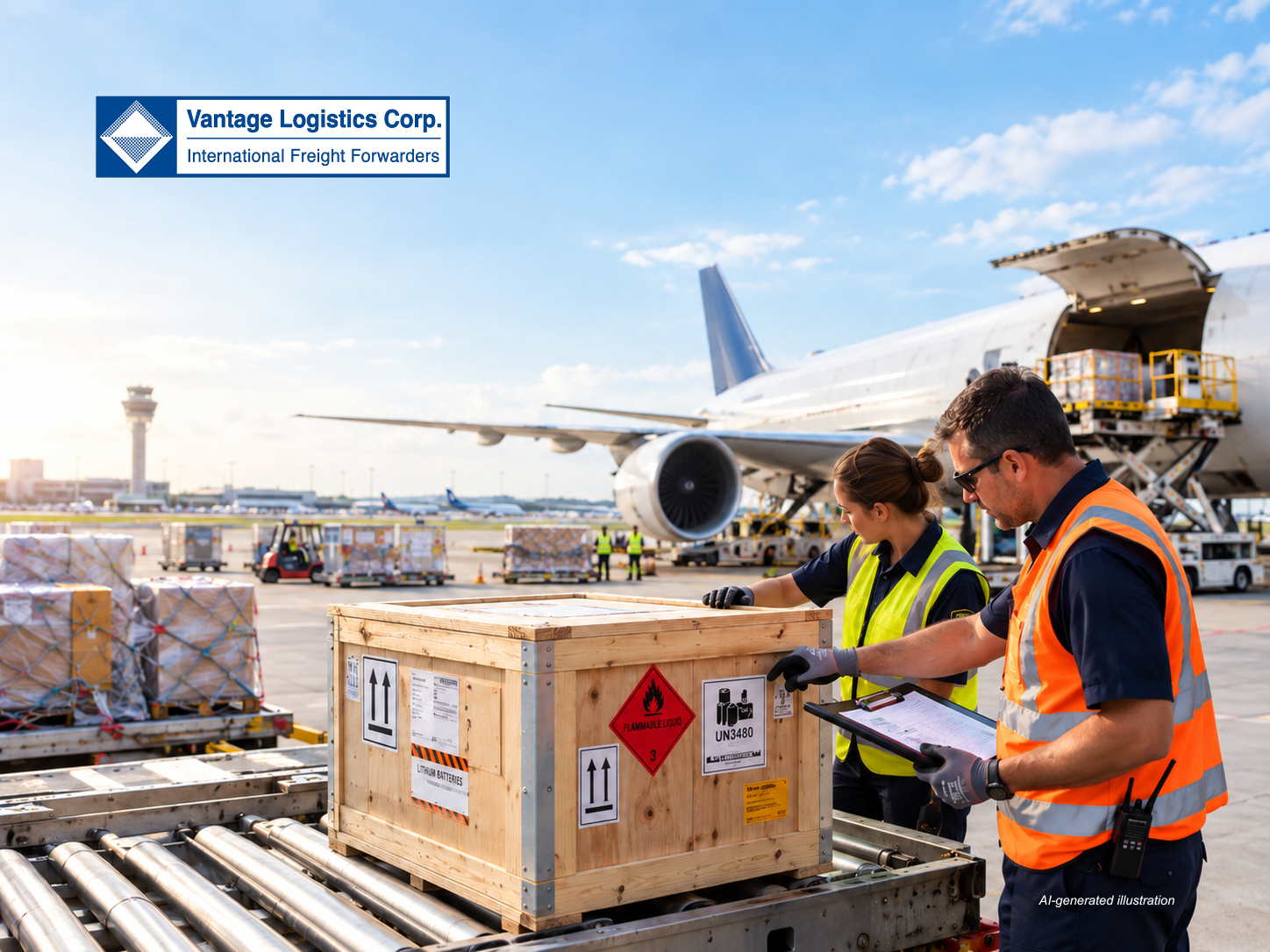
IATA is promoting a multi-layered control model for dangerous goods, emphasizing that risk identification, declaration, and control must be implemented early rather than relying solely on screening at the airport. According to IATA, airport security screening remains a vital layer of defense, but it cannot single-handedly address the risks posed by undeclared or hidden dangerous goods. Effective control requires seamless coordination among manufacturers, shippers, freight forwarders, airlines, ground handlers, and regulatory authorities across the entire supply chain. Risks Arising Before Cargo Reaches the Airport Dangerous goods transported by air must comply with stringent regulations concerning classification, packaging, marking, labeling, and documentation. However, risks typically arise when cargo is not properly identified, classified, or accurately declared during the initial stages of the supply chain. Key Notable Data Points: Approximately 80% of dangerous goods incidents reported to IATA in the first half of 2025 involved undeclared or hidden dangerous goods Lithium batteries, e-cigarettes, and aerosol cans are among the items most frequently detected in connection with declaration violations Early identification of risks provides stakeholders with additional opportunities to inspect, verify, and apply appropriate handling measures before cargo enters the air transportation system Multi-Layered Control Solutions Aligned with IATA’s Framework To minimize risks, IATA emphasizes shifting from a reactive inspection mechanism to proactive early management through the following measures: Enhanced Enforcement: Strengthening oversight by regulatory authorities and e-commerce platforms regarding product information Staff Training: Focusing on inspection and cargo identification competencies for intake teams at freight forwarding enterprises Data Sharing: Optimizing information flow among stakeholders to screen high-risk shipments before they are loaded onto aircraft Classification Challenges and the Role of Freight Forwarders The responsibility for accurately classifying dangerous goods rests with the shipper. Technical characteristics and compositions – particularly for products containing lithium batteries with varying configurations and quantities – must be determined at the planning stage. Nevertheless, freight forwarders remain a critical link in receiving information and conducting physical checks. Personnel trained in IATA DGR enable forwarders to recognize signs of undeclared or improperly declared dangerous goods while coordinating with shippers on packaging, labeling, and documentation requirements according to applicable regulations. Specialized Air Freight Solutions for Dangerous Goods at Vantage Logistics Amid rising compliance demands in international air transport, selecting a logistics partner with appropriate professional capabilities is essential for businesses to proactively manage risks and ensure supply chain continuity. Backed by our recognized credentials – IATA Code 3730023004 and IATA DGR Certificate #159783 – Vantage Logistics possesses the capability to support the transportation of high-scrutiny commodities via air freight. Beyond execution, we accompany customers from the initial stages of assessing cargo characteristics, consulting on compliance requirements, and preparing documentation, to coordinating with airlines and relevant parties to deploy suitable transport plans. This approach helps clients proactively meet international air transport standards while mitigating risks during transit. Contact Vantage Logistics to discuss your dangerous goods air freight requirements.   Contact Vantage Logistics for tailored transport solutions and competitive quotations. Please provide details on cargo type, market, origin, destination, and estimated timeline. Vantage Logistics Corp – South East Asia (S.E.A) Logistics Provider One-Stop Shop For Integrated Logistics Services Head Office Viet Nam – Suite 6.01, Floor 6th, Block A, RiverGate Residence, 151-155 Ben Van Don, Khanh Hoi Ward, HCMC, Viet Nam Branch Thailand, Laos, Cambodia, Malaysia, Indonesia, Singapore Contact Us Email in**@*****om.vn Hotline +84-909-026-261 Website https://vantage-logistics.com Send your shipment enquiry today and receive a tailored transport plan from the Vantage Logistics team....

06/10/2026

View More
1 2 3 … 23