RESOURCE

vlc-news-philippines-cancels-rice-import-permit-15102026

Market updates

Philippines Cancels Permit for Controversial 12,480-Metric-Ton Rice Shipment from Viet Nam

The Philippine Department of Agriculture (DA) said it had ordered the cancellation of the Sanitary and Phytosanitary Import Clearance (SPSIC) for a 12,480-metric-ton rice shipment from Viet Nam before the vessel arrived. The case involves reported discrepancies in rice specifications and an expired import contract, highlighting the risks that can arise when shipping schedules do not align with import requirements in the destination market. 1. Developments at the Port of Arrival According to the Philippine Department of Agriculture (DA) and the Philippine News Agency (PNA), the vessel MV Tay Son 2, carrying 12,480 metric tons of rice from Viet Nam, arrived at the Port of Davao on September 14, 2026. According to these sources, the vessel’s captain refused to submit the shipment for inspection by the Philippine Bureau of Plant Industry (BPI). On September 17, 2026, the vessel departed Davao before the matter had been resolved. Philippine authorities subsequently prevented the cargo from being unloaded at another location and brought the vessel to the Port of General Santos before ordering it to return to Davao for further handling. 2. Rice Specifications and Import Requirements The case involves two issues: reported discrepancies in rice specifications and the status of the import contract and permit. 2.1. Reported Discrepancy in Rice Specifications The importer, Planters Product, Inc. (PPI), reported a discrepancy between the purchase order and the specifications communicated for the shipment: Specifications under the purchase order: 25% broken rice Reported specifications for the shipment: 5% broken rice In agricultural trade, the percentage of broken grains is an important commercial specification. However, the discrepancy remains based on information reported by the importer and has not been confirmed by an official inspection, as the physical inspection process was not completed. 2.2. Expired Contract and Canceled Import Permit In addition to the rice specifications, the delivery timeline and the status of the import documentation were also highlighted by the DA: Estimated time of arrival (ETA): July 2026 Actual arrival: Mid-September 2026 According to the DA, the import contract had expired and the SPSIC had been canceled before the vessel arrived. The vessel’s arrival also coincided with the period when the Philippines was preparing for the wet-season rice harvest. According to published information, import policy during this period was also linked to efforts to limit downward pressure on domestic palay prices. Operational Note: Even when goods meet quality requirements, a shipment may still face customs clearance difficulties if it fails to meet import requirements or if the relevant permit is no longer valid. 3. Proposed Measures for Handling the Shipment According to published information, the Bureau of Customs of the Philippines (BOC) was still considering the final course of action for the shipment. The proposed measures included: Proposed Measure Proposing Authority / Status Return to the Country of Origin The BPI was reported to have recommended returning the shipment to Viet Nam. Seizure and Penalties The DA proposed considering seizure of the shipment and the application of penalties under relevant regulations, subject to the competent authority’s findings and decision. Final Decision The BOC was reviewing the official course of action for the shipment. 4. Conclusion The controversial rice shipment in the Philippines highlights how international trade depends not only on product quality and contractual terms but also on shipping schedules, the validity of import documentation, and regulatory requirements in the destination market. When these elements are no longer aligned, shipments already in transit may face unexpected complications during arrival and customs clearance. Vantage Logistics will continue to provide updates on notable developments in logistics, import-export activities, and international supply chains, offering businesses additional insight into factors that may affect global trade. Contact Vantage Logistics for tailored transport solutions and competitive quotations. Please provide details on cargo type, market, origin, destination, and estimated timeline.   Vantage Logistics Corp – South East Asia (S.E.A) Logistics Provider One-Stop Shop For Integrated Logistics Services Head Office Viet Nam – Suite 6.01, Floor 6th, Block A, RiverGate Residence, 151-155 Ben Van Don, Khanh Hoi Ward, HCMC, Viet Nam Branch Thailand, Laos, Cambodia, Malaysia, Indonesia, Singapore Contact Us Email in**@*****om.vn Hotline +84-909-026-261 Website https://vantage-logistics.com Send your shipment enquiry today and receive a tailored transport plan from the Vantage Logistics team.

15/10/2026

View More
vlc-news-asean-east-asia-trade-15102026

Market updates

ASEAN–East Asia Trade Reaches USD 1.4 Trillion, Up 13.7% in 2025

According to preliminary data from the ASEAN Secretariat, two-way trade between ASEAN and its three East Asian partners (China, Japan, and South Korea) reached USD 1.4 trillion in 2025, representing a 13.7% year-on-year increase. Notably, China–ASEAN trade continued its upward trajectory in the first seven months of 2026, underscoring a sustained expansion in cross-regional trade volumes worth monitoring. 1. Regional Trade Volume and Foreign Direct Investment (ASEAN+3) Trade and investment flows between ASEAN and its three East Asian partners maintain a substantial footprint. In 2025, Foreign Direct Investment (FDI) inflows from China, Japan, and South Korea into ASEAN totaled USD 44.8 billion. Key ASEAN–East Asia Trade & Investment Indicators Indicator Value Growth / Share ASEAN – (China, Japan, South Korea) Trade in 2025 USD 1.4 Trillion Up 13.7% vs 2024 FDI from 3 East Asian Partners into ASEAN in 2025 USD 44.8 Billion Accounted for 18.2% of total ASEAN FDI China – ASEAN Trade (First 7 Months of 2026) USD 744.41 Billion Up 24.7% year-on-year The scale of merchandise trade and investment capital highlights the vital economic linkage between East Asia and Southeast Asia. However, assessing actual freight demand requires a granular evaluation of specific commodity structures, export-import markets, and active transport corridors. 2. Direct Impacts on Transport Networks and Logistics Infrastructure Expanding trade volumes underscore the critical role of regional transport connections. Depending on industry-specific cargo characteristics and delivery requirements, flexible logistics solutions are being actively deployed: Intra-Asia Ocean Freight Connections: For multi-leg shipments, vessel schedule reliability, transit times, and feeder network connectivity are pivotal factors for supply chain managers. Major gateway hubs such as Shanghai, Ningbo, Busan, and Yokohama maintain dense feeder linkages with Southeast Asian ports within ocean carrier networks Integrated Logistics and Multimodal Transport: Depending on lead-time sensitivity, combining ocean freight, Cross-Border Trucking, and inland warehousing offers expanded routing options. Real-world operational efficiency hinges heavily on border crossing clearance times, transit schedules, and the coordination capability of the logistics operator Rules of Origin (C/O) and Customs Compliance: When leveraging Free Trade Agreements such as RCEP, AKFTA, or AJCEP, enterprises must accurately determine rules of origin and prepare compliant documentation to qualify for preferential tariffs. Duty exemption eligibility depends on the specific conditions of each product line and destination market 3. Monitoring Southeast Asian Trade Dynamics and Logistics Connectivity Expanding trade and investment flows reflect an increasingly integrated economic relationship between East Asia and Southeast Asia. This growth in cross-border trade creates momentum for expanding logistics connectivity, helping strengthen supply chain coverage across the region.   Contact Vantage Logistics for tailored transport solutions and competitive quotations. Please provide details on cargo type, market, origin, destination, and estimated timeline. Vantage Logistics Corp – South East Asia (S.E.A) Logistics Provider One-Stop Shop For Integrated Logistics Services Head Office Viet Nam – Suite 6.01, Floor 6th, Block A, RiverGate Residence, 151-155 Ben Van Don, Khanh Hoi Ward, HCMC, Viet Nam Branch Thailand, Laos, Cambodia, Malaysia, Indonesia, Singapore Contact Us Email in**@*****om.vn Hotline +84-909-026-261 Website https://vantage-logistics.com Send your shipment enquiry today and receive a tailored transport plan from the Vantage Logistics team.

15/10/2026

View More

Market updates

SINGAPORE STRENGTHENS PRODUCT SAFETY CONTROLS: WHAT VIETNAMESE EXPORTERS NEED TO KNOW

Singapore is strengthening its product safety controls through two key regulations: the Consumer Protection (Safety Requirements) Regulations (CPSR) and the Consumer Goods (Safety Requirements) Regulations (CGSR). For exporters, these requirements go beyond product compliance. They can also affect delivery schedules, logistics costs, and supply chain reliability. 1. Singapore Strengthens Product Safety Requirements According to information published by Vietnam’s Ministry of Industry and Trade, Singapore applies two main regulatory frameworks for product safety. – CPSR: Covers 33 categories of controlled goods, including electrical and electronic products, household appliances, and gas appliances. Products within scope must meet applicable safety requirements, complete registration, and carry the SAFETY Mark before being supplied or sold in Singapore. – CGSR: Covers general consumer goods such as toys, clothing, furniture, and sports equipment, which must comply with the relevant safety standards. Non-compliant products may be subject to sales restrictions or recalls. Businesses that violate applicable requirements may also face penalties. For exporters, checking compliance requirements before shipment is essential. Addressing documentation or registration issues early can help avoid costly adjustments after cargo has already left the port of origin. 2. Potential Impact on Southeast Asia’s Trade and Logistics Singapore plays an important role in Southeast Asia’s trade and logistics network. Tighter product safety controls may require exporters, importers, and distributors to review their procedures for placing goods on the Singapore market. Several potential risks deserve attention: – Delivery delays: Incomplete documentation or missing certificates may affect cargo acceptance and delivery schedules. – Additional logistics costs: Delays in resolving compliance issues may lead to storage, port handling, or additional transportation costs. – Disrupted distribution plans: Late deliveries can affect inventory planning, distribution schedules, and commitments to business partners. These requirements do not automatically apply across all ASEAN markets. However, they highlight the importance of understanding the specific regulations of each destination country when planning regional trade and distribution. 3. What Should Vietnamese Exporters Prepare? For Vietnamese businesses exporting to Singapore, compliance checks should take place before shipment arrangements are finalized. Exporters should determine whether their products fall under CPSR or CGSR, verify the applicable safety standards and registration requirements, and clarify responsibilities with their Singaporean importers. Documentation preparation should also be factored into the shipping schedule. If an issue is discovered only after cargo arrives at the destination port, businesses may need to manage several challenges simultaneously, including delivery delays, additional costs, and changes to distribution plans. A reliable shipping plan therefore involves more than selecting the right route or sailing schedule. It also requires anticipating potential obstacles before the cargo reaches its destination. 4. Managing Risks Through Early Planning Not every risk in international shipping can be eliminated, but many disruptions can be reduced through early preparation. Reviewing cargo information, documentation, shipping schedules, and destination requirements helps all parties make better-informed decisions. For shipments to Singapore, close coordination among exporters, importers, agents, and logistics providers helps maintain visibility over shipment readiness, address changes, and adjust plans when necessary. At Vantage Logistics, international transportation planning takes into account the practical requirements of each shipment and the coordination needed among relevant parties. This approach helps businesses manage potential disruptions and maintain better control over delivery schedules. As market requirements evolve, careful preparation does more than protect an individual shipment. It also helps businesses maintain reliable supply chains and build lasting partnerships across international markets.

15/10/2026

View More
vlc-news-vn-fruit-vegetable-exports

Market updates

Fruit and Vegetable Exports Surge as Cold Chain and Quarantine Pressures Intensif

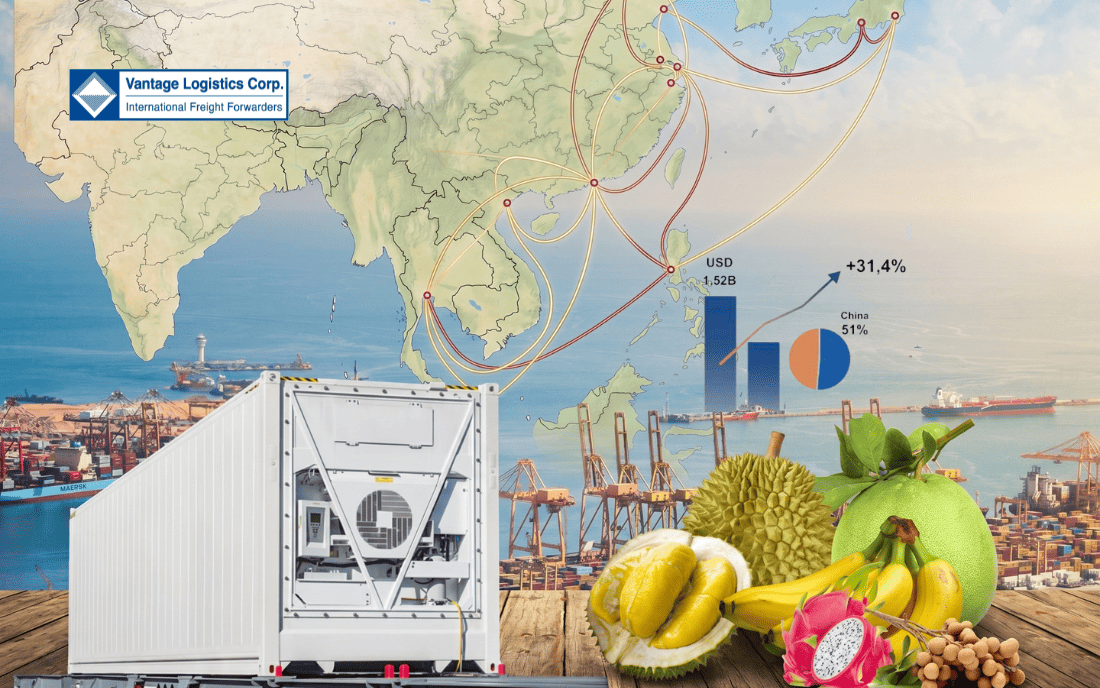
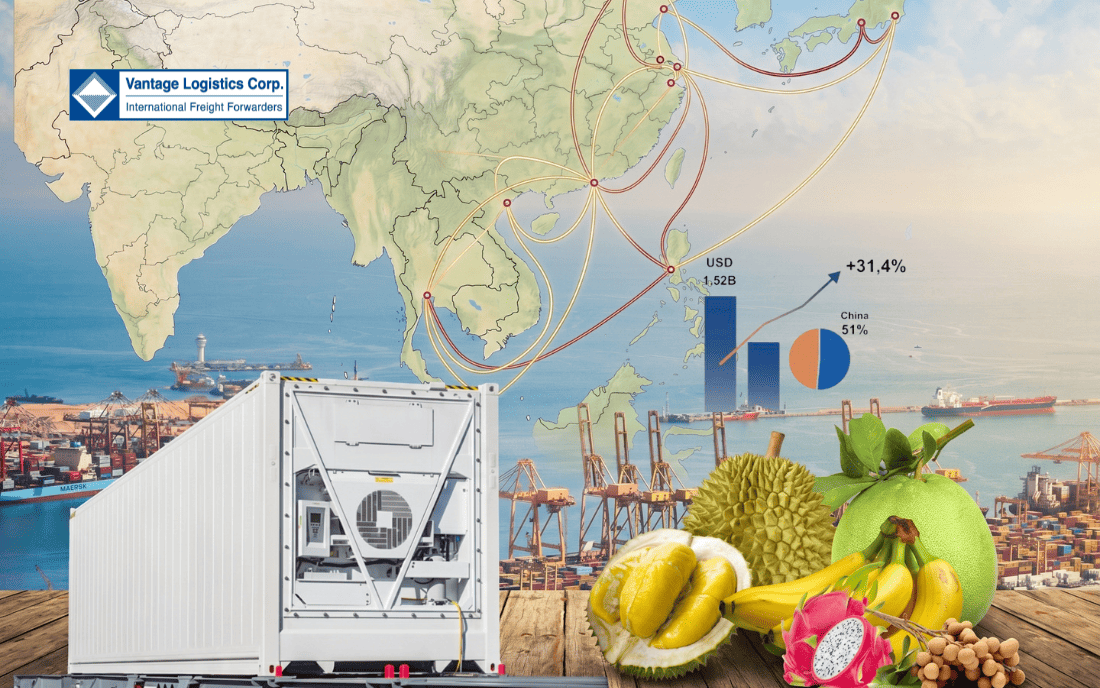
Viet Nam’s fruit and vegetable industry is entering a new growth phase, targeting USD 10 billion in export turnover in 2026. However, as official export channels continue to expand, pressure on cold chain infrastructure, quarantine compliance, and agricultural logistics systems is also rising rapidly. According to the General Department of Customs, Viet Nam’s fruit and vegetable exports reached USD 1.52 billion in Q1 2026, up 31.4% year-on-year. China remained the largest market with approximately USD 778 million, rising nearly 50% and accounting for 51% of the industry’s total export value. The United States ranked second with USD 130 million, up 16.4%, while South Korea reached USD 76.8 million and Japan recorded USD 58.4 million. Several markets posted strong growth, including Malaysia (+82.5%), Germany (+79.7%), the Netherlands (+51.6%), and Australia (+29.5%). This growth trend indicates that Viet Nam’s fruit and vegetable exports are no longer concentrated in only a few traditional destinations. Instead, exporters are expanding into new markets, particularly across Asia, supported by shorter transit times and more favourable geographical proximity. Official Export Channels Raise Cold Chain and Quarantine Requirements In 2026, China’s continued approval of official import channels for pomelos and lemons, together with the previously signed phytosanitary protocol for fresh jackfruit exports, is creating additional growth opportunities for Viet Nam’s fruit and vegetable sector. At the same time, official exports are introducing stricter requirements related to: Product traceability Phytosanitary compliance Temperature-controlled storage Packaging standards Customs clearance timelines As a result, logistics is becoming a direct component of export competitiveness rather than simply a transportation function. According to the Viet Nam Fruit and Vegetable Association, most Vietnamese agricultural exports are still concentrated in southern Chinese provinces, while northern China remains largely untapped. Expanding distribution deeper into the Chinese domestic market is expected to increase demand for long-haul cold chain transportation and more stable logistics corridors. Durian Continues to Drive Pressure on Agricultural Logistics Durian remains the largest growth driver within Viet Nam’s fruit and vegetable export sector. In the first two months of 2026 alone, durian exports reached approximately USD 146 million, up 177% year-on-year. Unlike many conventional agricultural products, durian is highly sensitive to transit time and storage conditions. This makes refrigerated containers, cross-docking cold storage facilities near border gates and ports, expedited customs clearance services, and fixed-schedule cross-border transport increasingly critical within the export supply chain. The period from June to October is forecast to be Viet Nam’s peak durian export season. According to the Viet Nam Fruit and Vegetable Association, fruit and vegetable exports in Q2 could increase by an additional 15–20%, with monthly export turnover expected to reach approximately USD 750–850 million during the peak harvest period. This also means pressure on refrigerated logistics systems is likely to intensify significantly during the second half of the year. Cold Storage Shortages and Post-Harvest Infrastructure Remain Cost Bottlenecks Despite rapid export growth, the fruit and vegetable sector continues to face major logistics infrastructure limitations. According to Vinafruit, shortages of cold storage facilities and integrated cold chain systems in farming regions are keeping logistics costs elevated while increasing post-harvest losses compared with competing countries in the region. In addition, domestic transportation costs have risen by approximately 30–40% due to fuel price volatility and higher logistics input costs. Beyond logistics challenges, importing markets are also tightening food safety and quality requirements. Several shipments of durian, dragon fruit, passion fruit, and chilli products have previously received warnings in markets such as the EU, Japan, and China due to technical standard or food safety violations. As a result, exporters are being pushed to invest more heavily in: Quality control systems Standardised packaging Preservation infrastructure Product traceability Integrated logistics operations from farming areas to border gates Agricultural Logistics Is Becoming More Specialised Alongside export growth, the structure of Viet Nam’s fruit and vegetable industry is also evolving as processed products gain a larger share of total exports. Companies are expanding investments in frozen products, dried fruit, and concentrated fruit juice to extend shelf life and increase export value. This trend is expected to drive further demand for: Specialised cold chain logistics Long-term cold storage facilities Refrigerated container transportation Logistics hubs near farming regions Multimodal transportation services for agricultural products As Viet Nam’s fruit and vegetable sector moves toward its USD 10 billion export target in 2026, cold chain capability and quality control are expected to remain decisive factors in determining exporters’ ability to expand into international markets.   Contact Vantage Logistics for tailored transport solutions and competitive quotations. Please provide details on cargo type, market, origin, destination, and estimated timeline. Vantage Logistics Corp – South East Asia (S.E.A) Logistics Provider One-Stop Shop For Integrated Logistics Services Head Office Viet Nam – Suite 6.01, Floor 6th, Block A, RiverGate Residence, 151-155 Ben Van Don, Khanh Hoi Ward, HCMC, Viet Nam Branch Thailand, Laos, Cambodia, Malaysia, Indonesia, Singapore Contact Us Email in**@*****om.vn Hotline +84-909-026-261 Website https://vantage-logistics.com Send your shipment enquiry today and receive a tailored transport plan from the Vantage Logistics team.....

11/05/2026

View More
vlc-news-vn-fruit-vegetable-exports-800-x-500-px-1-2-1

Market updates

Fruit and Vegetable Exports Surge as Cold Chain and Quarantine Pressures Intensify

Viet Nam’s fruit and vegetable industry is entering a new growth phase, targeting USD 10 billion in export turnover in 2026. However, as official export channels continue to expand, pressure on cold chain infrastructure, quarantine compliance, and agricultural logistics systems is also rising rapidly. According to the General Department of Customs, Viet Nam’s fruit and vegetable exports reached USD 1.52 billion in Q1 2026, up 31.4% year-on-year. China remained the largest market with approximately USD 778 million, rising nearly 50% and accounting for 51% of the industry’s total export value. The United States ranked second with USD 130 million, up 16.4%, while South Korea reached USD 76.8 million and Japan recorded USD 58.4 million. Several markets posted strong growth, including Malaysia (+82.5%), Germany (+79.7%), the Netherlands (+51.6%), and Australia (+29.5%). This growth trend indicates that Viet Nam’s fruit and vegetable exports are no longer concentrated in only a few traditional destinations. Instead, exporters are expanding into new markets, particularly across Asia, supported by shorter transit times and more favorable geographical proximity. Official Export Channels Raise Cold Chain and Quarantine Requirements In 2026, China’s continued approval of official import channels for pomelos and lemons, together with the previously signed phytosanitary protocol for fresh jackfruit exports, is creating additional growth opportunities for Viet Nam’s fruit and vegetable sector. At the same time, official exports are introducing stricter requirements related to: Product traceability Phytosanitary compliance Temperature-controlled storage Packaging standards Customs clearance timelines As a result, logistics is becoming a direct component of export competitiveness rather than simply a transportation function. According to the Viet Nam Fruit and Vegetable Association, most Vietnamese agricultural exports are still concentrated in southern Chinese provinces, while northern China remains largely untapped. Expanding distribution deeper into the Chinese domestic market is expected to increase demand for long-haul cold chain transportation and more stable logistics corridors. Durian Continues to Drive Pressure on Agricultural Logistics Durian remains the largest growth driver within Viet Nam’s fruit and vegetable export sector. In the first two months of 2026 alone, durian exports reached approximately USD 146 million, up 177% year-on-year. Unlike many conventional agricultural products, durian is highly sensitive to transit time and storage conditions. This makes refrigerated containers, cross-docking cold storage facilities near border gates and ports, expedited customs clearance services, and fixed-schedule cross-border transport increasingly critical within the export supply chain. The period from June to October is forecast to be Viet Nam’s peak durian export season. According to the Viet Nam Fruit and Vegetable Association, fruit and vegetable exports in Q2 could increase by an additional 15–20%, with monthly export turnover expected to reach approximately USD 750–850 million during the peak harvest period. This also means pressure on refrigerated logistics systems is likely to intensify significantly during the second half of the year. Cold Storage Shortages and Post-Harvest Infrastructure Remain Cost Bottlenecks Despite rapid export growth, the fruit and vegetable sector continues to face major logistics infrastructure limitations. According to Vinafruit, shortages of cold storage facilities and integrated cold chain systems in farming regions are keeping logistics costs elevated while increasing post-harvest losses compared with competing countries in the region. In addition, domestic transportation costs have risen by approximately 30–40% due to fuel price volatility and higher logistics input costs. Beyond logistics challenges, importing markets are also tightening food safety and quality requirements. Several shipments of durian, dragon fruit, passion fruit, and chili products have previously received warnings in markets such as the EU, Japan, and China due to technical standard or food safety violations. As a result, exporters are being pushed to invest more heavily in: Quality control systems Standardized packaging Preservation infrastructure Product traceability Integrated logistics operations from farming areas to border gates Agricultural Logistics Is Becoming More Specialized Alongside export growth, the structure of Viet Nam’s fruit and vegetable industry is also evolving as processed products gain a larger share of total exports. Companies are expanding investments in frozen products, dried fruit, and concentrated fruit juice to extend shelf life and increase export value. This trend is expected to drive further demand for: Specialized cold chain logistics Long-term cold storage facilities Refrigerated container transportation Logistics hubs near farming regions Multimodal transportation services for agricultural products As Viet Nam’s fruit and vegetable sector moves toward its USD 10 billion export target in 2026, cold chain capability and quality control are expected to remain decisive factors in determining exporters’ ability to expand into international markets.   Contact Vantage Logistics for tailored transport solutions and competitive quotations. Please provide details on cargo type, market, origin, destination, and estimated timeline. Vantage Logistics Corp – South East Asia (S.E.A) Logistics Provider One-Stop Shop For Integrated Logistics Services Head Office Viet Nam – Suite 6.01, Floor 6th, Block A, RiverGate Residence, 151-155 Ben Van Don, Khanh Hoi Ward, HCMC, Viet Nam Branch Thailand, Laos, Cambodia, Malaysia, Indonesia, Singapore Contact Us Email in**@*****om.vn Phone +84-28 382 67312 Hotline +84-909-026-261 Website https://vantage-logistics.com Send your shipment enquiry today and receive a tailored transport plan from the Vantage Logistics team....

11/05/2026

View More
vlc-news-vietnam-us-LNG

Market updates

Viet Nam – US LNG Cooperation Drives Growth in Energy Logistics Demand

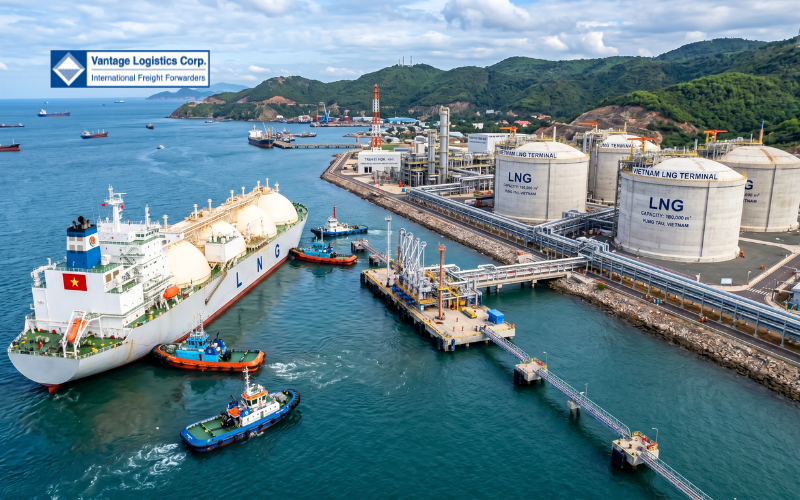
The expansion of LNG cooperation between Viet Nam and the United States is driving growing demand for port infrastructure, project cargo transportation, and logistics services supporting Viet Nam’s gas-to-power sector. As multiple LNG projects move forward, demand for industrial equipment transportation, oversized cargo handling, and multimodal logistics connectivity is expected to continue increasing in the coming years. Expanding Large-Scale Energy Cooperation During OTC 2026 in Houston, Viet Nam and the United States continued discussions to strengthen cooperation in LNG development and gas-fired power projects. Prior to the event, Viet Nam’s Ministry of Industry and Trade also held meetings with major US energy corporations to discuss LNG-to-power projects and advanced gas turbine technologies. LNG-to-Power Development Increases Demand for Project Cargo and Equipment Transportation Under the revised Power Development Plan VIII, Viet Nam aims to develop approximately 22.5 GW of LNG-fired power capacity by 2030 while importing more than 18 million tons of LNG annually to meet rising electricity demand. At the same time, Vietnamese enterprises have expanded cooperation with US energy companies including Cheniere Energy, ExxonMobil, ConocoPhillips, and Excelerate Energy to support LNG supply activities and related infrastructure investment. From a logistics perspective, the growth of LNG projects extends far beyond fuel imports. It is also generating substantial demand for the transportation of industrial equipment and technical infrastructure required for gas-fired power plant construction. Equipment such as gas turbines, storage tanks, steel structures, technical modules, and heavy industrial machinery often requires specialized transportation processes involving sea freight, inland transportation, and dedicated port operations to ensure project timelines are maintained. Opportunities for Port Infrastructure and Regional Supply Chains Most LNG projects in Viet Nam are currently planned in coastal provinces including Ba Ria – Vung Tau, Long An, Hai Phong, Binh Thuan, and Quang Ninh. This is expected to increase demand for deep-water ports, industrial storage facilities, and project cargo handling capabilities across key logistics hubs. During the construction phase of LNG infrastructure, imports of mechanical equipment, industrial materials, and construction-related cargo are also projected to rise alongside project implementation schedules. These cargo categories require close coordination between shipping lines, ports, inland transportation providers, and logistics operators to minimize disruptions and maintain construction progress. In addition to equipment transportation, multimodal connectivity between ports, industrial zones, and energy centers will become increasingly important as multiple LNG projects enter development phases simultaneously over the coming years. Energy Logistics Emerges as a High-Growth Sector As energy demand across Asia continues to rise, logistics services supporting LNG and gas-to-power projects are becoming one of the region’s notable growth segments. With LNG developments continuing to expand across Viet Nam, integrated logistics solutions will play an increasingly important role in supporting equipment transportation, infrastructure connectivity, and supply chain coordination throughout the energy sector. With experience in multimodal transportation, industrial cargo handling, and logistics connectivity across key port areas, Vantage Logistics is prepared to support large-scale energy projects – from technical equipment transportation to industrial supply chain coordination in Viet Nam. Learn more about Vantage Logistics’ industrial logistics and project cargo solutions: Featured Projects by Vantage Logistics Email: in**@*****om.vn Hotline: +84-909-026-261...

08/05/2026

View More
Vantage-Logistics-LogisticsDay-EN

Market updates

Ministry of Industry and Trade Officially Recognizes May 6 as Viet Nam Logistics Day

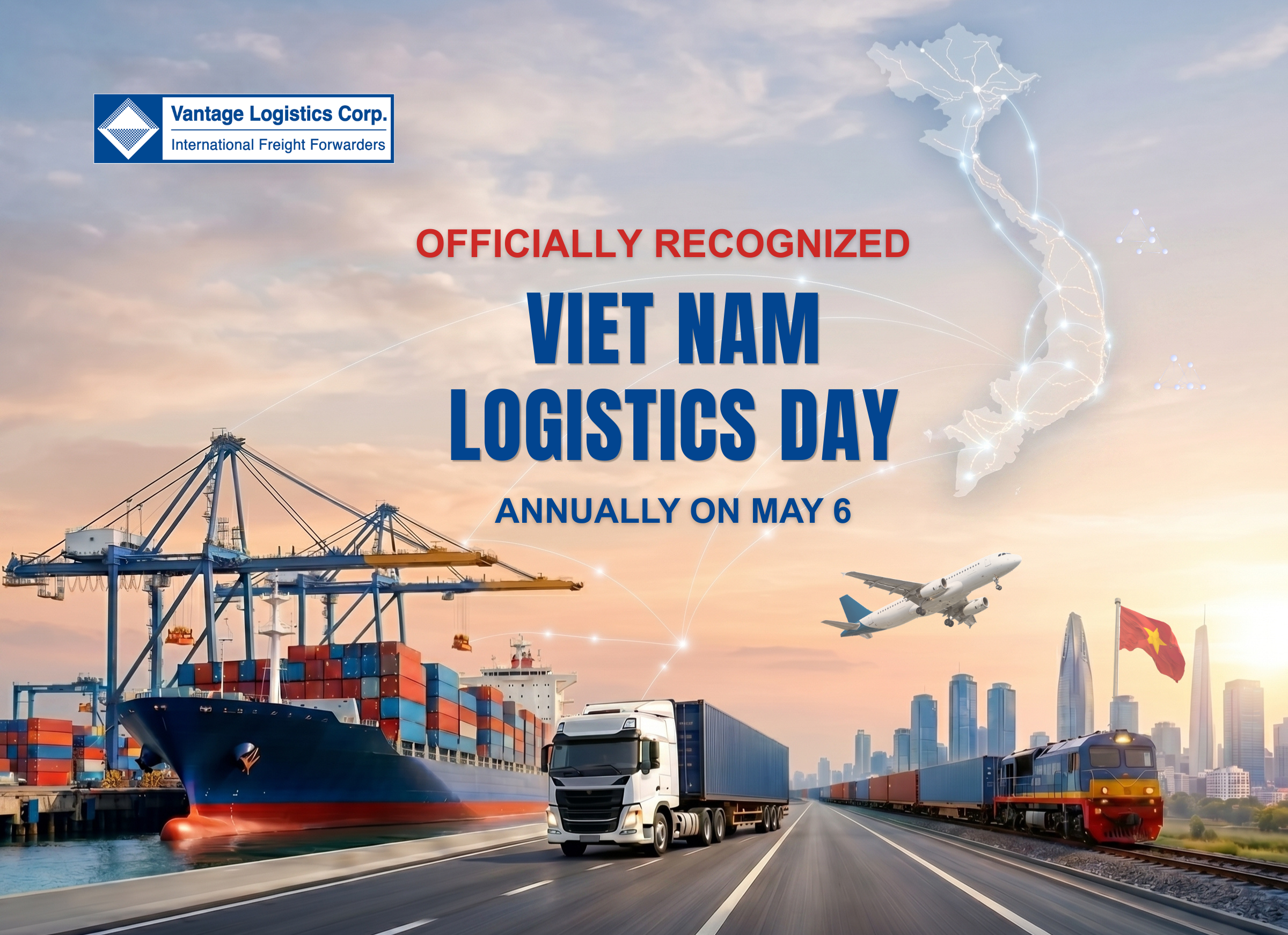
The Ministry of Industry and Trade has officially issued a decision recognizing May 6 each year as Viet Nam Logistics Day. The decision is expected to strengthen public awareness of the logistics sector’s role in supply chains, import-export activities and national economic growth. Official Decision from the Ministry of Industry and Trade On May 6, 2026, Deputy Minister of Industry and Trade Nguyen Sinh Nhat Tan signed Decision No. 1065/QĐ-BCT, officially designating May 6 each year as “Viet Nam Logistics Day”. In addition, the week including May 6 has also been recognized as “Viet Nam Logistics Week”, with activities to be organized flexibly depending on practical conditions each year. The decision is considered a significant milestone for Viet Nam’s logistics sector as trade, manufacturing and supply chain activities continue to expand in both scale and international connectivity. Historical Significance of May 6 The date carries historical significance linked to Decree No. 61 signed by President Ho Chi Minh on May 6, 1946 regarding the establishment of the Ministry of National Economy. Within the early organisational structure, the Supply Department was formed to oversee essential logistics and provisioning functions for the country. The selection of this milestone not only honors nearly 80 years of logistics development in Viet Nam but also reflects the continuous evolution and expansion of the sector over the decades. Vision from the Viet Nam Logistics Business Association (VLA) According to the Viet Nam Logistics Business Association (VLA), the recognition of Viet Nam Logistics Day aims to raise awareness among businesses and the wider community regarding the importance of logistics to manufacturing, trade and import-export activities. Mr Dao Trong Khoa, Chairman of VLA, stated that the occasion is not only intended to acknowledge the sector’s contributions, but also to create opportunities for businesses across the supply chain to strengthen connectivity, enhance cooperation and pursue more sustainable development in the years ahead. Logistics Continues to Play a Critical Role in Supply Chains As Viet Nam continues expanding its manufacturing and export capabilities while integrating more deeply into regional supply chains, logistics is playing an increasingly important role in maintaining cargo flows and optimizing trade activities. From international transportation and warehousing to customs clearance, cold chain logistics and e-commerce fulfilment, demand for integrated logistics solutions continues to rise alongside the country’s economic growth. The official recognition of Viet Nam Logistics Day is expected to strengthen collaboration among regulators, transport operators, shipping lines, warehousing providers and other stakeholders across the supply chain. At the same time, it creates opportunities to promote trade facilitation, workforce development and digital transformation throughout the logistics sector. As regional supply chains continue to evolve, logistics companies in Viet Nam are also accelerating investment in transportation capacity, warehousing systems and integrated supply chain solutions to meet growing trade demands. With this foundation, Viet Nam Logistics Day will become an annual gathering for the logistics community to reflect on its development journey while charting new directions for deeper integration and sustainable growth...

08/05/2026

View More
vlc-news-41-new-SPS

Market updates

41 New SPS Notifications: Export Markets Simultaneously Tighten Controls on ASEAN Agricultural Products

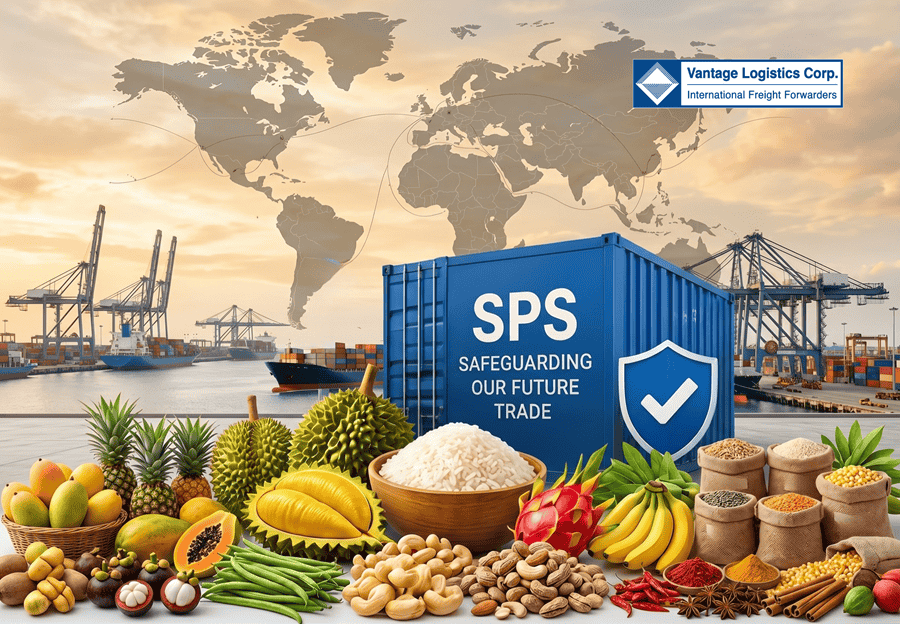
In late April 2026, the SPS Office of Vietnam recorded 41 new notifications from WTO members regarding sanitary and phytosanitary (SPS) measures. These updates are not limited to Viet Nam alone – they apply to all exporting countries. For ASEAN exporters such as Thailand, Indonesia, Malaysia, and the Philippines, the simultaneous tightening of SPS rules signals a clear trend: stricter controls on pesticide residues, animal and plant quarantine, and technical documentation. This development poses significant compliance challenges for the entire ASEAN agricultural supply chain and highlights the urgent need for cross‑border logistics solutions. 41 SPS Notifications According to the SPS Office of Viet Nam: 14 notifications are draft measures currently open for comments 27 notifications have already taken effect The new rules target key ASEAN export categories including vegetables, tropical fruits, tea, coffee, processed agricultural products, and animal feed. Export Markets Increasing SPS Controls  United States Authorities adjusted maximum residue limits (MRLs) for pesticides in food and feed. This directly affects beans, corn, rice, and tropical fruits – products exported widely across ASEAN. United Kingdom Post‑Brexit, the UK continues to refine its own import standards. Recent updates involve the active substance Prosulfocarb, with higher tolerance levels now permitted. This directly affects categories such as herbs and edible flowers – products exported by Viet Nam, Thailand, and Malaysia. China China introduced a list of 21 invasive species subject to strict border controls, including insects, mollusks, fish, and amphibians. This creates new compliance requirements for ASEAN exporters of animal‑origin goods. Taiwan Expanded regulations now cover 186 product combinations and 39 pesticide active substances. Key affected categories include herbs, tea, and coffee – major exports from Vietnam, Indonesia, and Laos. Ukraine Fresh or chilled durian has been added to Ukraine’s list of products under enhanced control. This directly impacts durian exporters from Viet Nam and Thailand. Rising Compliance Pressure for ASEAN Exporters The rapid introduction of SPS measures across multiple markets is intensifying compliance pressure on ASEAN exporters of food and agricultural products. Without timely updates, businesses risk: Higher inspection rates at borders Longer clearance times Increased container storage and warehousing costs Additional testing requirements Risk of goods being returned or re‑exported Recommendations for ASEAN Exporters To maintain and expand market share under tightening SPS rules, businesses should: Monitor SPS notifications from WTO and national SPS offices regularly Adjust pesticide use and residue control practices at the farm level Work closely with accredited testing agencies to prepare compliant documentation Update technical files and export certificates in line with the latest regulations Coordinate early with logistics and customs partners to minimize border risks SPS Trends Will Continue to Impact ASEAN Supply Chains The latest SPS notifications confirm that technical requirements for imported food and agricultural products are becoming increasingly strict worldwide. Proactive compliance and strong collaboration with cross‑border logistics partners will be essential to sustain export operations and mitigate risks in international trade.   Contact Vantage Logistics for tailored transport solutions and competitive quotations. Please provide details on cargo type, market, origin, destination, and estimated timeline. Vantage Logistics Corp – South East Asia (S.E.A) Logistics Provider One-Stop Shop For Integrated Logistics Services Head Office Viet Nam – Suite 6.01, Floor 6th, Block A, RiverGate Residence, 151-155 Ben Van Don, Khanh Hoi Ward, HCMC, Viet Nam Branch Thailand, Laos, Cambodia, Malaysia, Indonesia, Singapore Contact Us Email in**@*****om.vn Phone +84-28 382 67312 Hotline +84-909-026-261 Website https://vantage-logistics.com Send your shipment enquiry today and receive a tailored transport plan from the Vantage Logistics team....

07/05/2026

View More
vantage-logistics-annual-health-checkup-02

Vantage News

Vantage Logistics Organizes Annual Health Check-Up 2026

Placing our people at the heart of everything we do, the 2026 annual health check-up program at Vantage Logistics is more than just a workplace benefit; it is a meaningful partnership, empowering our team with the physical resilience to grow together. In May 2026, Vantage Logistics rolled out its annual health screenings for nearly 350 personnel across all offices and branches nationwide, in collaboration with reputable medical centers in Ho Chi Minh City, Ha Noi, Da Nang and other key nationwide. This annual health event reflects the Management’s deep care for the team – those who dedicate themselves day and night to the company’s shared development. The leadership at Vantage Logistics firmly believes that a healthy individual is the foundation of a happy family, and a resilient team member paves the way for a thriving, cohesive enterprise. At the medical centers, Vantage Logistics personnel undergo comprehensive, specialized examinations, including general check-ups, laboratory testing, diagnostic imaging, and advanced screenings. This structured process allows each member to clearly understand their physical well-being and proactively adopt healthier lifestyles. Notably, to maximize convenience and save time, laboratory sampling is also flexibly conducted directly at the offices, receiving enthusiastic participation from the entire team. In the logistics sector – where continuous operational intensity and seamless coordination across multiple departments are vital – maintaining the health and stability of the team plays an essential role in service quality and operational efficiency. Therefore, beyond periodic medical care, Vantage Logistics actively invests in the mental well-being and physical fitness of its workforce. Sports activities and running challenges are organized regularly, encouraging a healthy lifestyle while fostering strong team spirit and solidarity. This comprehensive combination of medical care and physical fitness initiatives is a powerful testament to the corporate culture at Vantage Logistics: always putting people at the center and driving towards sustainable development....

07/05/2026

View More
vlc-news-Intra-Asia-Trade-2026

Market updates

Intra-Asia Trade 2026: Opportunities for Logistics & Supply Chains

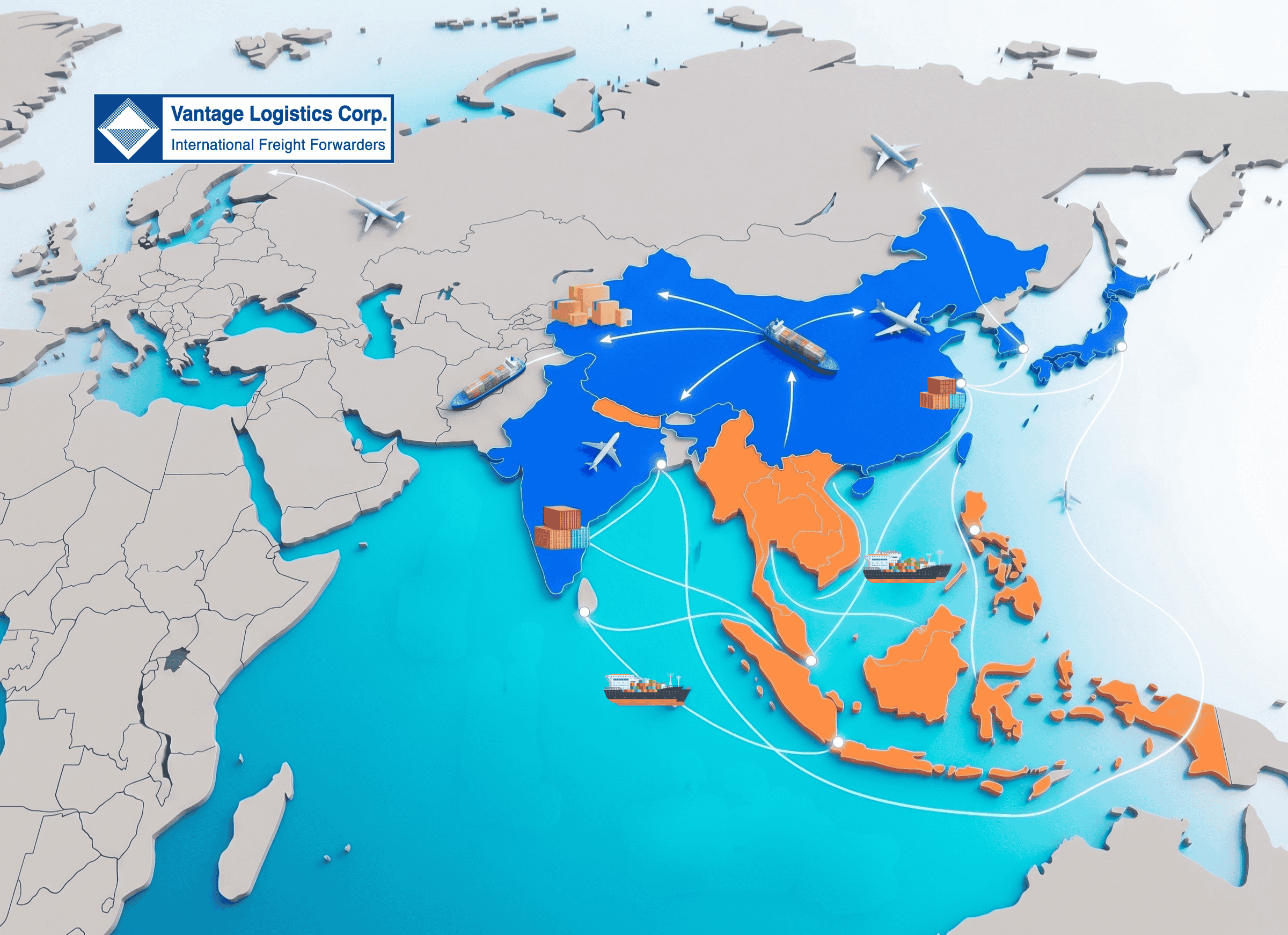
Intra-Asia Trade on the Rise: Regional Logistics Enter a New Phase Against the backdrop of global trade volatility and weakening external demand, Asia is restructuring toward stronger Intra-regional linkages. This shift is not only changing the nature of regional trade but also reshaping the logistics system – from transport routes to business operating models. A clear illustration is that Intra-Asia trade has emerged as a key growth driver. According to Asia House, bilateral trade between China and ASEAN surpassed China–U.S. trade as early as 2019 and has continued to expand, with two-way trade reaching about USD 982 billion in 2024. This reflects the growing interdependence within the region At the same time, the foundation of Intra-regional economic growth remains stable. In 2024–2025, many Asian economies recorded growth rates around 5%–6%. Viet Nam and India stood out, while the Philippines, Indonesia, and Malaysia maintained growth near 5%. China eased slightly from 5.0% to 4.8%. In contrast, Thailand, South Korea, and Japan grew more modestly, ranging from 0.9% to 2.5%. Looking ahead to 2026, forecasts suggest this trend will continue: Viet Nam is expected to sustain around 6.3%, India 6.5%, the Philippines 5.8%, Indonesia 5.0%, Malaysia 4.8%, and China declining further to 4.6%. Larger economies such as Japan and South Korea are projected to remain at modest levels, 0.9% and 1.8% respectively. This indicates that growth is no longer driven primarily by exports outside the region. Asian economies are becoming more interconnected and self-reliant, gradually shifting from the “world’s factory” to a closed-loop ecosystem of production and consumption – while simultaneously generating rising demand for Intra-regional logistics. Trade agreements strengthen regional integration The expansion of intra-Asia trade is supported by increasingly structured economic cooperation frameworks. The Regional Comprehensive Economic Partnership (RCEP) has played a key role in reducing trade barriers, simplifying rules of origin, and facilitating the movement of goods across member economies. In parallel, the upgraded ASEAN–China Free Trade Agreement (ACFTA 3.0) expands cooperation into new areas, including the digital economy, supply chain integration, and consumer protection. The ASEAN Digital Economy Framework Agreement (DEFA), expected to be finalized in 2026, will further accelerate integration by enabling a unified digital market across the region. ASEAN’s digital economy is projected to reach USD 2 trillion by 2030 if implementation progresses as planned. These developments are laying the foundation for a more integrated regional trade ecosystem, where goods, data, and capital move with greater efficiency. Businesses restructure supply chains towards regional models Alongside policy shifts, businesses are actively adjusting their strategies to align with the evolving landscape. Previously, supply chains were designed primarily for cost efficiency, with production concentrated in a single location and goods shipped across long distances. However, trade volatility and geopolitical risks have exposed the limitations of this model. Companies are now shifting towards: Multi-country production within the region Shorter transport distances Stronger regional partnerships This transition enhances resilience and enables faster response to market changes. That said, the shift is not uniform. China continues to play a central role due to its scale, technological capabilities, and established industrial ecosystem. Rather than full relocation, the prevailing model is evolving into a multi-hub network combining China and ASEAN markets. Explore Vantage Logistics’ Intra-Asia transport solutions....

06/05/2026

View More
vlc-news-lien-chieu-port-in-da-nang

Market updates

Lien Chieu container port breaks ground with investment exceeding VND 45 trillion in Da Nang

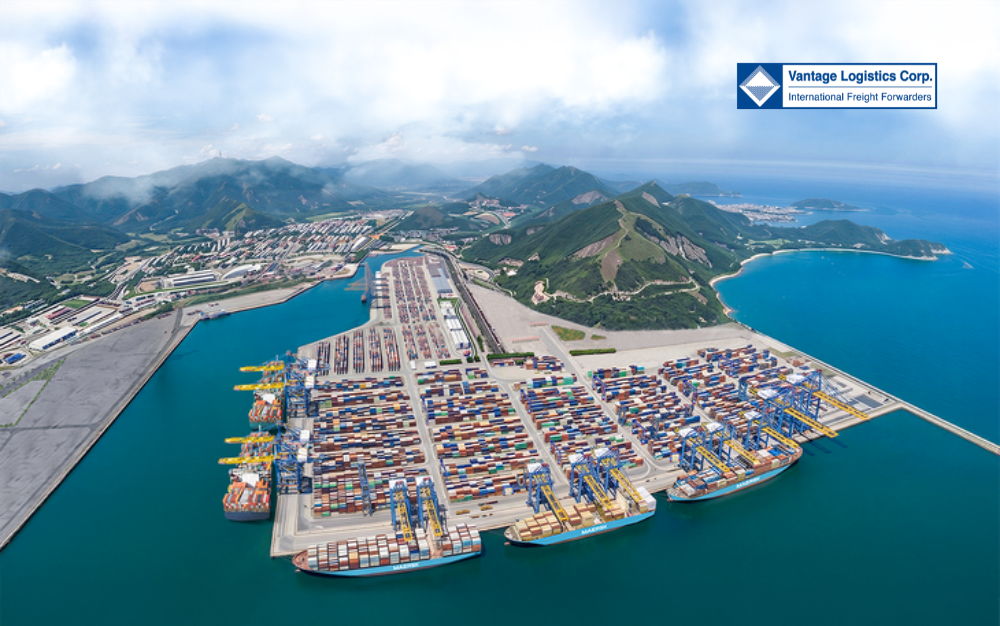
The Lien Chieu container port project in Da Nang has officially commenced, with total investment exceeding VND 45 trillion. Once operational, the deep-sea port will expand vessel handling capacity in Central Viet Nam, enabling more direct shipping routes and reducing reliance on transshipment through other regions. Fragmented port infrastructure in Central Viet Nam For years, Central Viet Nam has lacked a deep-sea port capable of handling large container vessels and operating as a true international gateway. Export and import activities remain constrained by: Tien Sa Port, with limitations in depth and expansion capacity Dependence on transshipment via northern and southern ports Extended transport routes, increasing cost per unit of cargo These factors directly affect businesses in Central Viet Nam, the Central Highlands, and neighboring areas where transit time and logistics cost control are critical. Design Perspective of the Lien Chieu Port Project Shift towards deep-sea port development The development of Lien Chieu port aligns with broader logistics trends: Increased capacity to accommodate larger vessels Reduced dependence on transshipment Improved cost efficiency through scale According to planning orientation, Lien Chieu is positioned as a major container port in Central Viet Nam, designed to handle high-capacity vessels and significant cargo throughput annually. Strengthening Central Viet Nam – China and ASEAN connectivity Once operational, Lien Chieu port will support the development of new transport routes: Domestic and regional connections: Central Viet Nam – Central Highlands Coastal industrial zones in Central Viet Nam International connections: Central Viet Nam – Southern China routes Viet Nam – Laos – Thailand transport corridors These routes enable: Shorter transport distances compared to routing via southern ports Fewer transshipment stages More stable delivery schedules This is particularly relevant for cargo segments with tight cost and lead time requirements, including agriculture, raw materials, and manufactured goods. Shaping a new logistics hub in Central Viet Nam Lien Chieu port will function as a key interface between maritime transport and regional economic corridors. Once operational, it will: Attract direct international shipping services Reduce pressure on existing ports Support the development of logistics centers and regional transport networks This provides businesses in Central Viet Nam with greater flexibility in port selection and supply chain design. Businesses operating in Central Viet Nam or across ASEAN corridors should begin preparing transport strategies now to benefit from the upcoming infrastructure. Partner with Vantage Logistics to stay ahead of developments at Lien Chieu Port and plan optimized logistics solutions in advance....

05/05/2026

View More
vlc-news-EVFTA-2026

Market updates

EVFTA 2026: New Rules of Origin – Essential Updates for Businesses

Starting May 10, 2026, Circular 14/2026/TT-BCT will officially replace the previous regulatory framework regarding rules of origin within the EVFTA. These updates focus on three primary areas: updating the HS 2022 code system, expanding the Registered Exporter (REX) system, and adding specific conditions for the cumulation of origin. These adjustments directly impact how businesses determine origin, structure supply chains, and prepare documentation to qualify for preferential tariffs when exporting to the EU. The Importance of the 2026 EVFTA Origin Updates The EVFTA has been in effect since 2020, with rules of origin previously governed by Circular 11/2020/TT-BCT. Following years of implementation, several practical factors have evolved: The Harmonized System (HS) nomenclature has transitioned to the 2022 version Regional supply chains have undergone significant shifts There is a growing trend toward diversifying raw material sourcing within the region. In response, the Ministry of Industry and Trade issued Circular 14/2026/TT-BCT to synchronize these new factors and standardize the application of origin rules according to current trade realities. 3 Key Changes in EVFTA 2026 Rules of Origin Controlled Expansion of Origin Cumulation The new regulations allow businesses to consider using materials from certain partner countries, provided they meet specific requirements regarding international commitments and administrative cooperation with the EU. This opens opportunities to: Diversify raw material supply chains. Reduce dependence on a single market. Optimize input costs while maintaining originating status. However, businesses must carefully evaluate each specific case to ensure full compliance with the updated criteria. Expansion of the Registered Exporter (REX) System Under the new provisions: For shipments valued at 6,000 EUR or less: Exporters may self-certify origin without REX registration. For higher-value shipments: Businesses must register with the REX system to continue using the self-certification mechanism. Key Impacts: Reduced document processing time. Decreased reliance on traditional Certificate of Origin (C/O) issuance procedures. Increased autonomy in export operations. Application of the HS 2022 System All Product Specific Rules (PSR) have been rebuilt based on the HS 2022 version. Points to note: Some commodity codes have changed classifications. Goods descriptions may differ from the HS 2017 version. Accompanying origin criteria for specific items may have changed. Failure to update timely may lead to incorrect origin declarations, resulting in the denial of preferential rates (GSP/EVFTA) and the application of higher Most-Favored-Nation (MFN) tax rates. The Role of Logistics in Maintaining Valid Origin Rules of origin extend beyond the production phase; they are intrinsically linked to the movement of goods. To comply with the Non-alteration Rule, businesses must ensure: Goods are not processed or altered in a third country. Goods remain under constant customs supervision. Goods do not enter domestic circulation in any transit country. This requires: Transparent transportation records. Controlled transit warehousing processes. End-to-end documentation from the point of export to the point of entry. Furthermore, EU customs authorities reserve the right to conduct post-clearance audits. Businesses must archive origin-related records for the minimum required period and be ready to provide them upon request. Risks of Delayed Compliance with Circular 14/2026/TT-BCT Delaying adjustments to meet the new Circular can lead to: Rejection of C/O or self-certification documents. Ineligibility for EVFTA preferential tax rates. Back-tax collection after goods have been cleared. Supply chain disruptions due to document reprocessing. In the highly competitive EU market, origin errors are not just compliance issues – they directly impact profit margins. Priority Tasks Before May 10, 2026 Businesses should immediately implement the following steps: Review all HS codes according to the 2022 version Cross-reference origin criteria for each specific product category Re-evaluate current raw material sources Register for the REX system if necessary Standardize record-keeping procedures for origin documentation Audit transit logistics processes The new Circular is more than a technical update; it is a critical change affecting your ability to leverage EVFTA tariff preferences. Early preparation will reduce compliance risks and maintain your competitive edge in the EU market. Contact Vantage Logistics today for a consultation on reviewing export records and C/O processes according to the new regulations....

05/05/2026

View More
1 … 16 17 18 19 20 … 43