RESOURCE

Vantage News

SOUTH–SOUTH TRADE OPENS NEW LOGISTICS CORRIDORS

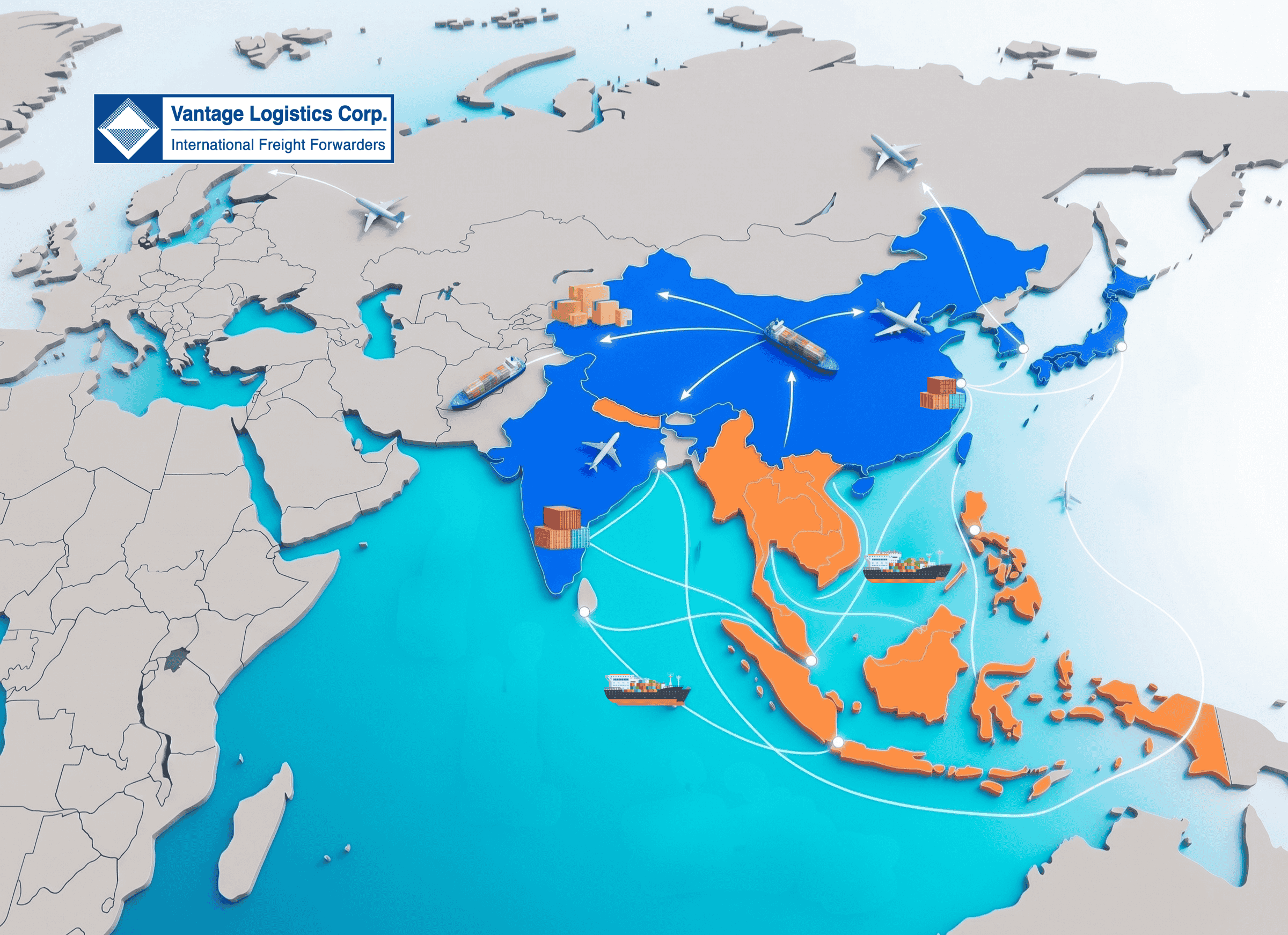
South–South Trade Opens New Logistics Corridors Global trade is witnessing stronger connections among developing economies. Rather than relying primarily on traditional markets such as the United States and Europe, more countries are expanding trade relations with India, the Middle East, Africa, and Southeast Asia. This shift in South–South trade is creating new import-export opportunities while encouraging the development of logistics corridors and more diversified supply chains. South–South Trade Is Reshaping Global Logistics Networks South–South trade refers to commercial exchanges between developing economies, including countries across Asia, Africa, the Middle East, and Latin America. According to UNCTAD data cited by Vietnam Logistics Review, South–South trade reached approximately USD 7.2 trillion in 2025, representing a 17.2% increase compared to 2024 and accounting for around 28% of global merchandise trade. This growth reflects efforts to diversify export markets and reduce dependence on traditional trading partners. Three emerging logistics corridors are gaining attention: ASEAN – India: Growing demand for transporting machinery, electronics, raw materials, and industrial goods. ASEAN – Middle East: Expanding opportunities for transshipment, bonded warehousing, distribution, and re-export activities, particularly through the UAE. ASEAN – Africa: New export opportunities, although infrastructure limitations, customs procedures, and international payment risks remain significant challenges. However, expanding into new markets also requires supply chains to adapt to different transportation routes, regulations, and delivery conditions. Southeast Asia Gains New Logistics Opportunities Located along major international shipping routes, Southeast Asia plays an important role in connecting manufacturing centers with emerging consumer markets. The expansion of South–South trade could increase demand for ocean freight, air freight, warehousing, and cross-border logistics services. Businesses across the region may also gain greater access to supply chains connecting ASEAN with India, the Middle East, and Africa. Nevertheless, differences in customs regulations, infrastructure capacity, and transshipment costs remain important considerations. Geopolitical developments and disruptions to international shipping schedules may also affect delivery times and transportation expenses. As a result, multimodal transportation and effective supply chain management will become increasingly important for Southeast Asia’s logistics industry. Vietnam Expands Trade Opportunities in Emerging Markets For Vietnam, the growth of South–South trade offers opportunities to diversify trading partners and develop new international transportation routes. In 2025, bilateral trade between Vietnam and India reached USD 16.46 billion, up 10.5% year-on-year. Meanwhile, Vietnam–UAE trade exceeded USD 6.5 billion. The Comprehensive Economic Partnership Agreement (CEPA), which took effect on February 3, 2026, provides additional opportunities for Vietnamese businesses to access Middle Eastern markets. Alongside these opportunities, Vietnamese importers and exporters need to carefully evaluate transportation routes, transshipment ports, and logistics partners. Total logistics costs extend beyond ocean freight rates, covering warehousing, customs clearance, inland transportation, and additional expenses caused by schedule changes. Logistics Solutions Adapt to Emerging Trade Corridors As international trade networks expand, transportation planning increasingly requires an end-to-end approach rather than focusing on individual shipping stages. Integrating ocean freight, air freight, inland transportation, customs brokerage, and cargo management can help businesses maintain greater control over delivery schedules and logistics costs. With experience in international freight forwarding, project logistics, and cross-border transportation across Southeast Asia, Vantage Logistics focuses on transportation arrangements tailored to cargo characteristics, shipping routes, and delivery requirements. Its international partner network and multimodal coordination capabilities provide a foundation for managing complex shipments and maintaining supply chain continuity. As new logistics corridors continue to emerge, selecting suitable transportation solutions from the outset will become increasingly important for businesses seeking to manage risks, control costs, and capture opportunities in international trade. Contact Vantage Logistics for tailored transport solutions and competitive quotations. Please provide details on cargo type, market, origin, destination, and estimated timeline.   Vantage Logistics Corp – South East Asia (S.E.A) Logistics Provider One-Stop Shop For Integrated Logistics Services Head Office Viet Nam – Suite 6.01, Floor 6th, Block A, RiverGate Residence, 151-155 Ben Van Don, Khanh Hoi Ward, HCMC, Viet Nam Branch Thailand, Laos, Cambodia, Malaysia, Indonesia, Singapore Contact Us Email in**@*****om.vn Hotline +84-909-026-261 Website https://vantage-logistics.com   Send your shipment enquiry today and receive a tailored transport plan from the Vantage Logistics team.

19/10/2026

View More
vlc-news-asean-rice-market-18102026

Market updates

ASEAN Rice Market Divergence: Shifting Import Demand and Supply Policies

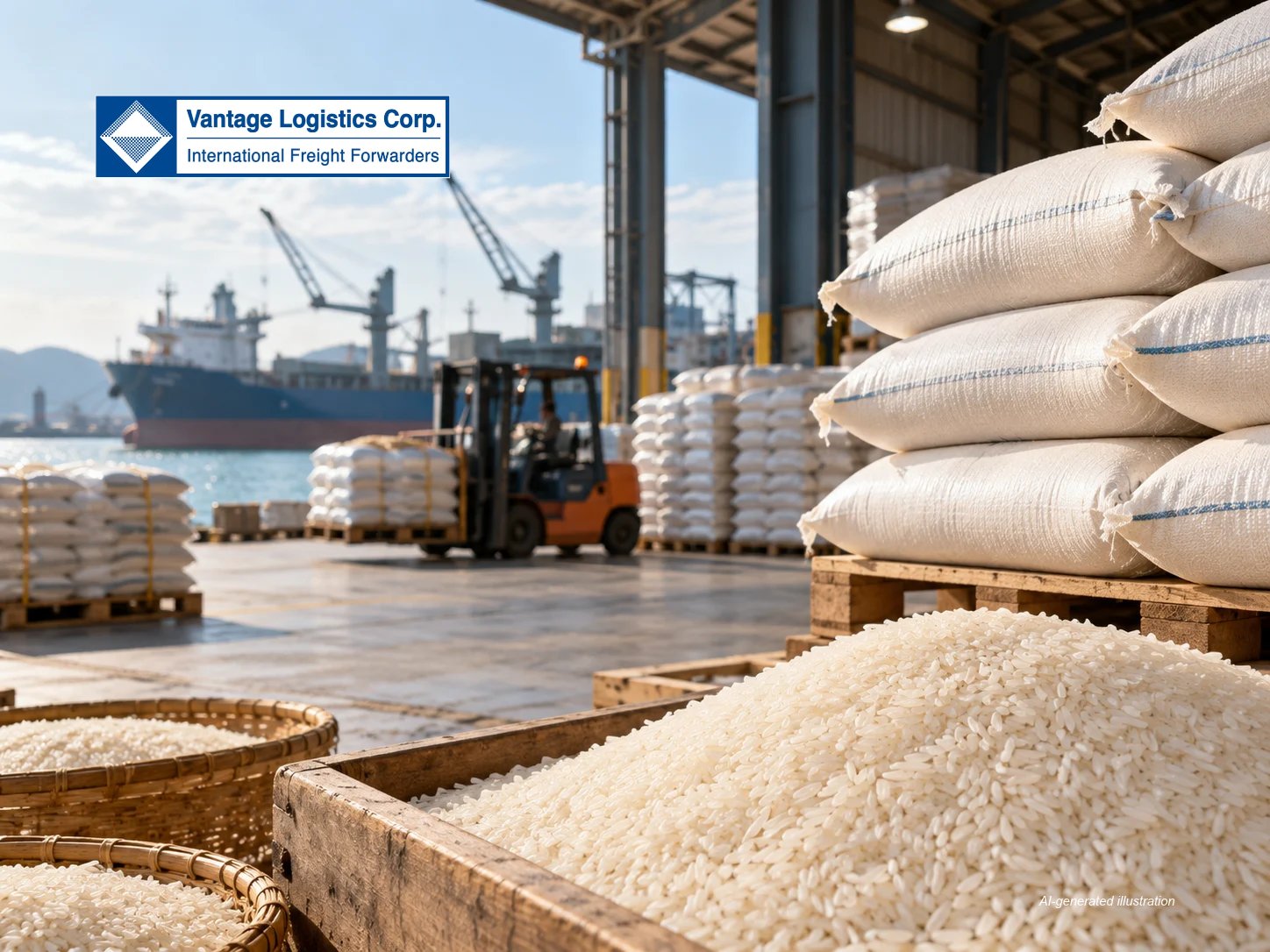
The Southeast Asian rice market is exhibiting distinct regional disparities in import policies and national supply security strategies. While the Philippines continues to import high volumes, Indonesia is prioritizing domestic production. On the export front, Viet Nam faces downward pressure on export values, while Thailand, Cambodia, and Myanmar remain key market supplies to watch within the regional trade landscape. These developments reflect evolving import demands, intensified supply competition, and key factors impacting rice transport dynamics across ASEAN. 1. The Philippines: High Import Demand and Diversifying Supply Sources The Philippines remains a primary rice import market in Southeast Asia. National food security imperatives, coupled with weather risks affecting domestic yields, continue to shape the country’s import policy. Imports Exceed Full-Year 2025 Volume: As of September 24, 2026, the Philippines imported approximately 3.98 million metric tons of rice, surpassing the total 3.39 million metric tons recorded in 2025. The Philippine Department of Agriculture confirmed ongoing imports throughout 2026 to secure reserves against El Niño-related production risks Planned U.S. Rice Purchases starting 2027: A Memorandum of Understanding (MOU) between USA Rice and the Philippine Rice Industry Stakeholders Movement (PRISM) targets an initial purchase of 100,000 metric tons of U.S. rice in 2027, scaling up to 200,000 metric tons annually from 2028 onward 2. Indonesia: Prioritizing Domestic Supply In contrast to the Philippines, Indonesia is prioritizing food self-sufficiency and reliance on domestic supply. In August 2026, the Indonesian Ministry of Agriculture stated that the country has no immediate plans for rice imports in 2026, citing increased domestic output. This policy shift underscores that import demand across ASEAN is far from uniform. While the Philippines relies heavily on international sources to maintain strategic reserves, Indonesia remains focused on domestic supply fulfillment. 3. Viet Nam: Export Value Declines Faster Than Volume In the first nine months of 2026, Viet Nam exported approximately 6.4 million metric tons of rice, generating USD 3.11 billion. The 10.9% drop in export value outpaced the 6.1% contraction in volume, driven by a 5.1% year-on-year decline in average export prices. Although the Philippines remains Vietnam’s largest export destination, a 16.8% decrease in export value to this market highlights the need for exporters to closely monitor local demand and transaction pricing. Conversely, Vietnamese rice exports to China experienced a strong surge, rising 76% in value. 4. Thailand, Cambodia, and Myanmar: Supply Markets to Watch Thailand: Thai rice price benchmarks (FOB 5% broken white rice at USD 489/ton; 100% Grade B white rice at USD 495/ton) offer clear indicators of regional price competition. However, point-in-time FOB prices alone do not determine long-term market trends or Vietnam’s competitive edge Cambodia & Myanmar: In the first half of 2026, Cambodia exported 630,319 metric tons of milled rice valued at over USD 367 million across 64 destinations, alongside more than 2.77 million metric tons of paddy rice. Export metrics from both Cambodia and Myanmar reaffirm their growing importance in regional supply Conclusion & Logistics Outlook The ASEAN rice market displays clear divergence across import demands, supply policies, and export outcomes. For logistics supply chains, these shifts highlight the need to closely track Intra-Asia trade flows, freight rate movements (bulk and container shipping), and trade policy updates. Specific impacts on trade routes will depend on actual cargo volumes and shipping terms (FOB, CIF/CFR). Vantage Logistics stands ready to partner with regional and international stakeholders to optimize transport solutions and navigate supply chain risks across Southeast Asia.   Contact Vantage Logistics for tailored transport solutions and competitive quotations. Please provide details on cargo type, market, origin, destination, and estimated timeline. Vantage Logistics Corp – South East Asia (S.E.A) Logistics Provider One-Stop Shop For Integrated Logistics Services Head Office Viet Nam – Suite 6.01, Floor 6th, Block A, RiverGate Residence, 151-155 Ben Van Don, Khanh Hoi Ward, HCMC, Viet Nam Branch Thailand, Laos, Cambodia, Malaysia, Indonesia, Singapore Contact Us Email in**@*****om.vn Hotline +84-909-026-261 Website Send your shipment enquiry today and receive a tailored transport plan from the Vantage Logistics team.

18/10/2026

View More
vlc-news-DG-logistics-solutions-18102026

Vantage News

VANTAGE LOGISTICS – INTERNATIONAL-STANDARD DANGEROUS GOODS (DG) LOGISTICS SOLUTIONS

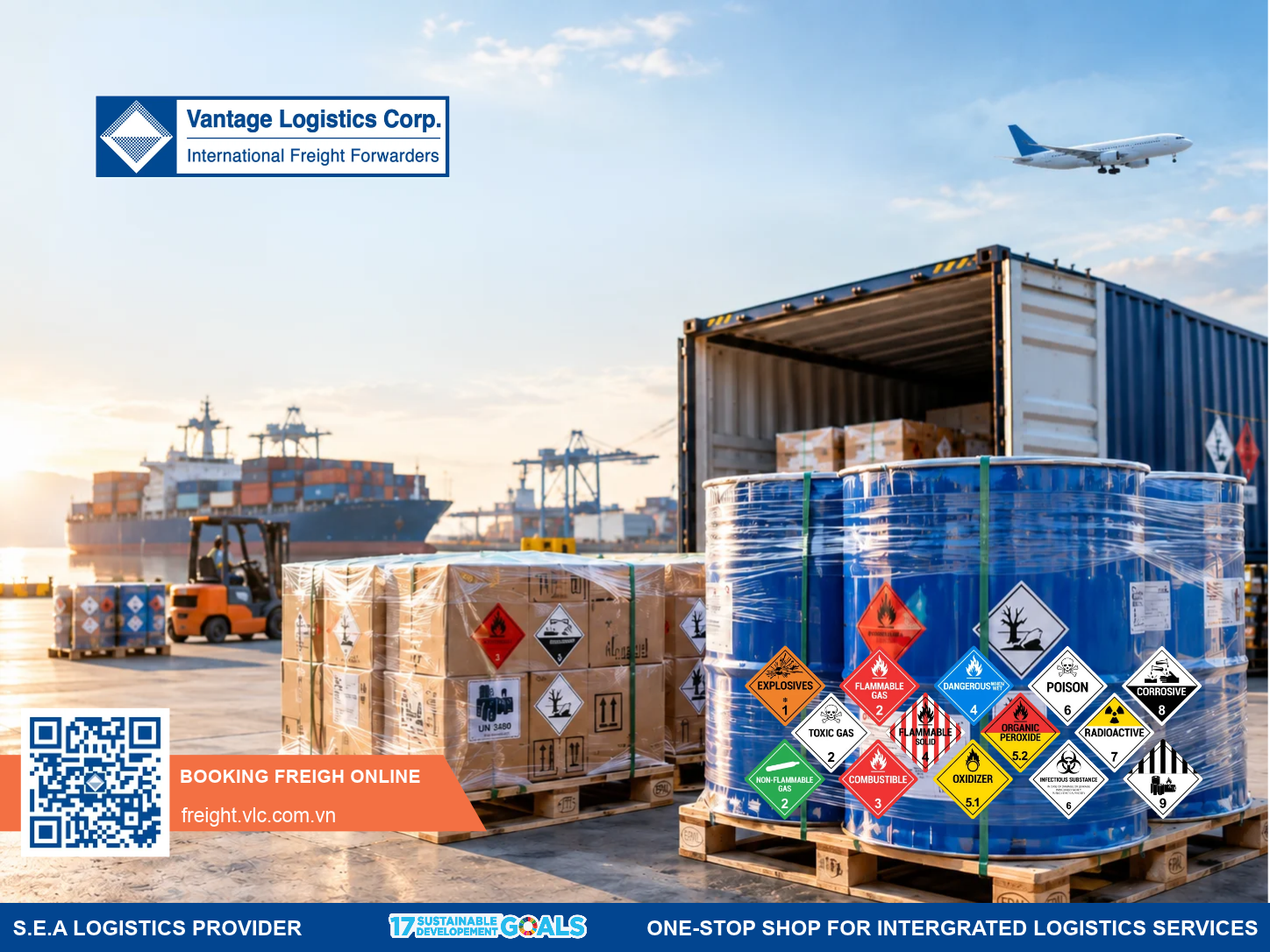
Optimizing customs clearance times, mitigating pre-shipment risks, and protecting supply chains for chemicals, lithium batteries & specialized raw materials. In international trade, transporting Dangerous Goods (DG) remains one of the most complex and strictly regulated operations. For manufacturers of chemicals, lithium batteries, industrial coatings, or compressed gas products, a minor error in classification, packaging, or documentation can trigger severe consequences: last-minute shipment rejections, heavy financial penalties, prolonged port storage, or complete disruption to production schedules. Recognizing that operational downtime and unexpected costs are top concerns for businesses, Vantage Logistics provides end-to-end (Door-to-Door) Dangerous Goods transport solutions. Our operations are directly managed by certified DG specialists holding qualifications recognized by IATA and Maritime Authorities. I. Dangerous Goods (DG) Logistics Capabilities at Vantage Logistics 1. In-Depth Classification & Pre-Shipment Inspection Vantage Logistics conducts comprehensive pre-checks to ensure shipments meet all carrier acceptance criteria: MSDS/SDS Analysis & Precise Classification: Reviewing Material Safety Data Sheets (MSDS) to determine exact UN numbers, Hazard Classes (Class 1–9), and Packing Groups Carrier Acceptance Feasibility Checks: Reviewing operator-specific variations and restrictions across airlines and shipping lines for specific products UN Packaging Standardization Advisory: Inspecting and advising on UN-certified packaging designed to withstand pressure differentials (Air) or corrosive environments (Sea) 2. Specialized Documentation & Legal Declaration Ensuring absolute accuracy across all shipping documentation: Dangerous Goods Declaration (DGD) Execution: Issuing IATA (Air) and IMDG (Sea) compliant DGDs verified against physical cargo specifications Pre-Approval from Carriers: Managing Notified Consignment procedures with port authorities, airlines, and shipping lines to secure official DG Approval prior to dispatching pick-up vehicles Specialized Licensing & Permits: Representing cargo owners in liaising with regulatory authorities (Civil Aviation Authority, Maritime Port Authorities, Ministry of Industry and Trade) to obtain transport permits for tightly controlled cargo classes 3. Safe Handling, Labeling & Storage Compliance Executed directly on-site according to international safety standards: Safe Segregation & Stowage: Separating incompatible chemical classes in accordance with IMDG Code and IATA DGR segregation tables, ensuring dangerous goods are never stowed together within the same container or aircraft hold Standardized Marking & Labeling: Supervising the placement of official Hazardous Labels and UN numbers in full compliance with international maritime and aviation regulations Specialized DG Warehousing: Supporting storage in isolated warehouse zones equipped with fire prevention systems, climate controls, and chemical spill response kits 4. Specialized Air & Sea Freight Solutions Air DG Transport: Fully compliant with the latest edition of the IATA Dangerous Goods Regulations (DGR). Performing pre-checks at airport cargo terminals (Tan Son Nhat, Noi Bai) prior to security screening Sea DG Transport: Fully compliant with the IMDG Code. Executing cargo lashing, securing, and issuing official Container Packing Certificates to ensure stability during ocean transit 5. Proven Field Experience & Industry Expertise Diverse Handling Capabilities: Lithium Batteries (Lithium-ion & Lithium-metal), Industrial Chemicals, Paints & Coatings, Solvents, Pharmaceuticals, and Aerosols Certified DG Specialists: In-house operations teams (Ops) are professionally trained and hold valid DG certificates under IATA DGR and IMDG Code, fully authorized to sign declarations and handle regulatory inquiries Comprehensive Risk Management: Developing Emergency Response Plans (ERP) and advising on specialized civil liability insurance policies for hazardous shipments II. Tangible Commercial Value for Businesses Maximized Acceptance Rates: Technical pre-checks and pre-approval (DG Approval) secured from carriers before factory dispatch Faster Customs Clearance & Cost Savings: Early documentation verification ensures uninterrupted cargo movement, minimizing detention and demurrage (DEM/DET) exposure Full Regulatory Assurance: Operational execution by certified DG specialists trained under IATA DGR and IMDG Code frameworks Uninterrupted Production Lines: Securing timely delivery of critical raw materials, chemicals, and industrial components to manufacturing plants Single Point of Accountability: Seamless execution from packaging advisory and licensing support to door-to-door delivery Safety – Compliance – Continuity is Vantage Logistics’ core commitment for every hazardous shipment. Need expert advice on transporting chemicals, lithium batteries, or specialized hazardous materials? Contact Vantage Logistics today!   Contact Vantage Logistics for tailored transport solutions and competitive quotations. Please provide details on cargo type, market, origin, destination, and estimated timeline. Vantage Logistics Corp – South East Asia (S.E.A) Logistics Provider One-Stop Shop For Integrated Logistics Services Head Office Viet Nam – Suite 6.01, Floor 6th, Block A, RiverGate Residence, 151-155 Ben Van Don, Khanh Hoi Ward, HCMC, Viet Nam Branch Thailand, Laos, Cambodia, Malaysia, Indonesia, Singapore Contact Us Email in**@*****om.vn Hotline +84-909-026-261 Website https://vantage-logistics.com Send your shipment enquiry today and receive a tailored transport plan from the Vantage Logistics team.

18/10/2026

View More
Vantage-Logistics-LogisticsDay-EN

Market updates

Ministry of Industry and Trade Officially Recognizes May 6 as Viet Nam Logistics Day

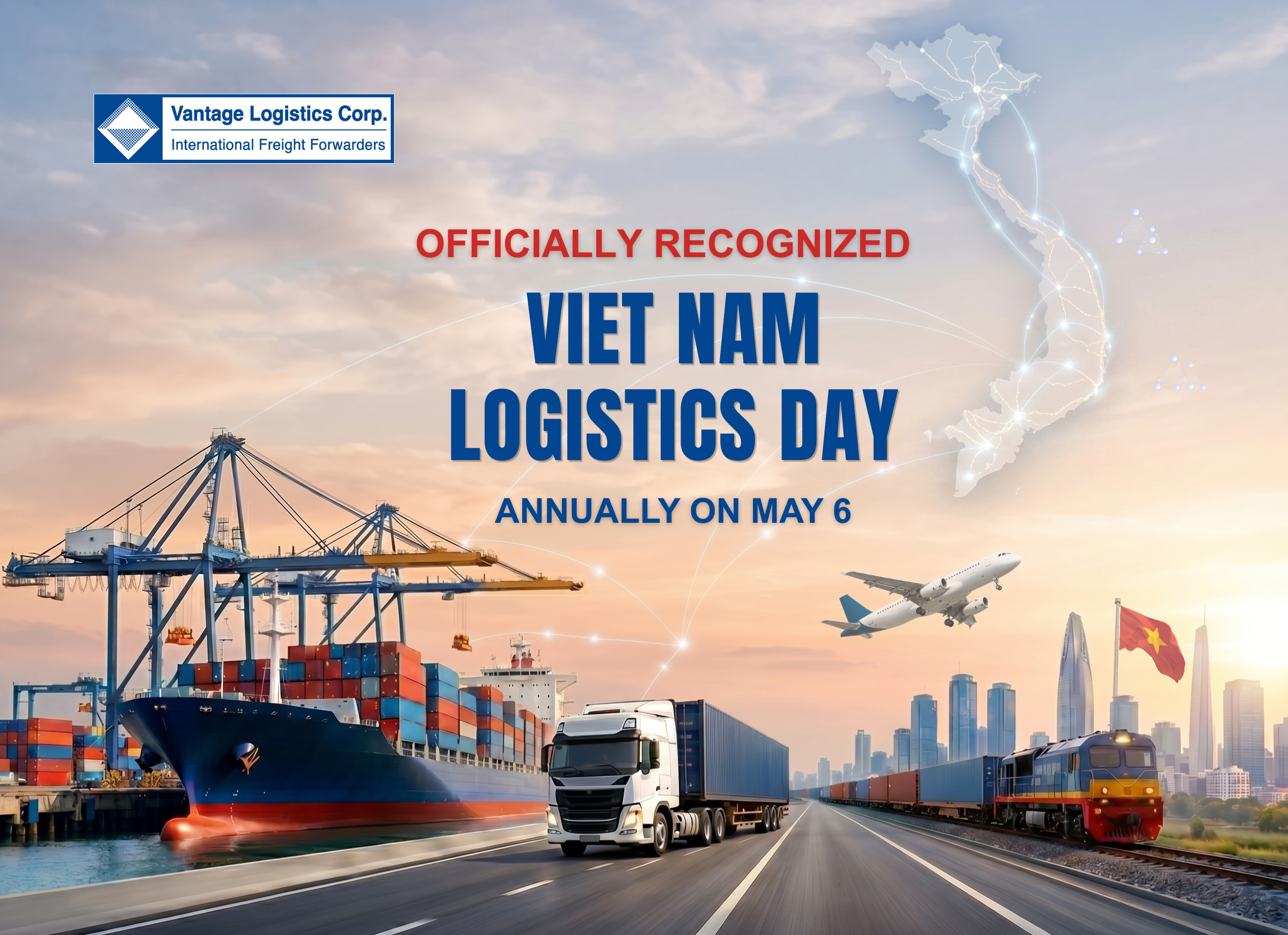
The Ministry of Industry and Trade has officially issued a decision recognizing May 6 each year as Viet Nam Logistics Day. The decision is expected to strengthen public awareness of the logistics sector’s role in supply chains, import-export activities and national economic growth. Official Decision from the Ministry of Industry and Trade On May 6, 2026, Deputy Minister of Industry and Trade Nguyen Sinh Nhat Tan signed Decision No. 1065/QĐ-BCT, officially designating May 6 each year as “Viet Nam Logistics Day”. In addition, the week including May 6 has also been recognized as “Viet Nam Logistics Week”, with activities to be organized flexibly depending on practical conditions each year. The decision is considered a significant milestone for Viet Nam’s logistics sector as trade, manufacturing and supply chain activities continue to expand in both scale and international connectivity. Historical Significance of May 6 The date carries historical significance linked to Decree No. 61 signed by President Ho Chi Minh on May 6, 1946 regarding the establishment of the Ministry of National Economy. Within the early organisational structure, the Supply Department was formed to oversee essential logistics and provisioning functions for the country. The selection of this milestone not only honors nearly 80 years of logistics development in Viet Nam but also reflects the continuous evolution and expansion of the sector over the decades. Vision from the Viet Nam Logistics Business Association (VLA) According to the Viet Nam Logistics Business Association (VLA), the recognition of Viet Nam Logistics Day aims to raise awareness among businesses and the wider community regarding the importance of logistics to manufacturing, trade and import-export activities. Mr Dao Trong Khoa, Chairman of VLA, stated that the occasion is not only intended to acknowledge the sector’s contributions, but also to create opportunities for businesses across the supply chain to strengthen connectivity, enhance cooperation and pursue more sustainable development in the years ahead. Logistics Continues to Play a Critical Role in Supply Chains As Viet Nam continues expanding its manufacturing and export capabilities while integrating more deeply into regional supply chains, logistics is playing an increasingly important role in maintaining cargo flows and optimizing trade activities. From international transportation and warehousing to customs clearance, cold chain logistics and e-commerce fulfilment, demand for integrated logistics solutions continues to rise alongside the country’s economic growth. The official recognition of Viet Nam Logistics Day is expected to strengthen collaboration among regulators, transport operators, shipping lines, warehousing providers and other stakeholders across the supply chain. At the same time, it creates opportunities to promote trade facilitation, workforce development and digital transformation throughout the logistics sector. As regional supply chains continue to evolve, logistics companies in Viet Nam are also accelerating investment in transportation capacity, warehousing systems and integrated supply chain solutions to meet growing trade demands. With this foundation, Viet Nam Logistics Day will become an annual gathering for the logistics community to reflect on its development journey while charting new directions for deeper integration and sustainable growth...

08/05/2026

View More
vlc-news-41-new-SPS

Market updates

41 New SPS Notifications: Export Markets Simultaneously Tighten Controls on ASEAN Agricultural Products

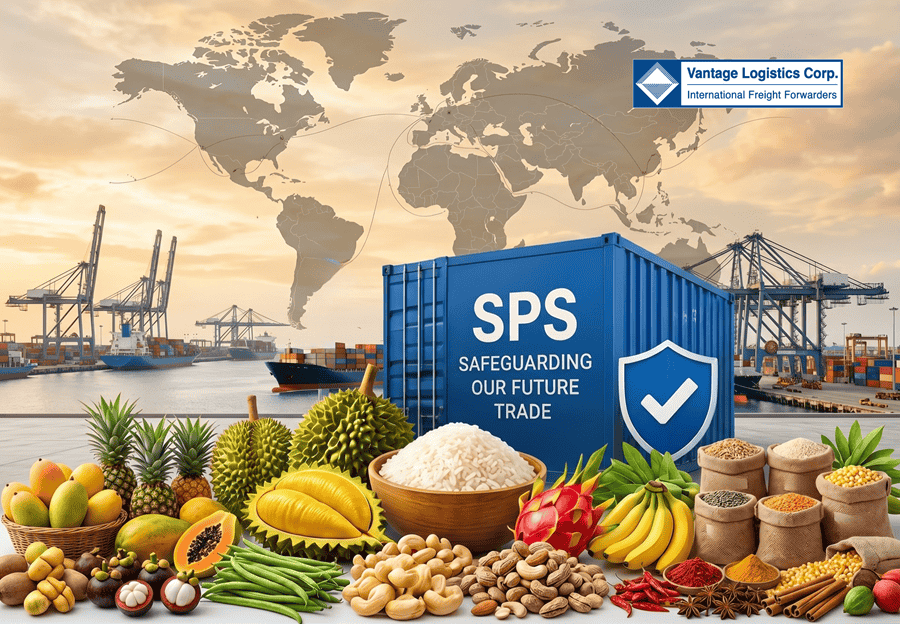
In late April 2026, the SPS Office of Vietnam recorded 41 new notifications from WTO members regarding sanitary and phytosanitary (SPS) measures. These updates are not limited to Viet Nam alone – they apply to all exporting countries. For ASEAN exporters such as Thailand, Indonesia, Malaysia, and the Philippines, the simultaneous tightening of SPS rules signals a clear trend: stricter controls on pesticide residues, animal and plant quarantine, and technical documentation. This development poses significant compliance challenges for the entire ASEAN agricultural supply chain and highlights the urgent need for cross‑border logistics solutions. 41 SPS Notifications According to the SPS Office of Viet Nam: 14 notifications are draft measures currently open for comments 27 notifications have already taken effect The new rules target key ASEAN export categories including vegetables, tropical fruits, tea, coffee, processed agricultural products, and animal feed. Export Markets Increasing SPS Controls  United States Authorities adjusted maximum residue limits (MRLs) for pesticides in food and feed. This directly affects beans, corn, rice, and tropical fruits – products exported widely across ASEAN. United Kingdom Post‑Brexit, the UK continues to refine its own import standards. Recent updates involve the active substance Prosulfocarb, with higher tolerance levels now permitted. This directly affects categories such as herbs and edible flowers – products exported by Viet Nam, Thailand, and Malaysia. China China introduced a list of 21 invasive species subject to strict border controls, including insects, mollusks, fish, and amphibians. This creates new compliance requirements for ASEAN exporters of animal‑origin goods. Taiwan Expanded regulations now cover 186 product combinations and 39 pesticide active substances. Key affected categories include herbs, tea, and coffee – major exports from Vietnam, Indonesia, and Laos. Ukraine Fresh or chilled durian has been added to Ukraine’s list of products under enhanced control. This directly impacts durian exporters from Viet Nam and Thailand. Rising Compliance Pressure for ASEAN Exporters The rapid introduction of SPS measures across multiple markets is intensifying compliance pressure on ASEAN exporters of food and agricultural products. Without timely updates, businesses risk: Higher inspection rates at borders Longer clearance times Increased container storage and warehousing costs Additional testing requirements Risk of goods being returned or re‑exported Recommendations for ASEAN Exporters To maintain and expand market share under tightening SPS rules, businesses should: Monitor SPS notifications from WTO and national SPS offices regularly Adjust pesticide use and residue control practices at the farm level Work closely with accredited testing agencies to prepare compliant documentation Update technical files and export certificates in line with the latest regulations Coordinate early with logistics and customs partners to minimize border risks SPS Trends Will Continue to Impact ASEAN Supply Chains The latest SPS notifications confirm that technical requirements for imported food and agricultural products are becoming increasingly strict worldwide. Proactive compliance and strong collaboration with cross‑border logistics partners will be essential to sustain export operations and mitigate risks in international trade.   Contact Vantage Logistics for tailored transport solutions and competitive quotations. Please provide details on cargo type, market, origin, destination, and estimated timeline. Vantage Logistics Corp – South East Asia (S.E.A) Logistics Provider One-Stop Shop For Integrated Logistics Services Head Office Viet Nam – Suite 6.01, Floor 6th, Block A, RiverGate Residence, 151-155 Ben Van Don, Khanh Hoi Ward, HCMC, Viet Nam Branch Thailand, Laos, Cambodia, Malaysia, Indonesia, Singapore Contact Us Email in**@*****om.vn Phone +84-28 382 67312 Hotline +84-909-026-261 Website https://vantage-logistics.com Send your shipment enquiry today and receive a tailored transport plan from the Vantage Logistics team....

07/05/2026

View More
vantage-logistics-annual-health-checkup-02

Vantage News

Vantage Logistics Organizes Annual Health Check-Up 2026

Placing our people at the heart of everything we do, the 2026 annual health check-up program at Vantage Logistics is more than just a workplace benefit; it is a meaningful partnership, empowering our team with the physical resilience to grow together. In May 2026, Vantage Logistics rolled out its annual health screenings for nearly 350 personnel across all offices and branches nationwide, in collaboration with reputable medical centers in Ho Chi Minh City, Ha Noi, Da Nang and other key nationwide. This annual health event reflects the Management’s deep care for the team – those who dedicate themselves day and night to the company’s shared development. The leadership at Vantage Logistics firmly believes that a healthy individual is the foundation of a happy family, and a resilient team member paves the way for a thriving, cohesive enterprise. At the medical centers, Vantage Logistics personnel undergo comprehensive, specialized examinations, including general check-ups, laboratory testing, diagnostic imaging, and advanced screenings. This structured process allows each member to clearly understand their physical well-being and proactively adopt healthier lifestyles. Notably, to maximize convenience and save time, laboratory sampling is also flexibly conducted directly at the offices, receiving enthusiastic participation from the entire team. In the logistics sector – where continuous operational intensity and seamless coordination across multiple departments are vital – maintaining the health and stability of the team plays an essential role in service quality and operational efficiency. Therefore, beyond periodic medical care, Vantage Logistics actively invests in the mental well-being and physical fitness of its workforce. Sports activities and running challenges are organized regularly, encouraging a healthy lifestyle while fostering strong team spirit and solidarity. This comprehensive combination of medical care and physical fitness initiatives is a powerful testament to the corporate culture at Vantage Logistics: always putting people at the center and driving towards sustainable development....

07/05/2026

View More
vlc-news-Intra-Asia-Trade-2026

Market updates

Intra-Asia Trade 2026: Opportunities for Logistics & Supply Chains

Intra-Asia Trade on the Rise: Regional Logistics Enter a New Phase Against the backdrop of global trade volatility and weakening external demand, Asia is restructuring toward stronger Intra-regional linkages. This shift is not only changing the nature of regional trade but also reshaping the logistics system – from transport routes to business operating models. A clear illustration is that Intra-Asia trade has emerged as a key growth driver. According to Asia House, bilateral trade between China and ASEAN surpassed China–U.S. trade as early as 2019 and has continued to expand, with two-way trade reaching about USD 982 billion in 2024. This reflects the growing interdependence within the region At the same time, the foundation of Intra-regional economic growth remains stable. In 2024–2025, many Asian economies recorded growth rates around 5%–6%. Viet Nam and India stood out, while the Philippines, Indonesia, and Malaysia maintained growth near 5%. China eased slightly from 5.0% to 4.8%. In contrast, Thailand, South Korea, and Japan grew more modestly, ranging from 0.9% to 2.5%. Looking ahead to 2026, forecasts suggest this trend will continue: Viet Nam is expected to sustain around 6.3%, India 6.5%, the Philippines 5.8%, Indonesia 5.0%, Malaysia 4.8%, and China declining further to 4.6%. Larger economies such as Japan and South Korea are projected to remain at modest levels, 0.9% and 1.8% respectively. This indicates that growth is no longer driven primarily by exports outside the region. Asian economies are becoming more interconnected and self-reliant, gradually shifting from the “world’s factory” to a closed-loop ecosystem of production and consumption – while simultaneously generating rising demand for Intra-regional logistics. Trade agreements strengthen regional integration The expansion of intra-Asia trade is supported by increasingly structured economic cooperation frameworks. The Regional Comprehensive Economic Partnership (RCEP) has played a key role in reducing trade barriers, simplifying rules of origin, and facilitating the movement of goods across member economies. In parallel, the upgraded ASEAN–China Free Trade Agreement (ACFTA 3.0) expands cooperation into new areas, including the digital economy, supply chain integration, and consumer protection. The ASEAN Digital Economy Framework Agreement (DEFA), expected to be finalized in 2026, will further accelerate integration by enabling a unified digital market across the region. ASEAN’s digital economy is projected to reach USD 2 trillion by 2030 if implementation progresses as planned. These developments are laying the foundation for a more integrated regional trade ecosystem, where goods, data, and capital move with greater efficiency. Businesses restructure supply chains towards regional models Alongside policy shifts, businesses are actively adjusting their strategies to align with the evolving landscape. Previously, supply chains were designed primarily for cost efficiency, with production concentrated in a single location and goods shipped across long distances. However, trade volatility and geopolitical risks have exposed the limitations of this model. Companies are now shifting towards: Multi-country production within the region Shorter transport distances Stronger regional partnerships This transition enhances resilience and enables faster response to market changes. That said, the shift is not uniform. China continues to play a central role due to its scale, technological capabilities, and established industrial ecosystem. Rather than full relocation, the prevailing model is evolving into a multi-hub network combining China and ASEAN markets. Explore Vantage Logistics’ Intra-Asia transport solutions....

06/05/2026

View More
vlc-news-lien-chieu-port-in-da-nang

Market updates

Lien Chieu container port breaks ground with investment exceeding VND 45 trillion in Da Nang

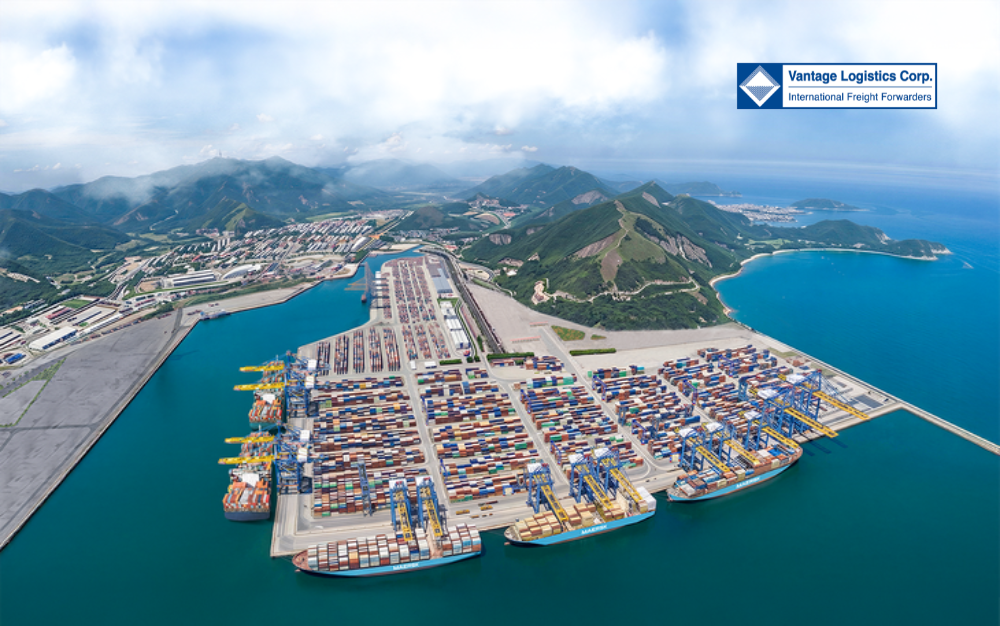
The Lien Chieu container port project in Da Nang has officially commenced, with total investment exceeding VND 45 trillion. Once operational, the deep-sea port will expand vessel handling capacity in Central Viet Nam, enabling more direct shipping routes and reducing reliance on transshipment through other regions. Fragmented port infrastructure in Central Viet Nam For years, Central Viet Nam has lacked a deep-sea port capable of handling large container vessels and operating as a true international gateway. Export and import activities remain constrained by: Tien Sa Port, with limitations in depth and expansion capacity Dependence on transshipment via northern and southern ports Extended transport routes, increasing cost per unit of cargo These factors directly affect businesses in Central Viet Nam, the Central Highlands, and neighboring areas where transit time and logistics cost control are critical. Design Perspective of the Lien Chieu Port Project Shift towards deep-sea port development The development of Lien Chieu port aligns with broader logistics trends: Increased capacity to accommodate larger vessels Reduced dependence on transshipment Improved cost efficiency through scale According to planning orientation, Lien Chieu is positioned as a major container port in Central Viet Nam, designed to handle high-capacity vessels and significant cargo throughput annually. Strengthening Central Viet Nam – China and ASEAN connectivity Once operational, Lien Chieu port will support the development of new transport routes: Domestic and regional connections: Central Viet Nam – Central Highlands Coastal industrial zones in Central Viet Nam International connections: Central Viet Nam – Southern China routes Viet Nam – Laos – Thailand transport corridors These routes enable: Shorter transport distances compared to routing via southern ports Fewer transshipment stages More stable delivery schedules This is particularly relevant for cargo segments with tight cost and lead time requirements, including agriculture, raw materials, and manufactured goods. Shaping a new logistics hub in Central Viet Nam Lien Chieu port will function as a key interface between maritime transport and regional economic corridors. Once operational, it will: Attract direct international shipping services Reduce pressure on existing ports Support the development of logistics centers and regional transport networks This provides businesses in Central Viet Nam with greater flexibility in port selection and supply chain design. Businesses operating in Central Viet Nam or across ASEAN corridors should begin preparing transport strategies now to benefit from the upcoming infrastructure. Partner with Vantage Logistics to stay ahead of developments at Lien Chieu Port and plan optimized logistics solutions in advance....

05/05/2026

View More
vlc-news-EVFTA-2026

Market updates

EVFTA 2026: New Rules of Origin – Essential Updates for Businesses

Starting May 10, 2026, Circular 14/2026/TT-BCT will officially replace the previous regulatory framework regarding rules of origin within the EVFTA. These updates focus on three primary areas: updating the HS 2022 code system, expanding the Registered Exporter (REX) system, and adding specific conditions for the cumulation of origin. These adjustments directly impact how businesses determine origin, structure supply chains, and prepare documentation to qualify for preferential tariffs when exporting to the EU. The Importance of the 2026 EVFTA Origin Updates The EVFTA has been in effect since 2020, with rules of origin previously governed by Circular 11/2020/TT-BCT. Following years of implementation, several practical factors have evolved: The Harmonized System (HS) nomenclature has transitioned to the 2022 version Regional supply chains have undergone significant shifts There is a growing trend toward diversifying raw material sourcing within the region. In response, the Ministry of Industry and Trade issued Circular 14/2026/TT-BCT to synchronize these new factors and standardize the application of origin rules according to current trade realities. 3 Key Changes in EVFTA 2026 Rules of Origin Controlled Expansion of Origin Cumulation The new regulations allow businesses to consider using materials from certain partner countries, provided they meet specific requirements regarding international commitments and administrative cooperation with the EU. This opens opportunities to: Diversify raw material supply chains. Reduce dependence on a single market. Optimize input costs while maintaining originating status. However, businesses must carefully evaluate each specific case to ensure full compliance with the updated criteria. Expansion of the Registered Exporter (REX) System Under the new provisions: For shipments valued at 6,000 EUR or less: Exporters may self-certify origin without REX registration. For higher-value shipments: Businesses must register with the REX system to continue using the self-certification mechanism. Key Impacts: Reduced document processing time. Decreased reliance on traditional Certificate of Origin (C/O) issuance procedures. Increased autonomy in export operations. Application of the HS 2022 System All Product Specific Rules (PSR) have been rebuilt based on the HS 2022 version. Points to note: Some commodity codes have changed classifications. Goods descriptions may differ from the HS 2017 version. Accompanying origin criteria for specific items may have changed. Failure to update timely may lead to incorrect origin declarations, resulting in the denial of preferential rates (GSP/EVFTA) and the application of higher Most-Favored-Nation (MFN) tax rates. The Role of Logistics in Maintaining Valid Origin Rules of origin extend beyond the production phase; they are intrinsically linked to the movement of goods. To comply with the Non-alteration Rule, businesses must ensure: Goods are not processed or altered in a third country. Goods remain under constant customs supervision. Goods do not enter domestic circulation in any transit country. This requires: Transparent transportation records. Controlled transit warehousing processes. End-to-end documentation from the point of export to the point of entry. Furthermore, EU customs authorities reserve the right to conduct post-clearance audits. Businesses must archive origin-related records for the minimum required period and be ready to provide them upon request. Risks of Delayed Compliance with Circular 14/2026/TT-BCT Delaying adjustments to meet the new Circular can lead to: Rejection of C/O or self-certification documents. Ineligibility for EVFTA preferential tax rates. Back-tax collection after goods have been cleared. Supply chain disruptions due to document reprocessing. In the highly competitive EU market, origin errors are not just compliance issues – they directly impact profit margins. Priority Tasks Before May 10, 2026 Businesses should immediately implement the following steps: Review all HS codes according to the 2022 version Cross-reference origin criteria for each specific product category Re-evaluate current raw material sources Register for the REX system if necessary Standardize record-keeping procedures for origin documentation Audit transit logistics processes The new Circular is more than a technical update; it is a critical change affecting your ability to leverage EVFTA tariff preferences. Early preparation will reduce compliance risks and maintain your competitive edge in the EU market. Contact Vantage Logistics today for a consultation on reviewing export records and C/O processes according to the new regulations....

05/05/2026

View More
vlc-news-asean-trade-corridors

Market updates

5 Fastest-Growing Trade Corridors in ASEAN: 2025–2027 Outlook

  As global supply chains continue to navigate geopolitical shifts and trade volatility, businesses in Asia are restructuring their manufacturing and transport networks. The trend moves towards near-shoring, enhanced flexibility, and reduced dependency on any single nation. Against this backdrop, ASEAN has emerged as a primary beneficiary. Driven by current market trends and upcoming prospects, import-export enterprises are no longer merely searching for faster transit routes. Instead, they are prioritizing corridors that offer cost optimization, multimodal transport options, and diversification away from single-market reliance. This shift explains the robust growth observed across ASEAN trade corridors over the past two years. 1. The Viet Nam – China Corridor: Southeast Asia’s Most Dynamic Cross-Border Trade and Investment Axis The Viet Nam – China trade route continues to record impressive growth rates. In 2025, bilateral trade turnover reached a record $252 billion, a 26.5% increase compared to 2024, clearly reflecting the wave of manufacturing relocation to Southeast Asia. Numerous electronics, machinery, textiles, and consumer goods enterprises are expanding factories in Northern Viet Nam to leverage proximity to China while benefiting from free trade agreements. Industrial zones in Hai Phong, Bac Ninh, Quang Ninh, and Lang Sơn are becoming new transit hubs for components, raw materials, and finished goods. Concurrently, cross-border transport demand has risen sharply across several routes: Viet Nam – Guangxi Viet Nam – Yunnan International intermodal rail links to China and Europe Short-sea shipping connecting ports in Southern China The two nations also signed cooperation agreements regarding supply chains and border-gate economies during the 2025–2026 period, laying the foundation for the establishment of cross-border economic cooperation zones. The rapid expansion of this corridor places significant pressure on customs clearance capacity, warehousing, and regional multimodal transport. 2. The Viet Nam – ASEAN – India Corridor: A New Regional Connection India is emerging as a vital trade partner for Viet Nam and ASEAN, particularly within electronics, agricultural products, chemicals, and industrial equipment. In the 2024–2025 fiscal year, total ASEAN–India trade turnover reached $123 billion, with India accounting for approximately 11% of the bloc’s global trade–underscoring the growing role of the South Asia–Southeast Asia corridor. Exporters are currently prioritizing a combination of sea and air freight to shorten transit times between South Asia and Southeast Asia. Connections through Ho Chi Minh City, the Cai Mep – Thi Vai deep-sea port complex, and Singapore play a central role in this transport chain. Cargo volume between ASEAN and India is growing steadily across the tech manufacturing and retail sectors, opening up substantial mid-term opportunities for logistics providers looking to tap into this corridor. 3. The Singapore – Indonesia Corridor: The Region’s New Logistics and Industrial Hub The integration model between Singapore and the industrial zones in Batam – Bintan, Indonesia, is creating a large-scale logistics and manufacturing cluster in Southeast Asia. Singapore maintains its role as a financial, technological, and international transshipment hub – with Changi Airport handling over 1.85 million tons of air cargo annually. Meanwhile, Indonesia offers competitive advantages in land availability, labour, and industrial resources, particularly nickel for the electric vehicle (EV) and battery industries. This dynamic drives strong demand for: Intra-regional sea freight Warehousing services E-commerce logistics Supply chains for the new energy sector The total ASEAN logistics market is projected to reach $305.98 billion in 2026 and $406.1 billion by 2031, with the Singapore – Indonesia corridor identified as one of the fastest-expanding routes in the region. 4. The East – West Economic Corridor: A New Catalyst for ASEAN Road Logistics The East – West Economic Corridor (EWEC), linking Myanmar, Thailand, Laos, and Viet Nam, is steadily developing into a strategic road transport route for the Greater Mekong Subregion. Upgrades to transport infrastructure and border checkpoints have significantly reduced cross-border transit times, particularly for: Agricultural products Consumer goods Industrial components Automotive parts For Viet Nam, central provinces are benefiting clearly by becoming transshipment points for cargo moving from Thailand and Laos out to the East Sea. This corridor also helps businesses reduce their reliance on sea freight for shipments requiring rapid delivery within the ASEAN bloc. Operational Risk Note: The section passing through Myanmar is currently affected by prolonged socio-political instability following the 2021 coup, leading to stalled infrastructure projects and inconsistent customs clearance. Businesses should evaluate contingency plans via the Thailand – Laos – Viet Nam route when planning logistics operations. 5. Philippines: The Accelerating E-Commerce Market in Southeast Asia The Philippines is standing out as one of the fastest-growing e-commerce markets in the region. In 2025, retail e-commerce Gross Merchandise Volume (GMV) in the Philippines reached $13.7 billion – accounting for approximately 32.2% of the country’s digital economy – with a growth rate exceeding 20% per annum, the highest in the region. This momentum is projected to maintain a ~15% annual growth rate through to 2029. The broader Southeast Asian e-commerce market reached $157.6 billion in 2025, up 22.8% from the previous year. Logistics providers are focusing on building networks that connect the Philippines with Malaysia, Singapore, and Viet Nam to serve cross-border e-commerce cargo flows. The expansion of a young consumer class alongside high online shopping rates drives momentum for: Fulfillment services Air freight E-commerce consolidation Regional bonded warehouses Consequently, logistics demand for cross-border e-commerce in the Philippines will continue to rise sharply, particularly in fast-moving consumer goods (FMCG), fashion, and electronics. ASEAN Enters a Phase of Regional Logistics Restructuring From the “China + 1” strategy and the e-commerce boom to heavy investments in cross-border infrastructure, ASEAN is transforming into a new global manufacturing and logistics hub. Each corridor presents distinct characteristics–ranging from the massive trade volume of the Viet Nam – China route and the long-term potential of the ASEAN – India corridor, to the rapid digital growth in the Philippines. For import-export enterprises, closely monitoring these high-growth trade corridors not only helps optimize transport costs but also opens up opportunities to access new markets and build more resilient supply chains for the long term. Contact Vantage Logistics to develop a tailored transport solution for the ASEAN market....

04/05/2026

View More
vlc-news-ppwr-EU-2026

Market updates

PPWR EU 2026: New Packaging Requirements and Impacts on Southeast Asian Exporters

The Packaging and Packaging Waste Regulation (PPWR) will reshape how packaging is controlled in the European market, introducing strict limits on PFAS and requiring transparency of information. Vietnamese exporters must proactively adjust to avoid disruptions in their supply chains. PPWR Overview PPWR replaces Directive 94/62/EC after more than 30 years. It is not just a technical update but a shift in philosophy: the EU moves from “managing waste after consumption” to “controlling packaging right from production.” This means exporters to the EU – even without offices in Europe – will bear legal responsibility for their packaging. Mandatory Requirements from August 12, 2026 Unlike long-term goals set for 2030 – 2040, chemical restrictions in packaging will take effect immediately from August 12, 2026: PFAS Limits – Strictly Controlled “Forever Chemicals” PFAS (Per- and Polyfluoroalkyl Substances) have been widely used in food packaging for oil and moisture resistance, especially in paper boxes, kraft bags, seafood and processed food packaging. From August, the EU enforces hard limits: 25 ppb for any single PFAS 250 ppb for total PFAS in packaging 50 ppm for polymeric PFAS This applies to all food-contact packaging, directly impacting exports such as seafood, packaged rice, coffee, and processed foods. Substances of Concern (SoC) Beyond PFAS, PPWR requires businesses to monitor and disclose all Substances of Concern in packaging, including certain organic compounds, coatings, and additives that may affect consumer health or reduce recyclability. Long-Term Roadmap: 2030 – 2040 Although not immediately mandatory, the following requirements must be integrated into medium-term investment strategies: Requirement Deadline Scope Minimum 30% recycled plastic content 2030 Consumer plastic packaging Design for Recycling 2030 All packaging Minimum 50% recycled plastic content 2040 Food plastic packaging Mandatory reuse targets 2030 B2B transport packaging Proactive material transition now will give businesses a competitive edge and avoid costly last-minute changes. Packaging Labels: Technical Requirements PPWR requires packaging to be clearly labeled with: Material composition under EU standardized classification Waste sorting instructions aligned with national rules Digital Product Passport: the EU is developing requirements for packaging to provide traceability and material information via QR codes or equivalent data carriers. While not yet mandatory, early preparation of data infrastructure will secure market advantages. Action Checklist by Priority By August 12, 2026 – Mandatory: Test PFAS levels in all food-contact packaging via EU-accredited labs (SGS, Intertek, Bureau Veritas). Review packaging composition with suppliers, request Safety Data Sheets (SDS) and SoC test results. Update packaging labels according to EU’s new material classification. Maintain complete technical documentation for EU customs authorities. By 2030 – Strategic Planning: Assess transition to eco-friendly materials: PFAS-free paper, bioplastics (PLA, rPET), compostable packaging. Collaborate with packaging designers to meet EU Design for Recycling criteria. Risks and Opportunities for Southeast Asian Exporters Non-compliant goods may face: Detention or rejection at EU ports Product recalls from the market Administrative fines up to millions of euros in major markets (Germany, France, Netherlands) Long-term reputational damage with EU import partners – harder to recover than financial penalties Opportunities include: Competitive advantage for early adopters Innovation in packaging materials (bioplastics, PFAS-free paper, compostable packaging) Enhanced brand reputation in global supply chains Vantage Logistics – Partnering for Sustainable Export The EU market is challenging, but businesses that prepare thoroughly can turn technical barriers into real competitive advantages. Vantage Logistics supports exporters through: Documentation and customs declaration consulting aligned with PPWR requirements Customs brokerage processes compliant with EU standards Continuous updates on trade policy changes to keep businesses ahead Contact Vantage Logistics’ expert team for tailored guidance on PPWR compliance for your EU export operations....

04/05/2026

View More
vlc-news-jones-act

Market updates

US Extends Jones Act Waiver for 90 Days to Stabilise Energy Supply Chains

The US government has officially extended the Jones Act waiver for an additional 90 days. This decision allows foreign-flagged vessels to transport cargo between domestic ports, a strategic move aimed at easing energy price pressures and maintaining logistics continuity amidst global geopolitical tensions. Official Extension Timeline The initial 60-day waiver, issued in March 2026, has been extended by a further 90 days. Effective Period: From 18 May 2026 until mid-August 2026. Key Provision: Authorizes foreign-flagged vessels to transport goods directly between US ports. Under standard regulations of the Merchant Marine Act of 1920 (Jones Act), this activity is strictly reserved for vessels built, owned, and operated by US citizens.  Drivers Behind the Extension Nerzing a century-old maritime law is a rare exception, driven by two primary pressures: Global Energy Disruptions: Ongoing conflicts in the Middle East have interrupted oil and gas flows, leading to potential domestic supply shortages for production and consumption. Domestic Transport Constraints: The number of Jones Act-compliant vessels is currently insufficient to meet surged demand, and the cost of operating these vessels remains significantly higher than international alternatives.  Direct Impact on Logistics and Energy The extension facilitates several critical shifts in the market: Increased Capacity: Greater transport availability for essential commodities, particularly crude oil, Liquefied Natural Gas (LNG), and fertilizer. Cost Mitigation: Reduced pressure on short-term fuel prices through the utilization of international fleets. Operational Flexibility: Coordinators have more options to manage vessel schedules and maintain domestic trade arteries. However, experts note that this is a temporary measure. The impact on price reduction may not be permanent, and the policy remains a point of debate within the US domestic shipping industry. Global Market Implications Whilst this is a domestic US policy, the ripple effects are expected to reach the international market: Vessel Reallocation: As international ships pivot to service US domestic routes, the availability of vessels on other global trade lanes may shift. Freight Rate Volatility: Changes in vessel availability could indirectly influence energy freight rates worldwide.  Guidance for Businesses in the ASEAN Region As the US prioritizes domestic stability, businesses in ASEAN – including those with trade links to Viet Nam – should consider the following: Proactive Planning: Secure bookings early to guarantee space and maintain schedules. Diversified Logistics: Evaluate multi-modal transport options or cross-border routes to reduce heavy reliance on international ocean freight. Market Monitoring: Closely track market fluctuations throughout the second and third quarters of 2026. To stay informed on freight rate movements and develop an optimal transport plan for Q2–Q3 2026, please contact Vantage Logistics for professional assistance....

02/05/2026

View More
1 … 17 18 19 20 21 … 43