RESOURCE

vlc-news-philippines-cancels-rice-import-permit-15102026

Market updates

Philippines Cancels Permit for Controversial 12,480-Metric-Ton Rice Shipment from Viet Nam

The Philippine Department of Agriculture (DA) said it had ordered the cancellation of the Sanitary and Phytosanitary Import Clearance (SPSIC) for a 12,480-metric-ton rice shipment from Viet Nam before the vessel arrived. The case involves reported discrepancies in rice specifications and an expired import contract, highlighting the risks that can arise when shipping schedules do not align with import requirements in the destination market. 1. Developments at the Port of Arrival According to the Philippine Department of Agriculture (DA) and the Philippine News Agency (PNA), the vessel MV Tay Son 2, carrying 12,480 metric tons of rice from Viet Nam, arrived at the Port of Davao on September 14, 2026. According to these sources, the vessel’s captain refused to submit the shipment for inspection by the Philippine Bureau of Plant Industry (BPI). On September 17, 2026, the vessel departed Davao before the matter had been resolved. Philippine authorities subsequently prevented the cargo from being unloaded at another location and brought the vessel to the Port of General Santos before ordering it to return to Davao for further handling. 2. Rice Specifications and Import Requirements The case involves two issues: reported discrepancies in rice specifications and the status of the import contract and permit. 2.1. Reported Discrepancy in Rice Specifications The importer, Planters Product, Inc. (PPI), reported a discrepancy between the purchase order and the specifications communicated for the shipment: Specifications under the purchase order: 25% broken rice Reported specifications for the shipment: 5% broken rice In agricultural trade, the percentage of broken grains is an important commercial specification. However, the discrepancy remains based on information reported by the importer and has not been confirmed by an official inspection, as the physical inspection process was not completed. 2.2. Expired Contract and Canceled Import Permit In addition to the rice specifications, the delivery timeline and the status of the import documentation were also highlighted by the DA: Estimated time of arrival (ETA): July 2026 Actual arrival: Mid-September 2026 According to the DA, the import contract had expired and the SPSIC had been canceled before the vessel arrived. The vessel’s arrival also coincided with the period when the Philippines was preparing for the wet-season rice harvest. According to published information, import policy during this period was also linked to efforts to limit downward pressure on domestic palay prices. Operational Note: Even when goods meet quality requirements, a shipment may still face customs clearance difficulties if it fails to meet import requirements or if the relevant permit is no longer valid. 3. Proposed Measures for Handling the Shipment According to published information, the Bureau of Customs of the Philippines (BOC) was still considering the final course of action for the shipment. The proposed measures included: Proposed Measure Proposing Authority / Status Return to the Country of Origin The BPI was reported to have recommended returning the shipment to Viet Nam. Seizure and Penalties The DA proposed considering seizure of the shipment and the application of penalties under relevant regulations, subject to the competent authority’s findings and decision. Final Decision The BOC was reviewing the official course of action for the shipment. 4. Conclusion The controversial rice shipment in the Philippines highlights how international trade depends not only on product quality and contractual terms but also on shipping schedules, the validity of import documentation, and regulatory requirements in the destination market. When these elements are no longer aligned, shipments already in transit may face unexpected complications during arrival and customs clearance. Vantage Logistics will continue to provide updates on notable developments in logistics, import-export activities, and international supply chains, offering businesses additional insight into factors that may affect global trade. Contact Vantage Logistics for tailored transport solutions and competitive quotations. Please provide details on cargo type, market, origin, destination, and estimated timeline.   Vantage Logistics Corp – South East Asia (S.E.A) Logistics Provider One-Stop Shop For Integrated Logistics Services Head Office Viet Nam – Suite 6.01, Floor 6th, Block A, RiverGate Residence, 151-155 Ben Van Don, Khanh Hoi Ward, HCMC, Viet Nam Branch Thailand, Laos, Cambodia, Malaysia, Indonesia, Singapore Contact Us Email in**@*****om.vn Hotline +84-909-026-261 Website https://vantage-logistics.com Send your shipment enquiry today and receive a tailored transport plan from the Vantage Logistics team.

15/10/2026

View More
vlc-news-asean-east-asia-trade-15102026

Market updates

ASEAN–East Asia Trade Reaches USD 1.4 Trillion, Up 13.7% in 2025

According to preliminary data from the ASEAN Secretariat, two-way trade between ASEAN and its three East Asian partners (China, Japan, and South Korea) reached USD 1.4 trillion in 2025, representing a 13.7% year-on-year increase. Notably, China–ASEAN trade continued its upward trajectory in the first seven months of 2026, underscoring a sustained expansion in cross-regional trade volumes worth monitoring. 1. Regional Trade Volume and Foreign Direct Investment (ASEAN+3) Trade and investment flows between ASEAN and its three East Asian partners maintain a substantial footprint. In 2025, Foreign Direct Investment (FDI) inflows from China, Japan, and South Korea into ASEAN totaled USD 44.8 billion. Key ASEAN–East Asia Trade & Investment Indicators Indicator Value Growth / Share ASEAN – (China, Japan, South Korea) Trade in 2025 USD 1.4 Trillion Up 13.7% vs 2024 FDI from 3 East Asian Partners into ASEAN in 2025 USD 44.8 Billion Accounted for 18.2% of total ASEAN FDI China – ASEAN Trade (First 7 Months of 2026) USD 744.41 Billion Up 24.7% year-on-year The scale of merchandise trade and investment capital highlights the vital economic linkage between East Asia and Southeast Asia. However, assessing actual freight demand requires a granular evaluation of specific commodity structures, export-import markets, and active transport corridors. 2. Direct Impacts on Transport Networks and Logistics Infrastructure Expanding trade volumes underscore the critical role of regional transport connections. Depending on industry-specific cargo characteristics and delivery requirements, flexible logistics solutions are being actively deployed: Intra-Asia Ocean Freight Connections: For multi-leg shipments, vessel schedule reliability, transit times, and feeder network connectivity are pivotal factors for supply chain managers. Major gateway hubs such as Shanghai, Ningbo, Busan, and Yokohama maintain dense feeder linkages with Southeast Asian ports within ocean carrier networks Integrated Logistics and Multimodal Transport: Depending on lead-time sensitivity, combining ocean freight, Cross-Border Trucking, and inland warehousing offers expanded routing options. Real-world operational efficiency hinges heavily on border crossing clearance times, transit schedules, and the coordination capability of the logistics operator Rules of Origin (C/O) and Customs Compliance: When leveraging Free Trade Agreements such as RCEP, AKFTA, or AJCEP, enterprises must accurately determine rules of origin and prepare compliant documentation to qualify for preferential tariffs. Duty exemption eligibility depends on the specific conditions of each product line and destination market 3. Monitoring Southeast Asian Trade Dynamics and Logistics Connectivity Expanding trade and investment flows reflect an increasingly integrated economic relationship between East Asia and Southeast Asia. This growth in cross-border trade creates momentum for expanding logistics connectivity, helping strengthen supply chain coverage across the region.   Contact Vantage Logistics for tailored transport solutions and competitive quotations. Please provide details on cargo type, market, origin, destination, and estimated timeline. Vantage Logistics Corp – South East Asia (S.E.A) Logistics Provider One-Stop Shop For Integrated Logistics Services Head Office Viet Nam – Suite 6.01, Floor 6th, Block A, RiverGate Residence, 151-155 Ben Van Don, Khanh Hoi Ward, HCMC, Viet Nam Branch Thailand, Laos, Cambodia, Malaysia, Indonesia, Singapore Contact Us Email in**@*****om.vn Hotline +84-909-026-261 Website https://vantage-logistics.com Send your shipment enquiry today and receive a tailored transport plan from the Vantage Logistics team.

15/10/2026

View More

Market updates

SINGAPORE STRENGTHENS PRODUCT SAFETY CONTROLS: WHAT VIETNAMESE EXPORTERS NEED TO KNOW

Singapore is strengthening its product safety controls through two key regulations: the Consumer Protection (Safety Requirements) Regulations (CPSR) and the Consumer Goods (Safety Requirements) Regulations (CGSR). For exporters, these requirements go beyond product compliance. They can also affect delivery schedules, logistics costs, and supply chain reliability. 1. Singapore Strengthens Product Safety Requirements According to information published by Vietnam’s Ministry of Industry and Trade, Singapore applies two main regulatory frameworks for product safety. – CPSR: Covers 33 categories of controlled goods, including electrical and electronic products, household appliances, and gas appliances. Products within scope must meet applicable safety requirements, complete registration, and carry the SAFETY Mark before being supplied or sold in Singapore. – CGSR: Covers general consumer goods such as toys, clothing, furniture, and sports equipment, which must comply with the relevant safety standards. Non-compliant products may be subject to sales restrictions or recalls. Businesses that violate applicable requirements may also face penalties. For exporters, checking compliance requirements before shipment is essential. Addressing documentation or registration issues early can help avoid costly adjustments after cargo has already left the port of origin. 2. Potential Impact on Southeast Asia’s Trade and Logistics Singapore plays an important role in Southeast Asia’s trade and logistics network. Tighter product safety controls may require exporters, importers, and distributors to review their procedures for placing goods on the Singapore market. Several potential risks deserve attention: – Delivery delays: Incomplete documentation or missing certificates may affect cargo acceptance and delivery schedules. – Additional logistics costs: Delays in resolving compliance issues may lead to storage, port handling, or additional transportation costs. – Disrupted distribution plans: Late deliveries can affect inventory planning, distribution schedules, and commitments to business partners. These requirements do not automatically apply across all ASEAN markets. However, they highlight the importance of understanding the specific regulations of each destination country when planning regional trade and distribution. 3. What Should Vietnamese Exporters Prepare? For Vietnamese businesses exporting to Singapore, compliance checks should take place before shipment arrangements are finalized. Exporters should determine whether their products fall under CPSR or CGSR, verify the applicable safety standards and registration requirements, and clarify responsibilities with their Singaporean importers. Documentation preparation should also be factored into the shipping schedule. If an issue is discovered only after cargo arrives at the destination port, businesses may need to manage several challenges simultaneously, including delivery delays, additional costs, and changes to distribution plans. A reliable shipping plan therefore involves more than selecting the right route or sailing schedule. It also requires anticipating potential obstacles before the cargo reaches its destination. 4. Managing Risks Through Early Planning Not every risk in international shipping can be eliminated, but many disruptions can be reduced through early preparation. Reviewing cargo information, documentation, shipping schedules, and destination requirements helps all parties make better-informed decisions. For shipments to Singapore, close coordination among exporters, importers, agents, and logistics providers helps maintain visibility over shipment readiness, address changes, and adjust plans when necessary. At Vantage Logistics, international transportation planning takes into account the practical requirements of each shipment and the coordination needed among relevant parties. This approach helps businesses manage potential disruptions and maintain better control over delivery schedules. As market requirements evolve, careful preparation does more than protect an individual shipment. It also helps businesses maintain reliable supply chains and build lasting partnerships across international markets.

15/10/2026

View More
vlc-news-vietnam-cambodia-1(1)

Market updates

Viet Nam–Cambodia–Laos Trade Connectivity Creates New Opportunities for Regional Supply Chains and Cross-Border Logistics

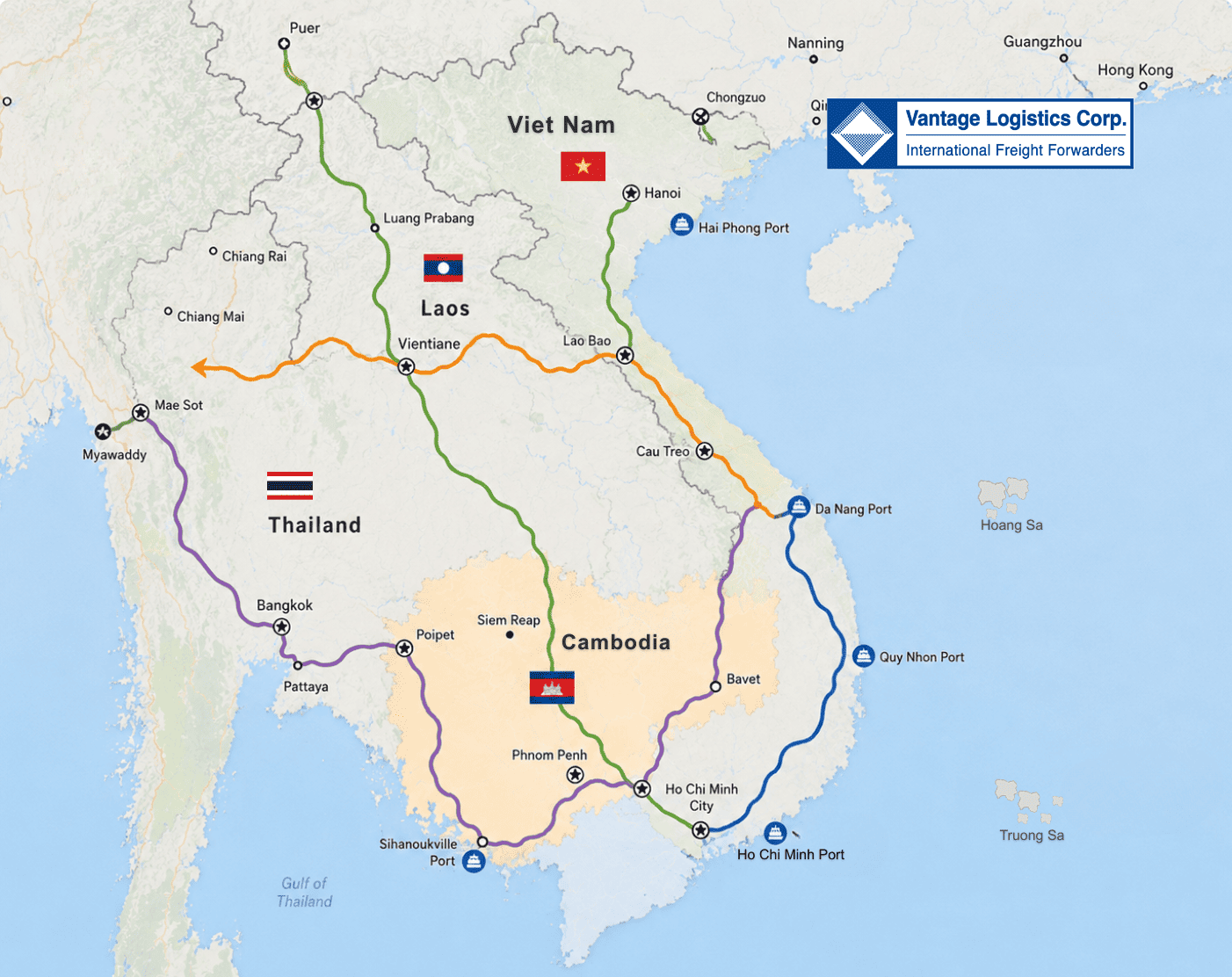
In June 2026, the Ministry of Industry and Trade of Viet Nam, in coordination with the People’s Committee of An Giang Province, organized the Viet Nam–Cambodia–Laos Border Trade Connectivity Conference in Tinh Bien, An Giang. The event was held under the theme: “Connecting Border Trade for Green and Digital Commerce Growth.” The conference took place as trade flows across the Mekong subregion continue to expand and regional supply chains become increasingly interconnected. For businesses, the event highlighted not only new market opportunities but also the growing importance of logistics capabilities, transportation networks, and cross-border supply chain management. The Mekong Trade Corridor Is Strengthening Regional Connectivity According to the Ministry of Industry and Trade, economic corridors, international border gates, border economic zones, and cross-border logistics networks linking Viet Nam, Cambodia, and Laos are playing an increasingly important role in facilitating trade, services, and investment activities. Border areas among the three countries are no longer viewed solely as transit points. They are becoming strategic links within Southeast Asia’s regional supply chain network. Stronger cooperation between border provinces is expected to support import and export activities, particularly for agricultural products, food, manufacturing materials, and consumer goods. As companies continue to diversify and strengthen supply chains across Southeast Asia, logistics routes connecting Viet Nam with Cambodia and Laos are attracting growing attention from both governments and the private sector. Trade Growth Drives Higher Demand for Logistics Services Cambodia remains one of Viet Nam’s largest trading partners within ASEAN. In 2025, bilateral trade between the two countries reached approximately USD 11.33 billion, representing an increase of 11.7% compared to the previous year. Both countries are also working toward a long-term trade target of USD 20 billion. As trade volumes continue to rise, logistics operations will face increasing demands in several key areas: Cross-border road transportation capacity Vehicle coordination at border checkpoints Customs declaration and clearance procedures Connectivity between warehouses, logistics centers, and delivery points Cross-border delivery scheduling and transit time management These developments indicate that growing trade activity creates not only commercial opportunities but also a greater need for efficient and scalable logistics operations. An Giang Emerges as a Strategic Gateway An Giang Province is strengthening its position as an important trade gateway between Viet Nam and Cambodia. The province shares nearly 148 kilometers of border with Cambodia and operates three international border gates: Vinh Xuong, Tinh Bien, and Ha Tien. It also benefits from connectivity to regional seaports and Phu Quoc International Airport. In 2025, total import-export turnover through An Giang’s border gates reached approximately USD 1.287 billion, including USD 561.35 million in exports and USD 718 million in imports. Key traded commodities include agricultural products, seafood, rice, fertilizers, manufacturing inputs, and consumer goods. These figures reflect the growing demand for cross-border transportation, warehousing, cargo consolidation, and logistics services supporting regional trade activities. Expanding Regional Supply Chains Across National Borders One of the key topics discussed during the conference was the development of stronger links between regional logistics hubs and commercial centers in Cambodia and Laos to improve supply chain efficiency and reduce transportation costs. Participants also emphasized the role of digital transformation in trade promotion, logistics management, and cross-border e-commerce. For manufacturers, traders, and import-export businesses, these developments create opportunities to: Expand into Cambodia and Laos Build regional supply chains rather than operating within a single market Leverage logistics corridors across the Mekong region Improve access to customers and business partners through digital trade platforms At the same time, successful cross-border expansion requires stronger control over documentation, transportation planning, delivery schedules, and customs compliance in each market. How Businesses Can Prepare for Accelerating Regional Trade To capture the benefits of growing trade connectivity between Viet Nam, Cambodia, and Laos, businesses should consider: Reviewing cross-border transportation and delivery capabilities Preparing customs documentation and trade compliance procedures in advance Assessing warehousing and consolidation requirements near border gateways Monitoring regulatory developments in trade and logistics across each market Building flexible logistics strategies for cargo movements throughout the Mekong region As regional trade volumes and supply chain integration continue to increase, close collaboration with experienced logistics providers can help businesses improve delivery reliability, manage transportation costs, and reduce operational risks. Vantage Logistics supports businesses with international freight forwarding, cross-border transportation, customs brokerage, warehousing, and logistics coordination across Southeast Asia. Services are tailored to the requirements of specific trade lanes, cargo types, and target markets. Contact Vantage Logistics to explore logistics solutions for your cross-border trade and regional supply chain operations.   Contact Vantage Logistics for tailored transport solutions and competitive quotations. Please provide details on cargo type, market, origin, destination, and estimated timeline. Vantage Logistics Corp – South East Asia (S.E.A) Logistics Provider One-Stop Shop For Integrated Logistics Services Head Office Viet Nam – Suite 6.01, Floor 6th, Block A, RiverGate Residence, 151-155 Ben Van Don, Khanh Hoi Ward, HCMC, Viet Nam Branch Thailand, Laos, Cambodia, Malaysia, Indonesia, Singapore Contact Us Email in**@*****om.vn Hotline +84-909-026-261 Website https://vantage-logistics.com Send your shipment enquiry today and receive a tailored transport plan from the Vantage Logistics team....

16/06/2026

View More
vlc-news-middle-east-conflict-route-risks-cost-pressure

Market updates

100 Days of Middle East Conflict: Route Risks and Cost Pressure Remain Unresolved

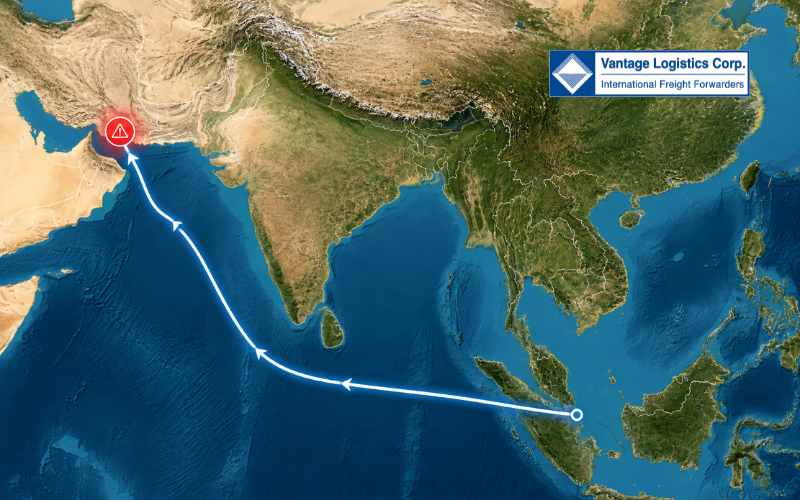
More than 100 days after the latest wave of conflict broke out in the Middle East, the international transport market has shown some short-term signs of geopolitical easing. However, this does not mean logistics risks have ended. Shipping lines, airlines, insurers and cargo owners still need time to reassess route safety, surcharges, schedules and operating capacity. For exporters from Viet Nam and Southeast Asia, Q3/2026 is a critical period to review shipment plans, especially for cargoes with strict delivery timelines, cost requirements and buyer commitments. Route Risks Remain Despite Signs of Easing In international logistics, the impact of geopolitical risk often comes with a delay. Even when the market receives positive signals on negotiations or easing tensions, shipping routes passing through key transit areas still need to be reassessed by carriers and insurers for actual safety conditions. When route risks remain present, shipping lines may continue to maintain or adjust their operating plans to ensure safe vessel deployment. This can affect transit time, sailing schedules, transshipment ports and the stability of delivery timelines. Exporters in Vietnam should not simply wait for the conflict to end. The priority is to check whether upcoming shipments depend on routes, sailing schedules or transshipment points that may still face disruption risks. Early Peak Season Adds Pressure on Freight Rates and Surcharges The 100-day milestone of the Middle East conflict also coincides with a challenging mid-year period for the global container shipping market. On one hand, fuel costs and route-risk-related surcharges remain key variables to monitor. On the other hand, concerns over market volatility have led many international buyers to advance their import plans, bringing peak-season demand earlier than usual. During this period, reference freight rates in the market should only be viewed as initial indicators. For exporters from Vietnam and Southeast Asia, the actual impact must be checked based on the port of loading, port of discharge, carrier, container type, booking timing and space availability at the time of confirmation. The base freight rate does not fully reflect total shipping costs. When surcharges change quickly and rate validity becomes shorter, businesses need to clarify the full cost structure before confirming a booking. Surcharges Must Be Checked Before Booking Confirmation When route risks increase, the cost structure of shipping lines and airlines may also change. In addition to the main freight rate, businesses need to check potential surcharges in the quotation, including fuel surcharge, peak season surcharge, container imbalance charge, local charges at origin and destination, and any fees related to schedule changes where applicable. For export shipments under CIF, DAP or DDP terms, unexpected surcharges can directly affect profit margins if they are not controlled from the beginning. A quotation with a lower base rate but incomplete surcharge details may result in a higher actual logistics cost than expected. Even under FOB terms, Vietnamese exporters are not fully insulated from the risk. If empty containers are released late, cargo is rolled to a later vessel or the sailing schedule changes close to the cargo-ready date, exporters may still face additional storage costs at origin and the risk of missing delivery commitments under the sales contract. Space and Empty Containers Should Be Confirmed Early When booking demand rises during peak season, checking the freight rate alone is not enough. Businesses need to confirm vessel space, empty container availability, rate validity and key operational milestones. Before finalizing a stuffing plan, exporters should clarify whether the quotation includes confirmed space and empty containers, or whether it is only an indicative rate at the time of quotation. This is important because rates and space availability can change quickly when demand increases. Businesses should also check the time buffer for empty container pickup, cargo stuffing, cargo delivery to port and closing time. If these milestones are too tight, even a small delay at the warehouse, during inland transport or at the terminal can cause the shipment to miss the intended vessel. Exporters should also prepare a backup plan in case the main sailing schedule changes. This may include alternative routes, suitable transshipment ports or adjusted delivery discussions with overseas buyers. Air Freight Only Fits Part of Urgent Demand Air freight is often considered when ocean freight cannot meet delivery requirements. However, tensions in the Middle East can also affect air cargo through fuel costs, route adjustments, operating capacity and transshipment conditions at major airports in the region. Because air freight costs are significantly higher than ocean freight, shifting the entire shipment to air is often unsuitable for bulky cargo, low-value goods or shipments with thin profit margins. Businesses need to assess urgency by cargo group rather than changing the entire mode of transport. In some cases, splitting the shipment can be considered. The urgent portion can move by air to support buyer delivery requirements or production continuity, while the remaining cargo continues by ocean with an earlier confirmed schedule to manage total logistics costs. Q3/2026 Shipment Plans Should Be Reviewed by Shipment In the second half of 2026, the international transport market may remain sensitive to geopolitical updates, fuel-related surcharges, peak-season demand and carrier capacity. Instead of only tracking general market movements, businesses should review logistics plans by individual shipment. Cargoes scheduled for delivery in June, July and August should be checked first. Exporters should identify which shipments must depart on time, which shipments can tolerate schedule adjustments and which shipments require an alternative plan if the sailing schedule changes. Logistics teams should also clarify rate validity, vessel space, empty container availability, applicable surcharges, inland transport time, customs clearance time, terminal delivery time and cut-off milestones. Early review gives businesses more control when communicating with buyers if transit time is at risk of changing. Early Control Helps Reduce Cost and Schedule Risks The international transport market in Q3/2026 remains affected by multiple factors at the same time: route risks, fuel costs, surcharges, peak-season demand, carrier capacity and empty container availability. When these factors occur together, businesses that prepare late will have fewer options in terms of sailing schedules, costs and delivery plans. The key is not to predict exactly when the market will ease, but to control what can be controlled: booking timing, quotation terms, surcharges, vessel space, empty containers, inland transport time, documentation and backup plans. Vantage Logistics recommends that exporters from Vietnam and Southeast Asia review their Q3/2026 shipment plans early. For cargoes with strict delivery timelines, cost requirements or buyer commitments, businesses should check freight rates, surcharges, sailing schedules, space availability and empty containers before confirming the stuffing plan. Contact Vantage Logistics to check freight rates, surcharges, sailing schedules, space availability and empty container status based on your actual export route.   Contact Vantage Logistics for tailored transport solutions and competitive quotations. Please provide details on cargo type, market, origin, destination, and estimated timeline. Vantage Logistics Corp – South East Asia (S.E.A) Logistics Provider One-Stop Shop For Integrated Logistics Services Head Office Viet Nam – Suite 6.01, Floor 6th, Block A, RiverGate Residence, 151-155 Ben Van Don, Khanh Hoi Ward, HCMC, Viet Nam Branch Thailand, Laos, Cambodia, Malaysia, Indonesia, Singapore Contact Us Email in**@*****om.vn Hotline +84-909-026-261 Website https://vantage-logistics.com Send your shipment enquiry today and receive a tailored transport plan from the Vantage Logistics team....

16/06/2026

View More
vlc-news-vietnamese-ports-rank-in-top-20-container-ports-1

Market updates

Vietnam’s Port Power: Cai Mep and Hai Phong Secure Global Top 20 Ranking in CPPI 2025

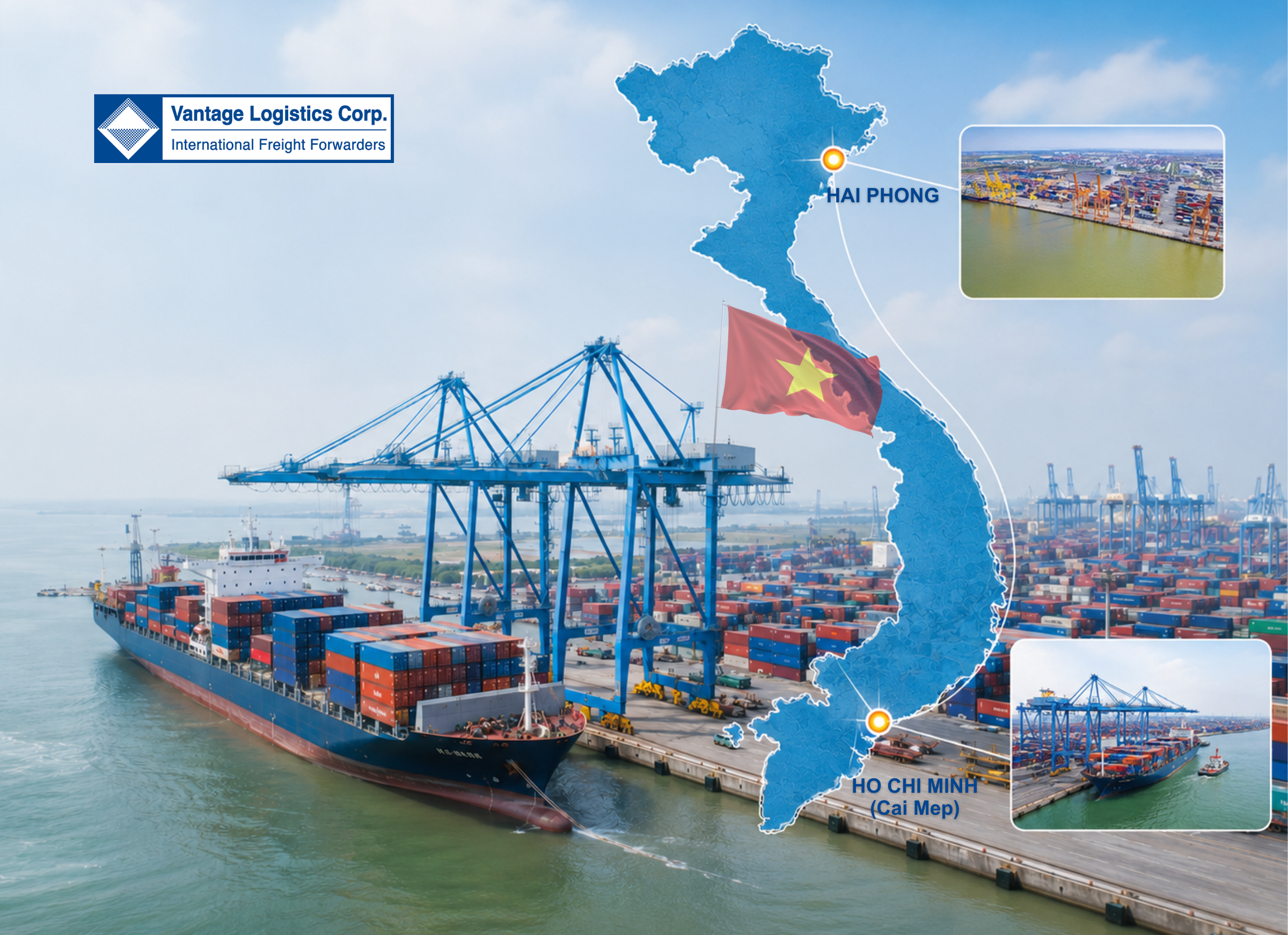
The CPPI 2025 report shows a slight decline in average global container port performance compared with the previous year, reflecting ongoing challenges facing maritime transport and international supply chains. Despite this trend, Viet Nam continues to have two ports ranked among the world’s Top 20 container ports. Global Port Performance Declines Slightly According to the report, the decline in port performance was not uniform across regions, reflecting differences in port infrastructure, trade structures, investment levels, and supply chain coordination capabilities. Ports in high-income and upper-middle-income economies generally maintained shorter vessel turnaround times, supported by stronger infrastructure, higher levels of automation, and more reliable information technology systems. Source: World Bank; S&P Global Market Intelligence Across East Asia and South Asia, many ports continued to deliver strong performance due to export-oriented trade structures, intense competition among ports, and ongoing investment in infrastructure, equipment, and operational capacity. By contrast, some ports in Europe and North America continued to face localized congestion, labor-related constraints, and inland transportation bottlenecks. The Middle East also recorded weaker performance following schedule disruptions linked to the Red Sea crisis. Source: World Bank; S&P Global Market Intelligence Top 20 CPPI 2025: East Asia Maintains a Strong Presence The CPPI 2025 results highlight the continued importance of East Asian ports within the global container shipping network. Table top 20 Nguồn: World Bank; S&P Global Market Intelligence China accounted for eight ports in the Top 20, including Fuzhou, Dalian, Mawan, and Chiwan, which all ranked within the global Top 5. The results underscore East Asia’s significant role in global container transportation and trade connectivity. Cai Mep and Hai Phong Stand Out in the Global Top 20 Viet Nam had two ports ranked among the Top 20 container ports in CPPI 2025: Cai Mep ranked 11th globally, while Hai Phong ranked 13th. Both ports achieved a CPPI score of 122. While Cai Mep maintained its position among the world’s higher-performing container ports, Hai Phong recorded a significant improvement in 2025, with its CPPI score rising from 87 to 122. Compared with 2020, the port’s score increased by 52 points, indicating substantial progress in operational efficiency and vessel turnaround performance. These results demonstrate the continuing importance of both Cai Mep and Hai Phong within international container shipping networks. Port Performance and Supply Chain Implications Port performance directly affects vessel turnaround times, schedule reliability, route utilization, and overall logistics costs. When vessels spend longer periods waiting at berth or anchorage, effective shipping capacity is reduced. This can weaken schedule reliability and create delays that extend to subsequent ports along a service route. The CPPI 2025 report also highlights the two-way relationship between port performance and supply chain stress. Supply chain disruptions can cause vessels to arrive out of sequence or in concentrated waves, while slower port operations can further spread delays throughout maritime networks. For importers and exporters, port performance data is more than a ranking metric. It is an operational indicator that should be monitored when planning shipments, particularly during periods of market volatility affecting vessel schedules, capacity availability, equipment supply, and freight costs. As global port performance continues to be influenced by supply chain disruptions, close coordination between vessel bookings, inland transportation, documentation, and customs clearance remains essential for maintaining shipment schedules and delivery reliability. Businesses planning shipments through Cai Mep, Hai Phong, or major international transshipment hubs can contact Vantage Logistics for support with vessel schedule reviews, inland transportation planning, customs clearance preparation, and shipment coordination tailored to specific cargo requirements.   Contact Vantage Logistics for tailored transport solutions and competitive quotations. Please provide details on cargo type, market, origin, destination, and estimated timeline. Vantage Logistics Corp – South East Asia (S.E.A) Logistics Provider One-Stop Shop For Integrated Logistics Services Head Office Viet Nam – Suite 6.01, Floor 6th, Block A, RiverGate Residence, 151-155 Ben Van Don, Khanh Hoi Ward, HCMC, Viet Nam Branch Thailand, Laos, Cambodia, Malaysia, Indonesia, Singapore Contact Us Email in**@*****om.vn Hotline +84-909-026-261 Website https://vantage-logistics.com Send your shipment enquiry today and receive a tailored transport plan from the Vantage Logistics team....

15/06/2026

View More
vlc-news-us-iran-hormuz-1

Market updates

US–IRAN AGREEMENT RAISES PROSPECTS FOR FULL RESTORATION OF SHIPPING THROUGH THE STRAIT OF HORMUZ: WHAT SHOULD BUSINESSES WATCH NEXT?

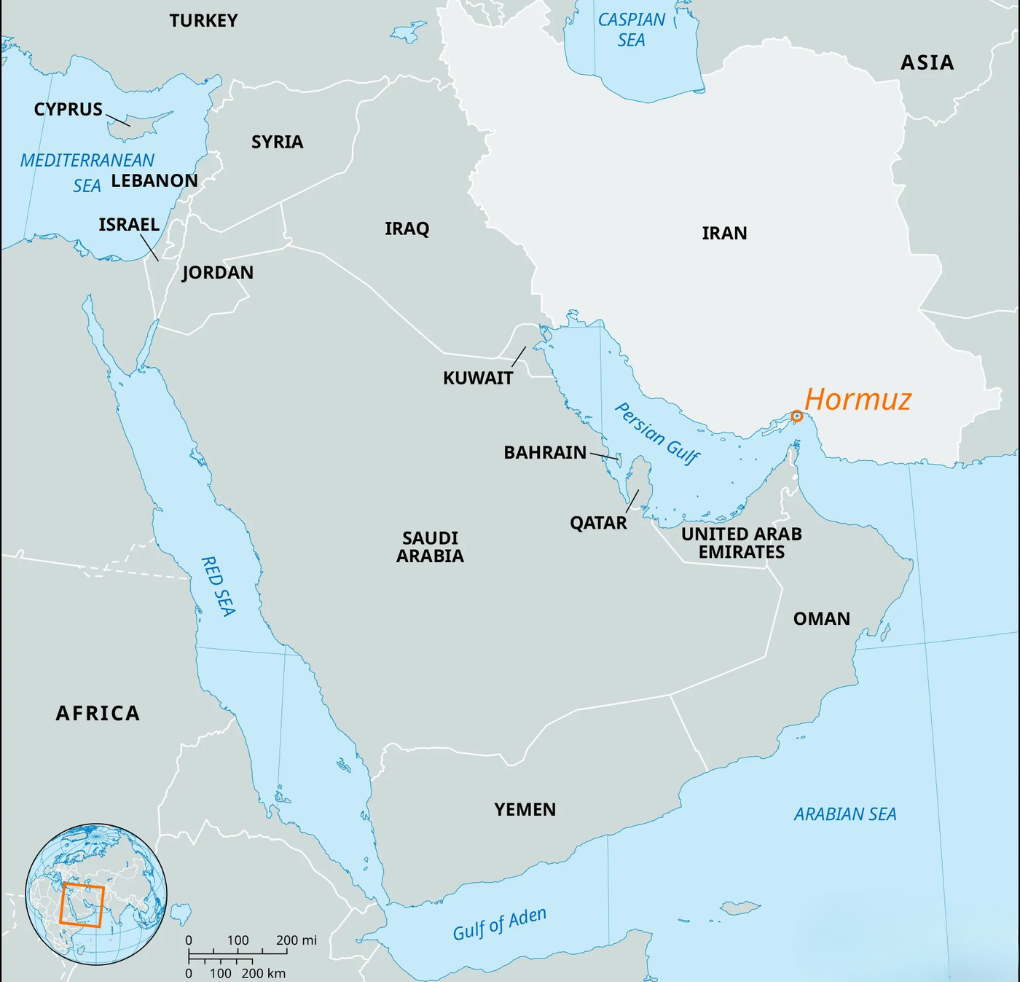
Recent progress in negotiations between the United States and Iran has raised expectations that maritime traffic through the Strait of Hormuz could gradually return to normal operations. If diplomatic momentum continues, global shipping, energy, and supply chain markets may enter a more stable phase after months of disruption caused by geopolitical tensions in the Middle East. Strait of Hormuz: A Critical Artery for Global Trade The Strait of Hormuz serves as the gateway between the Persian Gulf and the Indian Ocean, making it one of the world’s most strategically important maritime corridors. The waterway plays a central role in transporting crude oil, liquefied natural gas (LNG), petrochemicals, and a wide range of import and export cargo moving to and from the Middle East. According to international energy organizations, approximately 20% of global oil consumption and a significant share of LNG exports from Gulf countries – including Saudi Arabia, the United Arab Emirates, Qatar, Kuwait, and Iraq – transit through the Strait of Hormuz. As a result, any disruption in the area can have immediate implications for energy prices, freight costs, and international trade flows. During periods of heightened tension between the United States and Iran, many shipping lines adjusted sailing routes, implemented additional risk-management measures, and faced elevated insurance costs for vessels operating in the region. Peace Agreement Eases Pressure on Shipping and Energy Markets The preliminary peace agreement announced between the United States and Iran in mid-June 2026 is widely viewed as a positive step toward reducing geopolitical risk across the Persian Gulf region. Following the announcement, global energy markets responded positively, with both Brent and WTI crude prices showing downward pressure as concerns over potential supply disruptions eased. For the logistics sector, the development signals the possibility of greater stability across Middle East-related trade lanes in the coming months. Should maritime operations through the Strait of Hormuz fully normalize, several positive market developments could follow: Reduced upward pressure on marine fuel costs Lower war risk surcharges and additional insurance premiums Improved schedule reliability for shipping lines More stable supplies of crude oil, LNG, and industrial feedstocks from the Middle East Reduced supply chain disruption risks for manufacturers dependent on imported energy and raw materials Implications for Importers and Exporters in Viet Nam Although Viet Nam is not directly located along the Strait of Hormuz shipping corridor, businesses across the country remain exposed to developments in the region through global logistics costs and commodity pricing. Many manufacturers in Viet Nam import petrochemicals, plastics, industrial raw materials, petroleum products, and energy-related commodities from Middle Eastern suppliers. When transportation costs and fuel prices increase, overall import costs can rise significantly. If conditions in the Strait of Hormuz continue to stabilize, businesses in Viet Nam may benefit from: Gradual reductions in international logistics costs over the medium to long term More stable raw material supply from Middle Eastern markets Improved production planning and inventory management Reduced exposure to volatility in global energy prices For exporters serving Middle Eastern markets, improved maritime connectivity could also support stronger trade flows and more reliable transportation services throughout the region. Full Recovery May Take Time Despite improving conditions, shipping industry analysts caution that maritime operations are unlikely to return to pre-crisis conditions immediately. Shipping lines, vessel operators, and marine insurers continue to monitor maritime security conditions, operational risks, and regulatory developments as implementation of the agreement progresses. As a result, certain surcharges and risk-management measures may remain in place in the short term until the market gains greater confidence in the region’s long-term stability. Key Developments Businesses Should Monitor To strengthen supply chain resilience and manage risk effectively, cargo owners, importers, and exporters should closely monitor: The implementation progress of the preliminary US–Iran agreement Operational conditions in the Strait of Hormuz Global oil and marine fuel price trends Carrier-announced surcharges and fees Marine insurance requirements for Middle East trade routes Recovery of energy and raw material supply from Gulf countries Maintaining visibility over these factors can help businesses make more informed decisions regarding transportation planning, procurement strategies, and logistics cost management in an environment that remains sensitive to geopolitical developments. Supporting Supply Chains Through Market Uncertainty Changes in geopolitics, energy markets, and maritime transportation can have a direct impact on supply chain costs and operational performance. Through its global partner network and experience in international multimodal transportation, Vantage Logistics helps businesses stay informed of market developments, optimize transportation strategies, and maintain supply chain continuity amid changing market conditions. Contact Vantage Logistics to explore international freight solutions, supply chain management services, and logistics strategies tailored to your business requirements.   Contact Vantage Logistics for tailored transport solutions and competitive quotations. Please provide details on cargo type, market, origin, destination, and estimated timeline. Vantage Logistics Corp – South East Asia (S.E.A) Logistics Provider One-Stop Shop For Integrated Logistics Services Head Office Viet Nam – Suite 6.01, Floor 6th, Block A, RiverGate Residence, 151-155 Ben Van Don, Khanh Hoi Ward, HCMC, Viet Nam Branch Thailand, Laos, Cambodia, Malaysia, Indonesia, Singapore Contact Us Email in**@*****om.vn Hotline +84-909-026-261 Website https://vantage-logistics.com Send your shipment enquiry today and receive a tailored transport plan from the Vantage Logistics team....

15/06/2026

View More
vlc-news-centralized-customs-clearance-in-haiphong-vietnam

Market updates

Centralized Customs Clearance in Hai Phong: Importers and Exporters Should Review Data Before Filing Declarations

The centralized customs clearance model implemented at Customs Sub-Department Region III places greater emphasis on customs data quality. Businesses should review shipping documents, HS codes, certificates of origin, and electronic records before submitting customs declarations to reduce the risk of clearance delays. Effective June 1, 2026, a centralized customs clearance model has been implemented at Customs Sub-Department Region III, which oversees the Hai Phong area, under Decision No. 702/QĐ-CHQ. For importers and exporters, this change places greater responsibility on document preparation. Information contained in commercial invoices, packing lists, bills of lading, certificates of origin, HS codes, permits, and technical documents should be reviewed before customs declarations are submitted. As customs processing becomes more centralized and relies increasingly on electronic data verification, discrepancies may lead to clearance delays, additional costs, and disruptions to delivery schedules. The New Process Raises the Importance of Data Quality The centralized customs clearance model represents an adjustment to customs procedures for import and export shipments handled by Customs Sub-Department Region III. Instead of processing certain activities through multiple decentralized units, selected customs functions are now handled through centralized operational teams. What businesses should pay attention to is not simply where declarations are processed, but how they are reviewed. When information is already available through customs electronic data systems, the National Single Window, online public service platforms, the ASEAN Single Window, or other official data exchange channels, customs authorities have a stronger basis for cross-checking and verifying information. This does not make document preparation any simpler. On the contrary, businesses must ensure that customs data is complete, consistent, and supported by adequate documentation before declarations are submitted. In addition to placing greater emphasis on data quality, the centralized clearance model is also expected to contribute to a more standardized approach to document review and customs processing across the region. As review procedures become more centralized, businesses may benefit from greater consistency in document verification, regulatory application, and the handling of similar shipment scenarios. However, these benefits depend on having complete and accurate information from the outset. Small Discrepancies Can Delay an Entire Shipment In an electronic customs environment, risks do not arise solely from individual declaration errors. A greater risk often comes from inconsistencies between documents within the same shipment file. Common issues include: Product descriptions on commercial invoices that do not match technical documentation. HS codes that do not accurately reflect the nature, function, or composition of the goods. Differences in quantity, weight, or package counts between commercial invoices, packing lists, and bills of lading. Certificate of origin information that does not match invoices or shipping documents. Customs declaration descriptions that are too general to support regulatory verification. Permits, conformity certificates, or specialized inspection results that are not available at the time of declaration. These issues may result in requests for additional documentation, further clarification, or extended customs processing times. For time-sensitive shipments, even a single data discrepancy can lead to storage charges, container detention costs, trucking rescheduling, or delayed deliveries to manufacturing facilities. As customs reviews become more centralized and increasingly dependent on electronic data verification, businesses should also recognize that correcting discrepancies at the last minute may become more difficult than before. Information that is inconsistent across documents may require additional verification or explanation before being accepted, rather than being resolved through localized processing channels under a decentralized operating model. Import Cargo Management: Review Documents from the Draft Stage For import shipments, document verification should not begin when cargo arrives at the port. It should start as soon as draft documents are received from overseas suppliers. Businesses should review the following information as early as possible: Product names, descriptions, and technical documentation Proposed HS codes Invoice values, Incoterms, and payment currency Quantity, weight, package count, and packing specifications Seller, buyer, shipper, and consignee information Certificates of origin, import permits, specialized inspection documents, or conformity certificates when required Waiting until cargo arrives at the port to review documentation can leave businesses in a reactive position when document amendments, permit applications, or customs explanations become necessary. For manufacturing materials, machinery and equipment, goods claiming preferential origin, or shipments subject to specialized inspections, such delays may directly affect production schedules and delivery commitments. Export Cargo Management: Align Customs Procedures with Vessel Cut-Off Schedules For export shipments, customs procedures should not be treated as the final step after cargo has already been loaded. Declaration timelines are directly connected to container pickup, cargo stuffing, terminal delivery, and vessel cut-off schedules. Exporters should pay particular attention to shipments that: Utilize preferential certificates of origin Include multiple product lines, item codes, or packing configurations Require permits or specialized inspections Require detailed product descriptions from overseas buyers Have tight vessel schedules or short terminal receiving windows Involve last-minute changes before cargo loading If customs information must be revised close to vessel cut-off time, exporters may face missed sailings, additional storage costs, or disruptions to delivery commitments. Export documentation should therefore be reviewed before cargo loading begins, rather than after cargo is already moving toward the port. Centralized Customs Clearance Requires Early Cross-Department Coordination For many businesses, customs risks do not originate from a single document but from a lack of coordination among parties involved in the supply chain. Information provided by overseas suppliers, procurement teams, logistics departments, freight forwarders, customs brokers, and end customers should be aligned before customs declarations are submitted. The centralized customs clearance model places greater emphasis on internal coordination and information management. Businesses that establish document review procedures early, assign clear responsibilities across departments, and standardize customs data before filing are better positioned to reduce the likelihood of declaration amendments, additional explanations, and processing delays Certain Cases Continue to Follow Separate Procedures The centralized customs clearance model does not apply equally to every shipment type. Businesses should identify the correct cargo category, declaration method, and processing location before execution. Certain procedures continue to be handled by border-gate customs offices or through separate processes, including: Independently transported cargo Goods entering or leaving bonded warehouses Shipments declared using paper customs declarations Low-value postal or express consignments, where applicable Misunderstanding the scope of implementation may result in incorrect procedures, submissions through the wrong processing channels, or unnecessary delays. Self-Assessment Checklist Before Submitting Customs Declarations Before submitting a customs declaration, businesses should review at least the following: Are product descriptions consistent across the commercial invoice, packing list, bill of lading, technical documentation, and customs declaration? Does the HS code accurately reflect the nature of the goods and comply with current Vietnamese tariff regulations? Are invoice values, quantities, weights, package counts, and Incoterms consistent across all documents? Does the certificate of origin match the commercial invoice and bill of lading? Are the goods subject to permits, specialized inspections, or conformity certification requirements? Are all required electronic records available in the relevant systems? Is the shipment subject to centralized customs clearance or a separate border-gate customs process? Are there any issues that may require supporting explanations before customs authorities request additional documentation? This checklist does not replace professional customs expertise, but it can help businesses identify common data issues before declarations are submitted. Vantage Logistics Solution: Managing Risks Before Declarations Are Submitted Under a centralized customs clearance environment, customs services involve more than simply transmitting declarations. The greater priority is verifying data before information enters the customs system. Once declarations have been submitted, inconsistencies involving documents, HS codes, customs valuation, certificates of origin, permits, or technical documentation may lead to requests for additional information, clarification, or extended processing times. Vantage Logistics supports businesses by reviewing documentation during the preparation stage. Our operations team verifies consistency across commercial invoices, packing lists, bills of lading, certificates of origin, technical documents, and other regulatory records. In addition to reviewing individual documents, Vantage Logistics helps businesses establish document preparation procedures aligned with the centralized customs clearance model. Early coordination among suppliers, procurement teams, logistics departments, and declaration personnel can significantly reduce the risk of data discrepancies before information enters customs electronic systems. For each shipment, Vantage Logistics evaluates potential risk areas, including unclear product descriptions, HS classification concerns, origin-related discrepancies, missing permits, or incomplete specialized inspection documentation. For import shipments, Vantage Logistics reviews supplier draft documents before cargo arrives at the port. For export shipments, Vantage Logistics coordinates customs procedures with cargo loading schedules, container pickup, terminal delivery, and vessel cut-off deadlines to reduce the risk of shipment delays caused by last-minute document revisions. The value of customs services lies in identifying and resolving data conflicts before they become clearance issues. When documentation is prepared correctly from the beginning, businesses can reduce the likelihood of amendment requests, minimize port waiting times, control storage and detention costs, and maintain delivery schedules for factories, distribution centers, and overseas customers. Businesses shipping cargo through the Hai Phong area or seeking stronger customs risk management for import and export shipments are encouraged to contact Vantage Logistics for guidance on document review, customs declaration procedures, and customs clearance coordination tailored to individual shipment requirements.   Contact Vantage Logistics for tailored transport solutions and competitive quotations. Please provide details on cargo type, market, origin, destination, and estimated timeline. Vantage Logistics Corp – South East Asia (S.E.A) Logistics Provider One-Stop Shop For Integrated Logistics Services Head Office Viet Nam – Suite 6.01, Floor 6th, Block A, RiverGate Residence, 151-155 Ben Van Don, Khanh Hoi Ward, HCMC, Viet Nam Branch Thailand, Laos, Cambodia, Malaysia, Indonesia, Singapore Contact Us Email in**@*****om.vn Hotline +84-909-026-261 Website https://vantage-logistics.com Send your shipment enquiry today and receive a tailored transport plan from the Vantage Logistics team....

15/06/2026

View More
vlc-comprehensive-customs-solution

Vantage News

COMPREHENSIVE CUSTOMS SOLUTIONS – OPTIMIZE YOUR SUPPLY CHAIN WITH VANTAGE LOGISTICS

In global supply chains, customs clearance is often the critical checkpoint that determines cargo flow efficiency. As a licensed Customs Brokerage Agent certified by Vietnam Customs (Decision No. 2314/QD-TCHQ), Vantage Logistics goes beyond customs declaration services. We provide an integrated customs management platform that helps businesses streamline operations, reduce costs, and maintain supply chain continuity. Core Expertise: More Than Customs Declarations Rather than focusing solely on document processing, Vantage Logistics delivers comprehensive customs solutions built on in-depth knowledge of Vietnamese regulations and international trade requirements. Licensed Customs Brokerage Services: As an officially authorized customs broker, we ensure compliance throughout the clearance process, helping minimize inspection risks, administrative errors, and regulatory complications Permit and Licensing Consultation: Our specialists support businesses with permit applications, import-export licensing requirements, and Master List preparation for manufacturing and investment projects Professional Duty Refund Services: We review customs records and manage refund procedures to help companies recover eligible duties and improve working capital efficiency Vantage Logistics Customs Brokerage Services We provide comprehensive customs brokerage solutions, catering to the diverse requirements of import/export enterprises: Group 1: Customs Clearance & Procedures Full-service Customs Clearance: End-to-end clearance for all trade types (Commercial, Processing, and Export Manufacturing). Specialized Cargo Handling: Bulk cargo, project cargo, and temporary import/re-export shipments. Multi-modal Services: Expert clearance for both Air and Sea shipments. Transit Services: Facilitating customs procedures for cross-border transit goods. Tax Declaration & Settlement: Accurate calculation, declaration, and payment of customs duties on behalf of the client. Group 2: Customs Consulting & Strategic Solutions Classification & Optimization: HS Code classification, duty rate determination, and utilization of Free Trade Agreements (FTAs). Post-Clearance Audit (PCA) Support: Comprehensive file review, data preparation, and professional representation during customs audits. Compliance Solutions: Consulting on internal customs record management to mitigate regulatory risks and penalties. Group 3: Permits & Certifications Certificates of Origin (C/O): Application for various C/O forms (Form D, E, AK, EUR.1, etc.) to leverage tariff preferences. Specialized Permits: Managing quality inspections, sanitary/phytosanitary (SPS) certifications, and conformity declarations for regulated commodities Vantage Logistics Customs Services Department at Ho Chi Minh City Head Office Capability to Deliver Comprehensive Customs Solutions: Expert Consulting – Efficient Clearance Documentation errors are the root cause of delays and unexpected costs. At Vantage Logistics, we go beyond basic service provision, acting as an extended logistics department for your business. Our comprehensive solution is built on three core strengths: Modern Systems & Transparent Processes: By applying advanced technology, we streamline data processing and ensure real-time shipment tracking. This transparency guarantees that clearance procedures stay on schedule. Industry Expertise & Seamless Coordination: With extensive hands-on experience at major ports and airports, we handle diverse and specialized cargo efficiently. Close coordination across departments minimizes additional costs such as warehousing or container demurrage/detention fees. Risk Control & Sustainable Compliance: Through meticulous review and standardized declarations with high accuracy, we help businesses maintain “clean records.” This not only prevents administrative penalties but also enables long-term benefits from customs incentives in Vietnam and internationally. At Vantage Logistics, customs management is not merely a regulatory requirement – it is a strategic advantage that enables businesses to connect with global supply chains more efficiently and confidently. Need expert support for customs documentation, licensing requirements, or specialized clearance procedures? Contact Vantage Logistics today to discuss your operational requirements with our customs specialists.   Contact Vantage Logistics for tailored transport solutions and competitive quotations. Please provide details on cargo type, market, origin, destination, and estimated timeline. Vantage Logistics Corp – South East Asia (S.E.A) Logistics Provider One-Stop Shop For Integrated Logistics Services Head Office Viet Nam – Suite 6.01, Floor 6th, Block A, RiverGate Residence, 151-155 Ben Van Don, Khanh Hoi Ward, HCMC, Viet Nam Branch Thailand, Laos, Cambodia, Malaysia, Indonesia, Singapore Contact Us Email in**@*****om.vn Hotline +84-909-026-261 Website https://vantage-logistics.com Send your shipment enquiry today and receive a tailored transport plan from the Vantage Logistics team....

11/06/2026

View More
vlc-trucking-service (3)

Vantage News

FACTORY-TO-PORT TRUCKING SERVICES: KEEP YOUR EXPORT SCHEDULE ON TRACK AND AVOID CUT-OFF RISKS WITH VANTAGE LOGISTICS

Many exporters face a common challenge: production is completed, vessel booking has been confirmed, yet the container still fails to reach the port as planned. In most cases, the root cause lies within the inland transportation process. Delayed truck arrivals, late empty container releases, traffic congestion, port bottlenecks, or poor coordination between trucking schedules and vessel departures can all disrupt the supply chain. For exporters, this is more than a transportation issue – it is a significant operational risk that can directly impact delivery commitments and overall logistics costs. In many situations, the financial impact of a missed port cut-off can far exceed any transportation savings a company initially sought to achieve. More importantly, shipment delays can damage customer relationships and undermine delivery commitments made to overseas buyers. What Sets Vantage Logistics Apart Understanding these challenges, Vantage Logistics provides dedicated trucking solutions designed to minimize cut-off risks through: End-to-End Operational Control: We closely manage every stage of the process – from empty container pickup, factory stuffing, customs clearance, and port delivery – to ensure no critical step is overlooked. Reliable Transportation Capacity: Handling between 3,000 and 5,000 TEUs per month, supported by a stable trucking fleet and strategic carrier partnerships, we maintain service continuity even during peak shipping seasons. Real-Time Visibility and Monitoring: Our Transportation Management System (TMS) provides real-time tracking and proactive alerts whenever operational issues arise, enabling immediate response instead of relying on delayed manual updates. Experienced Field Operations Team: Our on-site personnel work directly at factories, depots, and ports to resolve issues as they occur, helping prevent disruptions and maintain shipment schedules. One-Stop Logistics Coordination: By integrating inland transportation, customs brokerage, warehousing, and international freight services, we provide a single point of contact that simplifies logistics management and reduces administrative workload. Benefits for Exporters Reduce Cut-Off Risks: Protect your delivery performance and maintain credibility with international customers Control Logistics Costs: Minimize unexpected expenses such as DEM/DET charges and emergency trucking arrangements Improve Shipment Visibility: Gain better control over shipment progress through a coordinated logistics solution rather than managing multiple disconnected service providers Connect with Vantage Logistics to explore an inland transportation solution tailored to your export operations and designed to keep your cargo moving according to schedule. Simply share your loading location, destination port or ICD, cargo type, expected container volume, and shipping schedule (ETD). Our logistics specialists will assess your requirements and develop a transportation plan that supports timely port delivery and reliable export execution.   Contact Vantage Logistics for tailored transport solutions and competitive quotations. Please provide details on cargo type, market, origin, destination, and estimated timeline. Vantage Logistics Corp – South East Asia (S.E.A) Logistics Provider One-Stop Shop For Integrated Logistics Services Head Office Viet Nam – Suite 6.01, Floor 6th, Block A, RiverGate Residence, 151-155 Ben Van Don, Khanh Hoi Ward, HCMC, Viet Nam Branch Thailand, Laos, Cambodia, Malaysia, Indonesia, Singapore Contact Us Email in**@*****om.vn Hotline +84-909-026-261 Website https://vantage-logistics.com Send your shipment enquiry today and receive a tailored transport plan from the Vantage Logistics team....

10/06/2026

View More
vlc-news-vnus-wooden-tariff

Market updates

U.S. PLYWOOD DUTIES COULD EXCEED 200%: HOW EXPORTERS CAN MANAGE THE RISK

As the U.S. Department of Commerce (DOC) intensifies its anti-dumping (AD) and countervailing duty (CVD) investigations into hardwood and decorative plywood imports from Vietnam, many exporters are facing the prospect of preliminary duties approaching 200%. According to preliminary findings released by the DOC, the combined AD and CVD rates for certain companies could reach nearly 208%, placing significant pressure on costs and competitiveness in the U.S. market. The uncertainty has already prompted some businesses to suspend exports while assessing their exposure to potential trade remedies. Understanding the Risk: It’s More Than Just HS Codes The HS (HTSUS) codes published by the DOC serve as a reference point, but they are not the sole factor in determining whether a product falls within the scope of an investigation. In practice, U.S. authorities place greater emphasis on a product’s technical description and actual characteristics when making scope determinations. In addition, Vietnamese plywood shipments have been subject to heightened scrutiny regarding Rules of Origin compliance. Concerns over the use of core materials sourced from countries already subject to high trade remedy duties have led to more rigorous reviews of origin-related documentation and manufacturing processes. Reference HTSUS codes published by the U.S. Department of Commerce for hardwood and decorative plywood products under investigation. Reference HTSUS Codes Published by the DOC Risk Mitigation Strategies for Exporters To reduce financial and compliance risks, businesses should take the following steps: Conduct a comprehensive review of raw material sourcing to ensure full traceability and maintain clear records demonstrating manufacturing activities performed in Vietnam. Monitor official regulatory updates by following Federal Register publications and DOC announcements, including final determinations that may impact future exports. Evaluate potential exclusions to determine whether specific products qualify for exemption based on their technical specifications. Verify documentation consistency across commercial invoices, shipping documents, certificates of origin, and customs declarations to minimize the risk of additional reviews or compliance issues. Vantage: Supporting Businesses Through Trade Challenges Navigating the complexities of U.S. trade regulations can be challenging, particularly when investigations involve product classification and origin verification requirements: To help businesses manage these challenges, Vantage provides: Product classification and scope assessment – helping determine whether a product falls within the scope of ongoing investigations. Export and logistics consultation – recommending transportation and documentation strategies that help reduce compliance and operational risks. Access to trade specialists – working alongside international trade and legal experts to strengthen origin documentation and support market access efforts. Trade barriers should not prevent businesses from pursuing opportunities in the U.S. market. Proactive risk assessment and proper documentation can help exporters better prepare for evolving regulatory requirements. Let Vantage Logistics help you evaluate potential risks and review your export compliance strategy today. Contact our team for guidance tailored to your products and shipping requirements. Vantage Logistics – Supporting Businesses in Global Markets.   Contact Vantage Logistics for tailored transport solutions and competitive quotations. Please provide details on cargo type, market, origin, destination, and estimated timeline. Vantage Logistics Corp – South East Asia (S.E.A) Logistics Provider One-Stop Shop For Integrated Logistics Services Head Office Viet Nam – Suite 6.01, Floor 6th, Block A, RiverGate Residence, 151-155 Ben Van Don, Khanh Hoi Ward, HCMC, Viet Nam Branch Thailand, Laos, Cambodia, Malaysia, Indonesia, Singapore Contact Us Email in**@*****om.vn Phone +84-28 382 67312 Hotline +84-909-026-261 Website Send your shipment enquiry today and receive a tailored transport plan from the Vantage Logistics team....

09/06/2026

View More

Market updates

VIET NAM – AUSTRALIA TRADE OVERVIEW: IMPORT & EXPORT STATISTICAL DATA (2022 – Q1/2026)

Viet Nam – Australia trade statistics 2022–Q1 2026: bilateral trade value, top export and import commodities, market trends, and logistics insights for exporters and importers. I. Viet Nam – Australia Trade Continues to Exceed USD 13 Billion Per Year Bilateral trade between Viet Nam and Australia has remained at a high level since 2022, consistently exceeding USD 13 billion annually. The trade structure remains complementary, with Viet Nam exporting manufactured and consumer goods while Australia supplies energy resources, agricultural products, and industrial raw materials. This balance has helped maintain stable trade flows despite fluctuations in global demand and supply chains. II. Viet Nam – Australia Trade Overview Over the past decade, bilateral trade has benefited from deeper economic cooperation and the implementation of regional trade agreements, including CPTPP, RCEP, and AANZFTA. Australia remains one of Viet Nam’s most important trading partners in Oceania, while Viet Nam has become an increasingly significant economic partner for Australia in Southeast Asia. Source: Vietnam Customs Statistic Preliminary data for the first quarter of 2026 indicate exports from Viet Nam to Australia of approximately USD 3.7 billion and imports of approximately USD 44 million, resulting in a trade surplus of about USD 3.66 billion. III. Viet Nam’s Major Exports to Australia Exports of computers, electronic products and components increased to USD 934 million in 2025, while telephones and components generated USD 675 million in export turnover. Electronics, machinery, textiles, footwear, and crude oil remained among Viet Nam’s largest export categories to Australia. Unit: USD Billion No Commodity 2024 2025 1 Computers, Electrical Products, Components & Parts 0,670 0,934 2 Telephones, Mobile Phones & Parts 0,589 0,675 3 Crude Oil 0,573 0,669 4 Machinery, Equipment, Tools & Instruments 1,138 0,641 5 Textiles & Garments 0,570 0,595 6 Footwear 0,412 0,459 7 Fishery Products 0,343 0,347 8 Iron & Steel Products 0,183 0,249 9 Iron & Steel 0,197 0,243 10 Other Products 0,410 0,482 Source: Vietnam Customs Statistic IV. Viet Nam’s Major Imports from Australia Australia’s exports to Viet Nam are concentrated in energy commodities, minerals, agricultural products, and manufacturing inputs. Coal remained the largest import category in 2025 at USD 2.63 billion, followed by ores and other mineral products at USD 1.25 billion. Together, these two categories accounted for more than half of Viet Nam’s imports from Australia. Unit: USD Billion No. Commodity 2024 2025 1 Coal 2,656 2,629 2 Ores & Other Mineral Products 1,267 1,251 3 Other Base Metals 1,064 1,059 4 Other Products 0,831 0,716 5 Wheat 0,362 0,380 6 Cotton 0,653 0,376 7 Fruits & Vegetables 0,151 0,170 8 Milk & Dairy Products 0,121 0,129 9 Ferrous Waste & Scrap 0,132 0,128 10 Animal Feed & Feed Materials 0,070 0,063 Source: Vietnam Customs Statistic V. Outlook for Viet Nam – Australia Trade in 2026 Looking ahead, demand for electronics, machinery, consumer products, seafood, energy commodities, and industrial inputs is expected to continue supporting trade between Viet Nam and Australia. The long-term outlook remains positive as expanding manufacturing activity in Viet Nam continues to drive demand for imported energy resources, minerals, cotton, and agricultural commodities from Australia. At the same time, rising consumer demand in Australia supports imports of Vietnamese manufactured goods, electronics, seafood, and apparel. As trade volumes continue to grow, efficient freight planning, customs compliance, and supply chain visibility remain critical for businesses operating between Viet Nam and Australia. Vantage Logistics supports importers and exporters with ocean freight, air freight, customs brokerage, warehousing, and integrated logistics solutions across this trade corridor.   Contact Vantage Logistics for tailored transport solutions and competitive quotations. Please provide details on cargo type, market, origin, destination, and estimated timeline. Vantage Logistics Corp – South East Asia (S.E.A) Logistics Provider One-Stop Shop For Integrated Logistics Services Head Office Viet Nam – Suite 6.01, Floor 6th, Block A, RiverGate Residence, 151-155 Ben Van Don, Khanh Hoi Ward, HCMC, Viet Nam Branch Thailand, Laos, Cambodia, Malaysia, Indonesia, Singapore Contact Us Email in**@*****om.vn Phone +84-28 382 67312 Hotline +84-909-026-261 Website https://vantage-logistics.com Send your shipment enquiry today and receive a tailored transport plan from the Vantage Logistics team...

08/06/2026

View More
1 … 12 13 14 15 16 … 43