 LOGIN
LOGIN 
 VN
VN
 Sea Freight
  Air Freight
  Intermodal
  Customs Brokerage
  Project Logistics
  Warehouse Services
  Trucking
  Insurance
  Logistics Infrastructures
  Consulting & Assistance
  NVOCC
NVOCC  Barge & Coastal Feeder
  GSA / PCSA Airlines
  Perishable / Refrigerated Logistics
  Dangerous Good Logistics
  Oil & Gas Logistics
  Offshore Services
  Rice Logistics
  Global Sales Logistics
  Parcel / Courier Logistics
  Cross-Docking & End-To-End Warehousing
  On Board Courier
  Buying Agent
The centralized customs clearance model implemented at Customs Sub-Department Region III places greater emphasis on customs data quality. Businesses should review shipping documents, HS codes, certificates of origin, and electronic records before submitting customs declarations to reduce the risk of clearance delays.
Effective June 1, 2026, a centralized customs clearance model has been implemented at Customs Sub-Department Region III, which oversees the Hai Phong area, under Decision No. 702/QĐ-CHQ.
For importers and exporters, this change places greater responsibility on document preparation. Information contained in commercial invoices, packing lists, bills of lading, certificates of origin, HS codes, permits, and technical documents should be reviewed before customs declarations are submitted.
As customs processing becomes more centralized and relies increasingly on electronic data verification, discrepancies may lead to clearance delays, additional costs, and disruptions to delivery schedules.
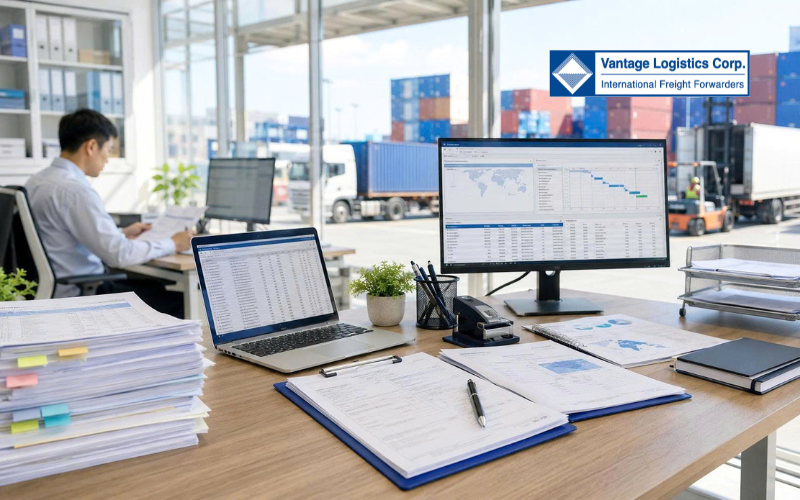
The New Process Raises the Importance of Data Quality
The centralized customs clearance model represents an adjustment to customs procedures for import and export shipments handled by Customs Sub-Department Region III. Instead of processing certain activities through multiple decentralized units, selected customs functions are now handled through centralized operational teams.
What businesses should pay attention to is not simply where declarations are processed, but how they are reviewed. When information is already available through customs electronic data systems, the National Single Window, online public service platforms, the ASEAN Single Window, or other official data exchange channels, customs authorities have a stronger basis for cross-checking and verifying information.
This does not make document preparation any simpler. On the contrary, businesses must ensure that customs data is complete, consistent, and supported by adequate documentation before declarations are submitted.
In addition to placing greater emphasis on data quality, the centralized clearance model is also expected to contribute to a more standardized approach to document review and customs processing across the region. As review procedures become more centralized, businesses may benefit from greater consistency in document verification, regulatory application, and the handling of similar shipment scenarios. However, these benefits depend on having complete and accurate information from the outset.
Small Discrepancies Can Delay an Entire Shipment
In an electronic customs environment, risks do not arise solely from individual declaration errors. A greater risk often comes from inconsistencies between documents within the same shipment file.
Common issues include:
- Product descriptions on commercial invoices that do not match technical documentation.
- HS codes that do not accurately reflect the nature, function, or composition of the goods.
- Differences in quantity, weight, or package counts between commercial invoices, packing lists, and bills of lading.
- Certificate of origin information that does not match invoices or shipping documents.
- Customs declaration descriptions that are too general to support regulatory verification.
- Permits, conformity certificates, or specialized inspection results that are not available at the time of declaration.
These issues may result in requests for additional documentation, further clarification, or extended customs processing times. For time-sensitive shipments, even a single data discrepancy can lead to storage charges, container detention costs, trucking rescheduling, or delayed deliveries to manufacturing facilities.
As customs reviews become more centralized and increasingly dependent on electronic data verification, businesses should also recognize that correcting discrepancies at the last minute may become more difficult than before. Information that is inconsistent across documents may require additional verification or explanation before being accepted, rather than being resolved through localized processing channels under a decentralized operating model.
Import Cargo Management: Review Documents from the Draft Stage
For import shipments, document verification should not begin when cargo arrives at the port. It should start as soon as draft documents are received from overseas suppliers.
Businesses should review the following information as early as possible:
- Product names, descriptions, and technical documentation
- Proposed HS codes
- Invoice values, Incoterms, and payment currency
- Quantity, weight, package count, and packing specifications
- Seller, buyer, shipper, and consignee information
- Certificates of origin, import permits, specialized inspection documents, or conformity certificates when required
Waiting until cargo arrives at the port to review documentation can leave businesses in a reactive position when document amendments, permit applications, or customs explanations become necessary. For manufacturing materials, machinery and equipment, goods claiming preferential origin, or shipments subject to specialized inspections, such delays may directly affect production schedules and delivery commitments.
Export Cargo Management: Align Customs Procedures with Vessel Cut-Off Schedules
For export shipments, customs procedures should not be treated as the final step after cargo has already been loaded. Declaration timelines are directly connected to container pickup, cargo stuffing, terminal delivery, and vessel cut-off schedules.
Exporters should pay particular attention to shipments that:
- Utilize preferential certificates of origin
- Include multiple product lines, item codes, or packing configurations
- Require permits or specialized inspections
- Require detailed product descriptions from overseas buyers
- Have tight vessel schedules or short terminal receiving windows
- Involve last-minute changes before cargo loading
If customs information must be revised close to vessel cut-off time, exporters may face missed sailings, additional storage costs, or disruptions to delivery commitments. Export documentation should therefore be reviewed before cargo loading begins, rather than after cargo is already moving toward the port.
Centralized Customs Clearance Requires Early Cross-Department Coordination
For many businesses, customs risks do not originate from a single document but from a lack of coordination among parties involved in the supply chain. Information provided by overseas suppliers, procurement teams, logistics departments, freight forwarders, customs brokers, and end customers should be aligned before customs declarations are submitted.
The centralized customs clearance model places greater emphasis on internal coordination and information management. Businesses that establish document review procedures early, assign clear responsibilities across departments, and standardize customs data before filing are better positioned to reduce the likelihood of declaration amendments, additional explanations, and processing delays
Certain Cases Continue to Follow Separate Procedures
The centralized customs clearance model does not apply equally to every shipment type. Businesses should identify the correct cargo category, declaration method, and processing location before execution.
Certain procedures continue to be handled by border-gate customs offices or through separate processes, including:
- Independently transported cargo
- Goods entering or leaving bonded warehouses
- Shipments declared using paper customs declarations
- Low-value postal or express consignments, where applicable
Misunderstanding the scope of implementation may result in incorrect procedures, submissions through the wrong processing channels, or unnecessary delays.
Self-Assessment Checklist Before Submitting Customs Declarations
Before submitting a customs declaration, businesses should review at least the following:
- Are product descriptions consistent across the commercial invoice, packing list, bill of lading, technical documentation, and customs declaration?
- Does the HS code accurately reflect the nature of the goods and comply with current Vietnamese tariff regulations?
- Are invoice values, quantities, weights, package counts, and Incoterms consistent across all documents?
- Does the certificate of origin match the commercial invoice and bill of lading?
- Are the goods subject to permits, specialized inspections, or conformity certification requirements?
- Are all required electronic records available in the relevant systems?
- Is the shipment subject to centralized customs clearance or a separate border-gate customs process?
- Are there any issues that may require supporting explanations before customs authorities request additional documentation?
This checklist does not replace professional customs expertise, but it can help businesses identify common data issues before declarations are submitted.
Vantage Logistics Solution: Managing Risks Before Declarations Are Submitted
Under a centralized customs clearance environment, customs services involve more than simply transmitting declarations. The greater priority is verifying data before information enters the customs system. Once declarations have been submitted, inconsistencies involving documents, HS codes, customs valuation, certificates of origin, permits, or technical documentation may lead to requests for additional information, clarification, or extended processing times.
Vantage Logistics supports businesses by reviewing documentation during the preparation stage. Our operations team verifies consistency across commercial invoices, packing lists, bills of lading, certificates of origin, technical documents, and other regulatory records.
In addition to reviewing individual documents, Vantage Logistics helps businesses establish document preparation procedures aligned with the centralized customs clearance model. Early coordination among suppliers, procurement teams, logistics departments, and declaration personnel can significantly reduce the risk of data discrepancies before information enters customs electronic systems.
For each shipment, Vantage Logistics evaluates potential risk areas, including unclear product descriptions, HS classification concerns, origin-related discrepancies, missing permits, or incomplete specialized inspection documentation.
- For import shipments, Vantage Logistics reviews supplier draft documents before cargo arrives at the port.
- For export shipments, Vantage Logistics coordinates customs procedures with cargo loading schedules, container pickup, terminal delivery, and vessel cut-off deadlines to reduce the risk of shipment delays caused by last-minute document revisions.
The value of customs services lies in identifying and resolving data conflicts before they become clearance issues. When documentation is prepared correctly from the beginning, businesses can reduce the likelihood of amendment requests, minimize port waiting times, control storage and detention costs, and maintain delivery schedules for factories, distribution centers, and overseas customers.
Businesses shipping cargo through the Hai Phong area or seeking stronger customs risk management for import and export shipments are encouraged to contact Vantage Logistics for guidance on document review, customs declaration procedures, and customs clearance coordination tailored to individual shipment requirements.
Contact Vantage Logistics for tailored transport solutions and competitive quotations.
Please provide details on cargo type, market, origin, destination, and estimated timeline.
| Vantage Logistics Corp – South East Asia (S.E.A) Logistics Provider
One-Stop Shop For Integrated Logistics Services |
|
| Head Office | Viet Nam – Suite 6.01, Floor 6th, Block A, RiverGate Residence,
151-155 Ben Van Don, Khanh Hoi Ward, HCMC, Viet Nam |
| Branch | Thailand, Laos, Cambodia, Malaysia, Indonesia, Singapore |
| Contact Us | |
| in**@*****om.vn | |
| Hotline | +84-909-026-261 |
| Website | https://vantage-logistics.com |
Send your shipment enquiry today and receive a tailored transport plan from the Vantage Logistics team.



 Vantage News

