RESOURCE

vlc-news-philippines-cancels-rice-import-permit-15102026

Market updates

Philippines Cancels Permit for Controversial 12,480-Metric-Ton Rice Shipment from Viet Nam

The Philippine Department of Agriculture (DA) said it had ordered the cancellation of the Sanitary and Phytosanitary Import Clearance (SPSIC) for a 12,480-metric-ton rice shipment from Viet Nam before the vessel arrived. The case involves reported discrepancies in rice specifications and an expired import contract, highlighting the risks that can arise when shipping schedules do not align with import requirements in the destination market. 1. Developments at the Port of Arrival According to the Philippine Department of Agriculture (DA) and the Philippine News Agency (PNA), the vessel MV Tay Son 2, carrying 12,480 metric tons of rice from Viet Nam, arrived at the Port of Davao on September 14, 2026. According to these sources, the vessel’s captain refused to submit the shipment for inspection by the Philippine Bureau of Plant Industry (BPI). On September 17, 2026, the vessel departed Davao before the matter had been resolved. Philippine authorities subsequently prevented the cargo from being unloaded at another location and brought the vessel to the Port of General Santos before ordering it to return to Davao for further handling. 2. Rice Specifications and Import Requirements The case involves two issues: reported discrepancies in rice specifications and the status of the import contract and permit. 2.1. Reported Discrepancy in Rice Specifications The importer, Planters Product, Inc. (PPI), reported a discrepancy between the purchase order and the specifications communicated for the shipment: Specifications under the purchase order: 25% broken rice Reported specifications for the shipment: 5% broken rice In agricultural trade, the percentage of broken grains is an important commercial specification. However, the discrepancy remains based on information reported by the importer and has not been confirmed by an official inspection, as the physical inspection process was not completed. 2.2. Expired Contract and Canceled Import Permit In addition to the rice specifications, the delivery timeline and the status of the import documentation were also highlighted by the DA: Estimated time of arrival (ETA): July 2026 Actual arrival: Mid-September 2026 According to the DA, the import contract had expired and the SPSIC had been canceled before the vessel arrived. The vessel’s arrival also coincided with the period when the Philippines was preparing for the wet-season rice harvest. According to published information, import policy during this period was also linked to efforts to limit downward pressure on domestic palay prices. Operational Note: Even when goods meet quality requirements, a shipment may still face customs clearance difficulties if it fails to meet import requirements or if the relevant permit is no longer valid. 3. Proposed Measures for Handling the Shipment According to published information, the Bureau of Customs of the Philippines (BOC) was still considering the final course of action for the shipment. The proposed measures included: Proposed Measure Proposing Authority / Status Return to the Country of Origin The BPI was reported to have recommended returning the shipment to Viet Nam. Seizure and Penalties The DA proposed considering seizure of the shipment and the application of penalties under relevant regulations, subject to the competent authority’s findings and decision. Final Decision The BOC was reviewing the official course of action for the shipment. 4. Conclusion The controversial rice shipment in the Philippines highlights how international trade depends not only on product quality and contractual terms but also on shipping schedules, the validity of import documentation, and regulatory requirements in the destination market. When these elements are no longer aligned, shipments already in transit may face unexpected complications during arrival and customs clearance. Vantage Logistics will continue to provide updates on notable developments in logistics, import-export activities, and international supply chains, offering businesses additional insight into factors that may affect global trade. Contact Vantage Logistics for tailored transport solutions and competitive quotations. Please provide details on cargo type, market, origin, destination, and estimated timeline.   Vantage Logistics Corp – South East Asia (S.E.A) Logistics Provider One-Stop Shop For Integrated Logistics Services Head Office Viet Nam – Suite 6.01, Floor 6th, Block A, RiverGate Residence, 151-155 Ben Van Don, Khanh Hoi Ward, HCMC, Viet Nam Branch Thailand, Laos, Cambodia, Malaysia, Indonesia, Singapore Contact Us Email in**@*****om.vn Hotline +84-909-026-261 Website https://vantage-logistics.com Send your shipment enquiry today and receive a tailored transport plan from the Vantage Logistics team.

15/10/2026

View More
vlc-news-asean-east-asia-trade-15102026

Market updates

ASEAN–East Asia Trade Reaches USD 1.4 Trillion, Up 13.7% in 2025

According to preliminary data from the ASEAN Secretariat, two-way trade between ASEAN and its three East Asian partners (China, Japan, and South Korea) reached USD 1.4 trillion in 2025, representing a 13.7% year-on-year increase. Notably, China–ASEAN trade continued its upward trajectory in the first seven months of 2026, underscoring a sustained expansion in cross-regional trade volumes worth monitoring. 1. Regional Trade Volume and Foreign Direct Investment (ASEAN+3) Trade and investment flows between ASEAN and its three East Asian partners maintain a substantial footprint. In 2025, Foreign Direct Investment (FDI) inflows from China, Japan, and South Korea into ASEAN totaled USD 44.8 billion. Key ASEAN–East Asia Trade & Investment Indicators Indicator Value Growth / Share ASEAN – (China, Japan, South Korea) Trade in 2025 USD 1.4 Trillion Up 13.7% vs 2024 FDI from 3 East Asian Partners into ASEAN in 2025 USD 44.8 Billion Accounted for 18.2% of total ASEAN FDI China – ASEAN Trade (First 7 Months of 2026) USD 744.41 Billion Up 24.7% year-on-year The scale of merchandise trade and investment capital highlights the vital economic linkage between East Asia and Southeast Asia. However, assessing actual freight demand requires a granular evaluation of specific commodity structures, export-import markets, and active transport corridors. 2. Direct Impacts on Transport Networks and Logistics Infrastructure Expanding trade volumes underscore the critical role of regional transport connections. Depending on industry-specific cargo characteristics and delivery requirements, flexible logistics solutions are being actively deployed: Intra-Asia Ocean Freight Connections: For multi-leg shipments, vessel schedule reliability, transit times, and feeder network connectivity are pivotal factors for supply chain managers. Major gateway hubs such as Shanghai, Ningbo, Busan, and Yokohama maintain dense feeder linkages with Southeast Asian ports within ocean carrier networks Integrated Logistics and Multimodal Transport: Depending on lead-time sensitivity, combining ocean freight, Cross-Border Trucking, and inland warehousing offers expanded routing options. Real-world operational efficiency hinges heavily on border crossing clearance times, transit schedules, and the coordination capability of the logistics operator Rules of Origin (C/O) and Customs Compliance: When leveraging Free Trade Agreements such as RCEP, AKFTA, or AJCEP, enterprises must accurately determine rules of origin and prepare compliant documentation to qualify for preferential tariffs. Duty exemption eligibility depends on the specific conditions of each product line and destination market 3. Monitoring Southeast Asian Trade Dynamics and Logistics Connectivity Expanding trade and investment flows reflect an increasingly integrated economic relationship between East Asia and Southeast Asia. This growth in cross-border trade creates momentum for expanding logistics connectivity, helping strengthen supply chain coverage across the region.   Contact Vantage Logistics for tailored transport solutions and competitive quotations. Please provide details on cargo type, market, origin, destination, and estimated timeline. Vantage Logistics Corp – South East Asia (S.E.A) Logistics Provider One-Stop Shop For Integrated Logistics Services Head Office Viet Nam – Suite 6.01, Floor 6th, Block A, RiverGate Residence, 151-155 Ben Van Don, Khanh Hoi Ward, HCMC, Viet Nam Branch Thailand, Laos, Cambodia, Malaysia, Indonesia, Singapore Contact Us Email in**@*****om.vn Hotline +84-909-026-261 Website https://vantage-logistics.com Send your shipment enquiry today and receive a tailored transport plan from the Vantage Logistics team.

15/10/2026

View More

Market updates

SINGAPORE STRENGTHENS PRODUCT SAFETY CONTROLS: WHAT VIETNAMESE EXPORTERS NEED TO KNOW

Singapore is strengthening its product safety controls through two key regulations: the Consumer Protection (Safety Requirements) Regulations (CPSR) and the Consumer Goods (Safety Requirements) Regulations (CGSR). For exporters, these requirements go beyond product compliance. They can also affect delivery schedules, logistics costs, and supply chain reliability. 1. Singapore Strengthens Product Safety Requirements According to information published by Vietnam’s Ministry of Industry and Trade, Singapore applies two main regulatory frameworks for product safety. – CPSR: Covers 33 categories of controlled goods, including electrical and electronic products, household appliances, and gas appliances. Products within scope must meet applicable safety requirements, complete registration, and carry the SAFETY Mark before being supplied or sold in Singapore. – CGSR: Covers general consumer goods such as toys, clothing, furniture, and sports equipment, which must comply with the relevant safety standards. Non-compliant products may be subject to sales restrictions or recalls. Businesses that violate applicable requirements may also face penalties. For exporters, checking compliance requirements before shipment is essential. Addressing documentation or registration issues early can help avoid costly adjustments after cargo has already left the port of origin. 2. Potential Impact on Southeast Asia’s Trade and Logistics Singapore plays an important role in Southeast Asia’s trade and logistics network. Tighter product safety controls may require exporters, importers, and distributors to review their procedures for placing goods on the Singapore market. Several potential risks deserve attention: – Delivery delays: Incomplete documentation or missing certificates may affect cargo acceptance and delivery schedules. – Additional logistics costs: Delays in resolving compliance issues may lead to storage, port handling, or additional transportation costs. – Disrupted distribution plans: Late deliveries can affect inventory planning, distribution schedules, and commitments to business partners. These requirements do not automatically apply across all ASEAN markets. However, they highlight the importance of understanding the specific regulations of each destination country when planning regional trade and distribution. 3. What Should Vietnamese Exporters Prepare? For Vietnamese businesses exporting to Singapore, compliance checks should take place before shipment arrangements are finalized. Exporters should determine whether their products fall under CPSR or CGSR, verify the applicable safety standards and registration requirements, and clarify responsibilities with their Singaporean importers. Documentation preparation should also be factored into the shipping schedule. If an issue is discovered only after cargo arrives at the destination port, businesses may need to manage several challenges simultaneously, including delivery delays, additional costs, and changes to distribution plans. A reliable shipping plan therefore involves more than selecting the right route or sailing schedule. It also requires anticipating potential obstacles before the cargo reaches its destination. 4. Managing Risks Through Early Planning Not every risk in international shipping can be eliminated, but many disruptions can be reduced through early preparation. Reviewing cargo information, documentation, shipping schedules, and destination requirements helps all parties make better-informed decisions. For shipments to Singapore, close coordination among exporters, importers, agents, and logistics providers helps maintain visibility over shipment readiness, address changes, and adjust plans when necessary. At Vantage Logistics, international transportation planning takes into account the practical requirements of each shipment and the coordination needed among relevant parties. This approach helps businesses manage potential disruptions and maintain better control over delivery schedules. As market requirements evolve, careful preparation does more than protect an individual shipment. It also helps businesses maintain reliable supply chains and build lasting partnerships across international markets.

15/10/2026

View More
vlc-news-regulation-july1-EN-2

Market updates

FROM JULY 1, 2026: NEW REGULATIONS OFFICIALLY TAKE EFFECT FOR IMPORT AND EXPORT ACTIVITIES

Beginning today (July 1, 2026), a number of new laws, decrees, circulars, and other key regulatory documents officially take effect in Viet Nam, impacting customs, taxation, product traceability, transportation, and logistics operations. Below are the key regulatory changes and the areas importers and exporters should prioritize reviewing. The regulations taking effect on July 1, 2026 are primarily grouped into six key areas: Customs administration and administrative penalties Tax administration Customs declaration procedures Product traceability and quality management Transportation, logistics, and e-commerce Administrative reform and digital transformation Customs: Updated Administrative Penalty Regulations One of the most significant changes taking effect today is Decree No. 169/2026/ND-CP, which officially replaces Decree No. 128/2020/ND-CP governing administrative penalties in the customs sector. The updated regulations cover: Incorrect HS code classification, customs valuation, or declaration of origin Late submission of customs documents or tax payments Violations relating to customs supervision, transit, and transshipment Errors in electronic customs declarations and customs procedures Tax Administration: Higher Requirements for Data and Post-Clearance Documentation The 2025 Law on Tax Administration officially takes effect on July 1, 2026, replacing the 2019 Law on Tax Administration. Under the new legislation, businesses are required to maintain more comprehensive declaration data and supporting documentation to substantiate their tax obligations. Areas such as HS classification, customs valuation, origin determination, tax exemptions, and tax refunds will be subject to closer scrutiny during tax audits and post-clearance inspections. Customs Declarations: Nationwide Standardization of Customs Office Codes Effective today, businesses must use the new customs office codes in accordance with Notice No. 17920/TB-CHQ and Official Letter No. 18074/CHQ-GSQL. Previous customs office codes are no longer valid for declarations submitted on or after July 1, 2026. This change has a direct impact on day-to-day customs declaration activities. Product Management: Preparing for the New Product Traceability and Electronic Labeling Framework Effective July 1, 2026, Circular No. 31/2026/TT-BCT and Decree No. 37/2026/ND-CP begin implementing Viet Nam’s new product traceability framework. During the initial implementation phase, businesses should prepare: Manufacturer information Product origin and shipment information Technical documentation Product identification codes The regulations also introduce new requirements relating to electronic labeling, barcodes, and risk-based quality inspections for imported goods. The full product traceability system is scheduled for implementation on January 1, 2027. Administrative Reform and Digital Transformation Alongside stronger regulatory oversight, the new policies also focus on simplifying administrative procedures and improving regulatory efficiency. Under Resolution No. 66.17/2026/NQ-CP, the Government continues to: Eliminate unnecessary business conditions Expand decentralization and delegation of authority Accelerate the digitalization of administrative procedures These initiatives are expected to help businesses reduce compliance costs while improving the efficiency of import, export, and logistics operations. Other Industry-Specific Regulations Taking Effect on July 1, 2026 In addition to the major regulatory changes affecting most importers and exporters, several new regulations apply to specific industries. Sector Regulation Key Changes Construction Materials Decree No. 209/2026/ND-CP; Circular No. 41/2026/TT-BXD Strengthened quality management requirements for imported construction materials, including conformity certification, technical documentation, and HS classification. Aviation 2025 Law on Civil Aviation of Viet Nam; Decrees No. 205 and 208/2026/ND-CP Updates governing air cargo transportation, airport operations, and aviation logistics services. E-commerce 2025 Law on E-commerce Strengthens the legal framework for cross-border e-commerce and data management among supply chain stakeholders. Chemicals Decree No. 26/2026/ND-CP and related implementing regulations Transitional requirements covering chemical storage, labeling, and supporting documentation. Inland Waterways Circular No. 20/2026/TT-BXD Standardizes the management of inland ports, terminals, and anchorage areas. Road Infrastructure Decree No. 241/2026/ND-CP Updates regulations governing road infrastructure management and certain vehicle-related provisions. High Technology 2025 Law on High Technology Introduces tax incentives and import duty preferences for qualifying high-tech enterprises. Priority Actions for Businesses To minimize compliance risks and avoid disruptions to import and export operations, businesses should prioritize the following actions: Update customs declaration systems with the new customs office codes before submitting new declarations. Review HS classification, origin determination, customs valuation, and supporting documentation for post-clearance audits. Prepare product traceability information, including technical documentation, manufacturer details, and product identification data in line with the new implementation roadmap. Monitor industry-specific regulations if operating in sectors such as aviation, construction materials, chemicals, cross-border e-commerce, or domestic transportation. The simultaneous implementation of these regulations on July 1, 2026 reflects Viet Nam’s continued focus on data-driven regulatory oversight, stronger compliance requirements, and ongoing administrative reform across the import, export, and logistics sectors. Businesses are encouraged to proactively review their customs procedures, update internal systems, and prepare the required documentation to minimize compliance risks and ensure uninterrupted customs clearance. Contact Vantage Logistics to learn how these regulatory changes may affect your import and export operations and to receive support with customs procedures and logistics solutions.   Contact Vantage Logistics for tailored transport solutions and competitive quotations. Please provide details on cargo type, market, origin, destination, and estimated timeline. Vantage Logistics Corp – South East Asia (S.E.A) Logistics Provider One-Stop Shop For Integrated Logistics Services Head Office Viet Nam – Suite 6.01, Floor 6th, Block A, RiverGate Residence, 151-155 Ben Van Don, Khanh Hoi Ward, HCMC, Viet Nam Branch Thailand, Laos, Cambodia, Malaysia, Indonesia, Singapore Contact Us Email in**@*****om.vn Hotline +84-909-026-261 Website https://vantage-logistics.com Send your shipment enquiry today and receive a tailored transport plan from the Vantage Logistics team....

01/07/2026

View More
vlc-news-update-customs-office-codes

Market updates

Effective July 1, 2026: Importers and Exporters Must Update Customs Office Codes and State Budget Collection Account Information

Effective July 1, 2026, Vietnam Customs will implement updated Customs office codes and State Budget (NSNN) collection account information under Notification No. 17920/TB-CHQ. Businesses involved in customs declarations, tax payments, and other customs-related financial obligations should review and update their records to help prevent processing errors and avoid customs clearance delays. Key Updates According to Notification No. 17920/TB-CHQ dated June 25, 2026, Vietnam Customs has updated the following information: Names of Customs offices Customs office codes Dedicated revenue collection accounts Temporary collection accounts Temporary holding accounts State Treasury offices where Customs authorities maintain their accounts These updates will take effect on July 1, 2026. What Should Businesses Check? Businesses should verify whether the Customs offices they regularly work with are affected by these updates and confirm that the Customs office codes and State Budget collection account information currently used in their systems remain accurate. The complete list of updated information is available in Notification No. 17920/TB-CHQ and its accompanying appendices. What Businesses Should Do To minimize disruptions to import and export operations, businesses should: Review the Customs office codes used in their customs declaration systems. Update State Budget (NSNN) collection account information used for customs duty and tax payments. Verify and update stored data in customs declaration software, ERP systems, or other internal platforms where Customs office information is maintained. Coordinate with your logistics provider or customs broker if assistance is needed to review and update relevant information. Updating this information in a timely manner can help reduce errors in customs declarations, tax payments, and other customs procedures after July 1, 2026. If your business needs support with customs procedures, regulatory updates, or customs declaration services, Vantage Logistics is ready to help ensure your import and export operations remain compliant and efficient. Contact Vantage Logistics to learn how our customs specialists can support your business.   Contact Vantage Logistics for tailored transport solutions and competitive quotations. Please provide details on cargo type, market, origin, destination, and estimated timeline. Vantage Logistics Corp – South East Asia (S.E.A) Logistics Provider One-Stop Shop For Integrated Logistics Services Head Office Viet Nam – Suite 6.01, Floor 6th, Block A, RiverGate Residence, 151-155 Ben Van Don, Khanh Hoi Ward, HCMC, Viet Nam Branch Thailand, Laos, Cambodia, Malaysia, Indonesia, Singapore Contact Us Email in**@*****om.vn Hotline +84-909-026-261 Website https://vantage-logistics.com Send your shipment enquiry today and receive a tailored transport plan from the Vantage Logistics team....

27/06/2026

View More
vlc-news-Centralized-Clearance-Pilot

Market updates

Customs Clearance Time in Hai Phong Reduced by 16% After Nearly One Month of Centralized Clearance Pilot

After nearly one month of implementing the centralized customs clearance model at Regional Customs Branch III (Hai Phong), initial results indicate that customs clearance processing time has been reduced by approximately 16% compared with previous procedures. The outcome highlights positive progress in customs modernization efforts while creating opportunities for importers and exporters to improve cargo flow efficiency and strengthen supply chain performance. Hai Phong Becomes the First Customs Authority to Implement Centralized Clearance Since June 2026, Regional Customs Branch III has officially adopted the centralized customs clearance model as part of the Customs sector’s modernization roadmap. Under the new framework, declaration reception, document review, and customs clearance processing are handled centrally by the Customs Clearance Team, replacing the previous decentralized approach that involved multiple operational units. To prepare for the transition, Regional Customs Branch III reviewed operational procedures, upgraded information technology systems, conducted personnel training, and coordinated closely with the business community to ensure uninterrupted customs operations and maintain supply chain continuity. Customs Clearance Time Reduced by Approximately 16% According to data released by Regional Customs Branch III following the initial implementation phase, the average processing and customs clearance time for import and export shipments has decreased by approximately 16% compared with the period prior to implementation. The centralized processing structure reduces intermediate handling steps, enhances consistency in document review, and minimizes discrepancies in procedural application across different operational units. At the same time, centralized data management strengthens customs authorities’ capabilities in monitoring, risk assessment, and declaration processing. On the first day of implementation, the system successfully received and processed a large volume of import-export declarations without significant congestion or operational disruptions, providing a solid foundation for stable operations in the following weeks. Benefits for Importers and Exporters Reduced Cargo Waiting Time Faster customs processing enables businesses to better manage production schedules, delivery commitments, and distribution plans. This is particularly important for time-sensitive industries such as electronics, textiles and garments, food products, and consumer goods. Greater Transparency and Consistency With declarations processed through a unified and centralized workflow, businesses can reduce the risk of delays or compliance issues resulting from differences in regulatory interpretation among processing units. Supporting Digital Transformation The centralized customs clearance model is closely linked to the expanded use of electronic data and digitalized procedures. This encourages businesses to improve declaration accuracy, standardize documentation, and adopt technology-driven approaches to import-export management. Businesses Should Continue Standardizing Declaration Data Although customs clearance performance has improved significantly, the effectiveness of the new model remains highly dependent on the quality and accuracy of the information submitted by businesses. Importers and exporters should continue reviewing and standardizing key declaration data, including HS codes, certificates of origin, commercial documentation, and electronic records before submitting customs declarations. Accurate and complete documentation at the outset helps minimize requests for additional information, shorten processing times, and maximize the benefits offered by the centralized clearance system. Moving Toward a More Efficient and Digital Customs Environment The approximately 16% reduction in customs clearance time after nearly one month of implementation demonstrates the positive impact of the centralized customs clearance model at Regional Customs Branch III on import-export activities in Hai Phong. The initiative represents an important step in Vietnam’s customs modernization agenda, supporting the development of a more transparent, digitalized, and efficient customs environment. For businesses, proactive efforts to standardize data, documentation, and declaration procedures will be essential to fully leverage the operational improvements delivered by the new model. Learn more about customs brokerage and logistics solutions from Vantage Logistics to streamline your import-export operations and enhance supply chain efficiency.   Contact Vantage Logistics for tailored transport solutions and competitive quotations. Please provide details on cargo type, market, origin, destination, and estimated timeline. Vantage Logistics Corp – South East Asia (S.E.A) Logistics Provider One-Stop Shop For Integrated Logistics Services Head Office Viet Nam – Suite 6.01, Floor 6th, Block A, RiverGate Residence, 151-155 Ben Van Don, Khanh Hoi Ward, HCMC, Viet Nam Branch Thailand, Laos, Cambodia, Malaysia, Indonesia, Singapore Contact Us Email in**@*****om.vn Hotline +84-909-026-261 Website https://vantage-logistics.com Send your shipment enquiry today and receive a tailored transport plan from the Vantage Logistics team....

24/06/2026

View More
vlc-news-vietnam's wooded export-banner

Market updates

VIETNAM’S 5-MONTH WOOD EXPORTS SURPASS $7 BILLION AMID SHIFTING MARKET STRUCTURES

Vietnam’s wood and wood product exports reached more than USD 7.01 billion during the first five months of 2026, up 2.9% year-over-year. While the United States remained the country’s largest export destination, its share continued to decline as shipments to China and several European markets recorded strong growth. Export Performance Remains Positive According to Vietnam Customs data, the country’s wood and wood product exports totaled USD 7.02 billion during the first five months of 2026, representing a 2.9% increase compared to the same period in 2025. The United States remained Vietnam’s largest export market, generating USD 3.48 billion and accounting for 49.6% of total export value. However, exports to the U.S. declined by 8.0% year-over-year, reducing its share from 55.5% to 49.6%. China emerged as one of the strongest growth markets, with export turnover reaching USD 1.05 billion, up 49.0% from the previous year. As a result, China’s share of Vietnam’s wood exports increased from 10.4% to 15.0%. Japan maintained its position as the third-largest market, with exports valued at USD 904.8 million, an increase of 5.1% year-over-year. Vietnam’s Wood and Wood Product Exports by Market (First Five Months of 2026) Export Market Structure Continues to Evolve Recent trade data indicates that market diversification is becoming increasingly evident across Vietnam’s wood industry. In addition to China, several export destinations posted significant growth: The Netherlands: +114.1% China: +49.0% Germany: +42.3% United Kingdom: +13.8% Malaysia: +12.9% Meanwhile, exports to several markets declined compared to the same period last year: South Korea: -16.5% United States: -8.0% Although export volumes to Europe remain smaller than those to the United States and China, the strong growth recorded in the Netherlands, Germany, and the United Kingdom highlights substantial opportunities for market expansion. This trend is particularly important as manufacturers seek additional growth drivers beyond their traditional export destinations.   Structure of Vietnam’s Wood Export Market (First 5 Months of 2026) Market Diversification Requires Greater Supply Chain Flexibility As wood manufacturers expand into a broader range of international markets, supply chains must be capable of supporting increasingly complex operational requirements, including: More trade lanes and destination markets Reliable transit times Effective logistics cost management Compliance with country-specific import regulations Multi-market documentation and customs requirements This is especially relevant for the wood industry, where many shipments involve high-value cargo and strict delivery schedules for overseas distributors, retailers, and interior furnishing projects. In such an environment, maintaining a stable and efficient logistics network becomes an important factor in sustaining competitiveness. Vantage Logistics Supports Vietnam’s Wood Exporters With more than 24 years of experience in international logistics, Vantage Logistics helps wood and wood product exporters develop supply chain solutions aligned with their global market expansion strategies. Vantage Logistics provides a comprehensive range of services, including: FCL and LCL ocean freight solutions to key export markets across North America, Europe, and Asia Air freight services for time-sensitive shipments Export customs clearance and documentation management Domestic transportation, cargo consolidation, and multimodal connectivity End-to-end logistics solutions from factory to final delivery point For companies expanding their international operations, Vantage Logistics also offers value-added supply chain solutions, including warehousing, fulfillment, order management, and destination distribution through a network of strategic partners and warehouse facilities. These capabilities help reduce delivery lead times and improve responsiveness to customer requirements in overseas markets. As export markets become increasingly diversified, effective management of cargo flows, inventory, and delivery schedules can help businesses enhance customer service, optimize operating costs, and improve flexibility when entering new markets. To learn more about Vantage Logistics’ solutions for the wood and wood products industry, contact our team for consultation tailored to your export requirements.   Contact Vantage Logistics for tailored transport solutions and competitive quotations. Please provide details on cargo type, market, origin, destination, and estimated timeline. Vantage Logistics Corp – South East Asia (S.E.A) Logistics Provider One-Stop Shop For Integrated Logistics Services Head Office Viet Nam – Suite 6.01, Floor 6th, Block A, RiverGate Residence, 151-155 Ben Van Don, Khanh Hoi Ward, HCMC, Viet Nam Branch Thailand, Laos, Cambodia, Malaysia, Indonesia, Singapore Contact Us Email in**@*****om.vn Hotline +84-909-026-261 Website https://vantage-logistics.com Send your shipment enquiry today and receive a tailored transport plan from the Vantage Logistics team....

24/06/2026

View More
vlc-news-waive-seaport-infrastructure-fees-1

Market updates

HCMC Implements 3-Year Seaport Infrastructure Fee Waiver: An Opportunity to Reduce Costs for Importers and Exporters

The exemption of infrastructure, service facility, and public utility fees within Ho Chi Minh City’s seaport gateway areas for a period of three years sends a positive signal to the import-export community. The policy is expected not only to ease logistics cost pressures but also to support businesses in improving operational efficiency and strengthening their competitiveness amid continued volatility in global trade. More Than 94,000 Businesses to Benefit from the New Policy The policy applies to entities currently subject to seaport infrastructure fees, including import and export cargo, transit shipments, transshipment cargo, temporary import for re-export cargo, and goods stored in bonded warehouses moving through Ho Chi Minh City’s seaport system. Approximately 94,053 businesses are expected to benefit from the policy. The total value of waived fees is estimated at VND 2.39 trillion per year, equivalent to approximately VND 7.17 trillion over the three-year implementation period. As businesses continue to face pressure from transportation costs, exchange rate fluctuations, fuel prices, and uncertain market demand, the fee exemption provides direct and practical support. According to estimates, the policy could reduce logistics costs by approximately 0.34% to 0.51% for small businesses, 0.11% to 0.17% for medium-sized enterprises, and 0.03% to 0.05% for large companies. Which Businesses Are Likely to Benefit the Most? The impact of the policy will vary depending on each company’s size and operational profile. Businesses with high import-export volumes or those that regularly utilize Ho Chi Minh City’s seaport system are expected to experience the most noticeable benefits from the fee exemption. These companies typically maintain stable cargo volumes, handle multiple shipments throughout the year, and incur logistics costs on a continuous basis. Key export sectors such as furniture and wood products, textiles and garments, footwear, electronics, processed agricultural products, and seafood are expected to benefit significantly due to the substantial volume of cargo moving through the port system. In addition, foreign-invested enterprises operating in manufacturing, engineering, electrical equipment, and supporting industries may also see lower costs associated with importing raw materials and exporting finished products. For businesses that frequently use major ports such as Cat Lai, Hiep Phuoc, and SP-ITC, the cumulative value of the fee exemption across multiple shipments over the three-year period can become increasingly meaningful. Supporting the Competitiveness of Vietnam’s Import-Export Sector Ho Chi Minh City serves as Vietnam’s largest maritime gateway and plays a critical role in the country’s international trade activities. Each year, cargo throughput across the city’s port system accounts for a significant share of the nation’s total import-export turnover. The waiver of seaport infrastructure fees helps businesses directly reduce costs associated with moving cargo through the port system. For companies with large import-export volumes or those that rely heavily on port services, the resulting savings can have a measurable impact on annual operating expenses. Beyond its financial value, the policy also reflects the city’s commitment to supporting the business community and creating a more favorable environment for trade, investment, and production activities. As global competition continues to intensify, lowering logistics costs remains an important factor in improving business performance and enhancing the competitiveness of Vietnamese goods in international markets. Learn more about Vantage Logistics’ integrated logistics and supply chain solutions to improve import-export performance and strengthen cost control in an evolving business environment.   Contact Vantage Logistics for tailored transport solutions and competitive quotations. Please provide details on cargo type, market, origin, destination, and estimated timeline. Vantage Logistics Corp – South East Asia (S.E.A) Logistics Provider One-Stop Shop For Integrated Logistics Services Head Office Viet Nam – Suite 6.01, Floor 6th, Block A, RiverGate Residence, 151-155 Ben Van Don, Khanh Hoi Ward, HCMC, Viet Nam Branch Thailand, Laos, Cambodia, Malaysia, Indonesia, Singapore Contact Us Email in**@*****om.vn Hotline +84-909-026-261 Website https://vantage-logistics.com Send your shipment enquiry today and receive a tailored transport plan from the Vantage Logistics team....

22/06/2026

View More
vlc-news-hs-2022-explanatory-notes-1

Market updates

HS 2022 Explanatory Notes: A Useful Reference for Importers and Exporters

Accurate HS classification is a critical component of international trade. Harmonized System (HS) codes determine applicable duties and taxes, customs requirements, import and export controls, and trade statistics. Correct classification helps businesses reduce compliance risks, avoid unnecessary costs, and support smoother customs clearance. Recently, Customs Sub-Department Region VIII shared the publication “HS 2022 Explanatory Notes – Complete Edition,” which was compiled based on the Vietnamese translation of the HS 2022 Explanatory Notes issued under Official Letter No. 1810/TCHQ-TXNK dated April 26, 2024 by the General Department of Viet Nam Customs. The reference document contains more than 2,400 pages and covers all 21 Sections and 97 Chapters of the HS 2022 Nomenclature. Why HS Explanatory Notes Matter Product classification is one of the most important aspects of customs compliance. HS codes are used to determine: Import and export duties and related taxes; Product-specific regulatory requirements; Licensing and specialized inspection obligations; Trade statistics and customs declarations. Classification errors can result in incorrect duty assessments, customs declaration amendments, shipment delays, additional compliance reviews, or other regulatory issues. As international trade regulations become increasingly standardized and digitized, access to detailed classification guidance can help businesses strengthen their internal review processes and make more informed classification decisions. A Practical Reference for Trade Compliance According to the information shared by Customs Sub-Department Region VIII, the document has been organized and formatted to make research and reference more convenient for businesses, organizations, and individuals involved in import and export activities. However, companies should note that product classification must always be based on the actual characteristics of the goods, technical documentation, applicable regulations, and the latest guidance issued by the competent customs authorities. Recommendation from Vantage Logistics Vantage Logistics recommends that importers, exporters, manufacturers, and supply chain professionals use this document as a supplementary reference when reviewing and classifying products. Businesses should also continue monitoring official guidance, regulatory updates, and classification-related developments issued by the General Department of Vietnam Customs and other competent customs authorities to ensure ongoing compliance with current regulations. The document shared by Customs Sub-Department Region VIII can be accessed and downloaded at: https://tinyurl.com/chugiaihs2022 Vantage Logistics continues to monitor customs, trade, and logistics developments to help businesses stay informed and better prepared for international trade and supply chain operations. Source: General Department of Viet Nam Customs (Official Letter No. 1810/TCHQ-TXNK dated April 26, 2024); information shared by Customs Sub-Department Region VIII.   Contact Vantage Logistics for tailored transport solutions and competitive quotations. Please provide details on cargo type, market, origin, destination, and estimated timeline. Vantage Logistics Corp – South East Asia (S.E.A) Logistics Provider One-Stop Shop For Integrated Logistics Services Head Office Viet Nam – Suite 6.01, Floor 6th, Block A, RiverGate Residence, 151-155 Ben Van Don, Khanh Hoi Ward, HCMC, Viet Nam Branch Thailand, Laos, Cambodia, Malaysia, Indonesia, Singapore Contact Us Email in**@*****om.vn Hotline +84-909-026-261 Website https://vantage-logistics.com Send your shipment enquiry today and receive a tailored transport plan from the Vantage Logistics team....

22/06/2026

View More
vlc-news-administrative-procedure-reforms

Market updates

Administrative Procedure Reforms to Benefit Importers and Exporters

Circular No. 26/2026/TT-BCT and Decision No. 771/QD-BCT introduce a series of notable changes to Vietnam’s import-export regulatory framework. From decentralizing approval authority to local agencies to simplifying documentation and Certificate of Origin (C/O) procedures, the new regulations are expected to reduce processing times, lower compliance costs, and help businesses make better use of preferential tariff schemes under Free Trade Agreements (FTAs). Advancing Decentralization and Administrative Simplification Circular No. 26/2026/TT-BCT forms part of the Ministry of Industry and Trade’s broader administrative reform program, covering eight regulatory areas, including import-export activities, e-commerce, chemicals, petroleum trading, minerals, and the transportation of dangerous goods. The initiative aims to streamline administrative procedures, reduce documentation requirements, shorten processing times, and delegate greater authority to local government agencies, improving overall efficiency for businesses. For the import-export sector, one notable change is the decentralization of transit permit issuance for most ordinary goods transported from China, Laos, and Cambodia through Viet Nam. In addition, the issuance of UAE-VN Certificates of Origin under the Vietnam–UAE Comprehensive Economic Partnership Agreement (CEPA) has also been delegated to provincial authorities. These changes are expected to provide businesses with more accessible points of contact for administrative procedures while reducing the concentration of applications at central government agencies. Decision No. 771/QD-BCT Revises 36 Import-Export Procedures Alongside Circular No. 26, the Ministry of Industry and Trade has issued Decision No. 771/QD-BCT, announcing amendments and updates to 36 administrative procedures within the import-export sector. Most of the revised procedures relate to the issuance of both preferential and non-preferential Certificates of Origin (C/O) under various trade agreements and preferential trade arrangements, including ASEAN, CPTPP, EVFTA, UKVFTA, RCEP, and other international frameworks in which Vietnam participates. These procedures play a critical role in export activities, as Certificates of Origin serve as the basis for claiming preferential tariff treatment in destination markets and demonstrating compliance with origin requirements under international trade agreements. Less Paperwork, Greater Digitalization One of the most significant developments is the ability of regulatory authorities to access enterprise information directly from Vietnam’s National Business Registration Database, eliminating the need for businesses to repeatedly submit certain documents that are already available within government systems. This measure is expected to reduce administrative paperwork, minimize duplicate submissions, and further support the digitalization of government services. In addition, many C/O-related procedures will continue to be processed through the Ministry of Industry and Trade’s electronic Certificate of Origin management platform (eCoSys), allowing businesses to track application status and communicate with issuing authorities more efficiently. How Businesses Benefit The latest reforms may provide several practical advantages for importers and exporters: Reduced documentation requirements for selected administrative procedures. Faster application processing through decentralization and digitalization initiatives. Less duplication of information already available in government databases. Lower administrative workload for export, import, and documentation teams. More efficient processing of C/O applications for export shipments. Improved access to preferential tariff benefits under FTAs. Reduced compliance-related costs. For exporters serving FTA markets, faster and more accurate C/O processing can help improve shipment readiness, enhance competitiveness, and optimize export costs. What Should Businesses Do Next? While the new regulations are designed to simplify procedures, import-export and documentation teams should proactively review any updates affecting documentation requirements, application forms, and procedural workflows. Businesses are encouraged to reassess their export documentation processes, particularly for shipments utilizing preferential Certificates of Origin under FTAs. Staying current with regulatory changes can help minimize filing errors, avoid unnecessary delays, and ensure full utilization of available tariff preferences. As international trade increasingly demands greater transparency and traceability, maintaining complete and accurate origin documentation remains essential for preserving market access and sustaining competitive advantages. Vantage Logistics supports customers in navigating regulatory changes, reviewing export documentation requirements, coordinating C/O-related procedures, and developing logistics strategies aligned with destination market requirements and applicable Free Trade Agreements.   Contact Vantage Logistics for tailored transport solutions and competitive quotations. Please provide details on cargo type, market, origin, destination, and estimated timeline. Vantage Logistics Corp – South East Asia (S.E.A) Logistics Provider One-Stop Shop For Integrated Logistics Services Head Office Viet Nam – Suite 6.01, Floor 6th, Block A, RiverGate Residence, 151-155 Ben Van Don, Khanh Hoi Ward, HCMC, Viet Nam Branch Thailand, Laos, Cambodia, Malaysia, Indonesia, Singapore Contact Us Email in**@*****om.vn Hotline +84-909-026-261 Website https://vantage-logistics.com Send your shipment enquiry today and receive a tailored transport plan from the Vantage Logistics team....

19/06/2026

View More

Vantage News

VANTAGE LOGISTICS – INTERNATIONAL SEA FREIGHT SOLUTIONS FOR GLOBAL SUPPLY CHAINS

Sea Freight Services – Extensive Trade Lane Coverage, Specialized Cargo Expertise, and Flexible Logistics Solutions for Importers and Exporters In international trade, ocean freight is more than a transportation cost. It directly impacts supply chain reliability, production schedules, inventory management, and overall business competitiveness. Vantage Logistics provides comprehensive international sea freight solutions that connect businesses across Vietnam and Southeast Asia with global markets through an extensive carrier network, diversified trade lanes, and operational processes aligned with international standards. Sea Freight Capabilities for Diverse Shipping Requirements  Global Ocean Freight Network Vantage Logistics offers comprehensive ocean freight services connecting Vietnam and Southeast Asia with major international markets, including: North America & the United States – supporting industrial products, manufacturing cargo, retail goods, and e-commerce shipments. Europe (EU) – connecting key logistics hubs and major seaports across the region. Australia & New Zealand – supporting stable export flows and supply chain continuity. Intra-Asia – strong coverage between Vietnam and China, South Korea, Japan, Taiwan, and Southeast Asian countries. India, the Middle East, and Africa – enabling businesses to expand into emerging and high-growth markets. Through a global agency network and long-standing partnerships with leading ocean carriers, Vantage Logistics develops transportation solutions tailored to specific industries, trade lanes, and delivery requirements. Expertise Across Multiple Cargo Types Vantage Logistics provides flexible sea freight solutions for a wide range of cargo categories: FCL (Full Container Load) – dedicated container transportation for various cargo types. LCL (Less than Container Load) – cost-effective consolidation services for small and medium-sized shipments. Reefer Containers – temperature-controlled transportation for perishable and sensitive cargo. Dangerous Goods (DG) – handling and transportation in compliance with international regulations. Open Top and Flat Rack Containers – suitable for oversized, overweight, and project cargo. Breakbulk and Bulk Cargo – transportation solutions for industrial cargo, heavy equipment, and specialized shipments. Our experienced operations team manages documentation, customs procedures, equipment coordination, and multimodal transportation requirements to ensure shipments move safely and according to schedule. Operational Strength and Global Partnerships Vantage Logistics maintains direct relationships with major shipping lines and a worldwide agency network, providing greater control and flexibility across the supply chain. Key advantages include: Reliable space allocation during peak shipping seasons. Access to suitable container equipment based on cargo requirements. Optimized routing solutions that balance transit time, service reliability, and transportation cost. International Certifications and Compliance Standards Vantage Logistics operates in accordance with internationally recognized standards and certifications, including: FMC OTI–NVOCC License (#023190) C-TPAT Certification ISO 9001:2015 HSSE Standards IATA Certification Customs Agent License These credentials support safe, compliant, and reliable logistics operations while enabling efficient cross-border transportation through our global agency network. In addition, Vantage Logistics maintains strict documentation controls and import-export compliance procedures to help minimize operational and regulatory risks throughout the shipping process. Value for Importers and Exporters Lower Logistics Costs: Leveraging carrier relationships, diversified trade lanes, and optimized transportation planning to improve cost efficiency. Better Delivery Performance: Providing shipment visibility and operational support that help businesses manage production schedules and distribution plans more effectively. Reduced Operational Risk: Supporting customers with transportation planning, documentation management, customs coordination, and cargo handling throughout the shipment lifecycle. Industry-Specific Logistics Solutions: Beyond freight transportation, Vantage Logistics works closely with customers to develop logistics strategies tailored to the unique requirements of each supply chain. Connecting Southeast Asia to Global Markets – From consumer goods and manufacturing materials to project cargo and specialized equipment, Vantage Logistics delivers sea freight solutions designed around real business requirements. Contact Vantage Logistics today to discuss the most suitable shipping routes and logistics solutions for your next shipment.   Contact Vantage Logistics for tailored transport solutions and competitive quotations. Please provide details on cargo type, market, origin, destination, and estimated timeline. Vantage Logistics Corp – South East Asia (S.E.A) Logistics Provider One-Stop Shop For Integrated Logistics Services Head Office Viet Nam – Suite 6.01, Floor 6th, Block A, RiverGate Residence, 151-155 Ben Van Don, Khanh Hoi Ward, HCMC, Viet Nam Branch Thailand, Laos, Cambodia, Malaysia, Indonesia, Singapore Contact Us Email in**@*****om.vn Hotline +84-909-026-261 Website https://vantage-logistics.com Send your shipment enquiry today and receive a tailored transport plan from the Vantage Logistics team....

19/06/2026

View More
vlc-news-imported-food-safety-review-17Jun-2

Market updates

Vietnam’s New Food Safety Inspection Requirements for Imported Food Take Effect July 17, 2026

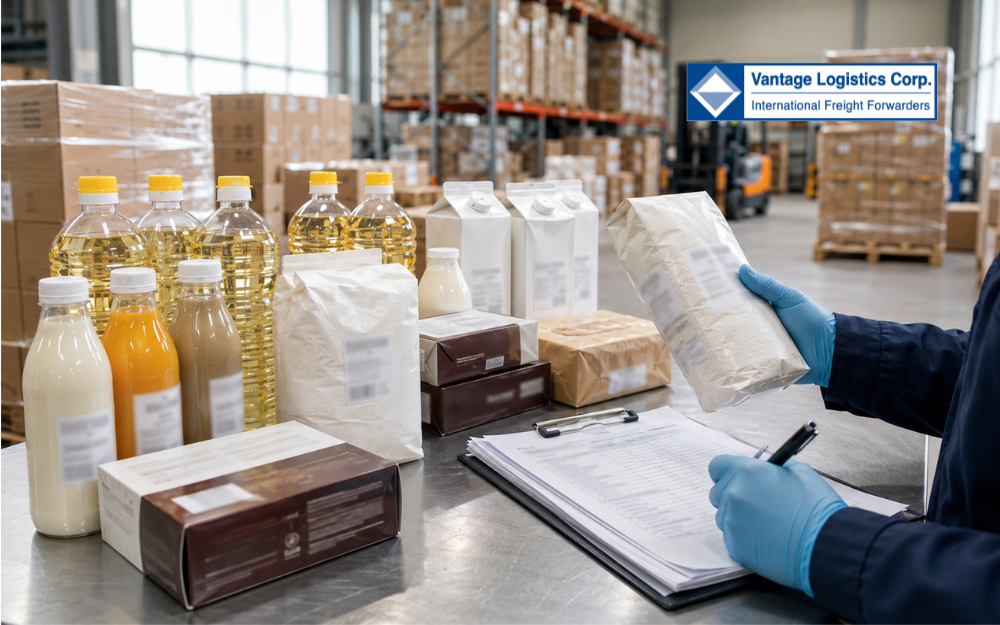
Effective July 17, 2026, Circular 28/2026/TT-BCT issued by Vietnam’s Ministry of Industry and Trade will officially take effect, introducing a list of imported goods subject to state food safety inspections under the Ministry’s regulatory authority. The new regulation affects a broad range of importers, including those handling beverages, processed dairy products, vegetable oils, flour and starch-based products, confectionery, and other food items identified under specific HS codes. For importers, compliance is not simply a matter of meeting food safety requirements. It also has direct implications for customs clearance schedules, cargo release timelines, and overall supply chain operations. Key Product Categories Affected Under Circular 28/2026/TT-BCT, the most notable product groups include: Beverages, soft drinks, alcoholic beverages, beer, and food-grade alcohol; Processed milk and selected dairy products; Vegetable oils; Flour, starch, and starch-based products; Biscuits, cakes, candies, and confectionery products; Other food products covered under designated HS codes. Companies importing these product categories should review their current product portfolios and documentation to determine whether their goods fall within the scope of the new food safety inspection requirements. HS Classification and Product Documentation Should Be Reviewed First In practice, many compliance issues arise not from new regulations themselves but from inconsistencies between product documentation and import records. Common issues include: HS codes that have not been reviewed against the updated product list; Product self-declaration dossiers that do not fully align with actual product specifications; Inconsistent information across commercial invoices, packing lists, and technical documents; Generic product descriptions from suppliers such as “Food Ingredient,” “Powder Mix,” “Preparation,” or “Concentrate,” making HS classification and regulatory assessment more difficult. Preparing complete and consistent documentation before shipment can significantly reduce compliance risks and streamline customs and food safety procedures upon arrival. Customs Clearance Process for Imported Food Products Subject to Food Safety Inspection Once Circular 28/2026/TT-BCT takes effect, food safety inspection should be treated as an integrated component of the overall customs clearance process rather than a separate compliance step. Step 1: Verify Regulatory Requirements and HS Classification Before signing purchase agreements or arranging transportation, importers should confirm: Whether the product is subject to food safety inspection requirements; Whether additional permits or specialized regulatory procedures apply; Whether the proposed HS code is compliant with current regulations; Whether the product qualifies for preferential tariff treatment under applicable free trade agreements (FTAs). Early verification helps minimize costly document revisions after cargo arrives at port. Step 2: Prepare and Align Import Documentation A typical import documentation package may include: sales contract, commercial invoice, packing list, bill of lading (B/L), certificate of origin (C/O), product self-declaration dossier, any applicable sector-specific regulatory documents. Product descriptions, ingredients, packaging specifications, and technical information should remain consistent across all supporting documents. Step 3: Submit Customs Declaration and Prepare Food Safety Inspection Documents After completing the documentation package, importers can proceed with customs declaration through Vietnam’s electronic customs system. Particular attention should be paid to: HS classification and Customs valuation. At the same time, companies should prepare food safety inspection registration documents through the National Single Window (NSW) portal to avoid processing delays when shipments arrive. Step 4: Respond to Customs Inspection Channels and Fulfill Tax Obligations Following declaration submission, the customs system will assign an inspection channel based on risk management criteria. Depending on the assigned channel, importers may be required to: Submit additional documents; Present original supporting records; Coordinate physical cargo inspections; Complete sector-specific inspection procedures. All applicable taxes and duties must also be settled before cargo can be released. Step 5: Cargo Release and Delivery to Warehouse Once customs clearance is completed, the operational process typically includes: Printing the customs-cleared declaration with barcode; Obtaining the Delivery Order (D/O) from the carrier or freight forwarder; Completing terminal and port procedures; Finalizing gate customs clearance; Arranging inland transportation to the warehouse. Advance preparation helps importers maintain greater control over delivery schedules and post-clearance distribution plans. Which Companies Should Review Their Documentation Now? Early preparation ahead of July 17, 2026 is particularly important for: Businesses importing new food product categories; Manufacturers using imported food ingredients in production; Companies managing multiple product lines and suppliers; Seasonal importers or businesses supporting major sales campaigns; Food importers handling products with special storage requirements or short shelf lives. Vantage Logistics Supports Importers Before Cargo Arrival For imported food shipments, reviewing documentation before cargo departs the origin country remains one of the most effective ways to minimize customs and compliance issues. Vantage Logistics supports businesses with: Pre-shipment review of draft shipping documents; HS code and product dossier verification; Preparation of food safety inspection documentation; Customs declaration support and NSW application tracking; Coordination among documentation, port operations, and inland transportation teams to support post-clearance delivery planning. Prepare Early for the July 17, 2026 Compliance Deadline Circular 28/2026/TT-BCT introduces additional regulatory requirements for a broad range of imported food products. Early review of HS classifications, product dossiers, self-declaration documents, and customs declaration procedures can help businesses manage food safety inspections more efficiently and avoid unnecessary clearance disruptions. Companies expecting food shipments to arrive on or after July 17, 2026 should assess their current documentation and compliance procedures now to reduce operational risks and maintain uninterrupted supply chain performance. Contact Vantage Logistics to review your food import documentation, prepare food safety inspection procedures, and develop a customs clearance strategy tailored to your upcoming shipments.   Contact Vantage Logistics for tailored transport solutions and competitive quotations. Please provide details on cargo type, market, origin, destination, and estimated timeline. Vantage Logistics Corp – South East Asia (S.E.A) Logistics Provider One-Stop Shop For Integrated Logistics Services Head Office Viet Nam – Suite 6.01, Floor 6th, Block A, RiverGate Residence, 151-155 Ben Van Don, Khanh Hoi Ward, HCMC, Viet Nam Branch Thailand, Laos, Cambodia, Malaysia, Indonesia, Singapore Contact Us Email in**@*****om.vn Hotline +84-909-026-261 Website https://vantage-logistics.com Send your shipment enquiry today and receive a tailored transport plan from the Vantage Logistics team....

16/06/2026

View More
1 … 11 12 13 14 15 … 43