RESOURCE

vlc-news-DG-logistics-solutions-18102026

Vantage News

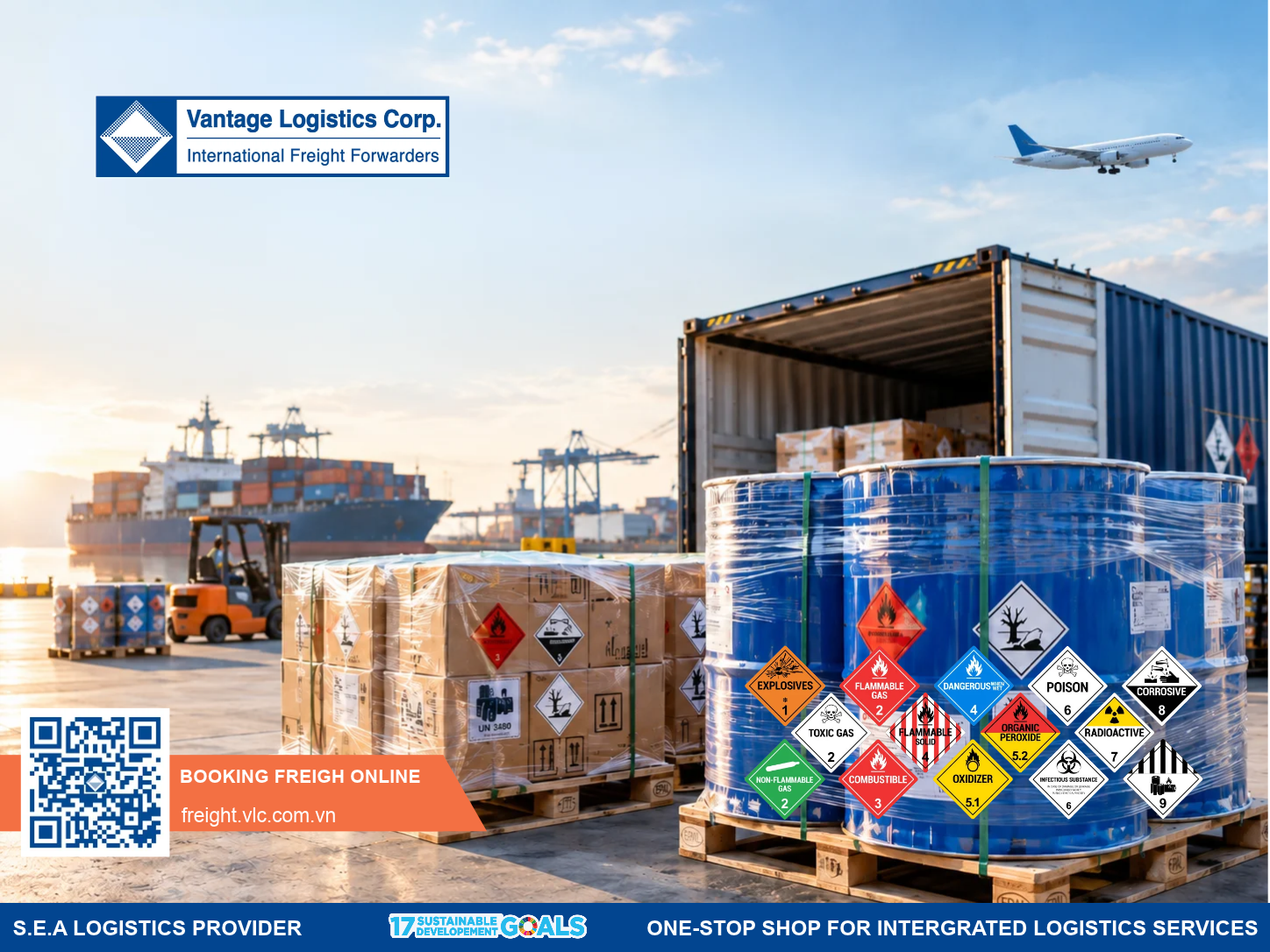
VANTAGE LOGISTICS – INTERNATIONAL-STANDARD DANGEROUS GOODS (DG) LOGISTICS SOLUTIONS

Optimizing customs clearance times, mitigating pre-shipment risks, and protecting supply chains for chemicals, lithium batteries & specialized raw materials. In international trade, transporting Dangerous Goods (DG) remains one of the most complex and strictly regulated operations. For manufacturers of chemicals, lithium batteries, industrial coatings, or compressed gas products, a minor error in classification, packaging, or documentation can trigger severe consequences: last-minute shipment rejections, heavy financial penalties, prolonged port storage, or complete disruption to production schedules. Recognizing that operational downtime and unexpected costs are top concerns for businesses, Vantage Logistics provides end-to-end (Door-to-Door) Dangerous Goods transport solutions. Our operations are directly managed by certified DG specialists holding qualifications recognized by IATA and Maritime Authorities. I. Dangerous Goods (DG) Logistics Capabilities at Vantage Logistics 1. In-Depth Classification & Pre-Shipment Inspection Vantage Logistics conducts comprehensive pre-checks to ensure shipments meet all carrier acceptance criteria: MSDS/SDS Analysis & Precise Classification: Reviewing Material Safety Data Sheets (MSDS) to determine exact UN numbers, Hazard Classes (Class 1–9), and Packing Groups Carrier Acceptance Feasibility Checks: Reviewing operator-specific variations and restrictions across airlines and shipping lines for specific products UN Packaging Standardization Advisory: Inspecting and advising on UN-certified packaging designed to withstand pressure differentials (Air) or corrosive environments (Sea) 2. Specialized Documentation & Legal Declaration Ensuring absolute accuracy across all shipping documentation: Dangerous Goods Declaration (DGD) Execution: Issuing IATA (Air) and IMDG (Sea) compliant DGDs verified against physical cargo specifications Pre-Approval from Carriers: Managing Notified Consignment procedures with port authorities, airlines, and shipping lines to secure official DG Approval prior to dispatching pick-up vehicles Specialized Licensing & Permits: Representing cargo owners in liaising with regulatory authorities (Civil Aviation Authority, Maritime Port Authorities, Ministry of Industry and Trade) to obtain transport permits for tightly controlled cargo classes 3. Safe Handling, Labeling & Storage Compliance Executed directly on-site according to international safety standards: Safe Segregation & Stowage: Separating incompatible chemical classes in accordance with IMDG Code and IATA DGR segregation tables, ensuring dangerous goods are never stowed together within the same container or aircraft hold Standardized Marking & Labeling: Supervising the placement of official Hazardous Labels and UN numbers in full compliance with international maritime and aviation regulations Specialized DG Warehousing: Supporting storage in isolated warehouse zones equipped with fire prevention systems, climate controls, and chemical spill response kits 4. Specialized Air & Sea Freight Solutions Air DG Transport: Fully compliant with the latest edition of the IATA Dangerous Goods Regulations (DGR). Performing pre-checks at airport cargo terminals (Tan Son Nhat, Noi Bai) prior to security screening Sea DG Transport: Fully compliant with the IMDG Code. Executing cargo lashing, securing, and issuing official Container Packing Certificates to ensure stability during ocean transit 5. Proven Field Experience & Industry Expertise Diverse Handling Capabilities: Lithium Batteries (Lithium-ion & Lithium-metal), Industrial Chemicals, Paints & Coatings, Solvents, Pharmaceuticals, and Aerosols Certified DG Specialists: In-house operations teams (Ops) are professionally trained and hold valid DG certificates under IATA DGR and IMDG Code, fully authorized to sign declarations and handle regulatory inquiries Comprehensive Risk Management: Developing Emergency Response Plans (ERP) and advising on specialized civil liability insurance policies for hazardous shipments II. Tangible Commercial Value for Businesses Maximized Acceptance Rates: Technical pre-checks and pre-approval (DG Approval) secured from carriers before factory dispatch Faster Customs Clearance & Cost Savings: Early documentation verification ensures uninterrupted cargo movement, minimizing detention and demurrage (DEM/DET) exposure Full Regulatory Assurance: Operational execution by certified DG specialists trained under IATA DGR and IMDG Code frameworks Uninterrupted Production Lines: Securing timely delivery of critical raw materials, chemicals, and industrial components to manufacturing plants Single Point of Accountability: Seamless execution from packaging advisory and licensing support to door-to-door delivery Safety – Compliance – Continuity is Vantage Logistics’ core commitment for every hazardous shipment. Need expert advice on transporting chemicals, lithium batteries, or specialized hazardous materials? Contact Vantage Logistics today!   Contact Vantage Logistics for tailored transport solutions and competitive quotations. Please provide details on cargo type, market, origin, destination, and estimated timeline. Vantage Logistics Corp – South East Asia (S.E.A) Logistics Provider One-Stop Shop For Integrated Logistics Services Head Office Viet Nam – Suite 6.01, Floor 6th, Block A, RiverGate Residence, 151-155 Ben Van Don, Khanh Hoi Ward, HCMC, Viet Nam Branch Thailand, Laos, Cambodia, Malaysia, Indonesia, Singapore Contact Us Email in**@*****om.vn Hotline +84-909-026-261 Website https://vantage-logistics.com Send your shipment enquiry today and receive a tailored transport plan from the Vantage Logistics team.

18/10/2026

View More
vlc-news-ASEAN-expands-semiconductor-investment-18102026 (2)

Market updates

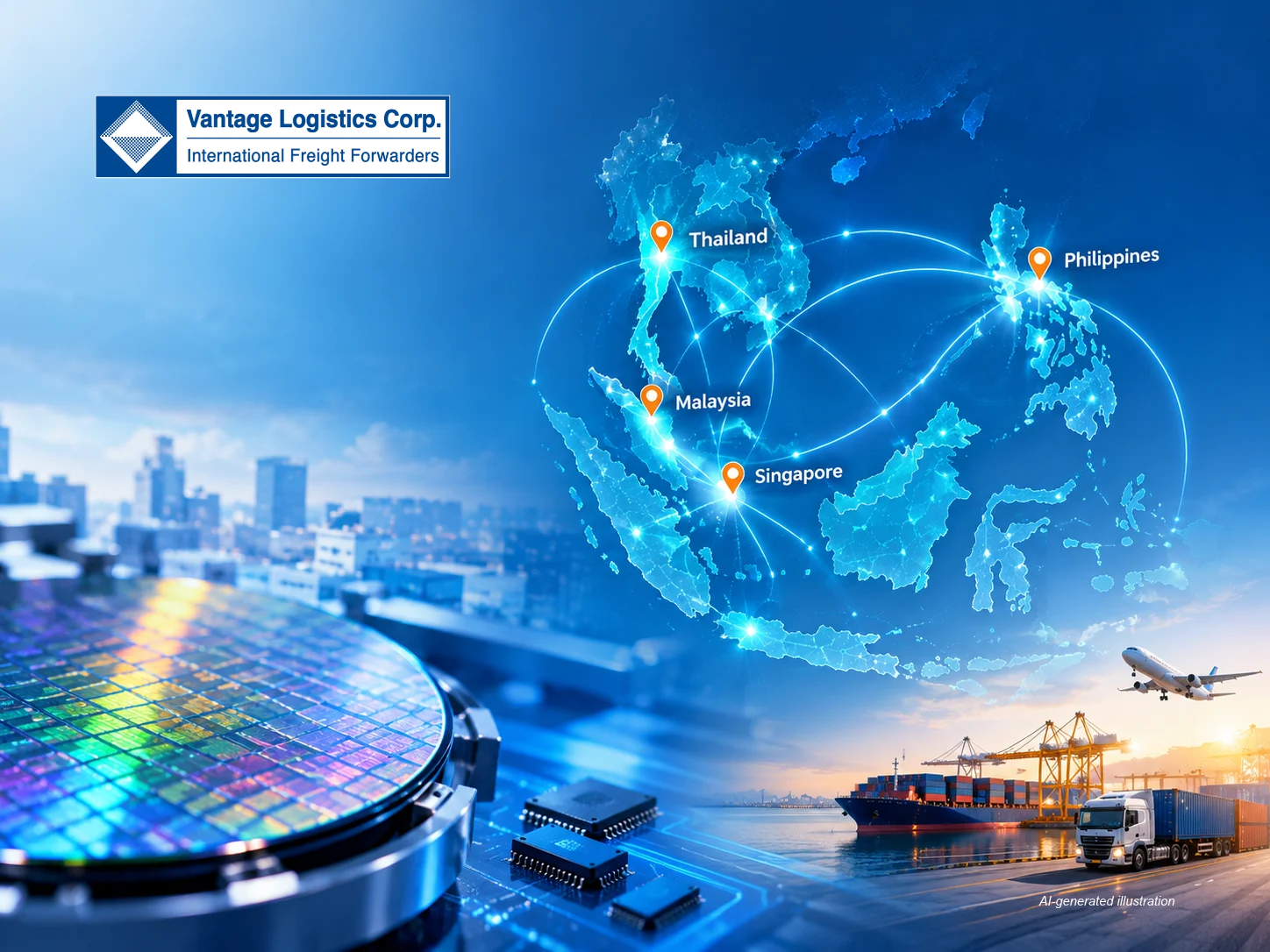
ASEAN Expands Semiconductor Investment Across Diverse Production Links

The wave of investment in semiconductors and advanced electronics is expanding rapidly across Southeast Asia. Division of labor among nations is becoming increasingly defined, reflecting the distinct roles each market plays within the regional supply chain. Overview of Key Markets Market Highlighted Data & Events Role in the Value Chain Thailand 880 registered projects ($26.8B, 2023–H1/2026) Expanding electronics, components & PCB ecosystem Malaysia RM16.9B in semiconductor investment approved (2025) Strengthening Assembly, Testing & Packaging (ATP) Singapore Micron broke ground on $24B wafer fab (Jan 2026) Concentrating on high-tech front-end fabrication Philippines $26.12B in electronics exports (H1/2026) Maintaining scale in electronics & component exports (Alongside these markets, Viet Nam continues to serve as a vital hub for regional assembly, testing, and packaging operations). Thailand Expands Investment in Electronics and Semiconductors From 2023 through the end of June 2026, the Board of Investment of Thailand (BOI) recorded approximately 880 project applications for investment incentives in semiconductors and advanced electronics, representing a total registered capital of roughly $26.8 billion. The project portfolio spans from semiconductors, printed circuit boards (PCBs), and hard disk drives (HDDs) to AI servers, networking equipment, and electronic components. Notably, the PCB sector alone accounted for 224 projects worth approximately $9.85 billion. This data indicates that Thailand is aiming for a broader electronics ecosystem rather than focusing solely on chip manufacturing. However, these figures represent proposed or registered applications and do not fully reflect pledged capital that has been disbursed or operational capacity already brought online. Manufacturing Hubs Assume Distinct Roles The development of the ASEAN semiconductor industry is not following a uniform template. Each market possesses its own industrial baseline and investment trajectory. Malaysia (Expanding Semiconductor Investment): In 2025, Malaysia approved RM28.5 billion in investments for the Electrical & Electronics (E&E) sector, with the semiconductor segment alone securing RM16.9 billion. As a long-established regional hub for assembly, testing, and packaging (ATP), these new inflows demonstrate its enduring appeal – though approved investment values do not immediately translate into operational production capacity Singapore (Scaling Wafer Manufacturing Capacity): In January 2026, Micron broke ground on an advanced wafer fabrication facility in Singapore, backed by a planned $24 billion investment over 10 years (with production expected to commence in H2 2028). The project underscores Singapore’s position in leading-edge, high-tech manufacturing stages Philippines (Maintaining Role in Electronics Exports): In the first half of 2026, the Philippines exported $26.12 billion in electronic products, accounting for 55.8% of its total export value. While representing a major share, this category encompasses a wide variety of goods and cannot be construed strictly as pure semiconductor export data. ASEAN in the Global Semiconductor Supply Chain According to the ASEAN Investment Report 2025, ASEAN accounts for over 20% of global back-end semiconductor activities, including assembly, testing, and packaging. Meanwhile, front-end operations such as wafer fabrication are concentrated more heavily in Singapore and Malaysia. Rather than pursuing a single unified manufacturing model, multiple ASEAN economies are expanding across different links of the semiconductor value chain – ranging from wafer fab to assembly, testing, and associated electronics manufacturing. Although many multinational corporations operate facilities across several ASEAN nations, this presence does not automatically imply direct inter-factory transactions or integration into a single closed supply chain. Assessing actual regional synergy requires analyzing broader trade data, input supply sources, and individual corporate customer networks. New Investments and Cross-Market Connectivity Demand As new projects transition into deployment, logistics demand will shift based on product category, plant location, and supplier architecture. For logistics providers and international partners, three core sets of indicators warrant close monitoring: Project Operational Progress: The precise timing of plant commissioning and the actual pace of capacity expansion Inter-Market Goods Flow: The value and trade structure of components exchanged between manufacturing hubs (verified through import/export trade data reconciliation) Transport Connectivity Requirements: Shipping routes, lead times, specialized handling requirements, and cross-border customs procedures tailored to specific product categories These indicators will help differentiate between a market that is merely “attracting paper capital” and a mature production network generating stable freight flows. Conclusion Investment in semiconductors and electronics continues to expand across ASEAN, yet the region is not developing as a monolithic manufacturing monolith. Instead, the region is evolving toward a polycentric model: Singapore focuses on high-tech front-end processes, Malaysia maintains its stronghold in the back-end semiconductor ecosystem, the Philippines sustains its large-scale electronics exports, while Thailand broadens its capability across component and PCB manufacturing. For supply chain professionals and global partners, project implementation speed, actual operational capacity, and cross-border trade flows will serve as far more meaningful indicators for evaluating regional connectivity than announced capital commitments alone.   Contact Vantage Logistics for tailored transport solutions and competitive quotations. Please provide details on cargo type, market, origin, destination, and estimated timeline. Vantage Logistics Corp – South East Asia (S.E.A) Logistics Provider One-Stop Shop For Integrated Logistics Services Head Office Viet Nam – Suite 6.01, Floor 6th, Block A, RiverGate Residence, 151-155 Ben Van Don, Khanh Hoi Ward, HCMC, Viet Nam Branch Thailand, Laos, Cambodia, Malaysia, Indonesia, Singapore Contact Us Email in**@*****om.vn Hotline +84-909-026-261 Website https://vantage-logistics.com Send your shipment enquiry today and receive a tailored transport plan from the Vantage Logistics team.

18/10/2026

View More
vlc-news-VEFTA-18102026

Market updates

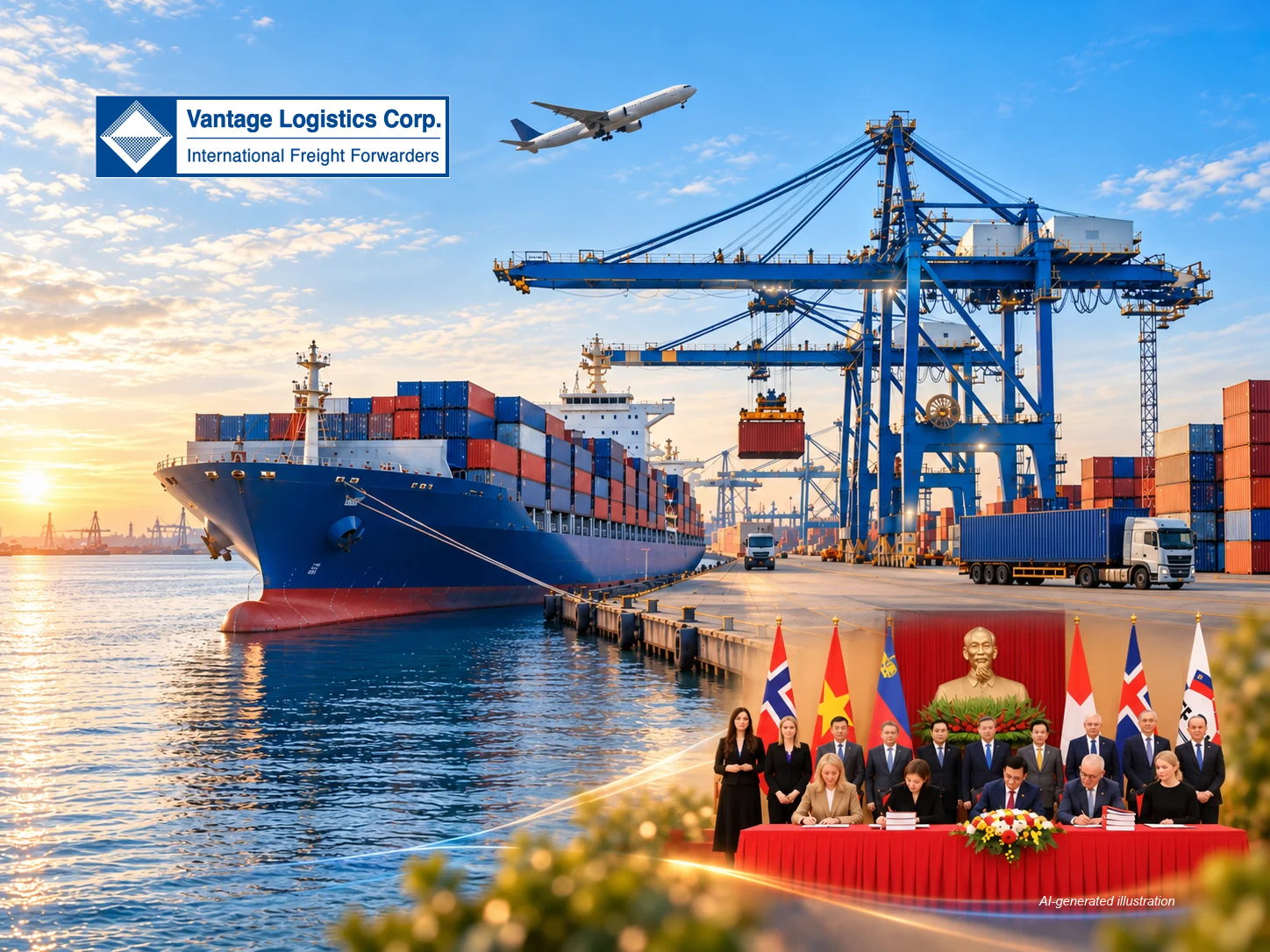
Viet Nam Official Signatory to Free Trade Agreement with EFTA States (VEFTA)

On the morning of October 18, 2026, in Hanoi, representatives from Vietnam and the four member states of the European Free Trade Association (EFTA) officially signed the Viet Nam – EFTA Free Trade Agreement (VEFTA). This event marks a significant milestone in expanding bilateral commercial ties. According to figures released by the EFTA Secretariat, two-way merchandise trade reached EUR 4.8 billion in 2025. However, the extent of duty savings and actual operational benefits will depend heavily on the timeline for entry into force following domestic ratification, as well as corporate compliance readiness. A Historic Milestone in Viet Nam – EFTA Commercial Relations The signing ceremony was held in Ha Noi with delegates from the Vietnamese government and the four EFTA member states: Switzerland, Norway, Iceland, and Liechtenstein – an economic bloc recognized for high per capita income and advanced technology, operating independently of the European Union (EU). Bilateral negotiations were launched in 2012 and formally concluded on July 2, 2026. The official signing represents a key step toward establishing a comprehensive legal framework covering trade in goods, services, investment, rules of origin, intellectual property, and government procurement. Data from the EFTA Secretariat indicates that bilateral trade in goods totaled EUR 4.8 billion in 2025 (excluding Swiss gold transactions), with Viet Nam recording a trade surplus of approximately EUR 2.5 billion. Trade flows highlight clear economic complementarities: Vietnam’s primary exports to EFTA include electrical machinery, footwear, apparel, and mechanical components. Conversely, Viet Nam imports key commodities from EFTA, notably pharmaceuticals, seafood, and specialized mechanical and electrical equipment. This existing commercial foundation provides momentum for further trade expansion once the agreement is implemented. Nevertheless, future growth trajectories will rely on broader market demand, product competitiveness, and the specific tariff concessions applicable to each commodity group. Navigating Tariff Schedules and Rules of Origin Signing the agreement establishes the final legal text; it does not trigger immediate tariff reductions. Importers and exporters must monitor the parliamentary ratification processes across signatory states to determine the official date of entry into force. To leverage tariff preferences once VEFTA takes effect, trading entities should review three core areas: HS Classification and Tariff Schedules: Accurately classify goods under the Harmonized System (HS) code to evaluate current duties against the agreed tariff reduction schedules Rules of Origin (RoO): Verify whether products meet specific origin criteria under the agreement, particularly items incorporating materials imported from non-signatory countries Origin Documentation: Ensure proper documentation and Certificates of Origin (C/O) are prepared to support preferential customs treatment during clearance For instance, a product manufactured or finalized in Viet Nam does not automatically qualify for preferential origin status under VEFTA if it incorporates non-originating inputs. Consequently, verifying raw material sourcing and production workflows must be integrated directly into early supply chain planning. Key Considerations for International Logistics Planning As trade terms and tariff structures evolve, businesses may re-evaluate shipping schedules, sourcing strategies, and transport routes. However, VEFTA’s practical impact on logistics demand will depend on actual cargo volumes following implementation. Shift in Freight Demand Across Sector Groups: Enhanced price competitiveness driven by tariff cuts may spur order volumes, prompting shifts in international freight capacity and destination handling requirements Total Landed Cost Evaluation: Tariff reductions represent only one element of overall landed cost. Freight rates, port surcharges, marine insurance, warehousing, and customs clearance fees directly dictate overall expense. Shippers should evaluate total end-to-end costs across different transport modes rather than relying solely on duty savings Synchronization of Documentation: Data across commercial invoices, bills of lading, customs declarations, and origin certificates must remain strictly consistent. Thorough document preparation minimizes demurrage risk and customs holds at entry ports Critical Focus Areas for Industry Stakeholders To maintain operational agility, import-export executives should monitor the following developments: Date of Entry into Force: Track official timelines for implementation following domestic ratification procedures Detailed Tariff Elimination Schedules: Review specific duty rates and reduction phases by individual HS codes Origin Compliance Rules: Re-examine raw material supply chains and documentation standards relevant to specific product categories Market Dynamics and Logistics Routing: Monitor trade volumes, transit lanes, and total landed costs to adjust transport strategies accordingly The signing of VEFTA expands the institutional framework governing trade between Viet Nam and the EFTA states. Realizing tangible benefits will depend on specific commodity lines, compliance with origin criteria, and effective international supply chain execution. Stay informed on market updates and trade policy developments with Vantage Logistics to proactively optimize your international shipping and freight forwarding plans.   Contact Vantage Logistics for tailored transport solutions and competitive quotations. Please provide details on cargo type, market, origin, destination, and estimated timeline. Vantage Logistics Corp – South East Asia (S.E.A) Logistics Provider One-Stop Shop For Integrated Logistics Services Head Office Viet Nam – Suite 6.01, Floor 6th, Block A, RiverGate Residence, 151-155 Ben Van Don, Khanh Hoi Ward, HCMC, Viet Nam Branch Thailand, Laos, Cambodia, Malaysia, Indonesia, Singapore Contact Us Email in**@*****om.vn Hotline +84-909-026-261 Website https://vantage-logistics.com Send your shipment enquiry today and receive a tailored transport plan from the Vantage Logistics team.

18/10/2026

View More
vlc-news-C-O-certification

Blog, Logistics

Choosing The Right C/O Form: A Strategy For Profit Optimisation In Exports

C/O Definition and Importance for Export Businesses C/O (Certificate of Origin) is one of the most critical documents in an import-export dossier. Issued by competent authorities, this document certifies that goods are manufactured or processed in compliance with origin criteria in a specific country. For Vietnamese export businesses, a C/O provides three practical benefits: Preferential Tariff Treatment: Most Free Trade Agreements (FTAs) involving Viet Nam offer preferential tax rates ranging from 0% to significantly lower than standard MFN rates, provided a valid C/O is presented. Enhanced Competitive Advantage: Goods with clear origin certification facilitate smoother customs clearance, build trust with import partners, and allow businesses to compete on price against other suppliers. Compliance with Mandatory Import Requirements: Many markets require a C/O as a mandatory condition for customs clearance, regardless of whether tax incentives apply. However, many businesses encounter serious errors, such as selecting the incorrect Form for a specific market, preparing incorrect documentation leading to rejection, or inaccurate declarations resulting in the loss of tax incentives.     Common C/O Forms for Vietnamese Businesses Viet Nam is currently a member of various FTAs, each corresponding to one or more specific C/O Forms. Choosing the correct Form is the prerequisite for applying preferential tariffs. No. C/O Form Target Market Agreement (FTA) Legal Basis 1 Form D ASEAN Internal Market ATIGA Circular 10/2022/TT-BCT 2 Form E China ACFTA Circular 12/2019/TT-BCT 3 Form EUR.1 European Union (EU) EVFTA Circular 11/2020/TT-BCT 4 Form AK/ VK Korea AKFTA / VKFTA Circular 20/2014/TT-BCT & Circular 40/2015/TT-BCT 5 Form AJ/ VJ Japan AJCEP / VJEPA Circular No. 20/2014/TT-BCT, as amended by Article 2 of Circular No. 04/2024/TT-BCT & Circular No. 10/2009/TT-BCT 6 Form AI India AIFTA Circular 15/2010/TT-BCT 7 Form S/X Laos / Cambodia Border Trade Agreements Circular 04/2010/TT-BCT & Circular 17/2011/TT-BCT 8 Form VC Chile VCFTA Circular 31/2013/TT-BCT 9 Form B Other Markets Non-preferential Circular 05/2018/TT-BCT Important Note: For certain markets like Korea or Japan, businesses can choose between regional Forms (AK, AJ) or bilateral Forms (VK, VJ). Selecting the correct Form ensures tax optimisation; selecting the incorrect Form results in the loss of incentives and potential penalties for inaccurate declarations.   Distinguishing Form E Authorised and Form E Third Party Invoicing Among C/O Forms, Form E (ACFTA) is the most frequently used but also the most prone to confusion, particularly in transactions involving intermediaries. When importing from China where the manufacturer is not the direct party on the contract but operates through another entity, Form E will fall into one of two categories: Authorised or Third Party Invoicing. Failure to distinguish these correctly often leads to Viet Nam Customs rejecting the C/O, forcing businesses to pay 100% of the import duty.   >> Case 1: Authorised C/O (Entrusted / Authorised) Case Description: The manufacturer produces the goods but lacks an export licence or does not wish to handle procedures. They hire a trading company in China to act as the exporter. The commercial invoice is issued by this trading company to the buyer. Box 1 (Exporter): Name of the Authorised Trading Company. Box 7 (Description of Goods): Must include the phrase: “MANUFACTURER: [Actual Manufacturer Name]”. Box 13: Do NOT tick “Third Party Invoicing”.   >> Case 2: Third Party Invoicing C/O Case Description: The buyer purchases goods through an intermediary in a third country (e.g. Hong Kong, Singapore) to benefit from price differences, but goods are shipped directly from the Chinese factory to Viet Nam. The commercial invoice is issued by the third-party company. Box 1 (Exporter): Name of the actual Manufacturer/Exporter in China. (Do not enter the Hong Kong/Singapore entity here). Box 7 (Description of Goods): Must include the name and address of the third-party invoice issuer. Box 10 (Invoice No.): Must reflect the invoice number issued by the third party. Box 13: MUST tick “Third Party Invoicing“. Risk Warning: In third-party transactions via Hong Kong, entering the Hong Kong entity name in Box 1 will result in immediate rejection, as Hong Kong is not an ACFTA member. Box 1 must be a legal entity registered in Mainland China or an ASEAN member state.   Risk Mitigation Solutions in C/O Declaration To protect financial interests and ensure smooth customs clearance, businesses should implement strict control measures: Verify the nature of the transaction before instructing partners to complete the C/O. Identify the actual invoice issuer and the actual exporter. Cross-check C/O information against the Invoice, Packing List, and Bill of Lading before accepting documents. Consult logistics experts or units experienced in Form E processing before signing commercial contracts.   Vantage Logistics Supports C/O Optimisation for Businesses With specialised experience in logistics and international trade, Vantage Logistics provides comprehensive C/O consultancy and support services for Vietnamese export and import businesses: Consultancy on selecting the correct C/O Form for specific markets and commodities. Verification of origin criteria to ensure goods meet agreement rules. Support in dossier preparation to minimise risks of document rejection or loss of tax incentives. Guidance on distinguishing specialised cases such as Authorised and Third Party C/O. Fast and accurate C/O processing to meet shipping deadlines. Contact Vantage Logistics experts for immediate support on C/O. — VANTAGE LOGISTICS South East Asia (S.E.A) Logistics Provider One-Stop Shop For Integrated Logistics Services   CONTACT US Head Office: Suite 6.01, Block A, RiverGate Residence, 151-155 Ben Van Don, Khanh Hoi Ward, HCMC, Viet Nam Email: in**@*****om.vn Phone: +84-28 382 67312 – Hotline: +84-909-026-261 Website: https://vantage-logistics.com...

03/04/2026

View More
vlc-news-shipping-through-hormuz (2)

Market updates

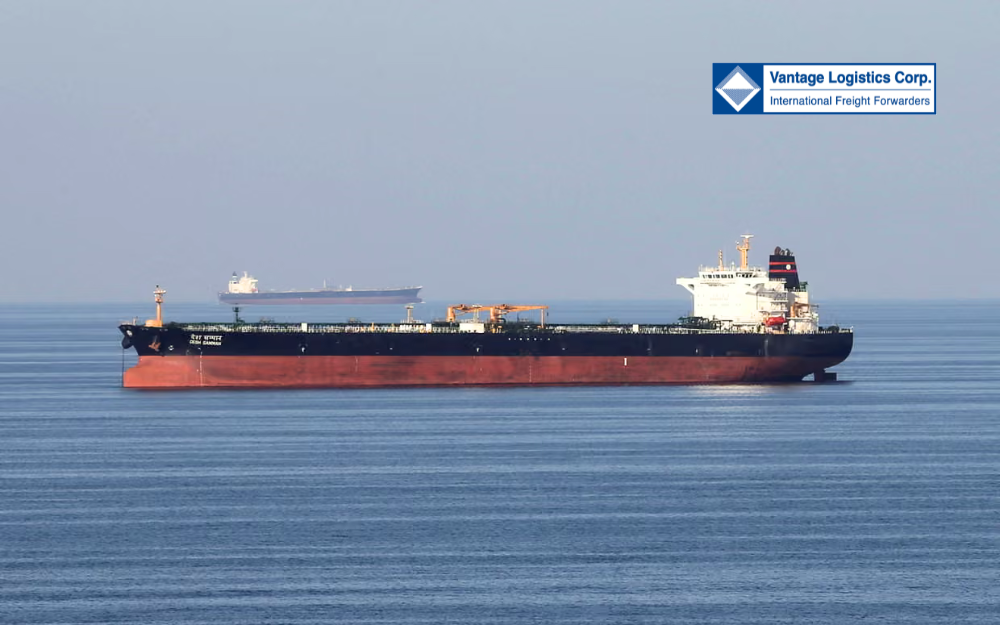
Hormuz Escalation: Viet Nam Seeks Iran’s Priority Passage for 19 Vessels Amid Rising Logistics Risks

Tensions in the Strait of Hormuz are not only driving up oil prices and global freight rates but also placing Viet Nam-linked vessels directly within a high-risk zone. According to the Viet Nam Maritime and Waterway Administration (VIMAWA), there are currently 19 vessels owned by Vietnamese enterprises operating in the Middle East, including 4 flying the Vietnamese flag and 15 under foreign flags. This highlights that Viet Nam’s maritime interests are now positioned at the centre of the disruption, making logistics risk management an immediate priority for businesses.   19 Viet Nam-linked vessels operating in the Hormuz region According to reports submitted to the Ministry of Construction and relevant authorities, VIMAWA stated:  There are 19 vessels owned by Vietnamese enterprises operating in the Middle East and requiring transit through the Strait of Hormuz. Of these: 4 vessels fly the Vietnamese flag 15 vessels are foreign-flagged but owned by Vietnamese companies Some vessels continue normal operations, while others are required to remain at anchor to assess the security situation and wait for more favourable conditions before requesting passage through Hormuz.   Distinction between Vietnamese-flagged and foreign-flagged vessels VIMAWA and relevant authorities have defined three levels of priority in proposals submitted to Iran: 1. Highest priority: Vietnamese-flagged vessels Owned by Vietnamese enterprises Carrying cargo between Viet Nam and the Middle East   2. Second priority: Foreign-flagged vessels Owned by Vietnamese enterprises Crewed by Vietnamese seafarers   3. Third priority: Foreign-flagged vessels Owned by Vietnamese enterprises Operating international routes outside Viet Nam’s direct trade flows Crewed by foreign seafarers   This prioritisation reflects three key realities: Viet Nam aims to protect routes directly linked to strategic trade flows, including energy and import-export cargo. Although many vessels operate under foreign flags to optimise cost and regulatory conditions, in times of crisis, shipowners still rely on government-level diplomatic support. A clear priority framework supports negotiations with insurers, as war-risk coverage often requires official confirmation from Iran regarding safe passage eligibility.   Operational risks: rising costs and disrupted schedules   The Hormuz crisis introduces three primary categories of operational risk: Extended anchorage and increased operating costs Some vessels must remain in the Gulf awaiting clearer security signals, leading to additional costs such as fuel, crew wages, anchorage fees, and lost voyage opportunities. Security and insurance risks Exposure to inspection, detention, or potential attacks if conditions deteriorate further. Rising war-risk premiums and high-risk area surcharges significantly increase operating costs. Spillover impact on Viet Nam’s supply chain: Disruptions to oil tankers, gas carriers, and bulk vessels from the Middle East Increased pressure on energy supply and industrial input materials Higher logistics costs and potential delivery delays   Viet Nam’s diplomatic response to safeguard maritime operations   In response, VIMAWA has proposed: Coordination between the Ministry of Construction and the Ministry of Foreign Affairs to engage with Iran and relevant parties to: Request priority and safe passage for Vietnamese-flagged vessels and Viet Nam-owned vessels, including those under foreign flags Obtain official assurances on the safety of vessels and crews, enabling companies to secure or maintain war-risk insurance Consideration of reduced maritime-related fees in affected areas, aligned with domestic frameworks, to ease pressure on Vietnamese shipowners   At the same time, Viet Nam’s maritime authorities are: Closely monitoring regional developments and updating guidance in line with IMO recommendations Instructing the Viet Nam Maritime Search and Rescue Coordination Centre (VMRCC) to maintain 24/7 operations and connectivity with shipowners and crewing agencies   Implications of the Hormuz crisis for Vietnamese import-export businesses   Based on the presence of Viet Nam-linked vessels in the Middle East, the impact extends beyond the maritime sector and directly affects trade operations. The figure of “19 vessels” is not merely statistical – it signals three practical implications for businesses:   Risk is now embedded, not external Vietnamese vessels and crews are operating within the risk zone, meaning any disruption in Hormuz can translate directly into cost increases and delays across the supply chain, from fuel prices to freight and insurance   Risk cost must be factored into logistics decisions When calculating FOB/CIF pricing, delivery timelines, or route selection, businesses must consider additional factors such as risk surcharges, anchorage delays, and alternative routing via the Cape of Good Hope   The role of logistics partners is evolving Logistics providers must go beyond pricing to deliver: Route-specific risk updates (Hormuz, Red Sea) Alternative routing and modal scenarios Advisory on insurance, lead time, and appropriate safety stock levels   Vantage Logistics is closely monitoring developments in the Middle East and key routes transiting Hormuz. Contact our experts today for tailored route analysis and proactive risk management solutions....

01/04/2026

View More
vlc-news-us-warehouse

Vantage News

Strategic US Warehousing & Fulfillment: Beyond International Shipping

Succeeding in the U.S. market demands more than just cross-border shipping; it requires a robust domestic footprint. To remain competitive, businesses selling to American customers must prioritize fast delivery, reliable fulfillment, and consistent inventory availability across a vast and geographically diverse landscape. Vantage Logistics provides comprehensive US warehousing and fulfillment services, seamlessly connecting sea freight from Viet Nam with a strategic distribution network across America’s key logistics hubs. By positioning inventory close to major population centers and transport corridors, we empower exporters to shorten lead times and significantly reduce domestic distribution costs. With a fully coordinated framework, Vantage Logistics manages the entire supply chain – from factory pickup in Viet Nam and international ocean transport to US warehousing and final-mile delivery to customers nationwide.   Strategic Warehouse Network Across Key US Logistics Hubs To ensure efficient nationwide coverage, Vantage Logistics coordinates operations across six major logistics regions. These facilities allow businesses to strategically distribute inventory to improve delivery performance and customer satisfaction.   1. California – The West Coast Gateway California serves as the primary entry point for Trans-Pacific cargo arriving from Asia. Vantage Logistics operates extensive infrastructure across Southern California’s core logistics centers, including: Commerce & Chino Fontana & Ontario These locations provide direct access to the Ports of Los Angeles and Long Beach, the busiest container gateways in North America, supporting rapid distribution throughout the Western United States.   Vantage Logistics Warehouse in Fontana, California   2. New Jersey – The Northeast Consumer Hub Our facility in Pennsauken, New Jersey, supports distribution to high-density consumer markets along the East Coast. This strategic location provides efficient access to: New York & Philadelphia Boston & Washington, D.C. By positioning inventory here, exporters can serve the Northeast and Mid-Atlantic regions with industry-leading delivery speeds.   3. Georgia – The Southeast Distribution Center Located in Savannah and Atlanta, our facilities connect directly with one of the fastest-growing container ports in the United States. They serve as a vital hub for the Southeastern market, including: Atlanta & Florida The Carolinas & Tennessee Savannah’s infrastructure enables seamless movement between port operations, storage, and domestic inland transportation.   4. Texas – The Central and Gulf Coast Hub The Houston, Texas warehouse provides strategic access to the Central United States and the Gulf Coast. As one of North America’s largest logistics nodes, Houston connects maritime operations with extensive rail and trucking networks, supporting trade across: Texas & the Gulf Coast Central U.S. states and cross-border trade routes   5. Illinois – The Midwest Logistics Heart Located in Chicago, our facility sits at the center of North American inland logistics. This hub is essential for reaching the vast Midwest consumer base, providing a direct link between major rail ramps and domestic trucking corridors.   6. Washington – The Pacific Northwest Gateway Our facility in Seattle serves as a strategic entry point for the Pacific Northwest. Connecting through the Ports of Seattle and Tacoma, this location ensures efficient distribution to the Northern United States and Western Canada.   Accelerating Delivery Across the United States Storing inventory within the US significantly enhances logistics efficiency. Instead of fulfilling individual orders from overseas, exporters can ship bulk inventory via ocean freight and distribute domestically through our network. Key Benefits for Vantage Logistics Partners: 3–5 day delivery coverage across most US regions Reduced reliance on expensive air freight shipments Faster fulfillment for e-commerce and retail customers. Enhanced stock availability to meet real-time market demand   End-to-End Fulfillment Services for E-commerce and Retail Our coordinated operations are designed to handle high order volumes with surgical precision. Core services include:   Inventory Storage: Flexible short-term and long-term options for palletized cargo or individual SKUs. Pick and Pack Fulfillment: Structured procedures ensuring every order is packed accurately and professionally. Value-Added Services (VAS): Product labeling, kitting, re-packaging, and SKU management tailored to specific retailer requirements. Nationwide Distribution: Integrated shipping via major carriers and LTL (Less-Than-Truckload) services for larger retail and wholesale shipments.   Real-Time Visibility with Advanced OMS Integration Efficiency is driven by our Order Management System (OMS), providing 24/7 visibility into inventory levels and order status. Our system synchronizes physical warehouse operations with major sales channels: Marketplace Platforms: Amazon, Walmart, Wayfair, eBay. E-commerce Platforms: Shopify, WooCommerce, Magento API Connectivity: Seamless data exchange with your internal ERP or order management software.   Supporting Vietnamese Exporters Entering the US Market Expanding into the United States presents immense growth opportunities, but success hinges on a reliable infrastructure. Vantage Logistics supports Vietnamese exporters through a single, integrated Viet Nam–US logistics framework. With more than 24 years of experience, we bridge the gap between manufacturing origins in Viet Nam and complex distribution networks in the United States. We simplify your supply chain, allowing you to focus on growth while we handle the complexities of international freight, customs, and domestic fulfillment.   Contact Vantage Logistics today to discuss your US warehousing and fulfillment strategy and build a nationwide distribution network for your products....

31/03/2026

View More

Market updates

ASEAN FUEL PRICE VOLATILITY: OPTIMISING LOGISTICS COSTS IN A “PRICE STORM”

Fuel price volatility is forcing Southeast Asian governments to adopt distinct policy approaches – from large-scale subsidies to full market liberalisation. For logistics and import–export businesses, understanding this “energy map” is essential to forecast costs, select optimal routes, and partner effectively.   Overview: Three Core Policy Responses Across ASEAN Across the region, governments are deploying a mix of measures, with clear strategic differences: Stabilisation Group (Malaysia, Indonesia): Prioritise large fiscal subsidies to maintain low fuel prices and support transport and consumption. Flexible Group (Vietnam, Thailand): Combine stabilisation funds with fiscal adjustments (taxes and fees) to smooth cyclical price shocks. Market-Driven Group (Philippines, Singapore): Align domestic prices closely with global markets, focusing on energy efficiency and green transition.     Market Analysis & Logistics Impact   Vietnam: Flexible Governance & Price Stabilisation Fund Mechanism: Utilises the fuel price stabilisation fund alongside periodic environmental tax adjustments (7-day cycles). Logistics Impact: Transport costs remain relatively controlled; short-term freight rates are predictable; suitable for domestic and intra-ASEAN routes.   Indonesia: Large Subsidies & Energy Transition Mechanism: Maintains significant fuel subsidies (~IDR 500 trillion) while advancing biodiesel (B35) adoption to reduce import dependency. Logistics Impact: Domestic transport costs stay low and stable; however, long-term inflationary pressure from fiscal spending should be monitored.   Malaysia: Price Controls & Targeted Subsidies Mechanism: Caps RON95 petrol prices (~RM 2.05/litre) and applies targeted subsidies. Logistics Impact: Most stable fuel pricing in the region; reduces volatility in road transport; supports key corridors such as Singapore–Malaysia–Thailand.   Thailand: Oil Fund Intervention & Tax Adjustments Mechanism: Uses the Oil Fuel Fund (off-budget) to offset fuel prices and reduce excise taxes. Logistics Impact: Eases short-term cost pressure; requires close monitoring of policy changes for effective transport planning.   Philippines: Liberalised Market Mechanism Mechanism: Fuel prices track global markets; government provides direct cash support to vulnerable groups. Logistics Impact: Freight rates fluctuate significantly; requires dynamic pricing strategies and rapid operational adjustments.   Singapore: No Subsidies, Focus on Green Efficiency Mechanism: No direct price intervention; applies carbon tax (increased to S$25/tonne CO₂ from 2024) to drive sustainability. Logistics Impact: Higher but transparent operating costs; strict compliance standards; optimised for high-efficiency transshipment hub models.   Quick Comparison: Stability & Logistics Implications Country Primary Approach Price Stability Logistics Impact Viet Nam Stabilisation Fund + Tax Medium–High Predictable freight rates Malaysia Price Cap Very High Low and stable costs Indonesia Subsidy + B35 High (short-term) Stable domestic routes Thailand Oil Fund + Tax Medium Policy-dependent planning Philippines Free Market Low High volatility Singapore Carbon Tax Transparent Higher cost, green compliance   Strategic Implications for Logistics Planning Diverging energy policies create distinct cost zones across ASEAN: Viet Nam – Malaysia – Thailand corridor: Offers cost stability and predictable operations. Philippines routes: Require contingency mechanisms such as fuel surcharges. Singapore routes: Prioritise green logistics solutions to manage carbon tax exposure.   What Should Businesses Do? Select transport routes aligned with fuel price stability in each market. Integrate multimodal transport to optimise total logistics costs. Partner with logistics providers that offer regional coverage and flexible coordination capabilities.   Vantage Logistics supports businesses in designing efficient transport strategies and managing fuel cost exposure across ASEAN markets. Contact us today for tailored advisory and execution support....

30/03/2026

View More
Vantage-carbon-credit-01

Market updates

Viet Nam Carbon Exchange 2026: Legal Framework Officially Established

Viet Nam has formally established the legal framework for its carbon exchange under Decree No. 29/2026/ND-CP. While no actual trading has commenced, the Government has already implemented coordinated measures across legal, infrastructure, and supervisory aspects. This marks a critical phase for businesses to closely monitor regulatory developments and build operational readiness, particularly in emission-intensive activities such as logistics and export operations. A Comprehensive Legal Framework Has Been Established The issuance of Decree No. 29/2026/ND-CP represents a key milestone in the development of Viet Nam’s carbon market. This Decree governs all activities related to the domestic carbon exchange, including: Registration and issuance of carbon credit codes Transfer of ownership Depository, trading, and settlement mechanisms Disclosure and reporting requirements It also clearly defines the entities responsible for market operations, including: Viet Nam Stock Exchange Hanoi Stock Exchange Viet Nam Securities Depository and Clearing Corporation These provisions build upon and extend earlier regulations, notably: Decree No. 06/2022/ND-CP on greenhouse gas emission reduction Decree No. 119/2025/ND-CP on emission management This confirms that the carbon market is not an isolated initiative, but part of a structured, long-term policy roadmap. Technical Infrastructure and Management Systems Under Development Alongside the legal framework, the Government is developing the core operational infrastructure. A national carbon registry system is being established to: Record emission allowances Track carbon credits Control transfer activities In parallel, the MRV mechanism (Measurement – Reporting – Verification) is being implemented, requiring businesses to: Monitor emissions on a regular basis Report verified data Ensure compliance before participating in transactions These elements are designed to ensure transparency and prevent inconsistencies in emission data. Governance Mechanism and Tradable Assets Clearly Defined Under current regulations, tradable assets in the carbon market include: Greenhouse gas emission allowances Eligible carbon credits The governance framework is structured to ensure: Periodic reporting Public disclosure Data verification and inspection This approach strengthens transparency and maintains consistency across the system. Impact Begins During the Preparation Phase Although trading activities have not yet started, regulatory requirements are already affecting businesses. High-emission sectors such as power generation, steel, and cement are being prioritised for monitoring and reporting obligations. More importantly, the impact is extending across the entire supply chain. Export-oriented businesses are increasingly required to: Provide emission data Ensure transparency across logistics operations Prepare for international mechanisms such as CBAM Logistics: Early Preparation Is Essential for Emission Management Within the supply chain, logistics represents a significant source of emissions through international transport, domestic distribution, and warehousing operations. As the carbon market becomes operational, these emission sources are expected to translate into direct cost factors. Preparing at this stage enables businesses to: Assess emissions across transport routes Select appropriate transport modes Optimise operations to reduce emissions These are controllable factors that can be addressed before carbon costs are widely enforced. At this stage, the focus is not on trading but on readiness. Businesses need to establish emission measurement capabilities, understand operational impacts, and adjust supply chains accordingly, particularly in logistics. Early preparation will determine how effectively companies adapt once the carbon market becomes fully operational. Contact Vantage Logistics to assess your logistics emissions and develop a practical strategy to prepare for upcoming carbon market requirements.   Contact Vantage Logistics for tailored transport solutions and competitive quotations. Please provide details on cargo type, market, origin, destination, and estimated timeline. Vantage Logistics Corp – South East Asia (S.E.A) Logistics Provider One-Stop Shop For Integrated Logistics Services Head Office Viet Nam – Suite 6.01, Floor 6th, Block A, RiverGate Residence, 151-155 Ben Van Don, Khanh Hoi Ward, HCMC, Viet Nam Branch Thailand, Laos, Cambodia, Malaysia, Indonesia, Singapore Contact Us Email in**@*****om.vn Hotline +84-909-026-261 Website https://vantage-logistics.com Send your shipment enquiry today and receive a tailored transport plan from the Vantage Logistics team....

19/03/2026

View More
vlc-banner-earth-hour-06032026

Vantage News

Vantage Logistics Supports Earth Hour 2026: “Green Innovation – Green Future”

Joining the nationwide initiative led by the Ministry of Industry and Trade and local authorities, Vantage Logistics has officially launched its internal campaign in support of Earth Hour 2026. As a provider of integrated logistics solutions for businesses, the company commits to translating environmental awareness into concrete operational actions that contribute to sustainable development and the protection of the planet. “60 Minutes for the Earth” Initiative At Vantage Logistics, Earth Hour has become a meaningful annual activity that mobilizes employees, branches, and warehouse systems across the organization. Key actions include: Time: 20:30 – 21:30, Saturday, 28 March 2026 Action: Switching off all non-essential lighting and illuminated signage at offices and operational warehouse areas. Community participation: Employees are encouraged to involve their families by turning off lights and electrical appliances at home during the same hour, extending the impact of the campaign beyond the workplace. Green Logistics – Turning Innovation into Action Aligned with the campaign theme “Green Innovation – Green Future”, Vantage Logistics continues to strengthen operational improvements that reduce energy consumption over the long term. Key initiatives include: Digital documentation (Paperless operations): Expanding the use of electronic documentation to minimize printing and reduce energy consumption from office equipment. Optimized transport routing: Applying technology to plan transport routes more efficiently, reducing empty mileage, saving fuel, and lowering greenhouse gas emissions. Energy-efficient warehouses: Maximizing natural lighting and ventilation within logistics facilities while prioritizing electric forklifts and energy-saving equipment in warehouse operations. Building a Green Workplace Culture Beyond the one-hour campaign, Vantage Logistics encourages employees to adopt daily energy-saving habits that contribute to a more sustainable working environment. Examples include: “Switch Off When Not in Use” practice: Turning off air conditioners, computers, and electrical equipment before leaving work areas. Standard office temperature: Maintaining air-conditioning at 25°C or higher to optimize electricity consumption. Internal engagement programs: Organizing “Green Office” initiatives and innovation challenges to encourage employees to propose practical energy-saving solutions. Message from Vantage Logistics Supporting Earth Hour 2026 reflects both environmental responsibility and operational efficiency. By using energy more effectively, Vantage Logistics can reduce operational costs while contributing to broader sustainability goals. The company calls on all employees and partners across the supply chain to take part in the initiative. Every light switched off and every litre of fuel saved contributes to building a sustainable green future. For a Greener Planet – For a Sustainable Vantage!...

13/03/2026

View More
vlc-news-cuts-import-tariffs-on-key-fuels-to-0%

Market updates

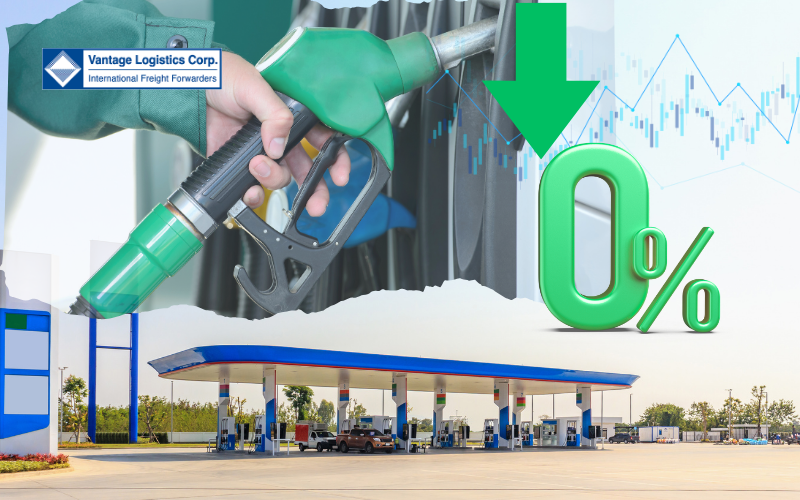
VIETNAM GOV’T CUTS IMPORT TARIFFS ON KEY FUELS TO 0%

On March 9, 2026, the Government of Vietnam issued Decree 72/2026/NĐ-CP, adjusting preferential import tariffs on several fuel products in the import tariff schedule. Under the new regulation, many types of fuel are reduced to 0%, enabling businesses to diversify import sources and helping stabilise transport and logistics costs in Vietnam. The policy is effective from March 9, 2026, to April 30, 2026, against the backdrop of global energy market volatility and rising fuel costs impacting logistics, maritime transport, and international supply chains. Fuel Import Tariffs Reduced to 0%: A Policy to Support the Energy Market According to Decree 72/2026/NĐ-CP, a number of fuels and essential energy products are subject to a 0% import tariff, including: Unleaded motor gasoline Diesel Fuel oil Jet fuel Kerosene In addition, certain raw materials used in gasoline production and blending, such as naphtha and reformate, along with petrochemical feedstocks including xylenes, condensate, p‑xylene, and other cyclic hydrocarbons, are also subject to a 0% import tariff. The aim of this policy is to help businesses expand fuel import sources, secure domestic supply, and ease energy cost pressures for industries heavily dependent on transport and logistics.   Fuel Costs and Their Impact on Vietnam’s Logistics Sector Fuel is one of the most significant cost factors in Vietnam’s transport and logistics industry. In road transport, fuel can account for 30–40% of total operating costs. In international shipping, fuel costs are often reflected through surcharges such as the Bunker Adjustment Factor (BAF), directly influencing freight rates. Reducing import tariffs on fuels can help stabilise supply and allow businesses to better control logistics costs in the short term. This is particularly important for exporters and importers relying heavily on maritime and multimodal transport services. However, the actual impact depends on global oil prices and domestic pricing mechanisms. Therefore, the tariff policy is considered a supportive measure to ease energy cost pressures on the logistics market.   Businesses Need to Optimise Logistics Plans During the Short-Term Policy Window Since the policy is only valid until April 30, 2026, importers and fuel-dependent industries must quickly adjust transport and import plans to take advantage of the preferential tariff period. For exporters and importers, optimising international shipping, maritime transport, and multimodal logistics will help reduce operating costs and maintain stable cargo flows amid ongoing energy market fluctuations.   Logistics and Maritime Transport Solutions from Vantage Logistics With fuel costs directly affecting international transport and logistics operations, choosing a partner capable of optimizing routes and controlling logistics expenses is crucial for exporters and importers. Vantage Logistics provides a comprehensive ecosystem of international logistics and transport services to support businesses in maintaining stable cargo flows across global supply chains. Solutions include: International maritime transport connecting global trade routes through a diverse network of shipping partners Flexible multimodal transport Customs declaration services and export–import procedure support Warehousing solutions, domestic transport management, and other support services With extensive experience in handling international routes and a cost-optimisation approach, Vantage Logistics helps customers reduce transport expenses, minimise supply chain risks, and maintain stable import–export operations.   Contact for Consultation For consultation on maritime transport, international logistics, or cost optimisation, please contact Vantage Logistics: Hotline: +84 909 026 261 Email: in**@*****om.vn...

12/03/2026

View More

Blog, Logistics

Local Charges in Sea Freight: The Costs Businesses Often Overlook in Import-Export Pricing

In many import-export transactions, companies tend to focus on the sea freight rate when comparing quotations between carriers or forwarders. However, once the cargo arrives at the port, a series of port-related fees – collectively known as local charges – begin to arise. If not calculated in advance, these charges can significantly increase the total logistics cost compared to the initial estimate.   In practice, for an international container shipment, total local charges at both origin and destination ports can account for around 10–30% of total logistics costs, depending on the trade lane, Incoterms, and the surcharge policies of each carrier. Understanding the structure of these charges helps businesses forecast costs more accurately and avoid unexpected expenses.     Common Local Charges in Container Shipping Below are the charges most frequently encountered during container handling at ports and throughout the international shipping process: THC – Terminal Handling Charge: container handling at the port, including loading, unloading, yard movement, and positioning. D/O Fee – Delivery Order Fee: issuance of the delivery order by the carrier or its agent. CIC – Container Imbalance Charge: surcharge applied when there is an imbalance of empty containers between regions. Documentation / Handling Fee: processing of shipping documents, issuance of bills of lading, booking, and related paperwork. AMS / ENS / AFR / ISF Filing Fee: manifest filing fees required by customs/security authorities in the US, EU, Japan, etc. Seal Fee: cost of sealing the container during stuffing. CFS Fee (for LCL cargo): charges for handling less-than-container-load shipments at the Container Freight Station.   Container Management Costs in Sea Freight Beyond port handling charges, businesses must also consider costs related to container usage time: Demurrage: charged when a container stays at the port beyond the free time allowed. Detention: charged when a container is taken out of the port but not returned to the depot within the permitted time. These costs can escalate quickly on a daily basis and become substantial if cargo pick-up or container return is delayed.   Other Hidden Charges Businesses Should Know In addition to the common charges, several surcharges are often overlooked in initial quotations: B/L Fee (Bill of Lading Fee): issuance of the bill of lading. Telex Release Fee: electronic release of cargo without presenting the original bill of lading. LSS (Low Sulphur Surcharge): fuel surcharge under IMO 2020 regulations. BAF / EBS (Bunker Adjustment Factor / Emergency Bunker Surcharge): fuel-related surcharges due to oil price fluctuations. PSC / CSC (Port Security Charge / Container Service Charge): port security and container service fees. DDC (Destination Delivery Charge): delivery charge at the destination port, commonly applied on US trade lanes. Fumigation Fee: container fumigation, often required for agricultural or wood products. Destination THC (DTHC): terminal handling charge at the destination port.   Local Charges Are Often Overlooked in Sea Freight Cost Comparisons A common reason is that businesses only compare the sea freight rate without considering local charges at both origin and destination ports. Factors leading to cost discrepancies include: Quotations showing only sea freight, excluding local charges. Different fee structures among carriers and forwarders. Incoterms defining cost responsibilities differently between buyer and seller. Poor control of cargo pick-up and container return times. Thus, two quotations with the same sea freight rate can result in very different total logistics costs.   How Businesses Can Effectively Control Local Charges Request detailed quotations: including freight, local charges at origin and destination, and carrier surcharges. Compare total costs (all-in): not just the freight rate. Control container usage time: to avoid demurrage and detention. Work with transparent logistics partners: experienced providers will clarify fee structures and advise on potential hidden charges.   Transparency in Logistics Costs – A Key Factor in Supply Chain Management Local charges are an integral part of international shipping. When understood and managed properly, they enable businesses to plan costs more accurately and avoid unnecessary surprises during cargo handling. Vantage Logistics provides clear and transparent shipping quotations, along with advisory support on potential charges for each trade lane and delivery condition.   Contact Vantage Logistics today for detailed consultation and tailored shipping quotations for your cargo. — VANTAGE LOGISTICS South East Asia (S.E.A) Logistics Provider One-Stop Shop For Integrated Logistics Services   CONTACT US Head Office: Suite 6.01, Block A, RiverGate Residence, 151-155 Ben Van Don, Khanh Hoi Ward, HCMC, Viet Nam Email: in**@*****om.vn Phone: +84-28 382 67312 – Hotline: +84-909-026-261 Website: https://vantage-logistics.com...

09/03/2026

View More
vlc-international-woman-day-card

Vantage News

VANTAGE LOGISTICS HONOURS WOMEN ON INTERNATIONAL WOMEN’S DAY

On the occasion of International Women’s Day, March 8, 2026, Vantage Logistics extends heartfelt greetings and appreciation to the women who have been accompanying the company throughout its journey of connecting trade and fostering sustainable growth.   March 8 is not only a day to celebrate the beauty and contributions of women in society, but also an opportunity for businesses to reflect on the vital role women play in every aspect of operations, management, and collaboration. At Vantage Logistics, women hold key positions – from meticulous operations, dedicated customer care, and dynamic business development to strong leadership in managing and coordinating supply chains. They are not only committed professionals but also a source of positive energy, inspiring colleagues every day. Their dedication, organisational skills, and sense of responsibility ensure shipments are handled accurately and on time, and they maintain seamless connections between the company and its partners worldwide.   Beyond the company itself, Vantage Logistics deeply values the partnership of female customers, partners, and collaborators across the logistics ecosystem. Many female entrepreneurs, managers, and experts are playing increasingly significant roles in international trade, import-export, and supply chain management.   On this International Women’s Day 2026, Vantage Logistics sends its best wishes to all the women who walk alongside us. May your day be filled with joy, meaningful moments, and continued confidence on your journey of growth.   As poet Ntozake Shange once wrote, “Where there is a woman, there is magic.”   Learn more about Vantage Logistics and our logistics services for businesses on our website or contact us directly for consultation....

07/03/2026

View More
1 … 19 20 21 22 23 … 43