RESOURCE

vlc-news-philippines-cancels-rice-import-permit-15102026

Market updates

Philippines Cancels Permit for Controversial 12,480-Metric-Ton Rice Shipment from Viet Nam

The Philippine Department of Agriculture (DA) said it had ordered the cancellation of the Sanitary and Phytosanitary Import Clearance (SPSIC) for a 12,480-metric-ton rice shipment from Viet Nam before the vessel arrived. The case involves reported discrepancies in rice specifications and an expired import contract, highlighting the risks that can arise when shipping schedules do not align with import requirements in the destination market. 1. Developments at the Port of Arrival According to the Philippine Department of Agriculture (DA) and the Philippine News Agency (PNA), the vessel MV Tay Son 2, carrying 12,480 metric tons of rice from Viet Nam, arrived at the Port of Davao on September 14, 2026. According to these sources, the vessel’s captain refused to submit the shipment for inspection by the Philippine Bureau of Plant Industry (BPI). On September 17, 2026, the vessel departed Davao before the matter had been resolved. Philippine authorities subsequently prevented the cargo from being unloaded at another location and brought the vessel to the Port of General Santos before ordering it to return to Davao for further handling. 2. Rice Specifications and Import Requirements The case involves two issues: reported discrepancies in rice specifications and the status of the import contract and permit. 2.1. Reported Discrepancy in Rice Specifications The importer, Planters Product, Inc. (PPI), reported a discrepancy between the purchase order and the specifications communicated for the shipment: Specifications under the purchase order: 25% broken rice Reported specifications for the shipment: 5% broken rice In agricultural trade, the percentage of broken grains is an important commercial specification. However, the discrepancy remains based on information reported by the importer and has not been confirmed by an official inspection, as the physical inspection process was not completed. 2.2. Expired Contract and Canceled Import Permit In addition to the rice specifications, the delivery timeline and the status of the import documentation were also highlighted by the DA: Estimated time of arrival (ETA): July 2026 Actual arrival: Mid-September 2026 According to the DA, the import contract had expired and the SPSIC had been canceled before the vessel arrived. The vessel’s arrival also coincided with the period when the Philippines was preparing for the wet-season rice harvest. According to published information, import policy during this period was also linked to efforts to limit downward pressure on domestic palay prices. Operational Note: Even when goods meet quality requirements, a shipment may still face customs clearance difficulties if it fails to meet import requirements or if the relevant permit is no longer valid. 3. Proposed Measures for Handling the Shipment According to published information, the Bureau of Customs of the Philippines (BOC) was still considering the final course of action for the shipment. The proposed measures included: Proposed Measure Proposing Authority / Status Return to the Country of Origin The BPI was reported to have recommended returning the shipment to Viet Nam. Seizure and Penalties The DA proposed considering seizure of the shipment and the application of penalties under relevant regulations, subject to the competent authority’s findings and decision. Final Decision The BOC was reviewing the official course of action for the shipment. 4. Conclusion The controversial rice shipment in the Philippines highlights how international trade depends not only on product quality and contractual terms but also on shipping schedules, the validity of import documentation, and regulatory requirements in the destination market. When these elements are no longer aligned, shipments already in transit may face unexpected complications during arrival and customs clearance. Vantage Logistics will continue to provide updates on notable developments in logistics, import-export activities, and international supply chains, offering businesses additional insight into factors that may affect global trade. Contact Vantage Logistics for tailored transport solutions and competitive quotations. Please provide details on cargo type, market, origin, destination, and estimated timeline.   Vantage Logistics Corp – South East Asia (S.E.A) Logistics Provider One-Stop Shop For Integrated Logistics Services Head Office Viet Nam – Suite 6.01, Floor 6th, Block A, RiverGate Residence, 151-155 Ben Van Don, Khanh Hoi Ward, HCMC, Viet Nam Branch Thailand, Laos, Cambodia, Malaysia, Indonesia, Singapore Contact Us Email in**@*****om.vn Hotline +84-909-026-261 Website https://vantage-logistics.com Send your shipment enquiry today and receive a tailored transport plan from the Vantage Logistics team.

15/10/2026

View More
vlc-news-asean-east-asia-trade-15102026

Market updates

ASEAN–East Asia Trade Reaches USD 1.4 Trillion, Up 13.7% in 2025

According to preliminary data from the ASEAN Secretariat, two-way trade between ASEAN and its three East Asian partners (China, Japan, and South Korea) reached USD 1.4 trillion in 2025, representing a 13.7% year-on-year increase. Notably, China–ASEAN trade continued its upward trajectory in the first seven months of 2026, underscoring a sustained expansion in cross-regional trade volumes worth monitoring. 1. Regional Trade Volume and Foreign Direct Investment (ASEAN+3) Trade and investment flows between ASEAN and its three East Asian partners maintain a substantial footprint. In 2025, Foreign Direct Investment (FDI) inflows from China, Japan, and South Korea into ASEAN totaled USD 44.8 billion. Key ASEAN–East Asia Trade & Investment Indicators Indicator Value Growth / Share ASEAN – (China, Japan, South Korea) Trade in 2025 USD 1.4 Trillion Up 13.7% vs 2024 FDI from 3 East Asian Partners into ASEAN in 2025 USD 44.8 Billion Accounted for 18.2% of total ASEAN FDI China – ASEAN Trade (First 7 Months of 2026) USD 744.41 Billion Up 24.7% year-on-year The scale of merchandise trade and investment capital highlights the vital economic linkage between East Asia and Southeast Asia. However, assessing actual freight demand requires a granular evaluation of specific commodity structures, export-import markets, and active transport corridors. 2. Direct Impacts on Transport Networks and Logistics Infrastructure Expanding trade volumes underscore the critical role of regional transport connections. Depending on industry-specific cargo characteristics and delivery requirements, flexible logistics solutions are being actively deployed: Intra-Asia Ocean Freight Connections: For multi-leg shipments, vessel schedule reliability, transit times, and feeder network connectivity are pivotal factors for supply chain managers. Major gateway hubs such as Shanghai, Ningbo, Busan, and Yokohama maintain dense feeder linkages with Southeast Asian ports within ocean carrier networks Integrated Logistics and Multimodal Transport: Depending on lead-time sensitivity, combining ocean freight, Cross-Border Trucking, and inland warehousing offers expanded routing options. Real-world operational efficiency hinges heavily on border crossing clearance times, transit schedules, and the coordination capability of the logistics operator Rules of Origin (C/O) and Customs Compliance: When leveraging Free Trade Agreements such as RCEP, AKFTA, or AJCEP, enterprises must accurately determine rules of origin and prepare compliant documentation to qualify for preferential tariffs. Duty exemption eligibility depends on the specific conditions of each product line and destination market 3. Monitoring Southeast Asian Trade Dynamics and Logistics Connectivity Expanding trade and investment flows reflect an increasingly integrated economic relationship between East Asia and Southeast Asia. This growth in cross-border trade creates momentum for expanding logistics connectivity, helping strengthen supply chain coverage across the region.   Contact Vantage Logistics for tailored transport solutions and competitive quotations. Please provide details on cargo type, market, origin, destination, and estimated timeline. Vantage Logistics Corp – South East Asia (S.E.A) Logistics Provider One-Stop Shop For Integrated Logistics Services Head Office Viet Nam – Suite 6.01, Floor 6th, Block A, RiverGate Residence, 151-155 Ben Van Don, Khanh Hoi Ward, HCMC, Viet Nam Branch Thailand, Laos, Cambodia, Malaysia, Indonesia, Singapore Contact Us Email in**@*****om.vn Hotline +84-909-026-261 Website https://vantage-logistics.com Send your shipment enquiry today and receive a tailored transport plan from the Vantage Logistics team.

15/10/2026

View More

Market updates

SINGAPORE STRENGTHENS PRODUCT SAFETY CONTROLS: WHAT VIETNAMESE EXPORTERS NEED TO KNOW

Singapore is strengthening its product safety controls through two key regulations: the Consumer Protection (Safety Requirements) Regulations (CPSR) and the Consumer Goods (Safety Requirements) Regulations (CGSR). For exporters, these requirements go beyond product compliance. They can also affect delivery schedules, logistics costs, and supply chain reliability. 1. Singapore Strengthens Product Safety Requirements According to information published by Vietnam’s Ministry of Industry and Trade, Singapore applies two main regulatory frameworks for product safety. – CPSR: Covers 33 categories of controlled goods, including electrical and electronic products, household appliances, and gas appliances. Products within scope must meet applicable safety requirements, complete registration, and carry the SAFETY Mark before being supplied or sold in Singapore. – CGSR: Covers general consumer goods such as toys, clothing, furniture, and sports equipment, which must comply with the relevant safety standards. Non-compliant products may be subject to sales restrictions or recalls. Businesses that violate applicable requirements may also face penalties. For exporters, checking compliance requirements before shipment is essential. Addressing documentation or registration issues early can help avoid costly adjustments after cargo has already left the port of origin. 2. Potential Impact on Southeast Asia’s Trade and Logistics Singapore plays an important role in Southeast Asia’s trade and logistics network. Tighter product safety controls may require exporters, importers, and distributors to review their procedures for placing goods on the Singapore market. Several potential risks deserve attention: – Delivery delays: Incomplete documentation or missing certificates may affect cargo acceptance and delivery schedules. – Additional logistics costs: Delays in resolving compliance issues may lead to storage, port handling, or additional transportation costs. – Disrupted distribution plans: Late deliveries can affect inventory planning, distribution schedules, and commitments to business partners. These requirements do not automatically apply across all ASEAN markets. However, they highlight the importance of understanding the specific regulations of each destination country when planning regional trade and distribution. 3. What Should Vietnamese Exporters Prepare? For Vietnamese businesses exporting to Singapore, compliance checks should take place before shipment arrangements are finalized. Exporters should determine whether their products fall under CPSR or CGSR, verify the applicable safety standards and registration requirements, and clarify responsibilities with their Singaporean importers. Documentation preparation should also be factored into the shipping schedule. If an issue is discovered only after cargo arrives at the destination port, businesses may need to manage several challenges simultaneously, including delivery delays, additional costs, and changes to distribution plans. A reliable shipping plan therefore involves more than selecting the right route or sailing schedule. It also requires anticipating potential obstacles before the cargo reaches its destination. 4. Managing Risks Through Early Planning Not every risk in international shipping can be eliminated, but many disruptions can be reduced through early preparation. Reviewing cargo information, documentation, shipping schedules, and destination requirements helps all parties make better-informed decisions. For shipments to Singapore, close coordination among exporters, importers, agents, and logistics providers helps maintain visibility over shipment readiness, address changes, and adjust plans when necessary. At Vantage Logistics, international transportation planning takes into account the practical requirements of each shipment and the coordination needed among relevant parties. This approach helps businesses manage potential disruptions and maintain better control over delivery schedules. As market requirements evolve, careful preparation does more than protect an individual shipment. It also helps businesses maintain reliable supply chains and build lasting partnerships across international markets.

15/10/2026

View More

Market updates

LOGISTICS 2026: 5 STRATEGIC TRENDS IN MULTIMODAL TRANSPORTATION

In 2026, the global logistics market enters a phase of excess capacity but heightened uncertainty. Tariffs, surcharges, and supply chain disruption risks continue to rise, forcing businesses to rethink their strategies. Below are five key trends across different transport modes that shippers and logistics providers should closely monitor to maintain competitive advantage. 1. Last-Mile Delivery Remains Under Cost Pressure Last-mile costs are expected to keep rising due to price adjustments and surcharges from major carriers such as FedEx and UPS. For e-commerce businesses, last-mile delivery has become one of the top three logistics expenses, pushing retailers to optimise distribution networks and adopt more flexible partnerships. 2. Ocean Freight: Oversupply but Risks Persist A surge in container supply during 2026–2027 strengthens shippers’ bargaining power on freight rates. However, geopolitical tensions, port congestion risks, and domestic disruptions remain. In this context, schedule reliability is becoming just as critical as cost. 3. Air Freight Restructures into Multi-Hub Models Air cargo flows are being rerouted to adapt to geopolitical shifts and trade policies. Companies leveraging data analytics and AI to optimise networks, select hubs, and allocate capacity will gain clear advantages in both time and cost efficiency. 4. U.S. Rail: Monitoring Potential UP–NS Merger After a volatile period, U.S. rail transport is gradually stabilising. Yet, the market is closely watching potential merger scenarios between major operators such as Union Pacific (UP) and Norfolk Southern (NS). If realised, such a deal could reshape network structures, alter competition levels, and affect service quality. 5. Road Transport: Stability of Carriers Takes Priority With many trucking companies exiting the market, shippers are increasingly focused on carriers’ financial strength and service sustainability. Rather than chasing short-term low rates, long-term, transparent partnerships are now considered the key to operational efficiency. Entering 2026, excess transport capacity does not equate to supply chain stability. Businesses can only sustain their advantage by prioritising flexibility, transparency, and risk management in their logistics strategies. Contact Vantage Logistics today for tailored strategic consulting on Logistics 2026....

09/02/2026

View More

Market updates

Vietnam’s Wood and Furniture Exports Outlook 2026

Vietnam’s wood industry enters 2026 with a positive growth outlook, as furniture consumption demand in major markets shows signs of gradual recovery. After a period of global economic volatility, improving conditions in housing and retail markets are supporting renewed demand for wood products and furniture. Within this context, the United States continues to play a pivotal role, while also imposing increasingly stringent requirements on product quality and supply chain reliability. According to data from the General Department of Vietnam Customs, Viet Nam’s wood and wood product exports reached USD 17.2 billion in 2025, up 5.7% year on year and the highest level on record. Processed wood products alone accounted for USD 11.7 billion, recording a 4% increase compared with 2024, indicating a sustained shift towards higher value-added products. Export value of wood and wood products (Source: General Department of Vietnam Customs, Vietnam Timber and Forest Products Association) Overall, Viet Nam’s wood exports have maintained an upward trajectory, rising from USD 14.8 billion in 2021 to USD 17.2 billion in 2025, with a target of USD 19 billion set for 2026. The 5.7% growth achieved in 2025 and the 2026 target reflect strong expectations for international markets, particularly for processed and value-added wood products. The United States – Vietnam’s Key Export Market for Furniture and Wood Products Top 10 export markets for Vietnamese wood products (Source: General Department of Vietnam Customs, Mekong ASEAN) In 2025, Vietnam’s wood and wood product exports recorded solid growth across most major markets. The United States remained the largest destination, with export turnover reaching USD 9.4 billion, up 4.3% compared with the previous year, reaffirming its position as Vietnam’s primary export market. Japan stood out with an impressive growth rate of 23.3%, reaching USD 2.15 billion, signalling rapidly expanding demand for Vietnamese wood products. Among other major markets, exports to China increased by 3.5% to USD 2.08 billion, while Canada and the United Kingdom grew by 14.3% and 8.9% respectively, reflecting successful market diversification. Regional markets such as Malaysia and Australia also maintained growth momentum, with export values of USD 167 million and USD 163 million respectively. Overall, the data show that Viet Nam’s wood industry continues to expand strongly in the US market. Beyond price competitiveness, the US increasingly prioritises sustainability certifications, transparent origin and traceability, while also requiring stable delivery times and flexible order fulfilment capabilities. Over the past year, Viet Nam’s wood industry has faced multiple simultaneous pressures, including weakening demand in certain major markets, volatile logistics costs, and increasingly stringent requirements related to legal sourcing and environmental standards. In addition, risks arising from trade defence measures and intensified regional competition have required exporters to adjust their production and export strategies. Nevertheless, despite these challenges, Viet Nam’s wood export value surpassed USD 17 billion for the first time. This achievement highlights the sector’s resilience, adaptability, and the relatively solid production and supply chain foundations that have been built in recent years. E-commerce: A New Growth Avenue for the Wood Industry Alongside traditional export channels, e-commerce is emerging as a promising avenue for Vietnamese wood exporters, particularly in the US market. Retail platforms and furniture marketplaces enable manufacturers to reach end consumers more directly, expand market coverage and diversify sales models. However, participation in e-commerce channels also places higher demands on supply chain operations, including on-time delivery performance, inventory management at destination markets, and flexible order processing. As a result, exporters must not only invest in product development but also build logistics capabilities that are aligned with cross-border e-commerce models. In this context, integrated logistics solutions – covering international transportation, warehousing and domestic distribution in import markets – are becoming increasingly important in supporting Vietnamese wood enterprises as they expand their global sales channels. Looking ahead to 2026, Vietnam’s wood industry faces significant growth opportunities, with the US continuing to serve as the primary growth driver and e-commerce offering additional development potential. In an environment of increasingly demanding market requirements, effective supply chain management will be a key factor in sustaining competitiveness. Closer collaboration between Vietnamese wood manufacturers and experienced logistics service providers can help strengthen export supply chains, creating a solid foundation for Vietnamese wood products to access the US market in a sustainable and long-term manner. Learn more about export logistics solutions to the US at Vantage Logistics....

03/02/2026

View More
vlc-news-wayfair-furniture-export

Vantage News, Vantage Events

UPCOMING EVENT: VANTAGE LOGISTICS TO ATTEND WAYFAIR VIETNAM GLOBAL SELLING SUMMIT 2026

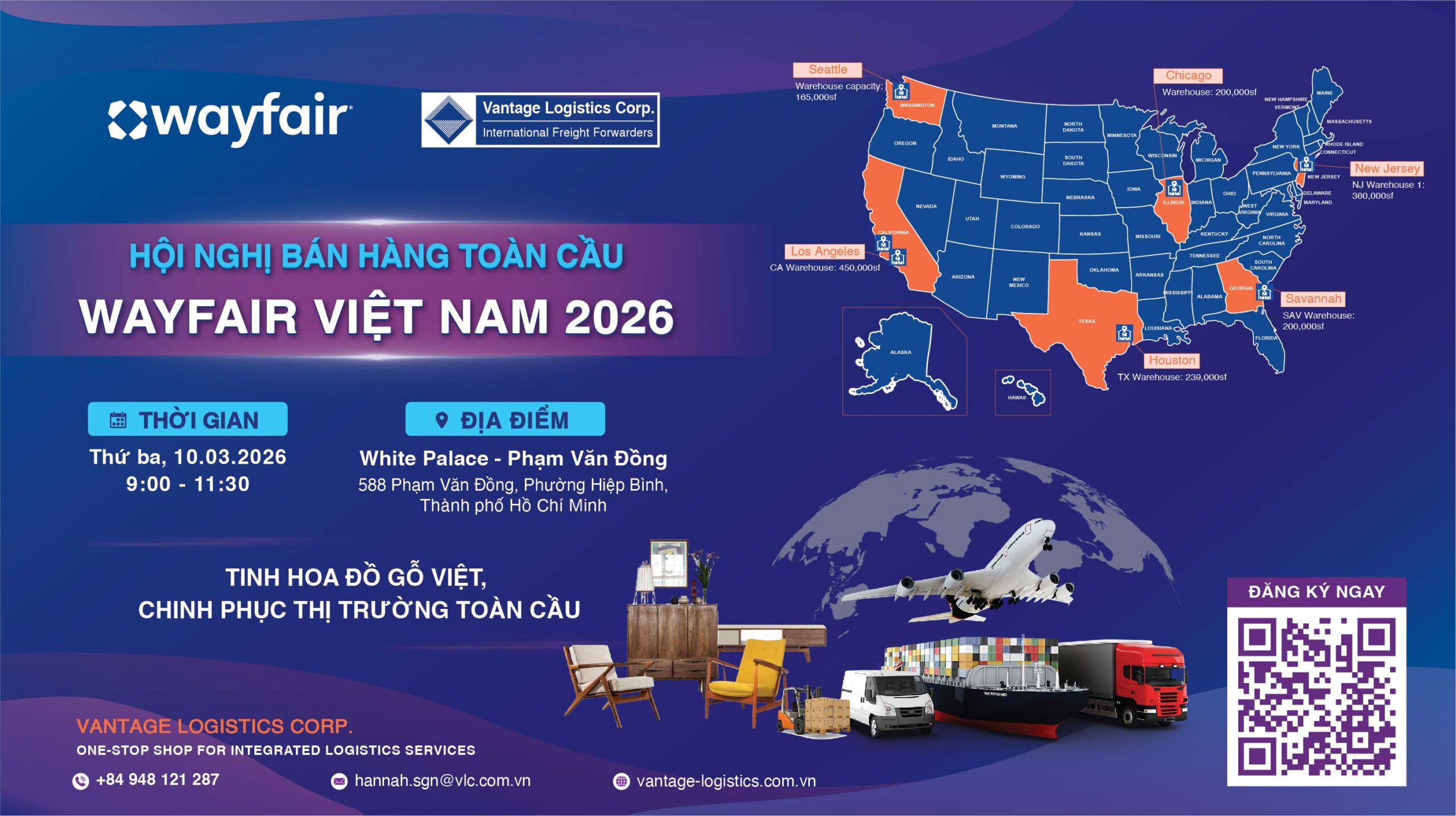
Time: 09:00 – 11:30 | 10 March 2026 Venue: White Palace Pham Van Dong, Ho Chi Minh City Vietnam’s wooden furniture industry is entering a high-value growth phase in the US and EU markets through cross-border e-commerce platforms. In 2025, Vietnam’s wood and wood product exports exceeded USD 17.2 billion, with the US market accounting for over 55% of total export value and continuing to play a central role. The US furniture market is projected to reach USD 118.6 billion by 2027, presenting substantial opportunities for Vietnamese manufacturers and exporters. Share of Wood and Wood Product Exports in 2025 (Source: Department of Forestry and Forest Protection, VIFOREST; Vietnamnet)   As noted by Mr Tran Lam Son, Vice Chairman of Thien Minh Furniture, major e-commerce platforms such as Wayfair are increasingly open to Vietnamese products. However, a key question remains for many businesses: how to move goods into US warehouses in the most efficient and cost-effective way. This is why Vantage Logistics will be present at the Wayfair Vietnam Global Selling Summit 2026 – a strategic forum bringing together manufacturers, suppliers, and partners across the global furniture export ecosystem.   Key topics at the event Wayfair & VIETRADE’s collaboration vision for Vietnamese enterprises Market entry strategies on Wayfair for the wooden furniture sector Efficient Warehousing for Cross‑Border E‑Commerce Collaboration roadmaps with Wayfair for sustainable sales growth Practical insights from suppliers with successful implementation experience   Vantage logistics sponsor booth: 1-to-1 consultation with industry specialists At its sponsor booth, Vantage Logistics will work directly with businesses to translate export potential into operational results on the Wayfair platform. Beyond understanding market demand, our team will provide 1-to-1 consultations focused on: Structuring transportation and fulfilment for Wayfair orders Cost-optimisation solutions for exports to the US Reducing risks related to delays, unexpected charges, and process deviations   > Register to attend with Vantage Logistics here EVENT INFORMATION Time: 09:00 – 11:30, 10 March 2026 Venue: Hall B, White Palace, 588 Pham Van Dong Street, Hiep Binh Chanh Ward, Thu Duc City, Ho Chi Minh City Contact: ha********@*****om.vn | +84 948 121 287...

30/01/2026

View More

Market updates

IATA Updates ULDR 2026 and DGR 2026 Regulations: New Safety Standards for the Aviation Industry

As air cargo operations become increasingly complex, the International Air Transport Association (IATA) has announced the ULD Regulations (ULDR) and Dangerous Goods Regulations (DGR) for the 2026 cycle. These are not merely technical standards, but strategic frameworks designed to enhance safety, harmonise operational processes, and support the industry’s move towards sustainable development. 1. Key Highlights of ULDR 2026 New aircraft contour code (W) and AMW ULD type: Supporting alignment with modern aircraft fleets and enabling higher compatibility between airlines and manufacturers. Standards for aircraft engine transportation: More than regulatory requirements, these standards serve as a “common language” for airlines to handle high-value, technically complex cargo in a consistent manner. Competency-Based Training and Assessment (CBTA): Personnel are assessed on practical capability rather than theory alone, contributing to a more professional and operationally competent air logistics workforce. Appendix J on sustainability: For the first time, the ULD lifecycle is incorporated into the regulations, positioning ULD management as part of the aviation industry’s broader ESG strategy. 2. Key Updates in DGR 2026 Implementation of ICAO amendments: The DGR 2026 edition incorporates all amendments from the ICAO Dangerous Goods Panel for the 2025–2026 period. The concept of “Safety of the Supply Chain” is added to the General Philosophy section, emphasising the shared responsibility of all stakeholders involved in the handling and transport of dangerous goods. New regulations on lithium batteries and electronic devices: Lithium batteries account for a significant share of regulatory changes, driven by an estimated annual increase of 25% in air-transported batteries and recent thermal runaway incidents. The updated rules tighten packaging, labelling, and inspection requirements for power banks, spare batteries, and lithium battery-powered electronic devices. New transport descriptions for hybrid vehicles: Two new entries are added under UN3166 to address challenges in transporting hybrid vehicles powered by both batteries and fuel: Vehicles, flammable gas powered, hybrid, Class 9 Vehicles, flammable liquid powered, hybrid, Class 9 Competency-Based Training and Assessment (CBTA): CBTA continues to be applied, with the introduction of new matrices focusing on dangerous goods handling and loading functions, ensuring personnel are assessed based on real operational performance rather than theoretical knowledge alone. With these important updates to ULDR and DGR, IATA is laying the foundation for a more modern, safer, and environmentally responsible air transport system. These changes not only help mitigate operational risks, but also create opportunities for logistics companies, airlines, and customers to participate in a smarter, standardised, and sustainable global supply chain. Contact Vantage Logistics for detailed consultation on safe and efficient air freight solutions...

27/01/2026

View More

Market updates

EU ETS 2026: New Cost Pressure for the Logistics Sector

From 1 January 2026, the EU Emissions Trading System (EU ETS) will be fully applied (100%) to maritime transport linked to the European Union. This marks a clear shift from a policy “transition phase” to a structural cost mechanism that directly affects freight rates, contract terms, and supply chain strategies for importers and exporters. Under the new framework, emissions costs are no longer treated as temporary surcharges. They become a mandatory, long-term cost component within logistics pricing. EU ETS 2026: key changes reshaping logistics costs The EU ETS (European Union Emissions Trading System) requires shipping lines to purchase emission allowances (EUAs) for voyages connected to the EU. From 2026, several critical changes take effect: 100% emissions obligation, compared with 40% in 2024 and 70% in 2025. Carbon costs itemised separately on freight invoices, rather than being bundled into base freight. Expanded emissions scope, covering not only CO₂ but additional greenhouse gases under the ETS framework. Market estimates indicate that ETS-related surcharges may rise by 35–50% compared with 2025, and currently account for 6–12% of total container shipping costs to the EU, depending on route and carrier. Pricing mechanism: no longer a “temporary surcharge” Unlike fuel or peak season surcharges, ETS costs have distinct characteristics: Carbon allowance prices are directly linked to the EU carbon market, fluctuating with climate policy and supply–demand dynamics. Compliance is a legal obligation for shipping lines. Downward price pressure is unlikely in the medium term, as the EU continues to tighten emissions targets. As a result, ETS has become a long-term pricing variable in logistics, rather than a cost that can be managed through short-term negotiations. How are importers and exporters affected? Although they do not emit directly, importers and exporters bear indirect cost impacts through freight rates and surcharges, including: Higher landed costs for EU-bound cargo. Reduced profit margins or the need to adjust selling prices. Increased risk for long-term FOB/CIF contracts signed before ETS was applied at 100%. Industries with heavy reliance on container shipping – such as textiles, furniture, and electronics – need to reassess pricing strategies and routing options early to mitigate cost shocks and protect competitiveness. How EU ETS 2026 is reshaping logistics strategies The combined impact of EU ETS and other EU carbon policies is pushing businesses to: Review transport routes, vessel schedules, and network configurations to control total logistics costs. Demand greater transparency in surcharge structures, emissions data, and freight calculations. Contact Vantage Logistics to explore logistics solutions aligned with EU ETS 2026....

21/01/2026

View More

Market updates

HO CHI MINH CITY ISSUES RESOLUTION 91/2025: ADJUSTED SEAPORT INFRASTRUCTURE FEES TO EASE LOGISTICS COST PRESSURE

Resolution No. 91/2025/NQ-HDND, issued by the Ho Chi Minh City People’s Council, officially revises the seaport infrastructure fee framework applicable to cargo moving through port gateway areas. The resolution focuses on restructuring fees by cargo type, introducing fee reductions for the Phu Huu BOT corridor, and granting full exemptions for Binh Duong and Ba Ria – Vung Tau. These changes have a direct impact on logistics costs, transport planning and port selection strategies for import–export enterprises. 1. Seaport infrastructure fees by cargo type Transit Cargo, Temporary Import for Re-export VND 2,200,000 per 20FT Container VND 4,400,000 per 40FT Container VND 50,000 per tonne for liquid bulk, dry bulk and LCL cargo Transshipment, Bonded Warehouse and Import–Export Cargo (Article 48, Clause 1 of the Customs Law) VND 220,000 per 20FT Container VND 500,000 per 40FT Container VND 15,000 per tonne for liquid bulk, dry bulk and LCL cargo This differentiated fee structure allows enterprises to forecast logistics costs more accurately and better reflects actual cargo handling characteristics. 2. Fee reductions for cargo moving via the Phu Huu BOT route For cargo moving through Ben Nghe – Phu Huu Port and SP-ITC, transported by road via the Phu Huu BOT, the resolution applies reduced fee levels compared with the standard framework: Transit Cargo, Temporary Import for Re-export Two trips (inbound and outbound): 94% of the standard fee One trip: 97% of the standard fee Transshipment, Bonded Warehouse and Import–Export Cargo Two trips: 47% of the standard fee One trip: 73.5% of the standard fee This mechanism is designed to mitigate overlapping charges, particularly for cargo already subject to BOT road tolls. Phu Huu BOT Toll Station (Source: VnEconomy) 3. Full exemption at Binh Duong and Ba Ria – Vung Tau ports No seaport infrastructure fees apply to cargo handled at ports in: Binh Duong Ba Ria – Vung Tau According to the orientation of the Ho Chi Minh City People’s Committee, the adjustment of seaport infrastructure fees is intended not only to ease logistics cost pressures on enterprises – particularly along corridors subject to multiple road tolls – but also to align with the regional development strategy: Binh Duong is positioned as a domestic logistics hub. Ba Ria – Vung Tau is designated as an international gateway port and a container transhipment centre for southern Vietnam. This approach helps decongest Ho Chi Minh City ports and supports a more balanced cargo flow across southern Vietnam. Summary of seaport infrastructure fees under Resolution 91/2025 Cargo type / Area Fee applied under Resolution 91/2025 Notes Transit cargo, temporary import for re-export VND 2,200,000 / 20FT VND 4,400,000 / 40FT VND 50,000 / TONNE Applicable at HCMC port areas Transshipment, bonded warehouse, import–export cargo (Art. 48) VND 220,000 / 20FT VND 500,000 / 40FT VND 15,000 / TONNE Significantly reduced fees, supporting import–export enterprises Ben Nghe – Phu Huu & SP-ITC via Phu Huu BOT Fee reduction: 2 trips: 94% 1 trip: 97% Reduced burden of overlapping charges Transshipment, bonded warehouse, import–export cargo via Phu Huu BOT Fee reduction: 2 trips: 47% 1 trip: 73.5% Substantial reduction in total logistics costs for enterprises Binh Duong & Ba Ria – Vung Tau ports No fee Aligned with regional logistics development strategy 4. Implications for logistics and import–export enterprises Lower direct logistics costs, particularly along the Phu Huu BOT corridor. Greater flexibility in route and port selection under the revised fee structure. Improved competitiveness for southern Vietnam’s logistics network. Demonstrates Ho Chi Minh City’s effort to balance public revenue objectives with business cost pressures. Contact Vantage Logistics to optimise logistics costs and align your transport planning with the latest policy framework....

20/01/2026

View More
VLC-NEWS-VANTAGE LOGISTICS LAUNCHES VANTAGE MOVE 2026

Vantage News

VANTAGE LOGISTICS CONTINUES THE VANTAGE MOVE 2026 JOURNEY: WHEN HEALTH BECOMES PART OF OPERATIONAL PERFORMANCE

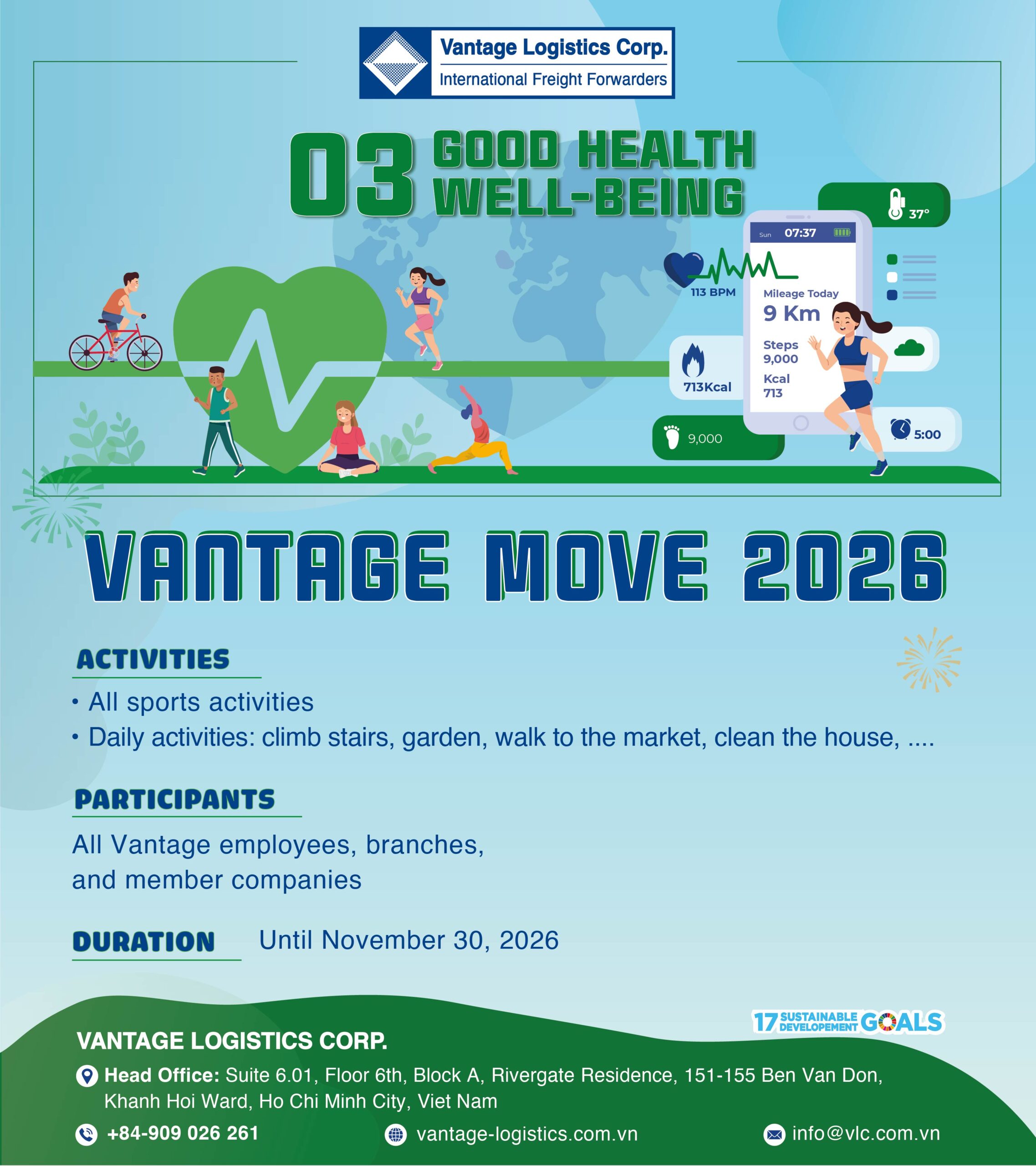
Vantage Logistics is launching Vantage Move 2026 as a long-term program designed to maintain stable performance by directly investing in employee health.   In a high-intensity logistics environment, operational errors often stem not only from processes but from human fatigue. Vantage Logistics officially launches Vantage Move 2026, building on the success of Vantage Move 2025 implemented last year. This milestone marks the maturation of a program that is becoming a defining tradition of Vantage Logistics’ internal culture.     Health as a Strategic Priority at Vantage Logistics   In the logistics industry – where operations never pause, time pressure is constant, and cross-functional coordination is non-stop – the physical condition of each employee is never just a personal matter. A healthy workforce is the foundation for consistent service quality, sustained processing speed, and reduced operational risk. That is why Vantage Logistics continues to invest in and expand this program in 2026.   Key focus areas for 2026  Sustain and expand daily physical activity habits across all employees Recognize and reward individuals and teams with outstanding achievements each quarter and at year-end Foster a positive workplace where health is part of the culture – not just a benefit   The program is an integral part of Vantage Logistics’ sustainability commitment, aligned with SDG 3 – Good Health and Well-Being under the United Nations’ 17 Sustainable Development Goals (17SDGs).   Join Vantage Move 2026 How to join: Click the link below to enter the Vantage Move 2026 Zalo Group → post your daily physical activities to the group to be tracked and scored each quarter. Join us now: https://zalo.me/g/oygcwu803 What counts? All sports activities and everyday movement – climbing stairs, gardening, walking to the market, cleaning the house, and more. Everyone can participate, individually or as a self-formed team. Eligible Participants: All employees are invited to take part, either as individuals or by forming teams with colleagues.  >> Stay updated on results from each phase at the Vantage Logistics website and internal channels....

18/01/2026

View More
1 … 20 21 22 23 24 … 43