RESOURCE

vlc-news-philippines-cancels-rice-import-permit-15102026

Market updates

Philippines Cancels Permit for Controversial 12,480-Metric-Ton Rice Shipment from Viet Nam

The Philippine Department of Agriculture (DA) said it had ordered the cancellation of the Sanitary and Phytosanitary Import Clearance (SPSIC) for a 12,480-metric-ton rice shipment from Viet Nam before the vessel arrived. The case involves reported discrepancies in rice specifications and an expired import contract, highlighting the risks that can arise when shipping schedules do not align with import requirements in the destination market. 1. Developments at the Port of Arrival According to the Philippine Department of Agriculture (DA) and the Philippine News Agency (PNA), the vessel MV Tay Son 2, carrying 12,480 metric tons of rice from Viet Nam, arrived at the Port of Davao on September 14, 2026. According to these sources, the vessel’s captain refused to submit the shipment for inspection by the Philippine Bureau of Plant Industry (BPI). On September 17, 2026, the vessel departed Davao before the matter had been resolved. Philippine authorities subsequently prevented the cargo from being unloaded at another location and brought the vessel to the Port of General Santos before ordering it to return to Davao for further handling. 2. Rice Specifications and Import Requirements The case involves two issues: reported discrepancies in rice specifications and the status of the import contract and permit. 2.1. Reported Discrepancy in Rice Specifications The importer, Planters Product, Inc. (PPI), reported a discrepancy between the purchase order and the specifications communicated for the shipment: Specifications under the purchase order: 25% broken rice Reported specifications for the shipment: 5% broken rice In agricultural trade, the percentage of broken grains is an important commercial specification. However, the discrepancy remains based on information reported by the importer and has not been confirmed by an official inspection, as the physical inspection process was not completed. 2.2. Expired Contract and Canceled Import Permit In addition to the rice specifications, the delivery timeline and the status of the import documentation were also highlighted by the DA: Estimated time of arrival (ETA): July 2026 Actual arrival: Mid-September 2026 According to the DA, the import contract had expired and the SPSIC had been canceled before the vessel arrived. The vessel’s arrival also coincided with the period when the Philippines was preparing for the wet-season rice harvest. According to published information, import policy during this period was also linked to efforts to limit downward pressure on domestic palay prices. Operational Note: Even when goods meet quality requirements, a shipment may still face customs clearance difficulties if it fails to meet import requirements or if the relevant permit is no longer valid. 3. Proposed Measures for Handling the Shipment According to published information, the Bureau of Customs of the Philippines (BOC) was still considering the final course of action for the shipment. The proposed measures included: Proposed Measure Proposing Authority / Status Return to the Country of Origin The BPI was reported to have recommended returning the shipment to Viet Nam. Seizure and Penalties The DA proposed considering seizure of the shipment and the application of penalties under relevant regulations, subject to the competent authority’s findings and decision. Final Decision The BOC was reviewing the official course of action for the shipment. 4. Conclusion The controversial rice shipment in the Philippines highlights how international trade depends not only on product quality and contractual terms but also on shipping schedules, the validity of import documentation, and regulatory requirements in the destination market. When these elements are no longer aligned, shipments already in transit may face unexpected complications during arrival and customs clearance. Vantage Logistics will continue to provide updates on notable developments in logistics, import-export activities, and international supply chains, offering businesses additional insight into factors that may affect global trade. Contact Vantage Logistics for tailored transport solutions and competitive quotations. Please provide details on cargo type, market, origin, destination, and estimated timeline.   Vantage Logistics Corp – South East Asia (S.E.A) Logistics Provider One-Stop Shop For Integrated Logistics Services Head Office Viet Nam – Suite 6.01, Floor 6th, Block A, RiverGate Residence, 151-155 Ben Van Don, Khanh Hoi Ward, HCMC, Viet Nam Branch Thailand, Laos, Cambodia, Malaysia, Indonesia, Singapore Contact Us Email in**@*****om.vn Hotline +84-909-026-261 Website https://vantage-logistics.com Send your shipment enquiry today and receive a tailored transport plan from the Vantage Logistics team.

15/10/2026

View More
vlc-news-asean-east-asia-trade-15102026

Market updates

ASEAN–East Asia Trade Reaches USD 1.4 Trillion, Up 13.7% in 2025

According to preliminary data from the ASEAN Secretariat, two-way trade between ASEAN and its three East Asian partners (China, Japan, and South Korea) reached USD 1.4 trillion in 2025, representing a 13.7% year-on-year increase. Notably, China–ASEAN trade continued its upward trajectory in the first seven months of 2026, underscoring a sustained expansion in cross-regional trade volumes worth monitoring. 1. Regional Trade Volume and Foreign Direct Investment (ASEAN+3) Trade and investment flows between ASEAN and its three East Asian partners maintain a substantial footprint. In 2025, Foreign Direct Investment (FDI) inflows from China, Japan, and South Korea into ASEAN totaled USD 44.8 billion. Key ASEAN–East Asia Trade & Investment Indicators Indicator Value Growth / Share ASEAN – (China, Japan, South Korea) Trade in 2025 USD 1.4 Trillion Up 13.7% vs 2024 FDI from 3 East Asian Partners into ASEAN in 2025 USD 44.8 Billion Accounted for 18.2% of total ASEAN FDI China – ASEAN Trade (First 7 Months of 2026) USD 744.41 Billion Up 24.7% year-on-year The scale of merchandise trade and investment capital highlights the vital economic linkage between East Asia and Southeast Asia. However, assessing actual freight demand requires a granular evaluation of specific commodity structures, export-import markets, and active transport corridors. 2. Direct Impacts on Transport Networks and Logistics Infrastructure Expanding trade volumes underscore the critical role of regional transport connections. Depending on industry-specific cargo characteristics and delivery requirements, flexible logistics solutions are being actively deployed: Intra-Asia Ocean Freight Connections: For multi-leg shipments, vessel schedule reliability, transit times, and feeder network connectivity are pivotal factors for supply chain managers. Major gateway hubs such as Shanghai, Ningbo, Busan, and Yokohama maintain dense feeder linkages with Southeast Asian ports within ocean carrier networks Integrated Logistics and Multimodal Transport: Depending on lead-time sensitivity, combining ocean freight, Cross-Border Trucking, and inland warehousing offers expanded routing options. Real-world operational efficiency hinges heavily on border crossing clearance times, transit schedules, and the coordination capability of the logistics operator Rules of Origin (C/O) and Customs Compliance: When leveraging Free Trade Agreements such as RCEP, AKFTA, or AJCEP, enterprises must accurately determine rules of origin and prepare compliant documentation to qualify for preferential tariffs. Duty exemption eligibility depends on the specific conditions of each product line and destination market 3. Monitoring Southeast Asian Trade Dynamics and Logistics Connectivity Expanding trade and investment flows reflect an increasingly integrated economic relationship between East Asia and Southeast Asia. This growth in cross-border trade creates momentum for expanding logistics connectivity, helping strengthen supply chain coverage across the region.   Contact Vantage Logistics for tailored transport solutions and competitive quotations. Please provide details on cargo type, market, origin, destination, and estimated timeline. Vantage Logistics Corp – South East Asia (S.E.A) Logistics Provider One-Stop Shop For Integrated Logistics Services Head Office Viet Nam – Suite 6.01, Floor 6th, Block A, RiverGate Residence, 151-155 Ben Van Don, Khanh Hoi Ward, HCMC, Viet Nam Branch Thailand, Laos, Cambodia, Malaysia, Indonesia, Singapore Contact Us Email in**@*****om.vn Hotline +84-909-026-261 Website https://vantage-logistics.com Send your shipment enquiry today and receive a tailored transport plan from the Vantage Logistics team.

15/10/2026

View More

Market updates

SINGAPORE STRENGTHENS PRODUCT SAFETY CONTROLS: WHAT VIETNAMESE EXPORTERS NEED TO KNOW

Singapore is strengthening its product safety controls through two key regulations: the Consumer Protection (Safety Requirements) Regulations (CPSR) and the Consumer Goods (Safety Requirements) Regulations (CGSR). For exporters, these requirements go beyond product compliance. They can also affect delivery schedules, logistics costs, and supply chain reliability. 1. Singapore Strengthens Product Safety Requirements According to information published by Vietnam’s Ministry of Industry and Trade, Singapore applies two main regulatory frameworks for product safety. – CPSR: Covers 33 categories of controlled goods, including electrical and electronic products, household appliances, and gas appliances. Products within scope must meet applicable safety requirements, complete registration, and carry the SAFETY Mark before being supplied or sold in Singapore. – CGSR: Covers general consumer goods such as toys, clothing, furniture, and sports equipment, which must comply with the relevant safety standards. Non-compliant products may be subject to sales restrictions or recalls. Businesses that violate applicable requirements may also face penalties. For exporters, checking compliance requirements before shipment is essential. Addressing documentation or registration issues early can help avoid costly adjustments after cargo has already left the port of origin. 2. Potential Impact on Southeast Asia’s Trade and Logistics Singapore plays an important role in Southeast Asia’s trade and logistics network. Tighter product safety controls may require exporters, importers, and distributors to review their procedures for placing goods on the Singapore market. Several potential risks deserve attention: – Delivery delays: Incomplete documentation or missing certificates may affect cargo acceptance and delivery schedules. – Additional logistics costs: Delays in resolving compliance issues may lead to storage, port handling, or additional transportation costs. – Disrupted distribution plans: Late deliveries can affect inventory planning, distribution schedules, and commitments to business partners. These requirements do not automatically apply across all ASEAN markets. However, they highlight the importance of understanding the specific regulations of each destination country when planning regional trade and distribution. 3. What Should Vietnamese Exporters Prepare? For Vietnamese businesses exporting to Singapore, compliance checks should take place before shipment arrangements are finalized. Exporters should determine whether their products fall under CPSR or CGSR, verify the applicable safety standards and registration requirements, and clarify responsibilities with their Singaporean importers. Documentation preparation should also be factored into the shipping schedule. If an issue is discovered only after cargo arrives at the destination port, businesses may need to manage several challenges simultaneously, including delivery delays, additional costs, and changes to distribution plans. A reliable shipping plan therefore involves more than selecting the right route or sailing schedule. It also requires anticipating potential obstacles before the cargo reaches its destination. 4. Managing Risks Through Early Planning Not every risk in international shipping can be eliminated, but many disruptions can be reduced through early preparation. Reviewing cargo information, documentation, shipping schedules, and destination requirements helps all parties make better-informed decisions. For shipments to Singapore, close coordination among exporters, importers, agents, and logistics providers helps maintain visibility over shipment readiness, address changes, and adjust plans when necessary. At Vantage Logistics, international transportation planning takes into account the practical requirements of each shipment and the coordination needed among relevant parties. This approach helps businesses manage potential disruptions and maintain better control over delivery schedules. As market requirements evolve, careful preparation does more than protect an individual shipment. It also helps businesses maintain reliable supply chains and build lasting partnerships across international markets.

15/10/2026

View More

Market updates

U.S. DELAYS FURNITURE TARIFF INCREASE UNTIL 2027: KEY TAKEAWAYS

The United States has decided to postpone the implementation of higher import tariffs on furniture and kitchen cabinets by one year, pushing the effective date to 2027. At the same time, proposed anti dumping duties on pasta imports from Italy are being revised downward. These developments carry direct implications for global supply chains, transport planning, and export strategies in the logistics sector. 1. Key Points Furniture & kitchen cabinet tariffs: The planned tariff hike, originally set for next year, has been deferred by 12 months, allowing exporters continued access to the U.S. market under current conditions in the short term. Italian pasta duties: Proposed anti‑dumping tariffs are under review and trending lower, signaling a more flexible stance compared with earlier restrictive scenarios. Policy message: Washington is weighing inflationary pressures and consumer costs, opting not to enforce immediate protectionist measures. 2. Direct Impact on Logistics Stable transport demand: The delay enables U.S. importers to maintain order schedules, reducing risks of shipment bunching or booking cancellations in the near term. Extended planning horizon: Companies gain additional time to optimize transport contracts, negotiate freight rates, and allocate ocean and air capacity for the 2026–2027 period. Positive signals for EU–US and Asia–US trade lanes: Particularly relevant for consumer goods with profit margins highly sensitive to tariff changes. 3. Points Requiring Close Attention Delay does not equal cancellation: Tariffs may still take effect in 2027, requiring businesses to prepare medium‑ and long‑term scenarios for logistics costs and pricing. Policy volatility: U.S. trade decisions remain subject to economic and political dynamics, underscoring the need for close monitoring of official announcements. Role of logistics advisors: Service providers should proactively update clients on tariff impacts, transport schedules, and cost‑optimization strategies. The U.S. decision provides a crucial buffer for global supply chains but also underscores the need for early preparation beyond 2027. For logistics companies, this is the right moment to reinforce planning and strengthen resilience. Contact Vantage Logistics today to review your U.S. transport plans and prepare tariff‑response strategies for the coming years....

16/01/2026

View More

Market updates

VIET NAM’S IMPORT–EXPORT PERFORMANCE 2025: USD 930 BILLION RECORD, WHILE TRADE SURPLUS NARROWS

In 2025, Viet Nam recorded an all-time high in total import–export turnover, driven by stronger import growth than exports, reflecting expanding production demand and deeper global integration. 1. Trade Overview 2025 Viet Nam’s total merchandise import–export turnover in 2025 reached USD 930.05 billion, up 18.2% year-on-year, according to the General Statistics Office of Viet Nam. Exports totalledUSD 475.04 billion, increasing 17.0%, while imports reached USD 455.01 billion, up 19.4%. The trade balance remained positive, with a surplus of approximately USD 20 billion; however, import growth outpaced export growth. 2. Exports: Continued Growth, but at a Slower Pace than Imports Export structure by economic sector and product group in 2025 (Source: VnEconomy) The foreign-invested sector continued to play a dominant role, accounting for over 77% of total export value. Meanwhile, the domestic sector recorded a slight decline compared with 2024, highlighting ongoing competitiveness challenges. Export composition continued to improve, with processed and manufactured goods representing nearly 90% of total exports. Export commodities exceeding USD 10 billion in 2025 (Source: General Statistics Office) Electronics, computers and components, textiles, footwear, and processed agricultural and food products maintained a high share, indicating a steady increase in technological content and value-added intensity. 3. Imports: Production Momentum Driving Raw Material Demand Import structure and product groups in 2025 (Source: VnEconomy) The majority of imports served production and export activities. Production inputs accounted for 93.6% of total import value, including: Machinery, equipment, tools and spare parts: 52.7% Raw materials, fuels and materials: 40.9% Import commodities exceeding USD 10 billion in 2025 (Source: General Statistics Office) In 2025, 47 imported items exceeded USD 1 billion, accounting for nearly 94% of total import turnover. Notably, nine items surpassed USD 10 billion, contributing 64.8% of total imports. Import growth outpaced export growth by 2.4 percentage points, clearly reflecting expanding production scale and rising demand for inputs and components. 4. Key Import–Export Markets: United States, EU, China and ASEAN Import–export markets in 2025 (Source: General Statistics Office) Viet Nam continued to post a substantial trade surplus with the United States, reaching USD 133.9 billion, up over 28% year-on-year. The EU maintained a surplus of USD 38.6 billion, increasing 10.1%. In contrast, the trade surplus with Japan fell sharply by 30.1%, down to USD 2.1 billion. On the deficit side, China remained Viet Nam’s largest import partner, with a trade deficit of USD 115.6 billion, up nearly 40%. South Korea and ASEAN recorded deficits of USD 31.6 billion and USD 14.2 billion, respectively, underlining sustained regional supply chain pressures. 2025 marks a turning point for Viet Nam’s trade landscape. Total turnover reached a record level, exceeded policy targets, and reflected both recovering global demand and the increasingly tangible impact of free trade agreements. These results confirm that Viet Nam’s trade expansion is becoming more substantive, laying a solid foundation for sustainable import–export growth in the coming years. The 2026–2027 period will be critical for enterprises to optimise supply chains, control logistics costs, and select end-to-end logistics partners capable of supporting deeper international integration. For further information, please contact: Email: in**@*****om.vn Hotline: +84-909-026-261...

15/01/2026

View More

Vantage Events

UPCOMING EVENT: CONNECT WITH VANTAGE LOGISTICS AT JCTRANS 2026 – BANGKOK

Vantage Logistics cordially invites our partners and customers to visit our booth at the JCTRANS Global Freight Forwarders Conference 2026, taking place from 01–04 April 2026 in Bangkok, Thailand. This event provides a valuable opportunity for direct discussions, strengthening partnerships, and jointly developing practical logistics solutions for Viet Nam and the wider ASEAN market. Meet Vantage Logistics at: Booth: F133 Date: 01–04/04/2026 Venue: Queen Sirikit National Convention Center (QSNCC), Bangkok, Thailand Vantage Logistics looks forward to meeting and engaging directly with international logistics partners and agents during the conference. For partners who are unable to attend in person, we are available to arrange online meetings to discuss cooperation opportunities in the coming period.   Vantage Logistics – A Reliable Partner In The Vietnamese Market At JCTRANS 2026, Vantage Logistics positions itself not only as a professional logistics service provider, but also as a strategic gateway for international partners seeking to access the Vietnamese and ASEAN markets. Our focus centres on three core objectives: Specialised solutions: Advisory and execution services covering multimodal transport, customs clearance, project logistics, cold chain, bulk cargo and dangerous goods (DG). Optimised resources: Sharing operational capabilities across ports, ICDs and depots, supported by strategic relationships with shipping lines, NVOCCs and airlines. Sustainable cooperation: Building long-term partnerships with international agents, prioritising operational stability, cost control and scalable supply chain growth.   JCTRANS 2026: Expanding Networks, Strengthening Service Capability Through this global logistics networking platform, Vantage Logistics aims to further strengthen its international partner network. This enables us to offer customers broader routing options, flexible operating capacity and efficient logistics solutions with controlled costs. We look forward to meeting you at Booth F133 – JCTRANS 2026, Bangkok, 01–04/04/2026. For meeting arrangements or to learn more about our service capabilities, please contact us: Email: in**@*****om.vn Hotline: +84 909 026 261 Explore more: Company Profile | Online Freight Booking...

14/01/2026

View More

Market updates

IMPORT–EXPORT TARIFF SCHEDULE 2026: A TAX AND CUSTOMS POLICY REFERENCE TOOL FOR BUSINESSES

The Regional Customs Branch VIII has officially released the Import–Export Tariff Schedule 2026, a free professional reference tool integrating 32 tariff schedules and more than 8,000 HS codes. The file supports businesses in identifying applicable tax policies, controlling costs, reducing compliance risks, and improving transparency in import–export operations. To support the import–export business community and enhance the effectiveness of customs policy reference, the Regional Customs Branch VIII issued the Import–Export Tariff Schedule 2026. The document builds on previous editions while reviewing and updating tax regulations and goods management policies in force as of January 2026. The tariff file is systematised by HS code, allowing users to efficiently cross-check applicable duty rates and regulatory requirements for each specific commodity. Integrated Contents of the Import–Export Tariff Schedule 2026 Vietnam’s Import–Export Goods Nomenclature, presented in bilingual Vietnamese–English format, in accordance with current regulations. 31 tariff schedules applicable in 2026, including: Ordinary import duty and preferential import duty. Special preferential tariff schedules under Free Trade Agreements (FTAs). Export duty and preferential export duty. Value-added tax (VAT), special consumption tax (SCT), environmental protection tax, and related taxes. Goods management policy system by HS code, covering approximately 100 types of regulatory policies applicable to more than 8,000 HS codes, structured for practical reference and application. Value for Import–Export Enterprises Fast and accurate reference of tariff rates and goods management policies by HS code. Support for cost estimation and international business planning. Reduced risk during customs declaration and clearance procedures. Improved legal compliance and greater transparency in import–export activities. Important Notes on Use Data are compiled from current legal normative documents (source: Thu Vien Phap Luat). The file inherits previous editions and fully updates tax and goods management policies effective as of January 2026. The VAT tariff does not have a direct HS-based legal reference and is developed based on Decree No. 174/2025/ND-CP and historical data; therefore, it is for reference purposes only. Users should further cross-check relevant legal documents, particularly Appendices I and II and Column “G – VAT Reduction” in the file, to ensure accurate application. Relevance in the 2026 Context With multiple adjustments expected in 2026 relating to FTA implementation roadmaps and updates to the HS code nomenclature, a clear understanding of applicable tariff schedules and goods management policies is essential for businesses to mitigate legal risks and improve operational efficiency in import–export activities. The Regional Customs Branch VIII encourages enterprises and professional practitioners to share the Import–Export Tariff Schedule 2026 widely via websites, fanpages, and specialised information channels, with proper source attribution to ensure transparency and ease of future updates. Reference Source The Import–Export Tariff Schedule 2026 was compiled and shared by Mr Vu Quy Hung, currently working at Quang Ninh Customs. The document is developed through systematic consolidation of current tax regulations and import–export goods management policies, inheriting and updating content from previous editions. Wider dissemination of this tariff file supports enterprises and customs professionals in policy reference and application. When using or re-sharing the document, proper source citation is requested to ensure accuracy and facilitate updates to future revisions. Download Link – Import–Export Tariff Schedule 2026 (Official source from the Regional Customs Branch VIII) Excel file https://tinyurl.com/btxnk2026 https://tinyurl.com/btxnk2026-01 https://tinyurl.com/btxnk2026-01-06 PDF file https://tinyurl.com/btxnk2026-A3 https://tinyurl.com/btxnk2026-A4 According to Vantage Logistics’ advisory, the tariff schedules and related policy files are provided directly by the Regional Customs Branch VIII and will be updated on an ongoing basis. Partners are advised to use the links above to download the files and monitor the latest updates to ensure accurate and timely application....

13/01/2026

View More

Market updates

Vantage Logistics Successfully Executes Oversized Air Cargo Shipment via Dedicated Freighter Aircraft

Vantage Logistics has completed the air transportation of an oversized high-tech equipment shipment from Tan Son Nhat International Airport to Taipei, utilising a dedicated cargo aircraft and fully complying with PMC pallet loading requirements and international aviation handling standards. Air Shipment Details: Commodity: High-tech equipment – IRIS S optical measurement and inspection system Weight & Dimensions: ​2 PTLS // GW 1,568 kg // DIMS 1 × 0.5 × 0.5 m (1); 2.4 × 1.9 × 2.5 m (1) 2 PLTS // GW 1,578 kg // DIMS 1 × 0.5 × 0.5 m (1); 2.4 × 1.9 × 2.5 m (1) Airport of Loading (AOL): Tan Son Nhat, Viet Nam Airport of Destination (AOD): Taipei, Taiwan The cargo was packed in custom-built wooden crates in accordance with the manufacturer’s specifications. With individual pallet dimensions reaching up to 238 x 191 x 248 cm, the shipment exceeded passenger aircraft limits and therefore required a specialised airfreight solution. Handling a “Non-Standard” Air Cargo Requirement Faced with oversized, high-value technology equipment, the Vantage Logistics team developed a transport plan focused on safety, schedule certainty, and airline compliance. Key measures included: Assigning a freighter aircraft for the entire oversized shipment Engineering a PMC pallet loading plan aligned with aircraft weight and dimensional constraints Standardising technical cargo descriptions, HS codes, and documentation to accelerate airline approval Maintaining end-to-end control from packing, warehouse delivery, and aircraft loading through to final handover in Taipei Through coordinated execution and strict process control, the shipment was delivered on schedule and met all technical and operational requirements. Managing oversized, hard-to-load cargo or freighter-only air shipments? Contact Vantage Logistics to discuss a transport plan tailored to your operational and technical needs....

03/01/2026

View More

Market updates

10 KEY MILESTONES OF VIETNAM’S LOGISTICS SECTOR

2025 marked a pivotal year for Viet Nam’s logistics sector, as national-level policies, large-scale infrastructure projects and international events were implemented in parallel. These developments not only strengthened operational capacity but also reshaped the role of logistics within supply chains and the broader economic growth agenda. Below are 10 defining milestones that clearly illustrate the sector’s development trajectory over the past year. 1. Adoption of the New National Logistics Development Strategy For the first time, logistics was formally recognised as essential economic infrastructure under the National Logistics Development Strategy to 2035, with a vision to 2050. The strategy provides a long-term regulatory framework for logistics hub planning, multimodal connectivity and capacity building for domestic enterprises. Logistics Development Strategy 2025 – 2035 (Source: Thuong Truong) 2. Vietnam Logistics Forum 2025 Focuses on Regional Connectivity Held in Da Nang, the Viet Nam Logistics Forum 2025 highlighted the role of logistics in regional integration and the East–West Economic Corridor. Discussions centred on infrastructure development, institutional reforms and practical solutions to reduce logistics costs for manufacturing and export-oriented businesses. Viet Nam Logistics Forum (Source: Thuong Truong) 3. Nearly 1,500 km of Expressways Added to the Network Viet Nam continued to expand the North–South expressway system, significantly shortening inter-regional transit times and easing pressure on national highways. This expansion directly impacts logistics costs and enhances the reliability of domestic supply chains. A section of the Quang Ngai – Hoai Nhon Expressway (Source: Vietnamnet) 4. Capacity Expansion at Key Seaport Systems New berths at the Lach Huyen Port complex (Hai Phong) commenced operations, increasing Viet Nam’s total seaport capacity to approximately 900 million tonnes per year. This strengthens the country’s ability to accommodate larger vessels and handle growing import–export volumes. Lach Huyen International Container Port Cluster (Source: Hateco Group) 5. Phase 1 Operations Begin at Long Thanh International Airport Long Thanh International Airport entered initial operations with substantial cargo handling capacity, positioning it as a future air logistics hub. In parallel, existing airports continue to be upgraded to meet rising international freight demand. Long Thanh Airport Construction Site (Source: Thuong Truong) 6. Implementation of the Lao Cai – Hanoi – Hai Phong Railway Line The new railway corridor is designed primarily for freight transport, enhancing connectivity between seaports, border gates and industrial zones, while supporting cross-border logistics with China. Map of the Lao Cai – Hanoi – Hai Phong Railway Line (Source: The Saigon Times) 7. Pilot Free Trade Zones Integrated with Logistics Free trade zones in Da Nang and Hai Phong were approved, integrating logistics, manufacturing and services. This model creates favourable conditions for investment attraction and the development of higher value-added supply chains. Location of Hai Phong Free Trade Zone (Source: Thoi Bao Tai Chinh Viet Nam) 8. Establishment of Additional Local Logistics Associations The formation and consolidation of logistics associations across multiple provinces reflect increasing professionalisation within the sector, while strengthening policy dialogue between businesses and regulatory authorities. Launch of HCMHLA – Association formed from the merger of three logistics and port organizations (Source: Doanh Nghiep Hoi Nhap) 9. Vietnam Hosts the FIATA World Congress 2025 Hosting the FIATA World Congress in Ha Noi placed Viet Nam at the centre of the global logistics network. The event attracted more than 1,000 international delegates and focused on practical themes such as green logistics, supply chain resilience and operational digitalisation. FIATA World Congress 2025 in Hanoi (Source: Dien Dan Doanh Nghiep) 10. Vietnam International Logistics Exhibition (VILOG) Expands in Scale VILOG 2025 welcomed hundreds of domestic and international exhibitors, showcasing solutions in warehousing, automation, cold chain logistics and specialised transport. The exhibition has become a key platform connecting market demand with logistics technology. Seminar Introducing VILOG 2025 Exhibition (Source: Tap Chi Cong Thuong) The series of developments throughout 2025 demonstrates Viet Nam’s logistics sector transitioning from a supporting function to a core economic infrastructure pillar, driven by connectivity, operational efficiency and deeper international integration. Logistics enterprises must proactively adapt to capitalise on this wave of infrastructure investment and system upgrades. Contact Vantage Logistics to build a logistics strategy for 2026 aligned with Viet Nam’s evolving market landscape....

02/01/2026

View More

Vantage News

NEW YEAR HOLIDAY ANNOUNCEMENT 2026

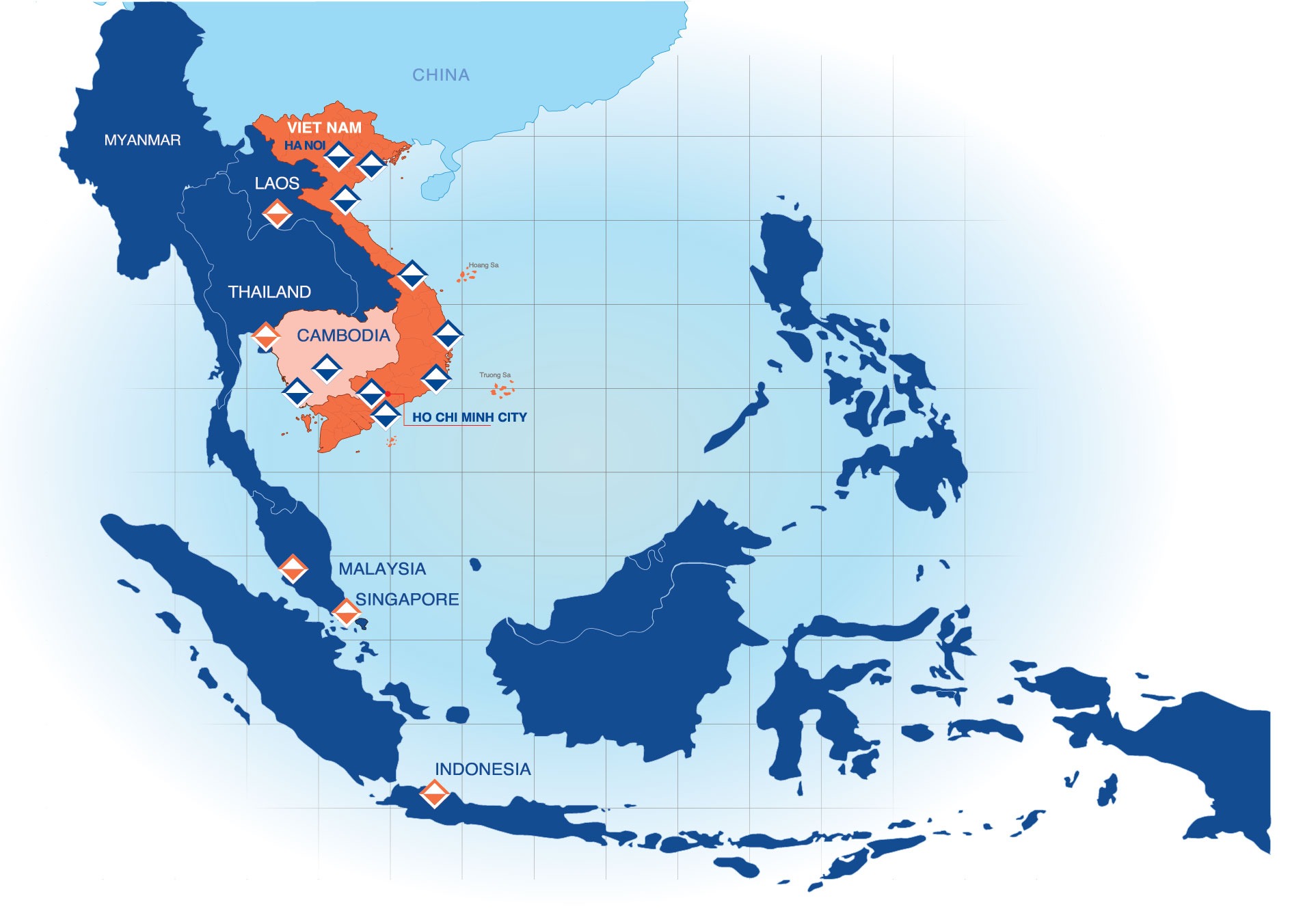
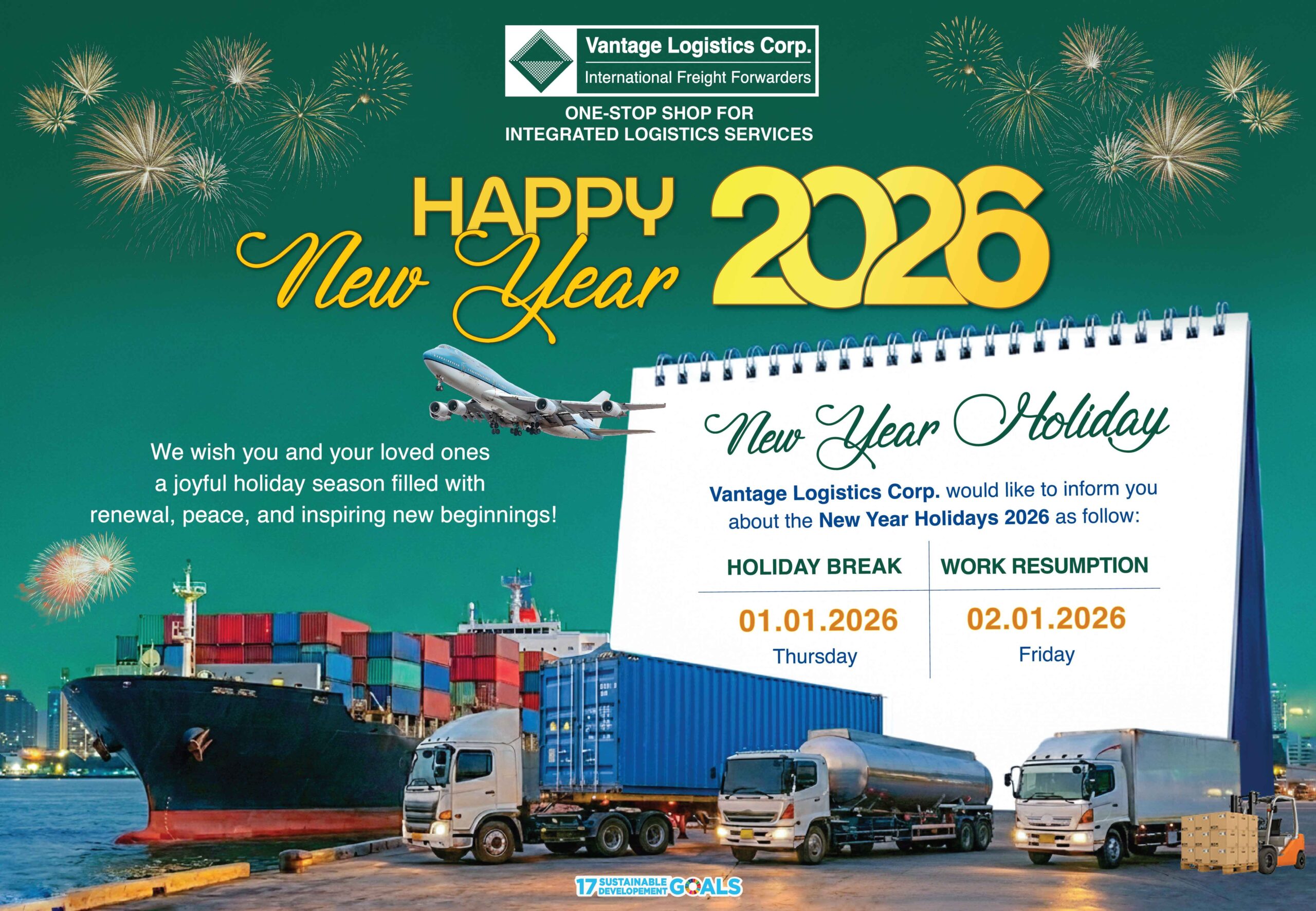
During the holiday, if you require assistance, please contact in**@*****om.vn – we will respond as soon as possible. Vantage Logistics respectfully informs our valued customers and partners of the New Year holiday schedule for 2026. The past year has been a remarkable journey of growth and collaboration. Looking ahead, Vantage Logistics remains committed to delivering excellence, strengthening partnerships and creating greater value for our customers and partners. Holiday Schedule Holiday: Thursday, 01 January 2026 Work Resumes: Friday, 02 January 2026 Please note that responses and support may be slower than usual. We will get back to you at the earliest possible time! Contact Information Hotline: +84 909 026 261 Email: in**@*****om.vn On this special occasion, Vantage Logistics extends its warmest wishes to our valued customers, partners, and colleagues across the industry. May the New Year bring you health, happiness, prosperity, and continued success. Vantage Logistics: One-stop Shop For Integrated Logistics Services With a robust network across the ASEAN region, Vantage Logistics serves as a vital bridge, connecting products from Vietnam and Southeast Asia to the global market. Guided by dedication, professionalism, and continuous innovation, we are committed to helping our clients achieve sustainable business success. We hold certifications including C-TPAT, IATA, ISO 9001:2015, FMC OTI-NVOCC Bond, Customs Agents License, and HSSE Compliance, ensuring quality and reliability in our services. Our key offerings include: Comprehensive Logistics Services: International Freight (Sea & Air), Customs Brokerage, Warehousing, Trucking, Project Logistics, Perishable and Dangerous Goods Logistics, Oil & Gas Logistics, and more. Carrier Agency Services: Exclusive and General Sales Agency for International and Domestic Carriers, Break Bulk Vessel and Tanker Services. Logistics Infrastructure Operations: Ports, ICD, Logistics Hub/Depot, Warehouse Management. GSA Airline Services: Airline Ticket, Flight Operations and Ground Handling, Private Jet/VVIP Services. Trading and Procurement: Sourcing SEA Suppliers for Global Markets, Additional Sales Channel Development. You can also explore our online freight platform for seamless logistics solutions here Please find the detailed Vantage Logistics Profile here Should you have any questions or require tailored solutions, feel free to reach out. Looking forward to future collaboration....

29/12/2025

View More

Market updates

SLASH YOUR THAILAND-CAMBODIA SHIPPING COSTS BY UP TO 50%

Amid prolonged congestion on traditional routes and rising transport costs, Vantage Logistics introduces the Thailand – Viet Nam – Cambodia corridor, a practical solution enabling businesses to cut shipping costs by up to 50%, shorten transit times, and maintain reliable schedules. The traditional Bangkok/Laem Chabang – Sihanoukville – Phnom Penh route has been facing prolonged congestion, leading to rising costs and unstable schedules. Many businesses are paying up to USD 2,000 per 40-foot container while still encountering delivery delays. To address this bottleneck, Vantage Logistics has introduced an alternative transport corridor connecting Thailand – Viet Nam – Cambodia. Thailand – Viet Nam – Cambodia Transport Corridor The new route is designed around Viet Nam’s role as an efficient regional transit hub in Southeast Asia. Instead of relying heavily on Cambodian seaports under sustained pressure, cargo is routed via Viet Nam before transiting onward to Cambodia. This approach optimises cargo flows and reduces congestion-related risks. Key benefits: Up to 50% cost reduction, with rates from approximately USD 1,000/40’ container compared to the traditional route Lower congestion risk by reducing reliance on Cambodian seaports Shorter transit time, averaging around 2 days to Viet Nam and 1–3 days onward to Phnom Penh More stable schedules, supporting businesses that require precise delivery planning Smooth customs clearance, with full support for T-documents and transit procedures This new corridor provides importers and exporters with greater flexibility and improved cost control, particularly as regional logistics costs remain volatile. It offers a practical solution to maintain delivery timelines and mitigate risks during peak seasons. Contact Vantage Logistics for route consultation and tailored quotations for your specific shipping requirements. Contact: Jenny Vo – je*******@*****om.vn...

26/12/2025

View More
1 … 21 22 23 24 25 … 43