 LOGIN
LOGIN 
 VN
VN
 Sea Freight
  Air Freight
  Intermodal
  Customs Brokerage
  Project Logistics
  Warehouse Services
  Trucking
  Insurance
  Logistics Infrastructures
  Consulting & Assistance
  NVOCC
NVOCC  Barge & Coastal Feeder
  GSA / PCSA Airlines
  Perishable / Refrigerated Logistics
  Dangerous Good Logistics
  Oil & Gas Logistics
  Offshore Services
  Rice Logistics
  Global Sales Logistics
  Parcel / Courier Logistics
  Cross-Docking & End-To-End Warehousing
  On Board Courier
  Buying Agent
The global container shipping industry and supply chains are facing severe turbulence as port congestion across North Asia surges to historic highs, resulting in widespread equipment deficits and tightening global vessel capacity.
As of late August 2026, the situation continues to deteriorate following the landfall of Typhoon Saudel –the latest in a destructive series including Super Typhoons Dolphin, Bavi, and Noul – further crippling backlog clearance efforts.
-
North Asia Epicenter Crippled: Port Congestion Surpasses Pandemic Peaks
Recent market data from Linerlytica and Portcast indicates that global port congestion has surpassed peak pandemic levels:
- Global Scale: Inactive capacity trapped at anchorages has exceeded 31 million TEUs (surpassing the historical peak of 4.0 million TEUs during COVID-19), effectively immobilizing 12.6% of the global container fleet.
- North Asian Bottleneck: North Asia accounts for over 50% of worldwide congestion (approx. 2.2 – 2.4 million TEUs). Major Chinese gateways are under severe pressure:
- Ningbo-Zhoushan: Fully locked down under a Level-I emergency response (August 26–27), with 77 mega-container vessels queuing for berthing.
- Shanghai (Yangshan & Waigaoqiao): Suspended empty container gate-in starting August 27. Anchorage waiting times at Yangshan have escalated to 7–11 days, with 139 vessels waiting offshore.
- Service Reliability: Schedule reliability has slumped to 60%–65%, with average vessel arrival delays stretching to 5.0–5.5 days.

Ninhbo-Zhousan Port (Source: Ninhbo-Zhousan)
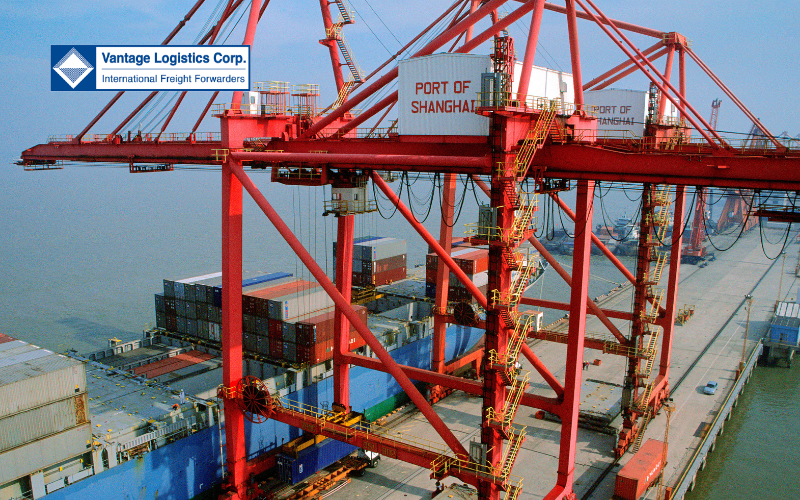

Shanghai Port
This prolonged disruption has tied up substantial equipment capacity, triggering an acute shortage of empty containers across neighboring manufacturing and export hubs – including Viet Nam – while keeping logistics costs heavily elevated.
-
Cascading Impact: Equipment Deficits Threaten Vietnamese Export Gateways
With hundreds of vessels stranded across North Asian hubs, effective ocean carrier capacity has dropped substantially. This has driven acute empty equipment shortages across key Southeast Asian export gateways – particularly at Cat Lai Port – and exerted upward pressure on Transpacific freight rates.
To mitigate equipment risks and avoid supply chain disruption, businesses should proactively execute targeted operational and strategic measures:
-
Tactical Responses and Long-Term Strategies for Shippers & Logistics Operators
-
Short-Term Tactical Solutions:
- Advance Bookings: Secure vessel space at least 3 to 4 weeks prior to the Cargo Ready Date (CRD). Ensure an official Container Release Note (CRN) is confirmed before dispatching trucking assets to empty depots.
- Equipment Mode Optimization: Flexibly substitute scarce 40ft/40HC containers with two 20ft units or consolidate cargo into LCL (Less-than-Container Load) shipments to optimize space availability.
- In-Zone Triangulation (SOC Utilization): Coordinate directly with inbound raw material importers within the same industrial cluster to secure, lease, or purchase empty boxes directly post-destuffing, eliminating empty repositioning turnaround times.
-
- Extended Free Time Negotiations: Negotiate higher Combined Demurrage & Detention (DEM/DET) allowances with ocean carriers to provide buffer time for early pickup or extended yard staging.
-
Strategic Supply Chain & Multi-Modal Coordination
- ICD & Dry Port Optimization: Relocate empty repositioning workflows from primary gateways to inland container depots (e.g., ICD Long Binh, ICD Song Than, ICD Nhon Trach) to alleviate bottlenecks at main terminals like Cat Lai and Cai Mep – Thi Vai.
- Predictive Tech Integration (AI & IoT): Leverage real-time predictive tracking to monitor vessel arrivals and optimize import-export container ratios, minimizing empty deadhead truck trips and maintaining continuous equipment flow.
- Gateway Diversion: Reroute direct-load cargo to deep-water gateways with healthier equipment circulation, such as Cai Mep (for US/EU direct strings), capturing incoming empty flows directly from mother vessels.
Is your business looking for tailored contingency plans to protect shipping schedules and manage logistics expenditures during this volatility? Connect with the Vantage Logistics Advisory Team today for customized solutions covering equipment availability, schedule optimization, and multi-port routing strategies.
Contact Vantage Logistics for tailored transport solutions and competitive quotations.
Please provide details on cargo type, market, origin, destination, and estimated timeline.
| Vantage Logistics Corp – South East Asia (S.E.A) Logistics Provider
One-Stop Shop For Integrated Logistics Services |
|
| Head Office | Viet Nam – Suite 6.01, Floor 6th, Block A, RiverGate Residence,
151-155 Ben Van Don, Khanh Hoi Ward, HCMC, Viet Nam |
| Branch | Thailand, Laos, Cambodia, Malaysia, Indonesia, Singapore |
| Contact Us | |
| in**@*****om.vn | |
| Hotline | +84-909-026-261 |
| Website | https://vantage-logistics.com |
Send your shipment enquiry today and receive a tailored transport plan from the Vantage Logistics team.



 Vantage News

