 LOGIN


 Sea Freight
 Air Freight
 Intermodal
 Customs Brokerage
 Project Logistics
 Warehouse Services
 Trucking
 Insurance
 Logistics Infrastructures
 Consulting & Assistance
 NVOCC
 Barge & Coastal Feeder
 GSA / PCSA Airlines
 Perishable / Refrigerated Logistics
 Dangerous Good Logistics
 Oil & Gas Logistics
 Offshore Services
 Rice Logistics
 Global Sales Logistics
 Parcel / Courier Logistics
 Cross-Docking & End-To-End Warehousing
 On Board Courier
 Buying Agent

A cyberattack targeting refrigeration systems at hundreds of supermarkets in France forced retailers to discard large quantities of fresh and frozen food. Losses could reach tens of millions of euros as authorities investigate the incidents and raise concerns about the security of connected equipment used to preserve food.
Hundreds of Supermarkets Affected, Food Stocks Discarded
The attacks took place overnight on October 11–12, 2026, when hackers manipulated supermarket refrigeration systems remotely. Temperatures in some units reportedly climbed to around 50°C, leaving food unsuitable for sale and forcing retailers to dispose of affected stock.
The retailers affected included Carrefour, Monoprix, Intermarché, Netto and Coopérative U.
On October 13, French Finance Minister Roland Lescure said around 700 of the country’s 10,000 supermarkets had been affected. This figure covers the broader scope of the incidents and does not mean that all 700 stores were directly hacked or suffered food losses. Reuters separately identified at least 350 supermarkets directly targeted through attacks on refrigeration systems.
The Paris prosecutor’s office opened an investigation into food losses and reported fires. Thierry Cotillard, chairman of Les Mousquetaires, the group behind Intermarché and Netto, estimated that total losses nationwide could reach tens of millions of euros. The figure remains preliminary.
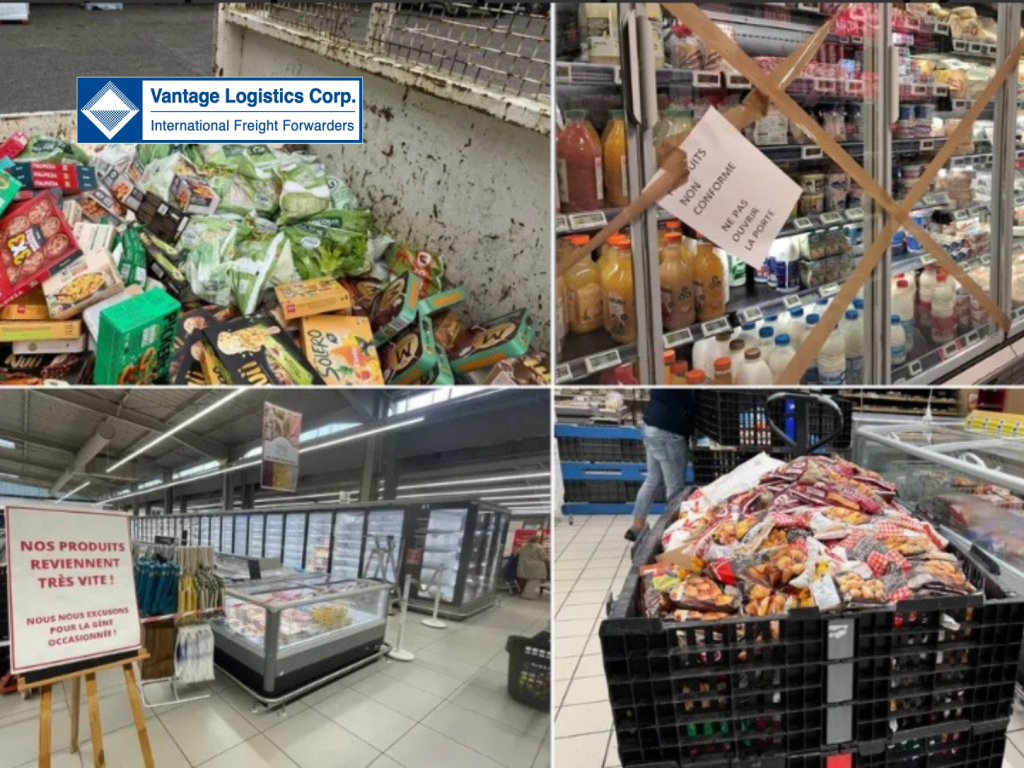
Fresh and frozen food at several supermarkets in France had to be collected and discarded
Hackers Altered Refrigeration System Settings
France’s national cybersecurity agency, CERT-FR, reported that compromised systems included Danfoss AK-SM and AK-SC controllers, as well as Copeland XWEB and Dixell XWEB systems.
The attackers changed operating parameters to disrupt temperature control and extend defrost cycles. According to Le Monde, some cycles were lengthened from approximately one hour to eight hours, delaying alarms and intervention.
Danfoss said many affected systems were old, had reached the end of their service life and no longer received security updates. The company recommended installing the latest firmware on supported devices, protecting systems with firewalls and replacing obsolete equipment.
Reuters also identified at least 4,500 Danfoss interfaces accessible from the internet. However, it could not establish how many were running vulnerable software or were susceptible to the attacks.
The full attack method and any links between the affected systems have not been publicly established.
Losses Extend Beyond the Value of Spoiled Food
In addition to discarded inventory, retailers may face equipment inspections, incident response costs and the expense of replenishing stock.
At an Intermarché store in Paris, manager Antony Bohne received an early-morning warning from a supplier at around 4 a.m. According to the Associated Press, the store managed to save most of its fresh produce, but frozen food had already been affected after freezer temperatures approached 40°C.
Insurance coverage may also be a concern. Standard cyber insurance policies do not necessarily cover every type of physical loss arising from a cyber incident. Actual coverage depends on policy wording, exclusions and the circumstances established during the investigation.
Investigation Continues as Responsibility Remains Unknown
French authorities continue to investigate the attacks. As of October 19, no group had publicly claimed responsibility, and the attackers’ identities and motives remained unknown.
The incidents have highlighted the risks associated with internet-connected refrigeration controls, particularly equipment that is outdated or inadequately secured. Recommended safeguards include removing direct internet access to control systems, restricting and protecting remote access, reviewing system configurations and installing security updates where supported.
Separately, Dutch supermarket group Ahold Delhaize experienced a cybersecurity incident affecting Albert Heijn’s online delivery service. Reuters reported on October 19 that deliveries would remain suspended until at least October 22. Dutch authorities said there was no evidence linking this incident to the attacks in France.
The two cases demonstrate how cybersecurity incidents can disrupt different parts of supermarket operations, from food preservation to online order fulfilment. However, there is currently no established evidence that they are part of the same campaign.
A Warning for Food Preservation Systems
The French incidents show that cyberattacks can cause physical and financial damage when connected equipment used to preserve food is compromised. For facilities relying on these systems, maintaining secure remote access, updating supported equipment and replacing obsolete controls are important parts of operational risk management.
For businesses across the supply chain, the wider lesson is that protecting goods depends not only on physical handling and temperature control, but also on the reliability and security of the systems that support them.
Follow Vantage Logistics for updates on international developments affecting business operations and supply chains.
Contact Vantage Logistics for tailored transport solutions and competitive quotations.
Please provide details on cargo type, market, origin, destination, and estimated timeline.
| Vantage Logistics Corp – South East Asia (S.E.A) Logistics Provider
One-Stop Shop For Integrated Logistics Services |
|
| Head Office | Viet Nam – Suite 6.01, Floor 6th, Block A, RiverGate Residence,
151-155 Ben Van Don, Khanh Hoi Ward, HCMC, Viet Nam |
| Branch | Thailand, Laos, Cambodia, Malaysia, Indonesia, Singapore |
| Contact Us | |
| in**@*****om.vn | |
| Hotline | +84-909-026-261 |
| Website | https://vantage-logistics.com |
Send your shipment enquiry today and receive a tailored transport plan from the Vantage Logistics team.

 Vantage News


