 LOGIN

 VN

 Sea Freight
 Air Freight
 Intermodal
 Customs Brokerage
 Project Logistics
 Warehouse Services
 Trucking
 Insurance
 Logistics Infrastructures
 Consulting & Assistance
 NVOCC
 Barge & Coastal Feeder
 GSA / PCSA Airlines
 Perishable / Refrigerated Logistics
 Dangerous Good Logistics
 Oil & Gas Logistics
 Offshore Services
 Rice Logistics
 Global Sales Logistics
 Parcel / Courier Logistics
 Cross-Docking & End-To-End Warehousing
 On Board Courier
 Buying Agent

Viet Nam has introduced new regulations governing administrative procedures through the National Single Window and ASEAN Single Window mechanisms. Indonesia has revised its import management policies, while Thailand has introduced electronic licensing requirements for certain nuclear-related goods subject to export controls.
Alongside these national-level changes, Viet Nam officially joined the ASEAN Authorised Economic Operator Mutual Recognition Arrangement (AAMRA) on 30 June 2026. Meanwhile, the ASEAN Customs Transit System (ACTS) continues to facilitate cross-border goods transportation under the applicable conditions in participating countries.
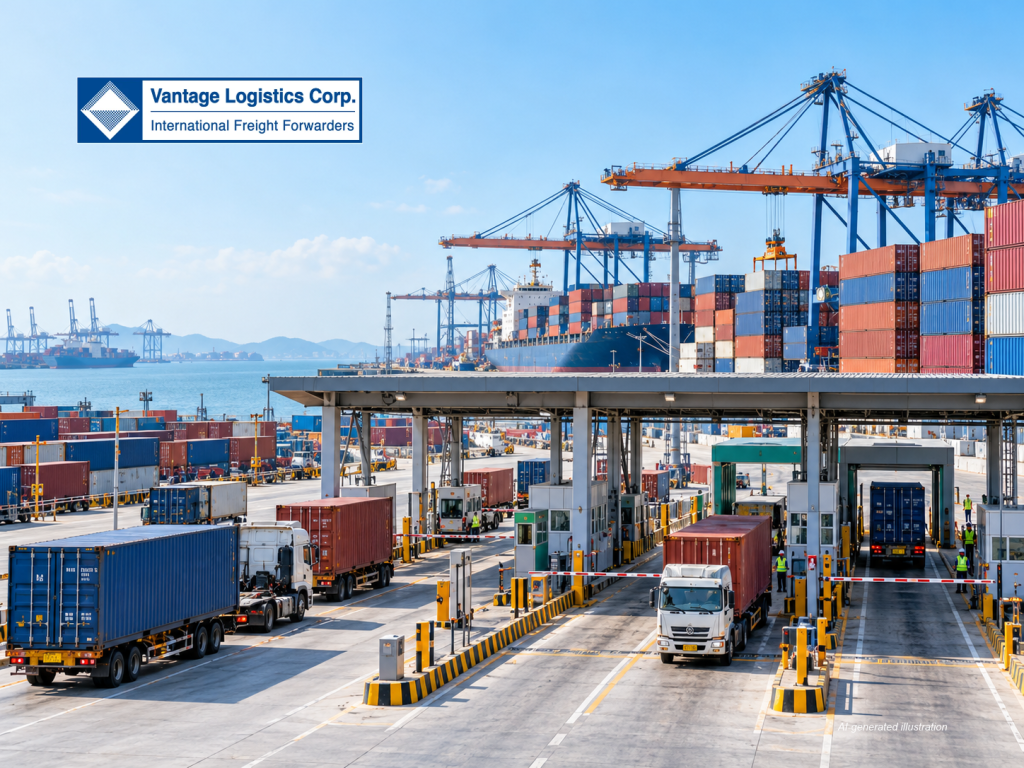
1. Viet Nam: New Rules for Single Window Procedures
Decree No. 336/2026/ND-CP took effect on 15 October 2026. It governs administrative procedures for exported, imported and transited goods, as well as vehicles entering, leaving or transiting Viet Nam, through the National Single Window and ASEAN Single Window mechanisms.
Under the regulations, relevant parties can submit and exchange information and supporting documents electronically in accordance with applicable laws. For logistics businesses, understanding the declaration process and documentation requirements for each procedure remains essential to ensuring smooth cargo movements.
In addition, Law No. 11/2026/QH16, which amends and supplements certain provisions of the Law on Customs, will take effect on 1 March 2027. Businesses should monitor this milestone and prepare for changes to customs administration and procedures in the coming months.
Key consideration: Decree No. 336/2026/ND-CP and Law No. 11/2026/QH16 have different scopes and effective dates. Businesses should check the provisions applicable to each procedure rather than assume that all requirements concerning user accounts, digital signatures or electronic documentation are newly introduced by these two instruments.
2. Indonesia: Changes to Import Documentation Management
Indonesia issued Minister of Trade Regulation No. 18 of 2026 (Permendag 18/2026), revising several provisions concerning import policies and controls. The regulation was issued on 3 June 2026 and promulgated on 4 June 2026. Certain provisions are subject to separate effective dates specified in the regulation.
Key changes include:
- Surveyor Reports (Laporan Surveyor – LS): The regulation allows surveyor reports to be issued in certain circumstances after an Import Approval (Persetujuan Impor – PI) has expired, provided the specified conditions are met.
- Import Permit Verification: The import permit number shown on the surveyor report must be consistent with the number used in the Import Declaration (Pemberitahuan Impor Barang – PIB).
- Reporting Obligations: The regulation revises the enforcement framework for import reporting requirements. Businesses should review the rules applicable to their specific import permits or authorisations and take note of the relevant effective dates.
- Resolution of Barriers to Goods Circulation: The regulation also addresses mechanisms for resolving obstacles arising during the circulation of imported goods.
These changes highlight the importance of cross-checking data across import permits, surveyor reports and customs declarations. Businesses should identify the exact permit requirements applicable to their goods and monitor the effective dates of individual provisions.
3. Thailand: Electronic Licensing Requirements for Category 0 Goods
From 30 July 2026, Thailand requires an electronic licence before the export or re-export of Category 0 goods, covering nuclear materials, facilities and equipment.
These goods are subject to controls because of their relevance to nuclear activities and the risk of proliferation of weapons of mass destruction. However, not all goods that can be used for both civilian and military purposes fall under Category 0. Thailand’s control framework divides regulated goods into multiple categories, each with its own requirements.
In addition to obtaining an electronic licence, businesses must notify the relevant authorities before export or re-export and submit a report within 30 days after the transaction. Licensing decisions take into account the intended end use of the goods and information about the parties involved.
For shipments covered by these controls, businesses should determine in advance whether the goods fall within the controlled list and allow sufficient time to complete licensing procedures before arranging transportation.
4. ASEAN Trade Facilitation Mechanisms
AAMRA: Mutual Recognition of Authorised Economic Operators
The ASEAN Authorised Economic Operator Mutual Recognition Arrangement (AAMRA) aims to strengthen cooperation among the customs authorities of ASEAN Member States and facilitate cross-border trade. As of 30 June 2026, the arrangement has been implemented across all 10 ASEAN Member States, extending its coverage throughout the region.
Under AAMRA, businesses recognised as Authorised Economic Operators (AEOs) in one participating country may benefit from trade facilitation measures in other participating ASEAN countries, subject to the scope of recognition and the implementation rules of each customs authority.
However, implementation across the region does not mean that all businesses automatically qualify for facilitation benefits or that all shipments are exempt from customs inspections.
ACTS: Facilitating Cross-Border Transit
The ASEAN Customs Transit System (ACTS) facilitates the movement of goods in transit by road between participating countries through electronic declarations and a guarantee mechanism governed by the system’s rules.
Eligible businesses can use a single electronic transit declaration for a journey through multiple participating countries, rather than processing separate transit documentation for each leg as under more traditional procedures.
ACTS is an established regional mechanism, not a newly introduced policy in 2026. It covers transit procedures and does not replace applicable duties, licensing requirements or import formalities in the destination country.
5. What Logistics Businesses Should Monitor
When handling shipments across multiple markets in Southeast Asia, businesses should:
- Monitor the effective dates and scope of each regulation
- Verify consistency across import permits, surveyor reports and customs declaration data
- Determine in advance whether goods are subject to special control requirements
- Assess whether AAMRA or ACTS can be used based on business eligibility and the transport route
- Keep up to date with implementation guidance issued by the relevant authorities
Distinguishing national regulations from regional cooperation mechanisms helps businesses identify the correct procedures, prepare the required documentation and manage cross-border shipments more effectively across ASEAN markets.
Vantage Logistics welcomes discussions with international agents and partners on shipment handling requirements, customs procedures and suitable transportation arrangements across Southeast Asia.
Contact Vantage Logistics for tailored transport solutions and competitive quotations.
Please provide details on cargo type, market, origin, destination, and estimated timeline.
| Vantage Logistics Corp – South East Asia (S.E.A) Logistics Provider
One-Stop Shop For Integrated Logistics Services |
|
| Head Office | Viet Nam – Suite 6.01, Floor 6th, Block A, RiverGate Residence,
151-155 Ben Van Don, Khanh Hoi Ward, HCMC, Viet Nam |
| Branch | Thailand, Laos, Cambodia, Malaysia, Indonesia, Singapore |
| Contact Us | |
| in**@*****om.vn | |
| Hotline | +84-909-026-261 |
| Website | https://vantage-logistics.com |
Send your shipment enquiry today and receive a tailored transport plan from the Vantage Logistics team


 Vantage News


