 LOGIN

 VN

 Sea Freight
 Air Freight
 Intermodal
 Customs Brokerage
 Project Logistics
 Warehouse Services
 Trucking
 Insurance
 Logistics Infrastructures
 Consulting & Assistance
 NVOCC
 Barge & Coastal Feeder
 GSA / PCSA Airlines
 Perishable / Refrigerated Logistics
 Dangerous Good Logistics
 Oil & Gas Logistics
 Offshore Services
 Rice Logistics
 Global Sales Logistics
 Parcel / Courier Logistics
 Cross-Docking & End-To-End Warehousing
 On Board Courier
 Buying Agent

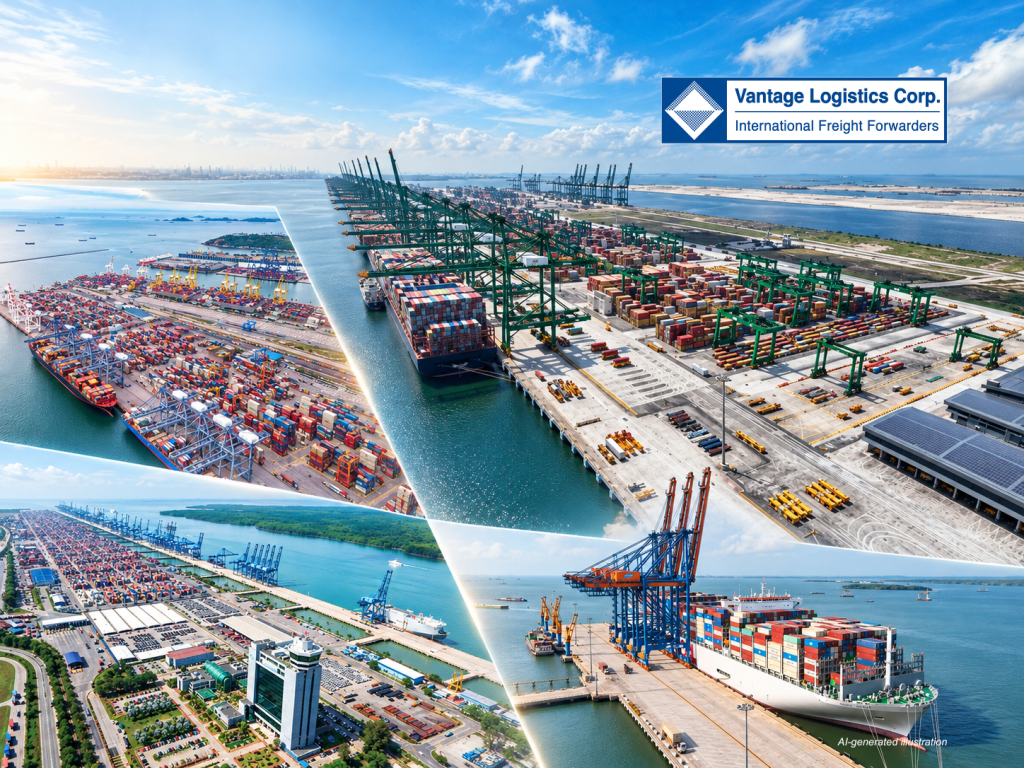
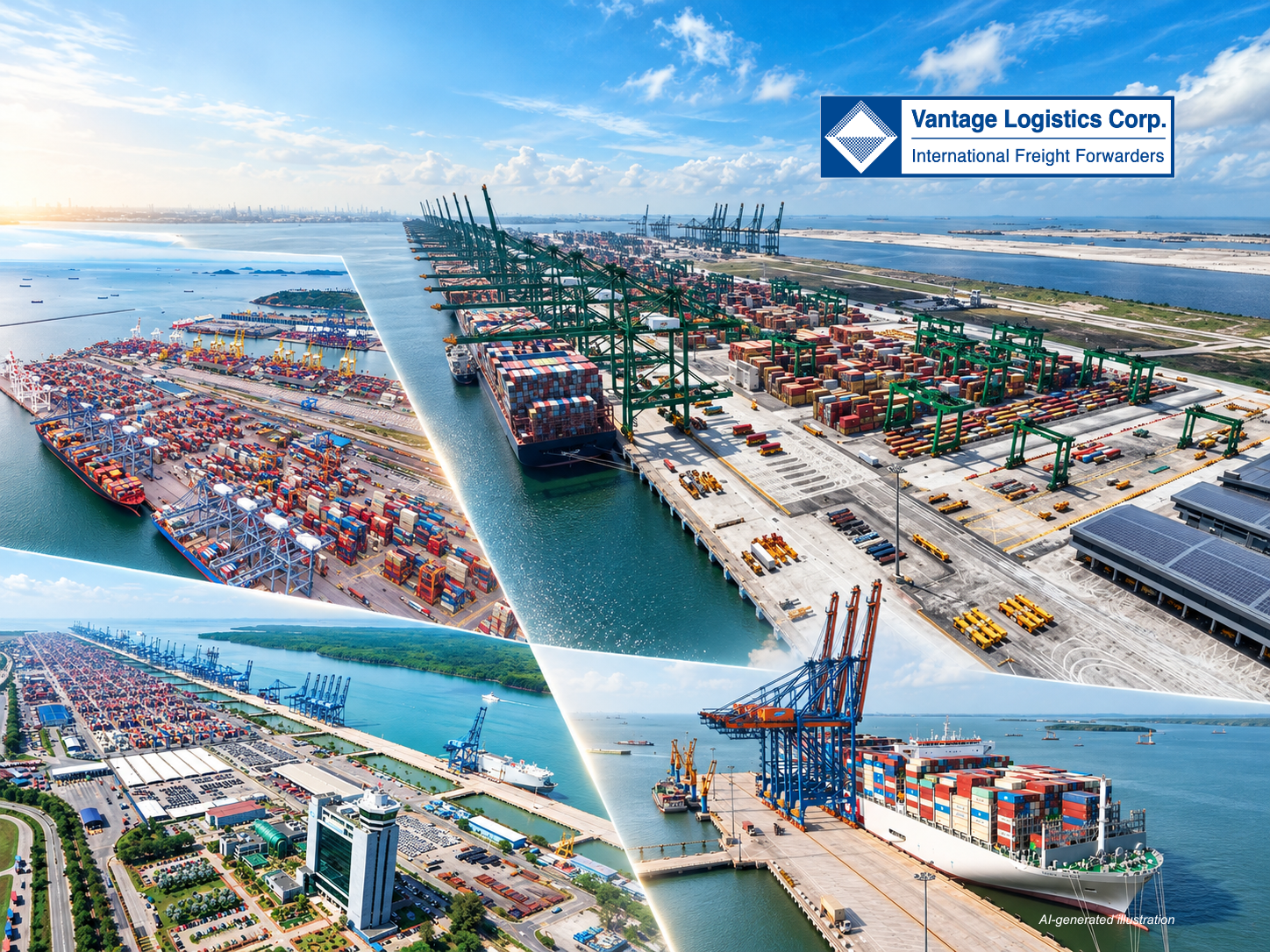
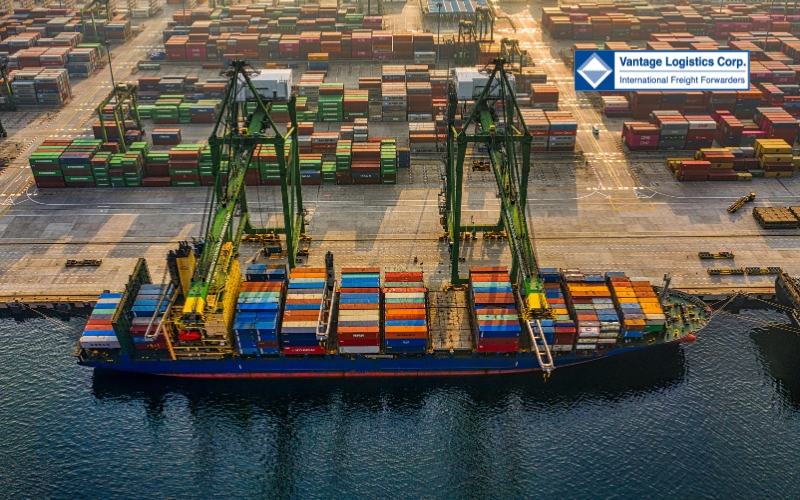
Port capacity across Singapore, Thailand, Malaysia, and Viet Nam is expanding through major infrastructure developments. Concurrently, ocean carriers continue to adjust port rotations and add direct connections between regional hubs. While these dynamics highlight the ongoing evolution of Southeast Asia’s maritime network, available data remains insufficient to conclude a large-scale shift of transshipment activity away from Singapore.
1. Southeast Asian Port Hubs Expand Capacity Along Divergent Paths
| Country | Port / Project | Target Capacity Upon Completion | Status / Timeline Notes |
| Singapore | Tuas Port | 65 million TEUs/year (full buildout) | 4 new berths scheduled to operationalize in 2026 |
| Thailand | Laem Chabang (Phase 3) | Scaled up from 11M to 18M TEUs/year | Terminal F1 targeted for 2027; F2 targeted for 2031 |
| Malaysia | Westports 2 (Port Klang) | Scaled up from 14M to 27M TEUs/year | Phased expansion across Container Terminals CT10–CT17 |
| Carey Island | No short-term container capacity confirmed | Phase 1 focuses on general cargo & dry bulk | |
| Viet Nam | Cai Mep Ha | 11 million TEUs/year (design capacity) | Phase 1 (2M TEUs) expected operational in Q4/2028 |
Note: Figures represent target or design capacities under respective project master plans and do not equate to current operational throughput. Timelines and commissioning dates reflect official announcements.
Flagship developments such as Tuas Port (Singapore), Laem Chabang Phase 3 (Thailand), Westports 2 (Malaysia), and Cai Mep Ha (Viet Nam) are being executed under long-term, phased roadmaps to expand cargo handling capacity over time. Notably, Malaysia’s Carey Island project prioritizes general cargo and dry bulk handling in its initial phase, adding no immediate container capacity to the regional market.
2. Ocean Carriers Continue Fine-Tuning Service Networks
- Yang Ming & ONE – FP2 Service (Jan 2026): The carriers added Haiphong to the FP2 rotation, connecting Singapore, Laem Chabang, Cai Mep, and key ports across Asia and the US West Coast. The insertion of Haiphong expands direct mainline connectivity for Northern Viet Nam on this transpacific service
- OOCL – CHL7 Service (Sep 2026): OOCL launched the CHL7 service linking Nansha – Laem Chabang – Yangpu – Nansha. This loop adds a direct intra-Asia connection between South China and Thailand to support regional manufacturing trade
- MSC – Pearl & Sentosa Service Restructuring (Aug 2026): MSC recalibrated its Asia–US West Coast loops via a dual adjustment: the Pearl Service added Haiphong and Oakland while dropping Xiamen; conversely, the Sentosa Service added Xiamen while omitting Hai Phong and Oakland. Ports including Singapore, Port Klang, Laem Chabang, and Vung Tau remain anchored in the published rotations
These adjustments demonstrate how ocean carriers dynamically align service rotations with shifting cargo demand. However, isolated schedule changes do not constitute evidence of a broad-based diversion of transshipment volumes away from Singapore.
3. Port Capacity Expansion Must Be Matched by Hinterland Connectivity
Design capacity represents only one component of a port’s operational viability. Last-mile connectivity – including highways, rail corridors, inland container depots (ICDs), and warehousing infrastructure – directly dictates the efficiency of moving cargo between berth terminals and industrial hinterlands.
For container lines, decisions to add port calls or deploy direct services depend on gateway cargo density, service frequency, berth productivity, port stay duration, and overall vessel operating economics. Consequently, expanded design capacity does not automatically guarantee immediate direct calls or an expanded transshipment role for any single port.
While Southeast Asia’s port infrastructure continues to expand, its actual operational impact hinges on project commissioning timelines and integration with established transport networks.
Contact Vantage Logistics today to consult on your regional transport requirements and optimize your Southeast Asian supply chain.
Contact Vantage Logistics for tailored transport solutions and competitive quotations.
Please provide details on cargo type, market, origin, destination, and estimated timeline.
| Vantage Logistics Corp – South East Asia (S.E.A) Logistics Provider
One-Stop Shop For Integrated Logistics Services |
|
| Head Office | Viet Nam – Suite 6.01, Floor 6th, Block A, RiverGate Residence,
151-155 Ben Van Don, Khanh Hoi Ward, HCMC, Viet Nam |
| Branch | Thailand, Laos, Cambodia, Malaysia, Indonesia, Singapore |
| Contact Us | |
| in**@*****om.vn | |
| Hotline | +84-909-026-261 |
| Website | https://vantage-logistics.com |
Send your shipment enquiry today and receive a tailored transport plan from the Vantage Logistics team.

 Vantage News


