 LOGIN

 VN

 Sea Freight
 Air Freight
 Intermodal
 Customs Brokerage
 Project Logistics
 Warehouse Services
 Trucking
 Insurance
 Logistics Infrastructures
 Consulting & Assistance
 NVOCC
 Barge & Coastal Feeder
 GSA / PCSA Airlines
 Perishable / Refrigerated Logistics
 Dangerous Good Logistics
 Oil & Gas Logistics
 Offshore Services
 Rice Logistics
 Global Sales Logistics
 Parcel / Courier Logistics
 Cross-Docking & End-To-End Warehousing
 On Board Courier
 Buying Agent

The ASEAN Transport Sectoral Plan 2026–2030 aims to strengthen connectivity, digitalisation, and transport coordination among ASEAN Member States. Meanwhile, the ASEAN Customs Transit System (ACTS), operational since 2020, facilitates road freight transit procedures across participating countries. To use ACTS, businesses must meet specific requirements concerning designated routes, vehicles, customs guarantees, and eligible goods.
ASEAN Transport Connectivity Priorities for 2026–2030
On 20 November 2025, at the 31st ASEAN Transport Ministers Meeting in Nay Pyi Taw, Myanmar, ASEAN Transport Ministers adopted the ASEAN Transport Sectoral Plan 2026–2030 (ATSP), succeeding the Kuala Lumpur Transport Strategic Plan 2016–2025.
The new plan outlines regional cooperation priorities covering transport connectivity, trade facilitation, digital transformation, safety, and sustainability. However, the ATSP provides a regional strategic framework rather than establishing uniform cross-border transport procedures that take immediate effect across all Member States.
For importers and exporters, actual transport arrangements remain subject to infrastructure availability, designated border crossings, vehicle permits, and national regulatory requirements.
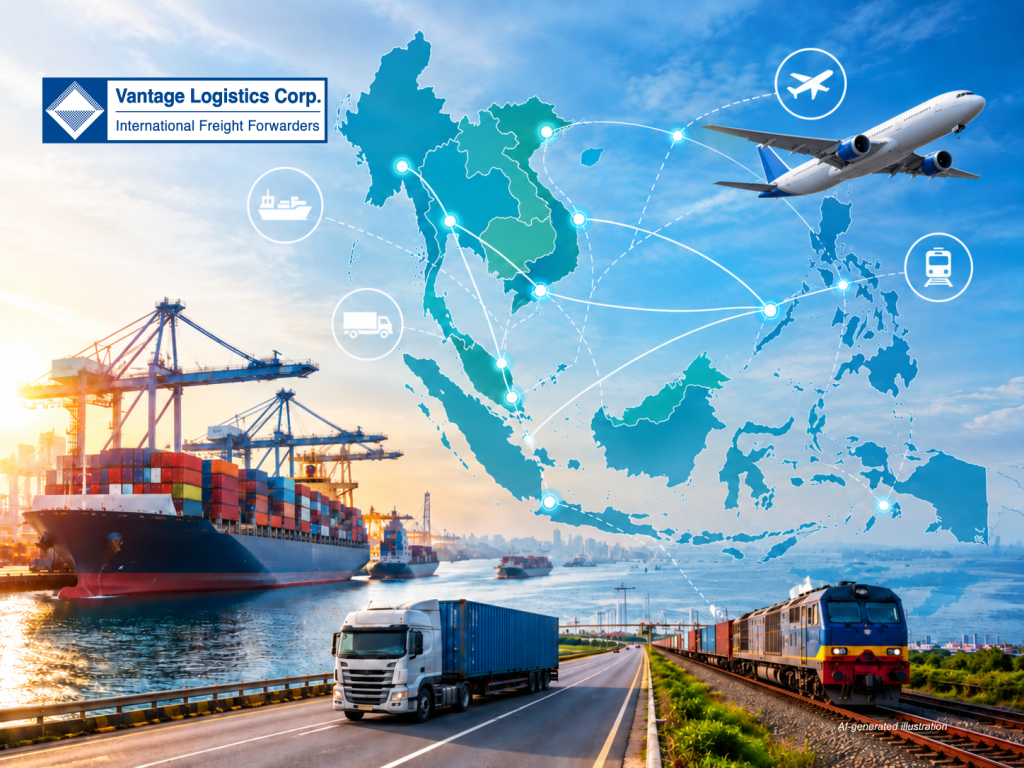
ACTS: Facilitating Road Freight Transit Procedures
The ASEAN Customs Transit System (ACTS) commenced operations on 2 November 2020 under ASEAN’s framework for facilitating goods in transit.
ACTS enables eligible businesses to use a single electronic transit declaration and a single customs guarantee covering the entire journey, rather than completing separate customs transit procedures at each border crossing. Relevant customs authorities exchange information through the system.
Where the necessary approvals and permits are in place, goods may travel through participating countries on the same vehicle without requiring transshipment to another vehicle at every border.
ACTS currently has seven participating countries: Cambodia, Lao PDR, Malaysia, Myanmar, Singapore, Thailand, and Viet Nam. Myanmar became the seventh participating country on 1 March 2024.
However, participation in ACTS does not mean that all routes, border crossings, vehicles, or types of goods are automatically eligible. Businesses must verify the applicable requirements for each journey.
Key Compliance Requirements
-
Designated Routes, Border Crossings, and Transit Time Limits
Businesses must identify the country of departure, country of destination, transit countries, and intended border crossings. The planned journey must comply with the designated routes and customs offices under ACTS.
Transit time limits must also be checked against the requirements of each participating country. In the event of delays, route changes, or incidents during transportation, the party responsible for the transit operation must comply with the relevant customs notification and handling procedures.
-
Vehicles and AGVCBP Requirements
Vehicles transporting goods under ACTS must hold an ASEAN Goods Vehicle Cross-Border Permit (AGVCBP) issued by the competent authority.
The permit is specific to the registered vehicle and its approved configuration and cannot be transferred to another vehicle. Businesses must verify the permit’s validity, vehicle details, and third-party liability insurance coverage in the countries along the route.
Permits issued under other transport arrangements should not be assumed to replace the AGVCBP.
-
Transit Registration and Customs Guarantees
The party primarily responsible for the transit operation (the Principal) must meet the applicable registration requirements, submit the electronic transit declaration, and arrange a valid customs guarantee under ACTS.
The Authorised Transit Trader (ATT) scheme has separate eligibility requirements for businesses seeking to benefit from simplified transit procedures.
The guarantee amount is determined based on the highest potential customs duties, taxes, and other applicable charges on the goods across the countries involved in the journey, including the country of departure, transit countries, and country of destination. The calculation takes into account goods classification under the ASEAN Harmonised Tariff Nomenclature (AHTN) and other applicable factors affecting duties and taxes.
ACTS allows guarantees covering either a single journey or multiple journeys, subject to approval. Once a transit operation has been duly completed, the guarantee is handled in accordance with the applicable procedures. For multiple-journey guarantees, the corresponding guarantee capacity may be released for further use.
Businesses should confirm the guarantee amount, guarantee type, and approval of the guarantor before departure.
-
Eligible Goods and Import–Export Procedures
Not all goods are eligible for transit under ACTS. Businesses must check the applicable lists of prohibited, excluded, or restricted goods along the intended route.
According to published ACTS guidance, dangerous goods are excluded from the system, while goods subject to sanitary and phytosanitary (SPS) controls have not been included within its scope. Businesses should verify the current implementation status with the competent authorities and must not assume that these goods can be transported under ACTS simply by obtaining additional permits or certificates.
For restricted goods that are eligible for transit, all relevant conditions must be met, including obtaining any necessary permits or approvals.
Importantly, ACTS facilitates customs transit procedures but does not replace export, import, or specialised inspection requirements. Businesses remain responsible for fulfilling the applicable obligations in the relevant countries.
Railway Connectivity and Multimodal Transport
In addition to road transport, ASEAN adopted the Strategic Plan on Enhancing Railway Interoperability among ASEAN Member States at the 31st ASEAN Transport Ministers Meeting.
The plan aims to improve coordination among regional railway networks, which continue to differ in track gauges, rolling stock, signalling systems, and operating procedures.
In practice, certain cross-border railway journeys may still require cargo transshipment, locomotive changes, or operational handovers rather than allowing a single train to complete the entire journey.
Separately, the potential extension of ACTS to rail and multimodal transport remains an area requiring further study and implementation. Businesses should not assume that the ACTS procedures currently applied to road transport are already operational for railway services.
The ATSP 2026–2030 establishes a framework for strengthening regional transport connectivity, while ACTS provides an existing mechanism for facilitating road freight transit procedures among participating countries.
For each shipment, businesses should verify designated routes and border crossings, vehicle requirements, customs guarantee arrangements, and the eligibility of goods under ACTS before confirming their transport plans. Early verification can help reduce the risk of route adjustments, border clearance issues, and delivery delays.
Vantage Logistics supports businesses in planning cross-border freight transportation within ASEAN, reviewing transport routes, and coordinating relevant documentation and procedural requirements for individual shipments. Contact Vantage Logistics to discuss suitable transport arrangements for your cargo.
Contact Vantage Logistics for tailored transport solutions and competitive quotations.
Please provide details on cargo type, market, origin, destination, and estimated timeline.
| Vantage Logistics Corp – South East Asia (S.E.A) Logistics Provider
One-Stop Shop For Integrated Logistics Services |
|
| Head Office | Viet Nam – Suite 6.01, Floor 6th, Block A, RiverGate Residence,
151-155 Ben Van Don, Khanh Hoi Ward, HCMC, Viet Nam |
| Branch | Thailand, Laos, Cambodia, Malaysia, Indonesia, Singapore |
| Contact Us | |
| in**@*****om.vn | |
| Hotline | +84-909-026-261 |
| Website | https://vantage-logistics.com |
Send your shipment enquiry today and receive a tailored transport plan from the Vantage Logistics team.

 Vantage News


