Market updates
VIETNAM’S 2025 IMPORT SOURCING MAP: CHINA LEADS, ASIA REMAINS THE REGIONAL BACKBONE
In 2025, Vietnam’s merchandise imports totaled approximately USD 455 billion, climbing nearly 20% year-on-year. Asia remained the predominant supplying region, accounting for 82.6% of national inbound turnover.
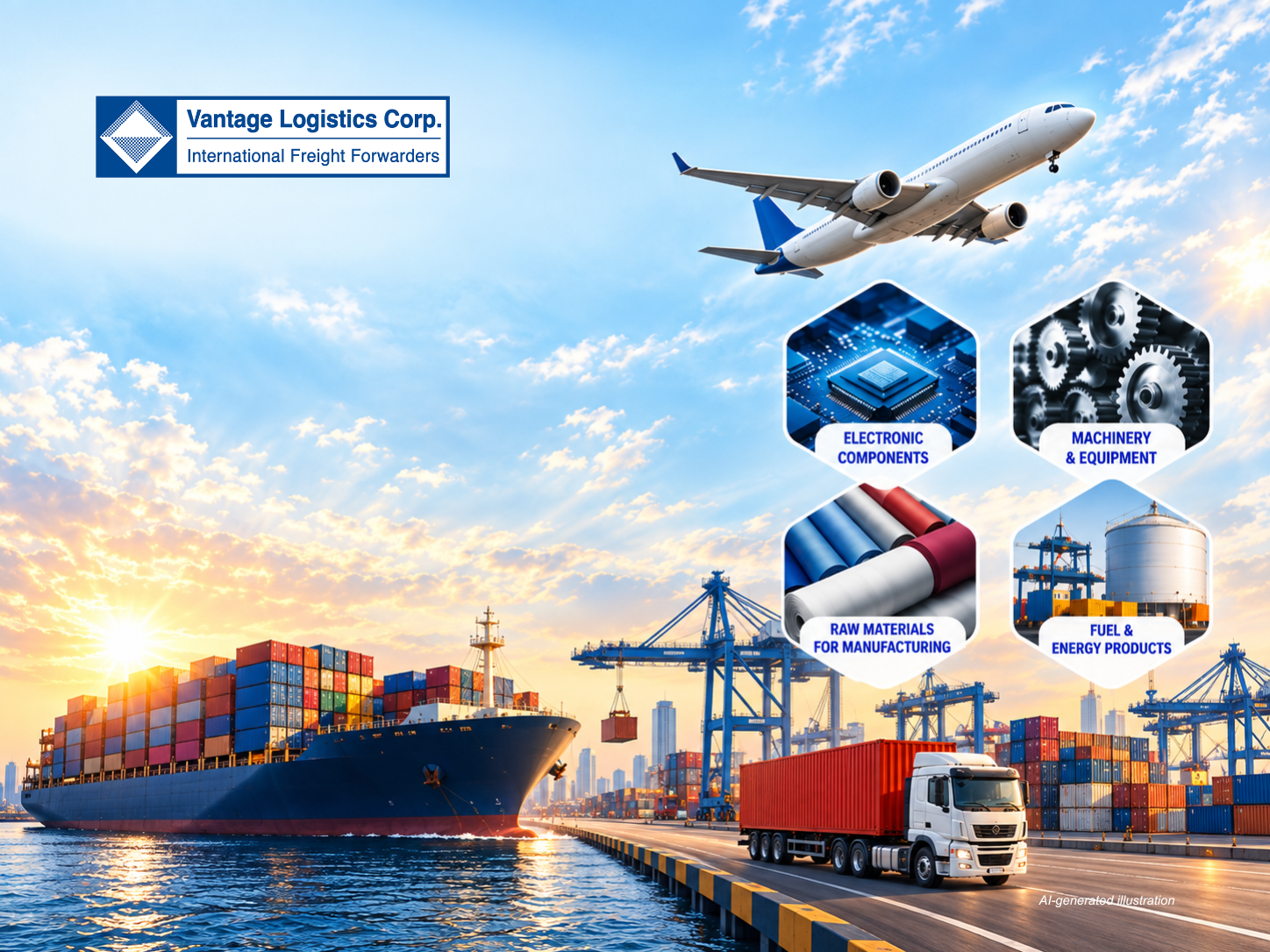
Capital flows remained heavily concentrated in machinery, electronic components, and production inputs feeding export manufacturing. The 2025 sourcing landscape reflected clear supply chain specialization: China sustained its dominant leadership, Northeast Asian hubs anchored high-tech segments, and intra-ASEAN partners fulfilled specialized industrial inputs and energy commodities.
I. China: The Primary Engine for Industrial Machinery and Manufacturing Inputs
China remained Vietnam’s largest trading partner, supplying USD 186.0 billion in goods – up 29.0% year-on-year and representing 40.8% of aggregate national imports.
Inbound flows from China played a decisive role across processing and assembly sectors:
Machinery, Equipment, and Technology: China served as the primary supplier of industrial machinery, mechanical equipment, and tooling molds for manufacturing plants across Viet Nam
Electronic Components: China held an overwhelming share of computer parts, printed circuit boards (PCBs), semiconductor devices, and telecommunications components feeding tech export assembly lines
Industrial Intermediates: China supplied high volumes of rolled fabrics, garment and footwear accessories, virgin plastic resins, and baseline chemicals
Consistent material flows originating from key industrial clusters in Guangdong, Zhejiang, Jiangsu, and Shanghai remained essential to sustaining uninterrupted operations across northern and southern industrial parks.
II. Northeast Asian Partners: High-Tech Integration and Advanced Materials
Alongside China, Northeast Asian economies supplied critical high-precision components and specialized industrial materials:
South Korea (USD 60.5B – 13.3% Share): Vietnam’s second-largest import source, expanding 12.8%. Shipments centered on high-value components, including memory chips, display panels, semiconductor components, and optical equipment feeding major multinational tech campuses
Taiwan (USD 33.0B – 7.3% Share): Posted notable 28.9% growth, driven by virgin plastic polymers, specialty chemicals, precision machine tools, and high-spec technical fabrics for export apparel lines
Japan (USD 24.7B – 5.4% Share): Increased 15.2% year-on-year. Procurement focused on precision machinery, industrial electrical equipment, automotive components, and high-grade alloy steel plates and coils servicing precision engineering, construction, and shipbuilding
III. Intra-ASEAN Supply Chains: Specialization in Raw Materials and Energy
Imports from ASEAN reached USD 52.6 billion, up 19.5% and capturing 11.6% of Vietnam’s total inbound trade. Despite operating within a single regional free trade framework, individual member states demonstrated distinct sourcing roles:
Indonesia: Served as an anchor for heavy industrial inputs and power generation. Coal represented the single largest commodity by value (supplying thermal power plants and cement manufacturing), followed by iron, steel, and base metals
Singapore: Functioned as the primary regional refined fuel gateway. Inbound shipments centered on petroleum products and refined oil derivatives feeding domestic transport networks and industrial utilities
Malaysia and Thailand: Supplied manufacturing raw materials alongside consumer-packaged goods. Shipments centered on plastic polymers, industrial chemicals, automotive/motorcycle spare parts, processed foods, dairy products, and confectionery
Cambodia: Provided cross-border raw agricultural commodities. Trade was dominated by in-shell raw cashews for domestic shelling and re-export, supplemented by natural rubber and dried cassava
IV. Corridor Logistics and Customs Transit Dynamics
Optimizing freight operations across major inbound corridors requires aligning transport modes with commodity characteristics:
1/ China – Viet Nam Corridors: Balancing Cost and Velocity
Ocean Freight: Transit times from Shanghai or Ningbo to Hai Phong range from 2 to 4 days, and to Ho Chi Minh City (Cat Lai and Cai Mep ports) from 4 to 6 days. Ocean transport offers optimal unit economics for raw materials, heavy machinery, and high-volume containerized freight
Cross-Border Trucking: Linehaul trucking via Huu Nghi, Tan Thanh (Lang Son), or Mong Cai (Quang Ninh) reaches industrial zones across Bac Ninh, Bac Giang, Vinh Phuc, and Hai Phong within 24 to 48 hours. This channel is suited for urgent semiconductor parts and precision molds, though shippers must coordinate border clearance schedules to avoid bottleneck delays during peak inspection cycles
2/ Northeast Asia Corridors (South Korea, Taiwan, Japan): High-Value Handling
Containerized ocean freight from Busan, Incheon, or Kaohsiung requires 5 to 8 days, while sailings from Tokyo or Yokohama take 7 to 10 days
For semiconductors, integrated circuits, and sensitive electronics, scheduled air freight via Noi Bai (HAN) or Tan Son Nhat (SGN) remains the standard routing to mitigate vibration risks, maintain temperature-controlled environments, and meet tight assembly lead times
3/ Intra-ASEAN Routes: Leveraging Short-Sea Corridors and Preferential Tariffs
Feeder sailings from Singapore, Port Klang (Malaysia), or Laem Chabang (Thailand) to Vietnam offer short ocean transit times of 3 to 5 days
Regulatory compliance centers on verifying Certificate of Origin documents (C/O Form D) to secure 0% preferential tariffs. Inaccurate documentation risks customs holds, triggering port storage and container demurrage/detention charges
V. Supply Chain Management Priorities For 2026
Trade and sourcing patterns in 2025 point toward three operational priorities for inbound supply chains:
Maintain Multimodal Routing Flexibility: Establish standby routing protocols across short-sea, cross-border trucking, and international rail to pivot cargo when primary lanes experience rate spikes or space crunches
Audit Upstream Traceability at Procurement: Expanding supply chain due diligence and green frameworks in destination markets (such as the EU and US) require importers to mandate emission metrics and origin verification from overseas suppliers at the initial contracting phase
Secure Advance Equipment and Space Commitments: Plan shipping schedules 1 to 2 weeks ahead on Northeast Asian routes to buffer against container equipment shortages and peak-season general rate increases
Data Sources: Ministry of Industry and Trade, Vietnam Import-Export Report 2025; General Department of Vietnam Customs.
Contact Vantage Logistics for tailored transport solutions and competitive quotations.
Please provide details on cargo type, market, origin, destination, and estimated timeline.
Vantage Logistics Corp – South East Asia (S.E.A) Logistics Provider
One-Stop Shop For Integrated Logistics Services
Head Office
Viet Nam – Suite 6.01, Floor 6th, Block A, RiverGate Residence,
151-155 Ben Van Don, Khanh Hoi Ward, HCMC, Viet Nam
Branch
Thailand, Laos, Cambodia, Malaysia, Indonesia, Singapore
Contact Us
Email
in**@*****om.vn
Hotline
+84-909-026-261
Website
https://vantage-logistics.com
Send your shipment enquiry today and receive a tailored transport plan from the Vantage Logistics team....
 LOGIN
LOGIN 
 VN
VN 中文
中文
 Sea Freight
  Air Freight
  Intermodal
  Customs Brokerage
  Project Logistics
  Warehouse Services
  Trucking
  Insurance
  Logistics Infrastructures
  Consulting & Assistance
  NVOCC
NVOCC  Barge & Coastal Feeder
  GSA / PCSA Airlines
  Perishable / Refrigerated Logistics
  Dangerous Good Logistics
  Oil & Gas Logistics
  Offshore Services
  Rice Logistics
  Global Sales Logistics
  Parcel / Courier Logistics
  Cross-Docking & End-To-End Warehousing
  On Board Courier
  Buying Agent





 Vantage News

