RESOURCE

vlc-news-philippines-cancels-rice-import-permit-15102026

Market updates

Philippines Cancels Permit for Controversial 12,480-Metric-Ton Rice Shipment from Viet Nam

The Philippine Department of Agriculture (DA) said it had ordered the cancellation of the Sanitary and Phytosanitary Import Clearance (SPSIC) for a 12,480-metric-ton rice shipment from Viet Nam before the vessel arrived. The case involves reported discrepancies in rice specifications and an expired import contract, highlighting the risks that can arise when shipping schedules do not align with import requirements in the destination market. 1. Developments at the Port of Arrival According to the Philippine Department of Agriculture (DA) and the Philippine News Agency (PNA), the vessel MV Tay Son 2, carrying 12,480 metric tons of rice from Viet Nam, arrived at the Port of Davao on September 14, 2026. According to these sources, the vessel’s captain refused to submit the shipment for inspection by the Philippine Bureau of Plant Industry (BPI). On September 17, 2026, the vessel departed Davao before the matter had been resolved. Philippine authorities subsequently prevented the cargo from being unloaded at another location and brought the vessel to the Port of General Santos before ordering it to return to Davao for further handling. 2. Rice Specifications and Import Requirements The case involves two issues: reported discrepancies in rice specifications and the status of the import contract and permit. 2.1. Reported Discrepancy in Rice Specifications The importer, Planters Product, Inc. (PPI), reported a discrepancy between the purchase order and the specifications communicated for the shipment: Specifications under the purchase order: 25% broken rice Reported specifications for the shipment: 5% broken rice In agricultural trade, the percentage of broken grains is an important commercial specification. However, the discrepancy remains based on information reported by the importer and has not been confirmed by an official inspection, as the physical inspection process was not completed. 2.2. Expired Contract and Canceled Import Permit In addition to the rice specifications, the delivery timeline and the status of the import documentation were also highlighted by the DA: Estimated time of arrival (ETA): July 2026 Actual arrival: Mid-September 2026 According to the DA, the import contract had expired and the SPSIC had been canceled before the vessel arrived. The vessel’s arrival also coincided with the period when the Philippines was preparing for the wet-season rice harvest. According to published information, import policy during this period was also linked to efforts to limit downward pressure on domestic palay prices. Operational Note: Even when goods meet quality requirements, a shipment may still face customs clearance difficulties if it fails to meet import requirements or if the relevant permit is no longer valid. 3. Proposed Measures for Handling the Shipment According to published information, the Bureau of Customs of the Philippines (BOC) was still considering the final course of action for the shipment. The proposed measures included: Proposed Measure Proposing Authority / Status Return to the Country of Origin The BPI was reported to have recommended returning the shipment to Viet Nam. Seizure and Penalties The DA proposed considering seizure of the shipment and the application of penalties under relevant regulations, subject to the competent authority’s findings and decision. Final Decision The BOC was reviewing the official course of action for the shipment. 4. Conclusion The controversial rice shipment in the Philippines highlights how international trade depends not only on product quality and contractual terms but also on shipping schedules, the validity of import documentation, and regulatory requirements in the destination market. When these elements are no longer aligned, shipments already in transit may face unexpected complications during arrival and customs clearance. Vantage Logistics will continue to provide updates on notable developments in logistics, import-export activities, and international supply chains, offering businesses additional insight into factors that may affect global trade. Contact Vantage Logistics for tailored transport solutions and competitive quotations. Please provide details on cargo type, market, origin, destination, and estimated timeline.   Vantage Logistics Corp – South East Asia (S.E.A) Logistics Provider One-Stop Shop For Integrated Logistics Services Head Office Viet Nam – Suite 6.01, Floor 6th, Block A, RiverGate Residence, 151-155 Ben Van Don, Khanh Hoi Ward, HCMC, Viet Nam Branch Thailand, Laos, Cambodia, Malaysia, Indonesia, Singapore Contact Us Email in**@*****om.vn Hotline +84-909-026-261 Website https://vantage-logistics.com Send your shipment enquiry today and receive a tailored transport plan from the Vantage Logistics team.

15/10/2026

View More
vlc-news-asean-east-asia-trade-15102026

Market updates

ASEAN–East Asia Trade Reaches USD 1.4 Trillion, Up 13.7% in 2025

According to preliminary data from the ASEAN Secretariat, two-way trade between ASEAN and its three East Asian partners (China, Japan, and South Korea) reached USD 1.4 trillion in 2025, representing a 13.7% year-on-year increase. Notably, China–ASEAN trade continued its upward trajectory in the first seven months of 2026, underscoring a sustained expansion in cross-regional trade volumes worth monitoring. 1. Regional Trade Volume and Foreign Direct Investment (ASEAN+3) Trade and investment flows between ASEAN and its three East Asian partners maintain a substantial footprint. In 2025, Foreign Direct Investment (FDI) inflows from China, Japan, and South Korea into ASEAN totaled USD 44.8 billion. Key ASEAN–East Asia Trade & Investment Indicators Indicator Value Growth / Share ASEAN – (China, Japan, South Korea) Trade in 2025 USD 1.4 Trillion Up 13.7% vs 2024 FDI from 3 East Asian Partners into ASEAN in 2025 USD 44.8 Billion Accounted for 18.2% of total ASEAN FDI China – ASEAN Trade (First 7 Months of 2026) USD 744.41 Billion Up 24.7% year-on-year The scale of merchandise trade and investment capital highlights the vital economic linkage between East Asia and Southeast Asia. However, assessing actual freight demand requires a granular evaluation of specific commodity structures, export-import markets, and active transport corridors. 2. Direct Impacts on Transport Networks and Logistics Infrastructure Expanding trade volumes underscore the critical role of regional transport connections. Depending on industry-specific cargo characteristics and delivery requirements, flexible logistics solutions are being actively deployed: Intra-Asia Ocean Freight Connections: For multi-leg shipments, vessel schedule reliability, transit times, and feeder network connectivity are pivotal factors for supply chain managers. Major gateway hubs such as Shanghai, Ningbo, Busan, and Yokohama maintain dense feeder linkages with Southeast Asian ports within ocean carrier networks Integrated Logistics and Multimodal Transport: Depending on lead-time sensitivity, combining ocean freight, Cross-Border Trucking, and inland warehousing offers expanded routing options. Real-world operational efficiency hinges heavily on border crossing clearance times, transit schedules, and the coordination capability of the logistics operator Rules of Origin (C/O) and Customs Compliance: When leveraging Free Trade Agreements such as RCEP, AKFTA, or AJCEP, enterprises must accurately determine rules of origin and prepare compliant documentation to qualify for preferential tariffs. Duty exemption eligibility depends on the specific conditions of each product line and destination market 3. Monitoring Southeast Asian Trade Dynamics and Logistics Connectivity Expanding trade and investment flows reflect an increasingly integrated economic relationship between East Asia and Southeast Asia. This growth in cross-border trade creates momentum for expanding logistics connectivity, helping strengthen supply chain coverage across the region.   Contact Vantage Logistics for tailored transport solutions and competitive quotations. Please provide details on cargo type, market, origin, destination, and estimated timeline. Vantage Logistics Corp – South East Asia (S.E.A) Logistics Provider One-Stop Shop For Integrated Logistics Services Head Office Viet Nam – Suite 6.01, Floor 6th, Block A, RiverGate Residence, 151-155 Ben Van Don, Khanh Hoi Ward, HCMC, Viet Nam Branch Thailand, Laos, Cambodia, Malaysia, Indonesia, Singapore Contact Us Email in**@*****om.vn Hotline +84-909-026-261 Website https://vantage-logistics.com Send your shipment enquiry today and receive a tailored transport plan from the Vantage Logistics team.

15/10/2026

View More

Market updates

SINGAPORE STRENGTHENS PRODUCT SAFETY CONTROLS: WHAT VIETNAMESE EXPORTERS NEED TO KNOW

Singapore is strengthening its product safety controls through two key regulations: the Consumer Protection (Safety Requirements) Regulations (CPSR) and the Consumer Goods (Safety Requirements) Regulations (CGSR). For exporters, these requirements go beyond product compliance. They can also affect delivery schedules, logistics costs, and supply chain reliability. 1. Singapore Strengthens Product Safety Requirements According to information published by Vietnam’s Ministry of Industry and Trade, Singapore applies two main regulatory frameworks for product safety. – CPSR: Covers 33 categories of controlled goods, including electrical and electronic products, household appliances, and gas appliances. Products within scope must meet applicable safety requirements, complete registration, and carry the SAFETY Mark before being supplied or sold in Singapore. – CGSR: Covers general consumer goods such as toys, clothing, furniture, and sports equipment, which must comply with the relevant safety standards. Non-compliant products may be subject to sales restrictions or recalls. Businesses that violate applicable requirements may also face penalties. For exporters, checking compliance requirements before shipment is essential. Addressing documentation or registration issues early can help avoid costly adjustments after cargo has already left the port of origin. 2. Potential Impact on Southeast Asia’s Trade and Logistics Singapore plays an important role in Southeast Asia’s trade and logistics network. Tighter product safety controls may require exporters, importers, and distributors to review their procedures for placing goods on the Singapore market. Several potential risks deserve attention: – Delivery delays: Incomplete documentation or missing certificates may affect cargo acceptance and delivery schedules. – Additional logistics costs: Delays in resolving compliance issues may lead to storage, port handling, or additional transportation costs. – Disrupted distribution plans: Late deliveries can affect inventory planning, distribution schedules, and commitments to business partners. These requirements do not automatically apply across all ASEAN markets. However, they highlight the importance of understanding the specific regulations of each destination country when planning regional trade and distribution. 3. What Should Vietnamese Exporters Prepare? For Vietnamese businesses exporting to Singapore, compliance checks should take place before shipment arrangements are finalized. Exporters should determine whether their products fall under CPSR or CGSR, verify the applicable safety standards and registration requirements, and clarify responsibilities with their Singaporean importers. Documentation preparation should also be factored into the shipping schedule. If an issue is discovered only after cargo arrives at the destination port, businesses may need to manage several challenges simultaneously, including delivery delays, additional costs, and changes to distribution plans. A reliable shipping plan therefore involves more than selecting the right route or sailing schedule. It also requires anticipating potential obstacles before the cargo reaches its destination. 4. Managing Risks Through Early Planning Not every risk in international shipping can be eliminated, but many disruptions can be reduced through early preparation. Reviewing cargo information, documentation, shipping schedules, and destination requirements helps all parties make better-informed decisions. For shipments to Singapore, close coordination among exporters, importers, agents, and logistics providers helps maintain visibility over shipment readiness, address changes, and adjust plans when necessary. At Vantage Logistics, international transportation planning takes into account the practical requirements of each shipment and the coordination needed among relevant parties. This approach helps businesses manage potential disruptions and maintain better control over delivery schedules. As market requirements evolve, careful preparation does more than protect an individual shipment. It also helps businesses maintain reliable supply chains and build lasting partnerships across international markets.

15/10/2026

View More

Vantage News

Vantage Logistics Take Action for World Environment Day 2025: Joining Forces To “Beat Plastic Pollution”

A Vantage Logistics representative stated: “Plastic pollution is a global issue, and no one can stand aside. As a logistics service provider, Vantage is committed to taking concrete steps to reduce environmental impact. We believe that even the smallest changes—from our offices to every shipment—can lead to meaningful outcomes for a more sustainable future.” In support of World Environment Day on June 5, 2025, themed “Beat Plastic Pollution” and initiated by the United Nations Environment Programme (UNEP), Vantage Logistics officially launches a company-wide communications and environmental action campaign. We call on all employees, partners, and the broader community to join hands in reducing plastic waste within the logistics industry. This year’s global celebration will take place on Jeju Island, South Korea, highlighting growing international concern over the plastic crisis—an urgent environmental threat severely impacting ecosystems and human health. As part of our corporate responsibility commitment, Vantage Logistics encourages practical and impactful action: Prioritize sustainable packaging: Promote the use of recyclable, reusable, or biodegradable packaging materials across operations. Improve transport efficiency: Optimize routing, utilize fuel-efficient vehicles, and cut CO₂ emissions wherever possible. Develop green logistics services: Expand barge transportation, reduce emissions in logistics activities, and increase recycling and reuse of operational materials. Internal education and awareness: Share knowledge on the impact of plastic pollution and actionable solutions through internal communications. Shift consumer behavior: Encourage reduced use of single-use plastics in offices and daily life. A Vantage Logistics representative stated: “Plastic pollution is a global issue, and no one can stand aside. As a logistics service provider, Vantage is committed to taking concrete steps to reduce environmental impact. We believe that even the smallest changes—from our offices to every shipment—can lead to meaningful outcomes for a more sustainable future.” Vantage Logistics calls on all employees, partners, and community members to commit to action—starting with small, mindful changes that contribute to protecting our shared planet....

13/05/2025

View More

Market updates

U.S. End Of De Minimis: Impact On Cross-Border E-Commerce – Supporting Role Of Vantage Logistics

A Critical Moment for Global Logistics Strategy. – The end of De Minimis is not just a tariff change – it is a clear signal of tightening global e-commerce regulations. Businesses must act quickly and partner with capable logistics providers to ensure compliance, cost control, and delivery speed. Effective May 2, 2025, the U.S. government officially ends the De Minimis exemption for shipments under USD 800 originating from China and Hong Kong. Previously, this exemption allowed e-commerce platforms such as Shein, Temu, Alibaba, etc., to ship millions of low-value parcels into the U.S. daily without import duties.The impact goes far beyond e-commerce – it affects the entire global supply chain. I. Impact on Businesses and Global Supply Chains1. New Policy – New Costs Parcels from China and Hong Kong are now subject to import duties of up to 30%, or a flat fee of USD 25 per shipment (rising to USD 50 starting June 1, 2025). E-commerce platforms are already increasing retail prices – affecting both consumer demand and downstream distribution. This marks a decisive policy shift by the U.S. – a move toward stricter cross-border trade that could expand to other countries​.2. Increased Operational and Logistics Pressure Tighter customs inspections are increasing clearance times and operating costs, especially for low-margin goods. Some regions are already seeing order declines and surplus production capacity.3. Supply Chain Relocation and Restructuring Manufacturing is shifting to Southeast Asia – including Vietnam, Thailand, and Indonesia, where many businesses are rapidly shifting production, and businesses urgently need to restructure logistics channels, seeking partners who can offer flexible transshipment solutions, legal compliance, and cost-efficient access to the U.S. market. II. Flexible Solutions from Vantage Logistics Comprehensive, optimized supply chain solutions to help businesses navigate the end of De Minimis:1. Transshipment Services: Tax Optimization and Legal Compliance Vantage offers compliant transshipment routing from China–Viet Nam–USA, in line with customs and trade regulations. Minimize tax impact while optimizing import procedures and delivery times. 2. Scalable Transport Capacity and 24/7 Operations Open freighter capacity from Hanoi (HAN) and Ho Chi Minh City (SGN) to Chicago (ORD) and Los Angeles (LAX) at competitive rates. 24/7 operations to meet continuous shipping demands. 3. Legal Credentials and Trusted Reputation One of the few Vietnamese companies licensed for international courier services – on par with global brands like DHL and UPS. FMC-certified (#023190), authorized to issue legal house bills and sign directly with carriers – ensuring transparency, compliance, and safe entry into the U.S. market. 4. Specialized and Competitive Services Import consulting, supply chain analysis, and logistics planning aligned with the new regulations. Competitive pricing structures to reduce cost pressures during this critical transition period. A Critical Moment for Global Logistics Strategy The end of De Minimis is not just a tariff change – it is a clear signal of tightening global e-commerce regulations. Businesses must act quickly and partner with capable logistics providers to ensure compliance, cost control, and delivery speed. With comprehensive capabilities, a global network, and international logistics experts, Vantage is ready to support your supply chain transformation – safely, effectively, and sustainably – in the post-De Minimis era...

29/04/2025

View More

Market updates

ICS2 – Technical Barrier for Exporting to the EU: What Businesses Must Prepare to Avoid Customs Delays

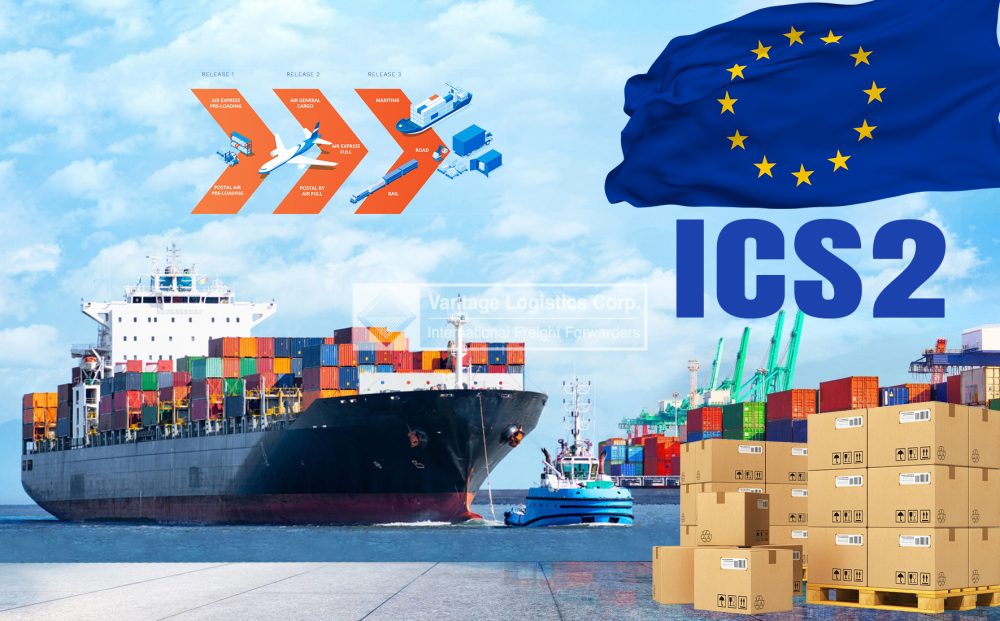
Since March 2021, the Import Control System 2 (ICS2) has been a mandatory tool for managing the flow of goods into the European Union (EU). Non-compliance with ICS2 requirements may lead to cargo being held, delayed at customs, or rejected – causing serious disruption to supply chains and damaging business credibility. ICS2 – A new regulation directly affecting exports to the EU – Businesses must act now to mitigate clearance risks Real impacts of ICS2 on supply chains to the EU Since March 2021, the Import Control System 2 (ICS2) has been a mandatory tool for managing the flow of goods into the European Union (EU). Non-compliance with ICS2 requirements may lead to cargo being held, delayed at customs, or rejected – causing serious disruption to supply chains and damaging business credibility. Effective from June 3, 2024, all parties involved in the supply chain to the EU – including exporters in Vietnam – are required to comply with ICS2 filing procedures. What is ICS2? ICS2 is an electronic declaration system that enables EU customs authorities to collect shipment data before the goods arrive at the EU border. Its main objectives are to: Enhance risk management and early detection of violations; Prevent illegal or dangerous goods from entering the EU; Safeguard the internal market from security threats and trade fraud. ICS2 implementation roadmap by phase and transport mode Phase Effective date Applicable entities Phase 1 From 15/03/2021 Express carriers, postal operators outside the EU Phase 2 From 01/03/2023 Forwarders, logistics providers, air carriers Phase 3 From 03/06/2024 All ocean, rail, road carriers and EU importers What information must be declared? The ICS2 declaration (Entry Summary Declaration – ENS) must include: Description of goods and HS code (minimum 6 digits); Country of origin; Shipper and consignee information; Routing and transport mode; Shipment details (weight, packaging, booking info, etc.). All data must be submitted in the correct XML electronic format, with no errors or omissions. Invalid data will result in the goods being denied clearance. Consequences of non-compliance Customs delays: Cargo may be detained, subjected to further inspection, or returned. Increased costs: Storage fees, data correction charges, and penalties may apply. Reputational risks: Late deliveries reduce trust with EU customers. Lost contracts: EU corporations prioritize partners who fully comply with legal standards. ICS2 transition support timeline The EU has announced a transition period for businesses to adapt: 03/06/2024 – 04/12/2024: Ocean and inland waterway carriers 04/12/2024 – 01/04/2025: Secondary filings for maritime shipments 01/04/2025 – 01/09/2025: Road and rail carriers !Note: This is a technical transition phase, not a grace period for exemption. What should businesses do now? Review and standardize your data process Identify all ICS2-relevant data touchpoints within your export chain. Train your logistics personnel Ensure staff fully understand ICS2 requirements – manual or ad-hoc filing is not acceptable. Partner with a professional forwarder or customs agent ICS2 demands advanced technical knowledge and legal accuracy – work with experienced providers. Audit your IT systems and integration capability Automation and seamless data exchange help minimize risks and avoid costly mistakes. With multi-route international shipping capabilities and deep understanding of EU regulatory systems, Vantage Logistics offers comprehensive ICS2 filing services, including: Advisory and data standardization; Accurate and timely ENS submission in the correct format; Real-time monitoring, updates, and adjustments throughout shipment transit; IT integration support to link your internal system with ICS2. We understand that every minute of delay is a lost opportunity. Vantage is committed to helping your cargo reach the EU on time, in full compliance, and without disruption....

24/04/2025

View More

Market updates

MoIT Revokes VCCI’s Authority To Issue C/O, CNM, And REX Codes – Exporters Must Proactively Transition

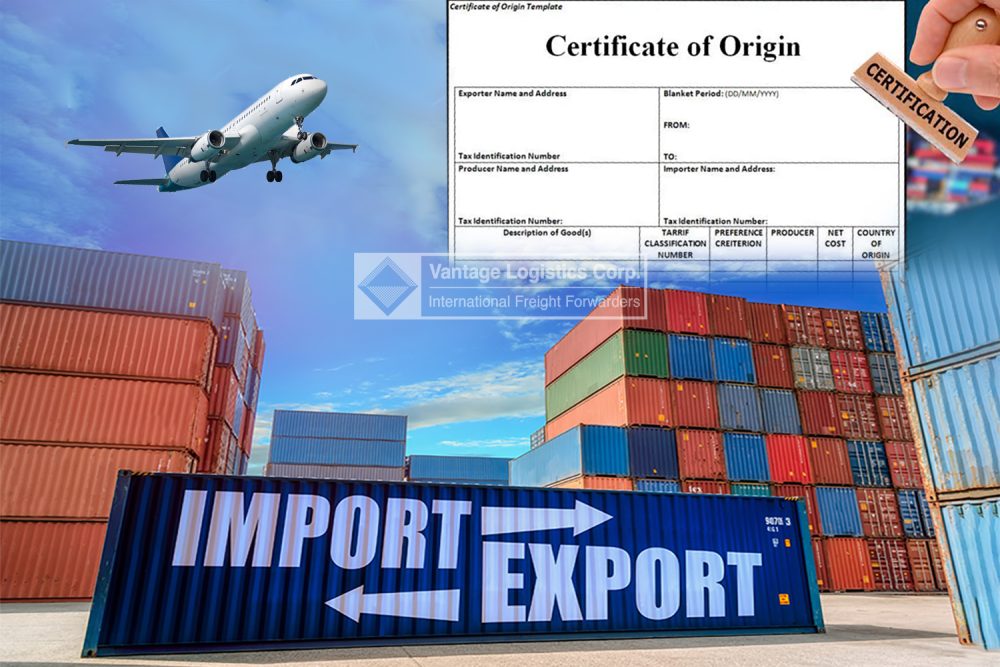
According to Decision 1103/QD-BCT, the Ministry of Industry and Trade has revoked a series of previous authorization decisions for VCCI, including the right to issue C/O forms A, B, non-preferential, CNM, C/O form GSTP and receive REX codes under the GSP of Norway and Switzerland. From April 21, 2025, enterprises will no longer submit application documents for issuance of documents through VCCI, instead, they need to carry out all procedures through the eCoSys system of the Ministry of Industry and Trade. On April 21, 2025, the Ministry of Industry and Trade (MOIT) issued Decision No. 1103/QĐ-BCT, officially revoking the authority of the Vietnam Chamber of Commerce and Industry (VCCI) to issue Certificates of Origin (C/O), Certificates of Non-Manipulation (CNM), and REX codes. According to Decision 1103/QD-BCT, the Ministry of Industry and Trade has revoked a series of previous authorization decisions for VCCI, including the right to issue C/O forms A, B, non-preferential, CNM, C/O form GSTP and receive REX codes under the GSP of Norway and Switzerland. From April 21, 2025, enterprises will no longer submit application documents for issuance of documents through VCCI, instead, they need to carry out all procedures through the eCoSys system of the Ministry of Industry and Trade. On April 21, 2025, the Ministry of Industry and Trade (MOIT) issued Decision No. 1103/QĐ-BCT, officially revoking the authority of the Vietnam Chamber of Commerce and Industry (VCCI) to issue Certificates of Origin (C/O), Certificates of Non-Manipulation (CNM), and REX codes. April 21, 2025, the Ministry of Industry and Trade (MOIT) issued Decision No. 1103/QĐ-BCT This is a major shift in the origin certification management system, directly impacting export enterprises that are currently benefiting from preferential tariffs under Free Trade Agreements (FTAs) such as EVFTA, CPTPP, RCEP, and UKVFTA. C/O, CNM, and REX codes are mandatory for goods to be eligible for preferential tariffs under FTAs. The change in the issuing authority will directly affect export procedures, especially for sectors effectively utilizing tariff preferences such as agriculture, forestry, fishery, textiles, footwear, and electronics. Accordingly, MOIT has revoked a series of previous decisions that authorized VCCI, including: Decision No. 1234/QĐ-BCT (2018): issuance of Form A, Form B, non-preferential C/O, and CNM; Decision No. 1076/QĐ-BCT (2020): issuance of GSTP Form C/O; Decision No. 2795/QĐ-BCT (2022): registration of REX codes under the GSP of Norway and Switzerland. From now on, all types of C/O, CNM, and REX codes will be issued by MOIT through the electronic system eCoSys – the official C/O management platform. The Import and Export Department will be responsible for receiving applications, issuing documents, and notifying importing partners about this change; The Department of E-commerce and Digital Economy will operate the eCoSys system, ensure data management, issue electronic documents, and handle REX code registrations. Recommendations for enterprises: Cease submitting C/O applications through VCCI; Register for an eCoSys account and familiarize with the new procedure; Closely follow updates and guidance from the Import and Export Department to ensure compliance, and avoid disruptions in tariff benefits and delivery schedules. Vantage Logistics – Your Export Compliance Partner, Supporting Export Enterprises, provides consulting services on customs procedures and export documentation, especially for C/O, CNM, and REX files. We are ready to support enterprises with: Registration and usage of the eCoSys system; Reviewing and preparing complete documentation tailored for each market; Consulting on new regulations under FTAs. > Updated C/O guidance form for Viet Nam: Contact the Vantage team to ensure your export activities remain smooth and fully compliant with the latest regulations....

22/04/2025

View More

Vantage News

Vantage Logistics Launches AI Training Program – Strategic Investment in Workforce Development

The training was delivered in a hybrid format — onsite at the Ho Chi Minh City head office and online for all other branches — enabling full participation across departments, including Sales, Marketing, Business Development, OPS, Project, Cusbrok, Trading, Accounting, as well as management and executive levels. AI Application Training held Online & Offline: April 12, 2025 To stay ahead of technological trends and equip employees with the essential knowledge and skills to effectively apply Artificial Intelligence (AI) in their daily work, Vantage Logistics successfully conducted the training program “Introduction to AI & Practical Applications for Enhanced Work Efficiency” on April 12, 2025. The training was delivered in a hybrid format — onsite at the Ho Chi Minh City head office and online for all other branches — enabling full participation across departments, including Sales, Marketing, Business Development, OPS, Project, Cusbrok, Trading, Accounting, as well as management and executive levels. In collaboration with Uplift, a specialized training provider in AI technologies, the program was designed to provide foundational knowledge and practical skills for AI adoption in logistics operations. Key training included​: AI Fundamentals: Basic introduction to Artificial Intelligence, Machine Learning, and Deep Learning. Popular AI Tools: Hands-on guidance in using generative AI tools such as Gemini, Poe, and Copilot. Prompt Engineering: Techniques for writing effective prompts to maximize AI capabilities. Practical Applications: Real-world AI use cases in content creation, slide design, image generation, and more Benefits: Higher productivity & time savings through automation of repetitive tasks. Improved work quality with AI support in data analysis and decision-making. Upgraded digital skillsets, aligning with industry-wide digital transformation demands. This training initiative marks a significant milestone in Vantage Logistics’ strategic direction to enhance competitiveness through technology. It reflects the company’s strong commitment to workforce digital transformation — building a team that is proactive, innovative, and adaptable in the rapidly evolving logistics landscape. Vantage Logistics sees technology as a core differentiator and will continue to invest in advanced training programs to future-proof its human capital. Some pictures of Offline training course at Ho Chi Minh City Branch Office:...

18/04/2025

View More

Market updates

VIETNAM TIGHTENS IMPORT MATERIAL CONTROLS FOR EXPORT GOODS

This move follows heightened trade tensions and the potential imposition of U.S. tariffs on Vietnamese exports. In response, Vietnam is strengthening internal policies to safeguard the credibility of its exports, especially in key markets like the U.S. and EU.. In addition, the Vietnamese government has formed a national negotiation team led by the Minister of Industry and Trade to engage with the U.S. on a fair and balanced trade agreement. On April 10, 2025, the Ministry of Industry and Trade (MOIT) of Vietnam issued Official Letter No. 2515/BCT-XNK requesting enhanced control over imported raw materials used in the production of export goods. The directive reinforces Vietnam’s efforts to prevent origin fraud, ensure traceability, and maintain international trade integrity amid shifting global dynamics. This move follows heightened trade tensions and the potential imposition of U.S. tariffs on Vietnamese exports. In response, Vietnam is strengthening internal policies to safeguard the credibility of its exports, especially in key markets like the U.S. and EU. Key points of the regulation include: Export manufacturers must ensure that imported materials meet hygiene, safety, and traceability standards as required by importing countries. Businesses are encouraged to diversify supply sources to avoid over-dependence on single markets. Exporters must strictly comply with origin requirements when applying for Vietnamese Certificates of Origin (C/O). Export associations are urged to work closely with authorities to provide guidance and timely updates to their members. In addition, the Vietnamese government has formed a national negotiation team led by the Minister of Industry and Trade to engage with the U.S. on a fair and balanced trade agreement. These developments may affect supply chains and documentation procedures, particularly for companies supplying raw materials into Vietnam. At Vantage Logistics, we are actively supporting our partners to navigate these changes—offering assistance in customs procedures, documentation review, and C/O compliance.  Instruction File On Vietnam C/O ​ For tailored support or questions, please contact your Vantage representative. We remain committed to keeping you informed and compliant in a fast-evolving trade environment....

15/04/2025

View More

Market updates

Europe (EU) – An Opportunity To Expand The Supply Chain From Vietnam Amid U.S. Market Volatility

The EVFTA, in effect since 2020, has gradually opened access for Vietnamese goods to the European market. In 2024, exports from Vietnam to the EU reached USD 53 billion, a 12% increase year-over-year. Key export categories include textiles, footwear, electronics, agricultural products, and furniture – all benefiting from EVFTA tariff preferences. Viet Nam is witnessing impressive export growth in Q1/2025, with a total export turnover reaching USD 93.06 billion – a 17% increase year-over-year. The FDI sector plays a key role, contributing USD 65.4 billion. Notably, exports to the European Union (EU) reached USD 11.4 billion, up 15.6%, reflecting a clear shift in market strategy among Vietnamese exporters. 1. U.S. Pressure – A Catalyst for Market Diversification In early 2025, the United States announced a plan to review tariffs on several import categories from Vietnam, accompanied by a temporary suspension of implementation. While this decision offers short-term relief, the risk of new or higher tariffs still looms. This represents a significant risk for businesses heavily reliant on the U.S. market. In recent years, Vietnam has significantly benefited from the global supply chain shift, particularly as U.S. importers seek to reduce dependence on China. However, this growth also comes with dependency risks: in 2024, over 30% of Vietnam’s total export turnover came from the U.S. Amid current uncertainties, businesses must pivot toward more stable and long-term potential markets – with Europe being an ideal choice. 2. The EU – A Stable and Promising Trade Partner The EVFTA, in effect since 2020, has gradually opened access for Vietnamese goods to the European market. In 2024, exports from Vietnam to the EU reached USD 53 billion, a 12% increase year-over-year. Key export categories include textiles, footwear, electronics, agricultural products, and furniture – all benefiting from EVFTA tariff preferences. Additionally, the EU market places strong emphasis on sustainability, product quality, and supply chain transparency – criteria that Vietnamese businesses are increasingly able to meet. The combination of clear trade regulations, preferential tariffs, and rising demand forms a solid foundation for long-term shipping routes. 3. Viet Nam – EU Logistics: Ready for Expansion Viet Nam has made significant progress in logistics infrastructure to support long-haul shipments to Europe: Modern port infrastructure: Deep-sea ports like Cai Mep – Thi Vai can now accommodate mother vessels with direct routes to major EU ports such as Rotterdam, Hamburg, and Antwerp. Stable freight rates: Unlike the volatile Trans-Pacific route, Asia–EU shipping rates remained relatively stable throughout 2024, providing favorable conditions for long-term logistics planning. More balanced container flow: Compared to the U.S. route, which often faces issues with empty container returns, the Vietnam–EU route sees more balanced two-way flows, reducing container repositioning costs and improving supply chain efficiency. 4. Why EU Logistics Agents Should Prioritize Partnership with Vietnam Now Expanding partnerships with Vietnam is not only a response to U.S. risks, but also a strategic move to build resilient and adaptive supply chains. Benefits for EU-based logistics agents include: A rapidly growing market: Demand for imports from Vietnam and Southeast Asia into the EU continues to rise – especially in textiles, agriculture, electronics, and FMCG sectors. Proactive and flexible Vietnamese exporters: Many are open to long-term contracts, streamlined operations, and prioritizing logistics partners with strong EU capabilities. Compliance advantage: The EVFTA requires high standards for traceability and technical compliance. EU-based logistics agents with compliance expertise are well-positioned as essential connectors in the operational chain. With over 23 years of experience in international transportation, Vantage Logistics is a trusted partner for many import-export businesses on the Vietnam–EU route, prioritizing efficiency, transparency, and regulatory compliance. Our services include: FCL and LCL shipping directly to major EU ports Domestic transport and customs clearance in both Vietnam and the EU Flexible warehousing solutions for e-commerce and bulk cargo Supply chain tracking & management tools to boost proactivity and optimize planning With a well-established network of EU agents, Vantage Logistics offers flexible door-to-door service, helping you serve your customers with the highest level of efficiency and professionalism. While the U.S. remains a key market, it is clear that over-reliance on a single destination is riskier than ever. In contrast, the EU offers stability, clearly defined expectations, and sustainable growth opportunities for Vietnamese exports. We believe EU logistics agents are in a prime position to lead the wave of trade and supply chain shifts from Vietnam. Vantage Logistics is ready to be your strategic partner – helping you connect effectively with Vietnam, the rising export hub of Southeast Asia. Connect with us today. Vantage Logistics is ready to collaborate and deliver optimal logistics solutions for the Vietnam–EU trade lane.....

15/04/2025

View More

Market updates

MARKET FORECAST NEWSLETTER: LOGISTICS TRANSPORTATION FROM VIETNAM & SOUTHEAST ASIA (SEA) TO GLOBAL MARKETS – Q2/2025

Other factors, such as prolonged inflation, fuel price volatility, and weakened consumer demand, further impact shipping demand. Meanwhile, the relocation of supply chains to Vietnam requires time to establish infrastructure and new production processes. This is an ideal period to negotiate long-term contracts with competitive freight rates, securing shipping capacity ahead of the Q3–Q4/2025 peak season. I. SeaFreight: Challenges & Opportunities from Vietnam and SEA The global economic landscape in Q2/2025 continues to be influenced by policy uncertainties and weakened consumer purchasing power. Ocean freight routes from Vietnam and Southeast Asia to major markets such as the United States, Europe, and Australia-New Zealand are experiencing mixed trends, creating both challenges and opportunities for businesses to optimize logistics costs and strategies: 1. U.S. Routes – High Volatility, Favorable Rates Stable yet slightly oversupplied capacity: Major carriers like Maersk, HPL, and ONE are maintaining “blank sailing” strategies to balance supply and demand. However, due to delayed bookings caused by concerns over new U.S. tariff policies, there is currently a slight surplus in slot availability. Freight rates plunging: According to ShipUniverse, freight rates from Vietnam to the U.S. in Q1/2025 dropped by an average of 28%, marking the sharpest decline in two decades. Although the U.S. has temporarily delayed imposing additional tariffs for 90 days (except for China), cautious sentiment continues to influence booking decisions. Other factors, such as prolonged inflation, fuel price volatility, and weakened consumer demand, further impact shipping demand. Meanwhile, the relocation of supply chains to Vietnam requires time to establish infrastructure and new production processes. This is an ideal period to negotiate long-term contracts with competitive freight rates, securing shipping capacity ahead of the Q3–Q4/2025 peak season 2. European Routes (EU) – Relatively Stable Amid Global Volatility Stable supply of slots and containers: Leading carriers like ONE, OOCL, MSC, and Maersk are maintaining consistent slot and container availability. Container inventory at major Vietnamese ports such as Cat Lai, Cai Mep, and Hai Phong remains largely stable. Freight rates staying low: Current rates are 10–15% lower than the same period in 2024 and are expected to remain stable through April and May. However, the risk of congestion at major ports like Rotterdam and Hamburg is increasing due to summer staffing shortages (typically from June to August). The EU’s economic recovery remains sluggish, with weak consumer demand. China continues to exert indirect influence on European routes by adjusting operational plans or feeder schedules. Certain transshipment routes via Singapore and Port Klang may face container shortages or delays without early planning. The European route is well-suited for shipments with regular, stable schedules. Businesses should prioritize this route to mitigate risks from the U.S. market and preserve long-term supply chain stability. 3. Australia-New Zealand Routes (AU-NZ) – Opportunities During The Low Season Ample supply – Competitive rates: Slot and container availability are abundant at major ports, making booking easier with minimal delays. Reduced shipping costs – Favorable negotiation opportunities: Carriers such as Maersk and HPL are offering rates lower than operational costs to attract cargo. Rates are expected to rise slightly starting in June to prepare for the peak season. Competitive pricing strategies: During the low season, carriers are ramping up promotions and special pricing policies. This is the perfect time to negotiate long-term contracts with low freight rates, optimizing logistics costs for shipments in Q3–Q4/2025 II. Air Freight: Impact of New U.S. Tariff Policies Following President Trump’s announcement of new import tariffs effective April 9, 2025, the global air freight market has seen significant changes, particularly in Southeast Asia: Noticeable drop in demand: With consumer sentiment slowing in the U.S., many airlines have reduced flight frequencies or switched to smaller bellyhold aircraft to optimize costs. Slight decline in freight rates: Routes affected by tariff policies—especially to North America—are adjusting rates downward, albeit with limited margins. Airlines are closely monitoring market trends to respond quickly to actual demand. Supply chain instability risk: Tariff implementation could trigger retaliatory measures from affected nations, creating ripple effects across global logistics chains. Stable freighter operations: Amid bellyhold reductions, freighter aircraft operations remain robust thanks to their flexibility in network coverage and frequency, especially in the Asia-Pacific region. Forecast: The air freight market will continue to experience significant volatility in Q2/2025. Businesses should secure bookings early and closely monitor developments to proactively adjust transportation plans, particularly for seasonal goods, technology products, or perishable items. In the face of unpredictable market fluctuations, Vantage Logistics Corp. is committed to being a “Leading Logistics Provider” by offering flexible and sustainable solutions alongside our partners: Logistics consulting: Optimizing shipment planning, consolidation, and route selection to ensure on-time delivery, compliance, and cost efficiency. Securing volume & long-term contracts: Actively negotiating with carriers to secure competitive rates and stable slots during peak seasons. Weekly market updates: Real-time data on slot availability and freight rates from carriers to enable rapid responses to market dynamics. Strong SEA network: Extensive connections across logistics hubs in the region – from Vietnam to Thailand, Singapore, Malaysia, and beyond – ensuring stable capacity from origin to global destinations. Vantage Logistics is ready to support our partners in navigating challenges and seizing opportunities in the global market during Q2/2025. Contact the Vantage team for detailed updates tailored to individual routes and specific needs....

14/04/2025

View More
1 … 27 28 29 30 31 … 43