RESOURCE

vlc-news-philippines-cancels-rice-import-permit-15102026

Market updates

Philippines Cancels Permit for Controversial 12,480-Metric-Ton Rice Shipment from Viet Nam

The Philippine Department of Agriculture (DA) said it had ordered the cancellation of the Sanitary and Phytosanitary Import Clearance (SPSIC) for a 12,480-metric-ton rice shipment from Viet Nam before the vessel arrived. The case involves reported discrepancies in rice specifications and an expired import contract, highlighting the risks that can arise when shipping schedules do not align with import requirements in the destination market. 1. Developments at the Port of Arrival According to the Philippine Department of Agriculture (DA) and the Philippine News Agency (PNA), the vessel MV Tay Son 2, carrying 12,480 metric tons of rice from Viet Nam, arrived at the Port of Davao on September 14, 2026. According to these sources, the vessel’s captain refused to submit the shipment for inspection by the Philippine Bureau of Plant Industry (BPI). On September 17, 2026, the vessel departed Davao before the matter had been resolved. Philippine authorities subsequently prevented the cargo from being unloaded at another location and brought the vessel to the Port of General Santos before ordering it to return to Davao for further handling. 2. Rice Specifications and Import Requirements The case involves two issues: reported discrepancies in rice specifications and the status of the import contract and permit. 2.1. Reported Discrepancy in Rice Specifications The importer, Planters Product, Inc. (PPI), reported a discrepancy between the purchase order and the specifications communicated for the shipment: Specifications under the purchase order: 25% broken rice Reported specifications for the shipment: 5% broken rice In agricultural trade, the percentage of broken grains is an important commercial specification. However, the discrepancy remains based on information reported by the importer and has not been confirmed by an official inspection, as the physical inspection process was not completed. 2.2. Expired Contract and Canceled Import Permit In addition to the rice specifications, the delivery timeline and the status of the import documentation were also highlighted by the DA: Estimated time of arrival (ETA): July 2026 Actual arrival: Mid-September 2026 According to the DA, the import contract had expired and the SPSIC had been canceled before the vessel arrived. The vessel’s arrival also coincided with the period when the Philippines was preparing for the wet-season rice harvest. According to published information, import policy during this period was also linked to efforts to limit downward pressure on domestic palay prices. Operational Note: Even when goods meet quality requirements, a shipment may still face customs clearance difficulties if it fails to meet import requirements or if the relevant permit is no longer valid. 3. Proposed Measures for Handling the Shipment According to published information, the Bureau of Customs of the Philippines (BOC) was still considering the final course of action for the shipment. The proposed measures included: Proposed Measure Proposing Authority / Status Return to the Country of Origin The BPI was reported to have recommended returning the shipment to Viet Nam. Seizure and Penalties The DA proposed considering seizure of the shipment and the application of penalties under relevant regulations, subject to the competent authority’s findings and decision. Final Decision The BOC was reviewing the official course of action for the shipment. 4. Conclusion The controversial rice shipment in the Philippines highlights how international trade depends not only on product quality and contractual terms but also on shipping schedules, the validity of import documentation, and regulatory requirements in the destination market. When these elements are no longer aligned, shipments already in transit may face unexpected complications during arrival and customs clearance. Vantage Logistics will continue to provide updates on notable developments in logistics, import-export activities, and international supply chains, offering businesses additional insight into factors that may affect global trade. Contact Vantage Logistics for tailored transport solutions and competitive quotations. Please provide details on cargo type, market, origin, destination, and estimated timeline.   Vantage Logistics Corp – South East Asia (S.E.A) Logistics Provider One-Stop Shop For Integrated Logistics Services Head Office Viet Nam – Suite 6.01, Floor 6th, Block A, RiverGate Residence, 151-155 Ben Van Don, Khanh Hoi Ward, HCMC, Viet Nam Branch Thailand, Laos, Cambodia, Malaysia, Indonesia, Singapore Contact Us Email in**@*****om.vn Hotline +84-909-026-261 Website https://vantage-logistics.com Send your shipment enquiry today and receive a tailored transport plan from the Vantage Logistics team.

15/10/2026

View More
vlc-news-asean-east-asia-trade-15102026

Market updates

ASEAN–East Asia Trade Reaches USD 1.4 Trillion, Up 13.7% in 2025

According to preliminary data from the ASEAN Secretariat, two-way trade between ASEAN and its three East Asian partners (China, Japan, and South Korea) reached USD 1.4 trillion in 2025, representing a 13.7% year-on-year increase. Notably, China–ASEAN trade continued its upward trajectory in the first seven months of 2026, underscoring a sustained expansion in cross-regional trade volumes worth monitoring. 1. Regional Trade Volume and Foreign Direct Investment (ASEAN+3) Trade and investment flows between ASEAN and its three East Asian partners maintain a substantial footprint. In 2025, Foreign Direct Investment (FDI) inflows from China, Japan, and South Korea into ASEAN totaled USD 44.8 billion. Key ASEAN–East Asia Trade & Investment Indicators Indicator Value Growth / Share ASEAN – (China, Japan, South Korea) Trade in 2025 USD 1.4 Trillion Up 13.7% vs 2024 FDI from 3 East Asian Partners into ASEAN in 2025 USD 44.8 Billion Accounted for 18.2% of total ASEAN FDI China – ASEAN Trade (First 7 Months of 2026) USD 744.41 Billion Up 24.7% year-on-year The scale of merchandise trade and investment capital highlights the vital economic linkage between East Asia and Southeast Asia. However, assessing actual freight demand requires a granular evaluation of specific commodity structures, export-import markets, and active transport corridors. 2. Direct Impacts on Transport Networks and Logistics Infrastructure Expanding trade volumes underscore the critical role of regional transport connections. Depending on industry-specific cargo characteristics and delivery requirements, flexible logistics solutions are being actively deployed: Intra-Asia Ocean Freight Connections: For multi-leg shipments, vessel schedule reliability, transit times, and feeder network connectivity are pivotal factors for supply chain managers. Major gateway hubs such as Shanghai, Ningbo, Busan, and Yokohama maintain dense feeder linkages with Southeast Asian ports within ocean carrier networks Integrated Logistics and Multimodal Transport: Depending on lead-time sensitivity, combining ocean freight, Cross-Border Trucking, and inland warehousing offers expanded routing options. Real-world operational efficiency hinges heavily on border crossing clearance times, transit schedules, and the coordination capability of the logistics operator Rules of Origin (C/O) and Customs Compliance: When leveraging Free Trade Agreements such as RCEP, AKFTA, or AJCEP, enterprises must accurately determine rules of origin and prepare compliant documentation to qualify for preferential tariffs. Duty exemption eligibility depends on the specific conditions of each product line and destination market 3. Monitoring Southeast Asian Trade Dynamics and Logistics Connectivity Expanding trade and investment flows reflect an increasingly integrated economic relationship between East Asia and Southeast Asia. This growth in cross-border trade creates momentum for expanding logistics connectivity, helping strengthen supply chain coverage across the region.   Contact Vantage Logistics for tailored transport solutions and competitive quotations. Please provide details on cargo type, market, origin, destination, and estimated timeline. Vantage Logistics Corp – South East Asia (S.E.A) Logistics Provider One-Stop Shop For Integrated Logistics Services Head Office Viet Nam – Suite 6.01, Floor 6th, Block A, RiverGate Residence, 151-155 Ben Van Don, Khanh Hoi Ward, HCMC, Viet Nam Branch Thailand, Laos, Cambodia, Malaysia, Indonesia, Singapore Contact Us Email in**@*****om.vn Hotline +84-909-026-261 Website https://vantage-logistics.com Send your shipment enquiry today and receive a tailored transport plan from the Vantage Logistics team.

15/10/2026

View More

Market updates

SINGAPORE STRENGTHENS PRODUCT SAFETY CONTROLS: WHAT VIETNAMESE EXPORTERS NEED TO KNOW

Singapore is strengthening its product safety controls through two key regulations: the Consumer Protection (Safety Requirements) Regulations (CPSR) and the Consumer Goods (Safety Requirements) Regulations (CGSR). For exporters, these requirements go beyond product compliance. They can also affect delivery schedules, logistics costs, and supply chain reliability. 1. Singapore Strengthens Product Safety Requirements According to information published by Vietnam’s Ministry of Industry and Trade, Singapore applies two main regulatory frameworks for product safety. – CPSR: Covers 33 categories of controlled goods, including electrical and electronic products, household appliances, and gas appliances. Products within scope must meet applicable safety requirements, complete registration, and carry the SAFETY Mark before being supplied or sold in Singapore. – CGSR: Covers general consumer goods such as toys, clothing, furniture, and sports equipment, which must comply with the relevant safety standards. Non-compliant products may be subject to sales restrictions or recalls. Businesses that violate applicable requirements may also face penalties. For exporters, checking compliance requirements before shipment is essential. Addressing documentation or registration issues early can help avoid costly adjustments after cargo has already left the port of origin. 2. Potential Impact on Southeast Asia’s Trade and Logistics Singapore plays an important role in Southeast Asia’s trade and logistics network. Tighter product safety controls may require exporters, importers, and distributors to review their procedures for placing goods on the Singapore market. Several potential risks deserve attention: – Delivery delays: Incomplete documentation or missing certificates may affect cargo acceptance and delivery schedules. – Additional logistics costs: Delays in resolving compliance issues may lead to storage, port handling, or additional transportation costs. – Disrupted distribution plans: Late deliveries can affect inventory planning, distribution schedules, and commitments to business partners. These requirements do not automatically apply across all ASEAN markets. However, they highlight the importance of understanding the specific regulations of each destination country when planning regional trade and distribution. 3. What Should Vietnamese Exporters Prepare? For Vietnamese businesses exporting to Singapore, compliance checks should take place before shipment arrangements are finalized. Exporters should determine whether their products fall under CPSR or CGSR, verify the applicable safety standards and registration requirements, and clarify responsibilities with their Singaporean importers. Documentation preparation should also be factored into the shipping schedule. If an issue is discovered only after cargo arrives at the destination port, businesses may need to manage several challenges simultaneously, including delivery delays, additional costs, and changes to distribution plans. A reliable shipping plan therefore involves more than selecting the right route or sailing schedule. It also requires anticipating potential obstacles before the cargo reaches its destination. 4. Managing Risks Through Early Planning Not every risk in international shipping can be eliminated, but many disruptions can be reduced through early preparation. Reviewing cargo information, documentation, shipping schedules, and destination requirements helps all parties make better-informed decisions. For shipments to Singapore, close coordination among exporters, importers, agents, and logistics providers helps maintain visibility over shipment readiness, address changes, and adjust plans when necessary. At Vantage Logistics, international transportation planning takes into account the practical requirements of each shipment and the coordination needed among relevant parties. This approach helps businesses manage potential disruptions and maintain better control over delivery schedules. As market requirements evolve, careful preparation does more than protect an individual shipment. It also helps businesses maintain reliable supply chains and build lasting partnerships across international markets.

15/10/2026

View More
vlc-news-blog-what-is-dap

Logistics, Blog

What is DAP? Delivered at Place Explained with Risks and Examples

What is DAP? DAP is a rule under Incoterms 2020 where the seller delivers goods to a specified destination, ready for unloading. Risk transfers at that point – before unloading begins. The buyer is responsible for import clearance, duties, taxes, and unloading.   How DAP Works  The seller manages everything up to delivery at the named place. The buyer takes over from arrival.   Seller’s responsibilities under DAP: Export packaging and documentation Export customs clearance All transport to the named destination – inland, ocean or air, and delivery to site Delivery of goods ready for unloading Bear all risk during transit   Buyer’s responsibilities under DAP: Unload goods at the named destination Handle import customs clearance Pay import duties, VAT, and taxes Arrange any onward transport after the named place   Risk transfer point: When goods arrive at the named place, ready for unloading – but before unloading begins. One important detail: the named place must be specific. “Ho Chi Minh City” is not sufficient. “Buyer’s warehouse at [address]” or “Cat Lai Port, Ho Chi Minh City” gives both parties clear reference points for when risk and cost transfer.   DAP vs DDP vs DPU: Where the Confusion Starts  DAP is often confused with DPU (Delivered at Place Unloaded) and DDP (Delivered Duty Paid).   DAP DPU DDP Seller arranges transport to destination yes yes yes Seller unloads at destination no yes no Seller handles import clearance no no yes Seller pays import duties & taxes no no yes Risk transfers Before unloading After unloading Before unloading   DAP vs DPU: the difference is unloading. DPU is the only rule where the seller bears unloading risk. DAP vs DDP: DDP requires the seller to act as importer, taking on duties and tax obligations.   See also: What is DDP?   When DAP Makes Sense  DAP works well when: The buyer has a reliable customs broker at the destination country The buyer wants direct control over import duty calculation and payment The seller wants to offer door-delivery service without taking on import tax liability The shipment is to a buyer’s own warehouse or named facility The seller wants to avoid registering as an importer of record in the destination country   When DAP Does NOT Work  DAP is not suitable when: The buyer has no local customs capability or broker Import duties are complex, high, or unpredictable at the destination The named destination is remote or difficult for the seller’s carrier to access precisely   Practical Insights: The Risks That Catch Buyers Off Guard   Customs delays become the buyer’s cost. If import clearance is delayed, storage and demurrage charges apply – and these fall entirely on the buyer. Unloading is often overlooked. DAP delivers goods ready for unloading – but the buyer must handle equipment and labour. This becomes critical for heavy or project cargo. Vague destination creates disputes. A general location like “Ho Chi Minh City” creates ambiguity. A precise address or terminal is required to define risk transfer clearly.   DAP in Practice: ASEAN Cross-Border Shipments  For shipments into Viet Nam, DAP is commonly used for machinery, equipment, and project cargo where the seller – often a European or Chinese manufacturer – arranges delivery to the buyer’s factory or project site.   The buyer’s customs broker handles import clearance under Vietnamese regulations.   Decision Insight: When to Choose DAP vs DDP If your team has customs capability and wants control over import costs, DAP is usually more efficient than DDP. If not, DDP may reduce operational risk, even if total cost is higher due to supplier pricing.   FAQ Does DAP include insurance? No. Insurance is not mandatory. The seller bears risk but is not required to insure the goods. What is the difference between DAP and DDU? DDU (Delivered Duty Unpaid) was the predecessor term under Incoterms 2000. It was replaced by DAP in Incoterms 2010 and remains unchanged in 2020. DAP is the current, valid term – DDU is no longer in use under the current rules. Can DAP be used for sea freight? Yes. DAP applies to all transport modes. Who arranges unloading under DAP? The buyer. This is one of the most frequently misunderstood points.   See also: What is FOB? | What is EXW?   Vantage Logistics supports cross-border and project cargo shipments across ASEAN under DAP and other Incoterms structures. Contact our team for guidance on structuring your shipment terms and controlling total cost. — VANTAGE LOGISTICS South East Asia (S.E.A) Logistics Provider One-Stop Shop For Integrated Logistics Services   CONTACT US Head Office: Suite 6.01, Block A, RiverGate Residence, 151-155 Ben Van Don, Khanh Hoi Ward, HCMC, Viet Nam Email: in**@*****om.vn Phone: +84-28 382 67312 – Hotline: +84-909-026-261 Website: https://vantage-logistics.com...

17/04/2026

View More
vlc-news-6-common-export-fraud-risks

Market updates

After the $600,000 Loss: 6 Common Export Fraud Risks Vietnamese Businesses Must Control Starting at the Logistics Level

The case of a Vietnamese exporter losing nearly $600,000 USD across 21 cargo containers in April 2026 is yet another reminder: export risk doesn’t stop at the contract – it runs through the entire logistics chain. Below is a breakdown of 6 common risk categories and the control points businesses can implement to protect their assets. Warning Signs in a Potential Partner In most fraud cases, red flags appear before any incident occurs: Unusually large orders with no deposit required Frequent changes in company name or use of multiple intermediary entities Complete documentation that is difficult to verify independently Unclear company address or no evidence of actual business operations Early identification helps businesses avoid entering high-risk transactions from the outset. Pre-Shipment Fraud: Gaining Control Through False Trust Common tactics Sending fake payment confirmations (fraudulent SWIFT transfer orders) Using contracts with vague terms on liability and dispute resolution Proposing high-risk payment methods (D/P, D/A) Core risk: The exporter produces and ships goods based on a financially unconfirmed transaction. Control points Only confirm payments through official banking channels Prioritize Letter of Credit (L/C) or upfront deposit before production Review all contract clauses relating to cargo control rights In-Transit Fraud: Loss of Shipment Control Common tactics Email spoofing to alter the consignee or shipping instructions Exploiting FOB terms to give the buyer full control over shipping Appointing non-transparent forwarders or agents Core risk: The exporter loses control over the Bill of Lading or delivery information. Control points Verify all changes through at least two communication channels (email and phone) Avoid full reliance on forwarders appointed solely by the buyer Track container movement and document status in real time Risks from Fraudulent or Non-Transparent Logistics Providers Common tactics Ghost forwarders collecting fees then cutting off all communication Low initial quotes followed by hidden surcharges once cargo is on board Withholding the Delivery Order (DO) or delaying cargo release Core risk: Cargo is held at port, generating storage fees, demurrage, and detention charges. Control points Work only with forwarders that have a clear legal identity and transparent operations Review all surcharges carefully before booking Monitor cargo release status at the destination port Port Delays Used as Financial Pressure Common tactics Stalling payment with a rotating list of excuses Refusing to collect cargo, leaving containers sitting at port Pushing all resulting costs back onto the exporter Demurrage fees typically run $80–150 USD/container/day; detention fees $50–100 USD/container/day. With 20 containers, losses can exceed tens of thousands of dollars within a single week. Core risk: Logistics costs escalate rapidly, creating severe cash flow pressure. Control points Clearly define cargo acceptance responsibilities in the contract Monitor free time windows at the destination port closely Prepare a contingency plan for cargo handling in the event of a dispute Price Extortion When Cargo Is Stranded at Port Common tactics With cargo sitting at port and storage costs climbing, the buyer demands: A significant price reduction Or outright refuses to take delivery Core risk: The exporter is forced to choose between accepting a deep discount or losing the entire shipment. Control points Prevent cargo from entering an uncontrolled state at the destination port Include contract clauses that address cargo handling under dispute conditions Prepare in advance for cargo resale or rerouting options Complex Multi-Layered Intermediary Structures  Common tactics Transactions routed through multiple opaque intermediary companies The actual end buyer either does not exist or lacks financial capacity Core risk: There is no identifiable party with ultimate accountability. Control points Verify the identity of the end buyer directly Minimize transactions that pass through multiple intermediary layers Check the buyer’s transaction history and trade credit standing Export Risk Control Checklist Verify partners through the Vietnamese Trade Office abroad or independent sources Use secured payment methods Confirm all banking documents through official channels Review contract clauses that relate directly to logistics operations Track shipment status and documentation in real time Partner with a logistics provider capable of managing the full operational chain Businesses may not eliminate all risks, but they can significantly reduce exposure by implementing structured controls across contracts, payments, and logistics operations. Contact Vantage Logistics today to receive expert guidance on safe shipping routes, tight documentation control, and minimizing unexpected costs at the destination port. — VANTAGE LOGISTICS South East Asia (S.E.A) Logistics Provider One-Stop Shop For Integrated Logistics Services   CONTACT US Head Office: Suite 6.01, Block A, RiverGate Residence, 151-155 Ben Van Don, Khanh Hoi Ward, HCMC, Viet Nam Email: in**@*****om.vn Phone: +84-28 382 67312 – Hotline: +84-909-026-261 Website: https://vantage-logistics.com...

17/04/2026

View More
vlc-news-blog-what-is-fob

Blog, Logistics

What is FOB? When to Use FOB to Control Shipping Costs

What is FOB? FOB (Free On Board) is a shipping term under Incoterms 2020 where the seller is responsible for goods until they are loaded onto the vessel at the port of origin. From that point, the buyer assumes all costs and risks.     How does FOB work? Seller: Prepares goods Handles export clearance Buyer: Books freight Pays shipping cost Arranges insurance Key point: Risk transfers at the port of loading   FOB vs CIF: Key differences Tiêu chí FOB CIF Freight Buyer Seller Insurance Buyer Seller Control Higher Lower   >> See also: What is CIF I Incoterms 2020   When should you use FOB? Use FOB if you: Have a reliable freight forwarder Want cost control Have import experience   Common risks Unexpected port charges Schedule delays Limited control without a forwarder   FAQ Does FOB include shipping cost? No. FOB only covers costs until goods are loaded. Who should use FOB? Businesses with logistics experience.   Need help choosing between FOB and CIF? Contact Vantage Logistics for tailored advice. — VANTAGE LOGISTICS South East Asia (S.E.A) Logistics Provider One-Stop Shop For Integrated Logistics Services   CONTACT US Head Office: Suite 6.01, Block A, RiverGate Residence, 151-155 Ben Van Don, Khanh Hoi Ward, HCMC, Viet Nam Email: in**@*****om.vn Phone: +84-28 382 67312 – Hotline: +84-909-026-261 Website: https://vantage-logistics.com...

16/04/2026

View More
VietNam-China-custome-agreement-Vantage-Logistics

Market updates

Viet Nam – China Sign New Customs Agreement: 5 Benefits for Costs and Transit Time

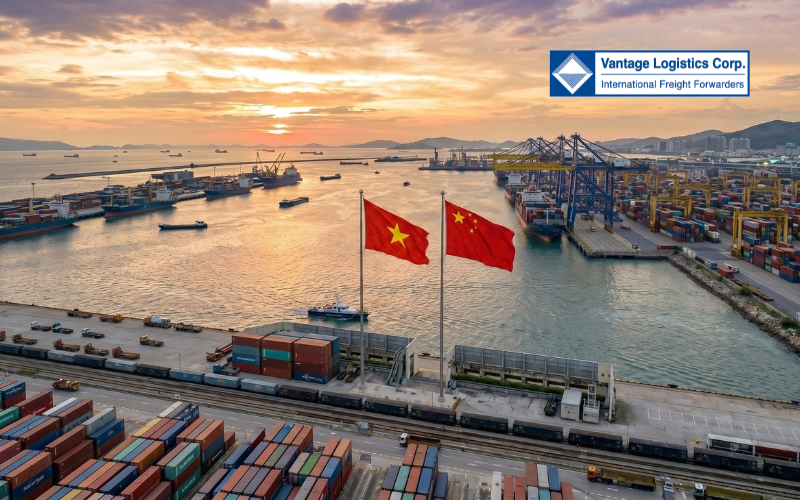
The Viet Nam – China Customs Cooperation Agreement, signed on April 15, 2026, not only replaces the 1993 framework but also redefines how goods are handled along Viet Nam’s largest trade corridor. With bilateral trade exceeding USD 250 billion (2025), changes in customs clearance time and logistics costs will begin to directly impact operating costs and delivery timelines within this quarter.   New legal framework after more than 30 years On April 15, 2026, Viet Nam and China officially signed the Agreement on Cooperation and Mutual Administrative Assistance in Customs. Following a bilateral trade volume that exceeded $250 billion in 2025, this agreement provides tangible benefits for businesses: faster customs clearance, lower logistics costs, and improved delivery timelines starting this quarter.   The 1993 agreement was developed in a context of low cargo volume, manual processes, and almost non-existent digital infrastructure. Today, as the Lang Son – Huu Nghi Quan and Hai Phong – Guangzhou routes have become among the busiest trade corridors in the region, pressure on speed and transparency has significantly exceeded the old framework. The new agreement establishes a legal foundation for full digitalisation and pre-arrival data processing.   Green lane shipments: Immediate processing, no manual inspection delays The new mechanism allows cargo to be channelled based on digital data shared in advance between the two customs authorities. Impact: Minimises reliance on subjective inspection at border gates. Beneficiaries: Agricultural products and fresh food (reduced spoilage risk) and electronic components (avoiding production disruption).   AEO enterprises: Priority on both sides of the border The agreement establishes a Mutual Recognition Arrangement (MRA) for Authorised Economic Operators (AEO). Enterprises recognised as AEO in Viet Nam will automatically be classified as low-risk when cargo arrives in China. Result: Physical inspection rates are reduced to a minimum, creating a strong competitive advantage during peak shipping periods.   Reduction in border-related costs Increased transparency and faster clearance directly reduce two cost groups: Demurrage & Detention: As cargo is no longer delayed due to documentation bottlenecks. Administrative costs: Reduction of additional charges previously caused by complex manual processes. For businesses handling multiple shipments per month, total cost savings can accumulate significantly on a quarterly basis.   Stronger protection against origin fraud The agreement enhances coordination in combating smuggling and origin fraud, in parallel with regional control initiatives (Mekong Dragon). This ensures fair competition for compliant businesses while providing clearer support mechanisms in cases of HS code disputes or customs valuation issues.   More effective utilisation of ACFTA & RCEP tariff preferences The new customs agreement acts as an “operational mechanism” for existing FTAs through: Harmonisation in the interpretation of rules of origin between the two countries. Full acceptance of electronic Certificates of Origin (e-Form E), reducing the risk of rejection due to minor administrative errors.   Summary by business type Business Type Key Impact Agriculture / Food Reduced waiting time, lower spoilage risk Manufacturing / Processing Timely input supply, optimised Just-in-time operations Trading / E-commerce Lower operating costs, faster capital turnover AEO-certified enterprises Priority clearance at both ends of the border   Are you ready for the changes under the 2026 Customs Agreement? Contact Vantage Logistics now to evaluate your specific shipment and determine the most suitable clearance strategy in line with the new 2026 regulations....

16/04/2026

View More
Vantage Logistics event banner for Breakbulk Asia 2026 Singapore, Booth F42

Vantage Events, Vantage News

VANTAGE LOGISTICS TO EXHIBIT AT BREAKBULK ASIA 2026, SINGAPORE – PROJECT LOGISTICS, REGIONAL EXPERTISE, AND GLOBAL EXECUTION

Vantage Logistics will exhibit at Breakbulk Asia 2026, taking place on 18–19 November 2026 at the Sands Expo and Convention Centre, Marina Bay Sands, Singapore. We warmly invite our partners and clients to visit us at Booth F42. At Booth F42, we will connect with cargo owners, EPC contractors, and global partners seeking reliable execution for breakbulk, project cargo, and heavy-lift shipments across ASEAN.   Event Details Breakbulk Asia 2026 is a dedicated exhibition for the breakbulk and project cargo logistics sector, bringing together stakeholders across energy, infrastructure, and industrial development. Our participation focuses on strengthening international partnerships and expanding cooperation opportunities in complex and non-containerized cargo transport. Booth: F42 Date: 18–19 November 2026 Venue: Sands Expo and Convention Centre, Marina Bay Sands, Singapore Hours: 18 Nov: 10:00 – 18:00 | 19 Nov: 10:00 – 17:00 (SGT)     Meet Vantage Logistics at Booth F42 With over 24 years of operational experience in Southeast Asia, Vantage Logistics delivers breakbulk and project cargo solutions with a focus on execution control, risk management, and schedule reliability. We support cargo owners and EPC contractors in handling oversized, heavy, and high-value cargo across cross-border and multimodal environments. At Booth F42, we will be available to discuss: Breakbulk & Heavy-lift Expertise – Specialized handling of non-containerized cargo, OOG, and oversized equipment. Comprehensive Project Support – Site evaluation, regulatory consulting, and tax exemption (Master List) management. Technical Engineering – Method statement preparation and precise load calculations for heavy-lift and OOG cargo. Global Execution – Vessel chartering, Port Captain supervision, and multimodal transport across land, river, and sea to the most remote project sites. Infrastructure & Agency – Commercial agency for major ports (VIMC Hau Giang, Vinh Tan, etc.) and river port/depot operations. Certified Excellence – Solutions backed by ISO 9001:2015, C-TPAT, FMC OTI–NVOCC Bond, and IATA standards. Our approach ensures visibility at every stage of transport, enabling more predictable delivery timelines for complex cargo movements.   Regional Infrastructure Supporting Execution Vantage Logistics operates 7 offices across Viet Nam and 2 offices in Cambodia, providing direct presence at major ports and industrial hubs. For breakbulk and heavy-lift cargo, we deploy specialised equipment including SPMTs and multi-axle trailers, enabling cargo handling beyond standard infrastructure limits. Combined with dedicated vessel chartering and experienced Port Captains, we maintain operational control from port discharge to final delivery at project sites.   Schedule a Meeting Whether you are a cargo owner, EPC contractor, port developer, or international freight partner, we welcome the opportunity to discuss how our expertise in project logistics and supply chain solutions can support your operations across ASEAN and beyond. To ensure we have dedicated time to discuss your logistics requirements, we invite you to book a meeting slot in advance via: Ms Kathy Truong – Project Director Email:sg*@*****om.vn Phone: +84-28-36 20 36 11/12/13/14 (Ext 101) Mobile: +84 909 665 775   Explore More About Us Company Profile (PDF) Our Project Portfolio   We look forward to welcoming you at Booth F42 – Breakbulk Asia 2026, Singapore, 18–19 November 2026....

08/04/2026

View More
vlc-news-C-O-certification

Blog, Logistics

Choosing The Right C/O Form: A Strategy For Profit Optimisation In Exports

C/O Definition and Importance for Export Businesses C/O (Certificate of Origin) is one of the most critical documents in an import-export dossier. Issued by competent authorities, this document certifies that goods are manufactured or processed in compliance with origin criteria in a specific country. For Vietnamese export businesses, a C/O provides three practical benefits: Preferential Tariff Treatment: Most Free Trade Agreements (FTAs) involving Viet Nam offer preferential tax rates ranging from 0% to significantly lower than standard MFN rates, provided a valid C/O is presented. Enhanced Competitive Advantage: Goods with clear origin certification facilitate smoother customs clearance, build trust with import partners, and allow businesses to compete on price against other suppliers. Compliance with Mandatory Import Requirements: Many markets require a C/O as a mandatory condition for customs clearance, regardless of whether tax incentives apply. However, many businesses encounter serious errors, such as selecting the incorrect Form for a specific market, preparing incorrect documentation leading to rejection, or inaccurate declarations resulting in the loss of tax incentives.     Common C/O Forms for Vietnamese Businesses Viet Nam is currently a member of various FTAs, each corresponding to one or more specific C/O Forms. Choosing the correct Form is the prerequisite for applying preferential tariffs. No. C/O Form Target Market Agreement (FTA) Legal Basis 1 Form D ASEAN Internal Market ATIGA Circular 10/2022/TT-BCT 2 Form E China ACFTA Circular 12/2019/TT-BCT 3 Form EUR.1 European Union (EU) EVFTA Circular 11/2020/TT-BCT 4 Form AK/ VK Korea AKFTA / VKFTA Circular 20/2014/TT-BCT & Circular 40/2015/TT-BCT 5 Form AJ/ VJ Japan AJCEP / VJEPA Circular No. 20/2014/TT-BCT, as amended by Article 2 of Circular No. 04/2024/TT-BCT & Circular No. 10/2009/TT-BCT 6 Form AI India AIFTA Circular 15/2010/TT-BCT 7 Form S/X Laos / Cambodia Border Trade Agreements Circular 04/2010/TT-BCT & Circular 17/2011/TT-BCT 8 Form VC Chile VCFTA Circular 31/2013/TT-BCT 9 Form B Other Markets Non-preferential Circular 05/2018/TT-BCT Important Note: For certain markets like Korea or Japan, businesses can choose between regional Forms (AK, AJ) or bilateral Forms (VK, VJ). Selecting the correct Form ensures tax optimisation; selecting the incorrect Form results in the loss of incentives and potential penalties for inaccurate declarations.   Distinguishing Form E Authorised and Form E Third Party Invoicing Among C/O Forms, Form E (ACFTA) is the most frequently used but also the most prone to confusion, particularly in transactions involving intermediaries. When importing from China where the manufacturer is not the direct party on the contract but operates through another entity, Form E will fall into one of two categories: Authorised or Third Party Invoicing. Failure to distinguish these correctly often leads to Viet Nam Customs rejecting the C/O, forcing businesses to pay 100% of the import duty.   >> Case 1: Authorised C/O (Entrusted / Authorised) Case Description: The manufacturer produces the goods but lacks an export licence or does not wish to handle procedures. They hire a trading company in China to act as the exporter. The commercial invoice is issued by this trading company to the buyer. Box 1 (Exporter): Name of the Authorised Trading Company. Box 7 (Description of Goods): Must include the phrase: “MANUFACTURER: [Actual Manufacturer Name]”. Box 13: Do NOT tick “Third Party Invoicing”.   >> Case 2: Third Party Invoicing C/O Case Description: The buyer purchases goods through an intermediary in a third country (e.g. Hong Kong, Singapore) to benefit from price differences, but goods are shipped directly from the Chinese factory to Viet Nam. The commercial invoice is issued by the third-party company. Box 1 (Exporter): Name of the actual Manufacturer/Exporter in China. (Do not enter the Hong Kong/Singapore entity here). Box 7 (Description of Goods): Must include the name and address of the third-party invoice issuer. Box 10 (Invoice No.): Must reflect the invoice number issued by the third party. Box 13: MUST tick “Third Party Invoicing“. Risk Warning: In third-party transactions via Hong Kong, entering the Hong Kong entity name in Box 1 will result in immediate rejection, as Hong Kong is not an ACFTA member. Box 1 must be a legal entity registered in Mainland China or an ASEAN member state.   Risk Mitigation Solutions in C/O Declaration To protect financial interests and ensure smooth customs clearance, businesses should implement strict control measures: Verify the nature of the transaction before instructing partners to complete the C/O. Identify the actual invoice issuer and the actual exporter. Cross-check C/O information against the Invoice, Packing List, and Bill of Lading before accepting documents. Consult logistics experts or units experienced in Form E processing before signing commercial contracts.   Vantage Logistics Supports C/O Optimisation for Businesses With specialised experience in logistics and international trade, Vantage Logistics provides comprehensive C/O consultancy and support services for Vietnamese export and import businesses: Consultancy on selecting the correct C/O Form for specific markets and commodities. Verification of origin criteria to ensure goods meet agreement rules. Support in dossier preparation to minimise risks of document rejection or loss of tax incentives. Guidance on distinguishing specialised cases such as Authorised and Third Party C/O. Fast and accurate C/O processing to meet shipping deadlines. Contact Vantage Logistics experts for immediate support on C/O. — VANTAGE LOGISTICS South East Asia (S.E.A) Logistics Provider One-Stop Shop For Integrated Logistics Services   CONTACT US Head Office: Suite 6.01, Block A, RiverGate Residence, 151-155 Ben Van Don, Khanh Hoi Ward, HCMC, Viet Nam Email: in**@*****om.vn Phone: +84-28 382 67312 – Hotline: +84-909-026-261 Website: https://vantage-logistics.com...

03/04/2026

View More
vlc-news-shipping-through-hormuz (2)

Market updates

Hormuz Escalation: Viet Nam Seeks Iran’s Priority Passage for 19 Vessels Amid Rising Logistics Risks

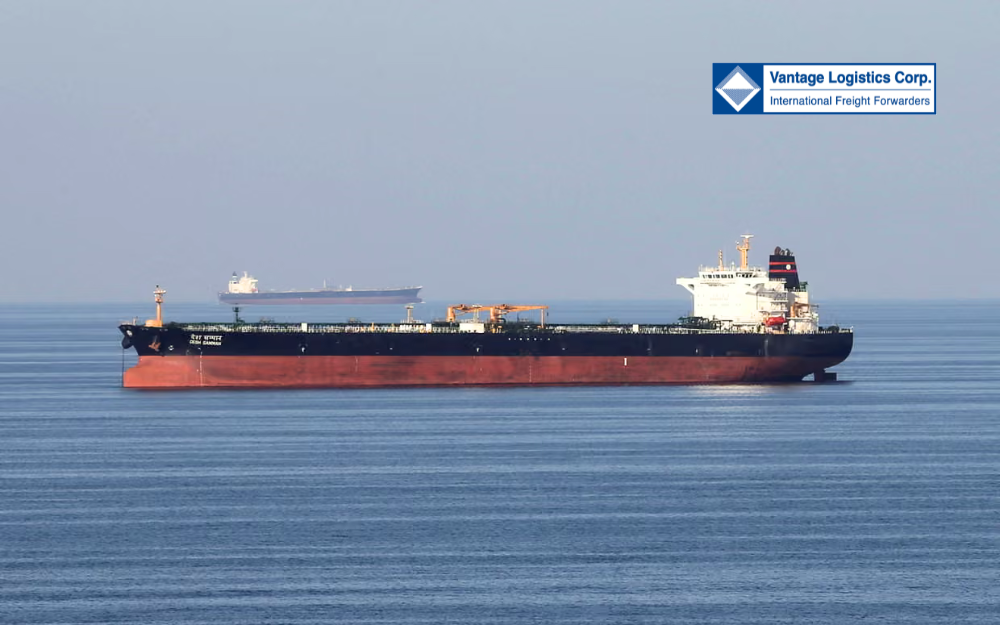
Tensions in the Strait of Hormuz are not only driving up oil prices and global freight rates but also placing Viet Nam-linked vessels directly within a high-risk zone. According to the Viet Nam Maritime and Waterway Administration (VIMAWA), there are currently 19 vessels owned by Vietnamese enterprises operating in the Middle East, including 4 flying the Vietnamese flag and 15 under foreign flags. This highlights that Viet Nam’s maritime interests are now positioned at the centre of the disruption, making logistics risk management an immediate priority for businesses.   19 Viet Nam-linked vessels operating in the Hormuz region According to reports submitted to the Ministry of Construction and relevant authorities, VIMAWA stated:  There are 19 vessels owned by Vietnamese enterprises operating in the Middle East and requiring transit through the Strait of Hormuz. Of these: 4 vessels fly the Vietnamese flag 15 vessels are foreign-flagged but owned by Vietnamese companies Some vessels continue normal operations, while others are required to remain at anchor to assess the security situation and wait for more favourable conditions before requesting passage through Hormuz.   Distinction between Vietnamese-flagged and foreign-flagged vessels VIMAWA and relevant authorities have defined three levels of priority in proposals submitted to Iran: 1. Highest priority: Vietnamese-flagged vessels Owned by Vietnamese enterprises Carrying cargo between Viet Nam and the Middle East   2. Second priority: Foreign-flagged vessels Owned by Vietnamese enterprises Crewed by Vietnamese seafarers   3. Third priority: Foreign-flagged vessels Owned by Vietnamese enterprises Operating international routes outside Viet Nam’s direct trade flows Crewed by foreign seafarers   This prioritisation reflects three key realities: Viet Nam aims to protect routes directly linked to strategic trade flows, including energy and import-export cargo. Although many vessels operate under foreign flags to optimise cost and regulatory conditions, in times of crisis, shipowners still rely on government-level diplomatic support. A clear priority framework supports negotiations with insurers, as war-risk coverage often requires official confirmation from Iran regarding safe passage eligibility.   Operational risks: rising costs and disrupted schedules   The Hormuz crisis introduces three primary categories of operational risk: Extended anchorage and increased operating costs Some vessels must remain in the Gulf awaiting clearer security signals, leading to additional costs such as fuel, crew wages, anchorage fees, and lost voyage opportunities. Security and insurance risks Exposure to inspection, detention, or potential attacks if conditions deteriorate further. Rising war-risk premiums and high-risk area surcharges significantly increase operating costs. Spillover impact on Viet Nam’s supply chain: Disruptions to oil tankers, gas carriers, and bulk vessels from the Middle East Increased pressure on energy supply and industrial input materials Higher logistics costs and potential delivery delays   Viet Nam’s diplomatic response to safeguard maritime operations   In response, VIMAWA has proposed: Coordination between the Ministry of Construction and the Ministry of Foreign Affairs to engage with Iran and relevant parties to: Request priority and safe passage for Vietnamese-flagged vessels and Viet Nam-owned vessels, including those under foreign flags Obtain official assurances on the safety of vessels and crews, enabling companies to secure or maintain war-risk insurance Consideration of reduced maritime-related fees in affected areas, aligned with domestic frameworks, to ease pressure on Vietnamese shipowners   At the same time, Viet Nam’s maritime authorities are: Closely monitoring regional developments and updating guidance in line with IMO recommendations Instructing the Viet Nam Maritime Search and Rescue Coordination Centre (VMRCC) to maintain 24/7 operations and connectivity with shipowners and crewing agencies   Implications of the Hormuz crisis for Vietnamese import-export businesses   Based on the presence of Viet Nam-linked vessels in the Middle East, the impact extends beyond the maritime sector and directly affects trade operations. The figure of “19 vessels” is not merely statistical – it signals three practical implications for businesses:   Risk is now embedded, not external Vietnamese vessels and crews are operating within the risk zone, meaning any disruption in Hormuz can translate directly into cost increases and delays across the supply chain, from fuel prices to freight and insurance   Risk cost must be factored into logistics decisions When calculating FOB/CIF pricing, delivery timelines, or route selection, businesses must consider additional factors such as risk surcharges, anchorage delays, and alternative routing via the Cape of Good Hope   The role of logistics partners is evolving Logistics providers must go beyond pricing to deliver: Route-specific risk updates (Hormuz, Red Sea) Alternative routing and modal scenarios Advisory on insurance, lead time, and appropriate safety stock levels   Vantage Logistics is closely monitoring developments in the Middle East and key routes transiting Hormuz. Contact our experts today for tailored route analysis and proactive risk management solutions....

01/04/2026

View More
vlc-news-us-warehouse

Vantage News

Strategic US Warehousing & Fulfillment: Beyond International Shipping

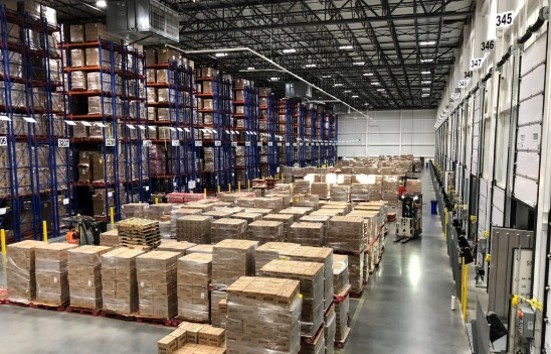
Succeeding in the U.S. market demands more than just cross-border shipping; it requires a robust domestic footprint. To remain competitive, businesses selling to American customers must prioritize fast delivery, reliable fulfillment, and consistent inventory availability across a vast and geographically diverse landscape. Vantage Logistics provides comprehensive US warehousing and fulfillment services, seamlessly connecting sea freight from Viet Nam with a strategic distribution network across America’s key logistics hubs. By positioning inventory close to major population centers and transport corridors, we empower exporters to shorten lead times and significantly reduce domestic distribution costs. With a fully coordinated framework, Vantage Logistics manages the entire supply chain – from factory pickup in Viet Nam and international ocean transport to US warehousing and final-mile delivery to customers nationwide.   Strategic Warehouse Network Across Key US Logistics Hubs To ensure efficient nationwide coverage, Vantage Logistics coordinates operations across six major logistics regions. These facilities allow businesses to strategically distribute inventory to improve delivery performance and customer satisfaction.   1. California – The West Coast Gateway California serves as the primary entry point for Trans-Pacific cargo arriving from Asia. Vantage Logistics operates extensive infrastructure across Southern California’s core logistics centers, including: Commerce & Chino Fontana & Ontario These locations provide direct access to the Ports of Los Angeles and Long Beach, the busiest container gateways in North America, supporting rapid distribution throughout the Western United States.   Vantage Logistics Warehouse in Fontana, California   2. New Jersey – The Northeast Consumer Hub Our facility in Pennsauken, New Jersey, supports distribution to high-density consumer markets along the East Coast. This strategic location provides efficient access to: New York & Philadelphia Boston & Washington, D.C. By positioning inventory here, exporters can serve the Northeast and Mid-Atlantic regions with industry-leading delivery speeds.   3. Georgia – The Southeast Distribution Center Located in Savannah and Atlanta, our facilities connect directly with one of the fastest-growing container ports in the United States. They serve as a vital hub for the Southeastern market, including: Atlanta & Florida The Carolinas & Tennessee Savannah’s infrastructure enables seamless movement between port operations, storage, and domestic inland transportation.   4. Texas – The Central and Gulf Coast Hub The Houston, Texas warehouse provides strategic access to the Central United States and the Gulf Coast. As one of North America’s largest logistics nodes, Houston connects maritime operations with extensive rail and trucking networks, supporting trade across: Texas & the Gulf Coast Central U.S. states and cross-border trade routes   5. Illinois – The Midwest Logistics Heart Located in Chicago, our facility sits at the center of North American inland logistics. This hub is essential for reaching the vast Midwest consumer base, providing a direct link between major rail ramps and domestic trucking corridors.   6. Washington – The Pacific Northwest Gateway Our facility in Seattle serves as a strategic entry point for the Pacific Northwest. Connecting through the Ports of Seattle and Tacoma, this location ensures efficient distribution to the Northern United States and Western Canada.   Accelerating Delivery Across the United States Storing inventory within the US significantly enhances logistics efficiency. Instead of fulfilling individual orders from overseas, exporters can ship bulk inventory via ocean freight and distribute domestically through our network. Key Benefits for Vantage Logistics Partners: 3–5 day delivery coverage across most US regions Reduced reliance on expensive air freight shipments Faster fulfillment for e-commerce and retail customers. Enhanced stock availability to meet real-time market demand   End-to-End Fulfillment Services for E-commerce and Retail Our coordinated operations are designed to handle high order volumes with surgical precision. Core services include:   Inventory Storage: Flexible short-term and long-term options for palletized cargo or individual SKUs. Pick and Pack Fulfillment: Structured procedures ensuring every order is packed accurately and professionally. Value-Added Services (VAS): Product labeling, kitting, re-packaging, and SKU management tailored to specific retailer requirements. Nationwide Distribution: Integrated shipping via major carriers and LTL (Less-Than-Truckload) services for larger retail and wholesale shipments.   Real-Time Visibility with Advanced OMS Integration Efficiency is driven by our Order Management System (OMS), providing 24/7 visibility into inventory levels and order status. Our system synchronizes physical warehouse operations with major sales channels: Marketplace Platforms: Amazon, Walmart, Wayfair, eBay. E-commerce Platforms: Shopify, WooCommerce, Magento API Connectivity: Seamless data exchange with your internal ERP or order management software.   Supporting Vietnamese Exporters Entering the US Market Expanding into the United States presents immense growth opportunities, but success hinges on a reliable infrastructure. Vantage Logistics supports Vietnamese exporters through a single, integrated Viet Nam–US logistics framework. With more than 24 years of experience, we bridge the gap between manufacturing origins in Viet Nam and complex distribution networks in the United States. We simplify your supply chain, allowing you to focus on growth while we handle the complexities of international freight, customs, and domestic fulfillment.   Contact Vantage Logistics today to discuss your US warehousing and fulfillment strategy and build a nationwide distribution network for your products....

31/03/2026

View More
1 … 18 19 20 21 22 … 43