VANTAGE NEWS

vlc-news-cross-border-logistics-10102026

Vantage News

VANTAGE LOGISTICS – INTEGRATED CROSS-BORDER TRANSPORT SOLUTIONS IN THE MEKONG REGION

Connecting supply chains across Viet Nam, Cambodia, Laos, and Thailand through synchronized maritime-road corridors and cross-border transit customs. In manufacturing and international trade, moving raw materials, components, and finished goods across Mekong countries requires a balance between delivery speed and logistics costs. Compared to sea freight, cross-border trucking reduces transit times significantly. However, the most critical operational challenges involve transit customs procedures and differing axle-load regulations across jurisdictions. A minor documentation discrepancy at the border or an axle-load calculation error can cause border congestion and incur substantial truck demurrage fees. Vantage Logistics delivers integrated Cross-Border Logistics solutions, combining multimodal connectivity, strict regulatory compliance, and localized operational management: 1. Flexible Transport Configurations Tailored to project budgets, delivery schedules, and vehicle circulation regulations across each market, Vantage Logistics deploys adaptable transport options: Border Transshipment (Back-to-Back Trucking): Coordinating cargo transfers or prime mover swaps at key border checkpoints (such as Moc Bai / Bavet and Lao Bao / Dansavanh) to optimize operating costs when vehicles are restricted from operating deep into the destination country Direct Cross-Border Trucking: Providing vehicles with valid international road transport permits and logbooks, ensuring seamless door-to-door delivery from dispatch facility to consignee warehouse Cross-Border Axle-Load Compliance: Calculating and distributing cargo weight in strict accordance with national regulations across Viet Nam, Cambodia, and Laos, preventing fines or forced offloading at border weigh stations Bonded Trucking: Managing cargo transit under customs supervision with intact customs seals from seaports to export border checkpoints or designated bonded facilities 24/7 GPS Tracking: Delivering real-time vehicle positioning to monitor route progress, milestone checkpoints, and actual on-site delivery 2. Transit Customs Clearance & GMS Framework Expertise Synchronizing documentation workflows to maintain uninterrupted cross-border cargo flow: Multilateral Transport Frameworks (GMS & Bilateral Agreements): Assisting clients in completing applications for cross-border transport permits and logbooks under the Greater Mekong Subregion (GMS) Cross-Border Transport Agreement and bilateral road transport pacts between Viet Nam, Cambodia, and Laos Pre-Arrival Document Synchronization: Closely coordinating between documentation teams in Viet Nam and our Phnom Penh branch office / localized partner networks to cross-check transit declarations and commercial invoices before vehicles arrive at the border, minimizing wait times at border checkpoints Transit Customs Clearance via Viet Nam: Managing customs transit declarations for international shipments moving through Viet Nam’s major seaports (Cat Lai, Cai Mep, Hai Phong, Da Nang) to Cambodia, Laos, and vice versa Quarantine & Tariff Consultation: Representing cargo owners in specialized inspections (phytosanitary and veterinary quarantine) at international border gates; advising on HS code classification and verifying the validity of Certificate of Origin (C/O Form D) under the ATIGA framework to ensure applicable tariff preferences Proof of Delivery (POD) Management: Collecting, reviewing, and delivering official POD documents endorsed by customs authorities at both borders for tax finalization, while providing advisory support on local road tolls and regional fiscal requirements 3. Multimodal Transport Connectivity Beyond road transport, Vantage Logistics bridges cross-border corridors with international ocean freight loops to expand regional reach: Regional Export Gateway Support: Facilitating overland cargo movement from Cambodia and Laos to Viet Nam’s major seaport hubs, connecting regional exports with mainline ocean carriers bound for global destinations Project Cargo & Heavy Machinery Coordination: Mobilizing specialized equipment in coordination with our in-house Project Logistics technical team for oversized/overweight machinery, industrial plant equipment, and temporary import/re-export shipments 4. Commercial Value for Businesses Transit Time Optimization: Reducing transit time on key corridors – such as Viet Nam to Cambodia within 1–2 days (compared to 5–8 days by sea) – securing continuous raw material flow for manufacturing lines Cost Efficiency: Delivering substantial cost savings compared to air freight while meeting rapid delivery requirements across diverse cargo categories Direct Localized Presence: Backed by 5 branch offices in Viet Nam (Ho Chi Minh City, Ha Noi, Hai Phong, Da Nang, Qui Nhon) and an established branch office in Phnom Penh, Cambodia, Vantage Logistics ensures rapid problem resolution and on-site support without reliance on third-party intermediaries Looking for an optimal transport solution between Viet Nam, Cambodia, Laos, and Thailand? Contact Vantage Logistics for routing advice and tailored quotations.   Contact Vantage Logistics for tailored transport solutions and competitive quotations. Please provide details on cargo type, market, origin, destination, and estimated timeline. Vantage Logistics Corp – South East Asia (S.E.A) Logistics Provider One-Stop Shop For Integrated Logistics Services Head Office Viet Nam – Suite 6.01, Floor 6th, Block A, RiverGate Residence, 151-155 Ben Van Don, Khanh Hoi Ward, HCMC, Viet Nam Branch Thailand, Laos, Cambodia, Malaysia, Indonesia, Singapore Contact Us Email in**@*****om.vn Hotline +84-909-026-261 Website https://vantage-logistics.com Send your shipment enquiry today and receive a tailored transport plan from the Vantage Logistics team.

10/10/2026

View More
vlc-news-integrated-cold-chain-solution-3102026 (1)

Vantage News

VANTAGE LOGISTICS – INTEGRATED COLD CHAIN SOLUTIONS FOR PERISHABLE & AGRICULTURAL EXPORTS

From reefer container preparation and transport coordination to in-transit temperature monitoring and incident management. For temperature-sensitive cargo, product quality depends not only on post-harvest storage but also on uninterrupted preservation throughout transit. Selecting suitable equipment, planning precise transit schedules, and continuously monitoring container integrity are critical to maintaining the specific shelf-life requirements of each shipment. Vantage Logistics delivers integrated cold chain solutions, combining technical equipment control, peak-season space allocation, and end-to-end operational monitoring from the packing facility to the destination port. Cold Chain Logistics Capabilities for Perishable & Agricultural Exports 1/ Cold Chain Engineering & Pre-Trip Preparation Transport plans are structured around the biological and technical characteristics of each cargo type: Technical Parameter Verification: Reviewing and cross-referencing set-point temperature, ventilation, and humidity levels against cargo handbooks for specific agricultural produce (dragon fruit, fresh coconut, banana, mango) and frozen seafood Pre-Cooling & Core Temperature Verification: Advising on warehouse pre-cooling protocols and measuring core product temperatures with specialized probes prior to stuffing Pre-Trip Inspection (PTI): Thoroughly checking refrigeration machinery, container structural integrity, and data logger functionality before releasing equipment for loading 2/ Space Allocation & Peak-Season Equipment Management Vantage Logistics proactively secures equipment and vessel allocation to mitigate peak-season rollover risks: Reefer Space & Plug-in Allocation: Securing firm space commitments and dedicated reefer plug-in capacity with international ocean carriers during peak harvest seasons Specialized Reefer Equipment: Supplying standard reefer containers as well as Controlled Atmosphere (CA) units for long-haul maritime routes to Europe and North America Demurrage & Detention (DEM/DET) Free-Time Negotiation: Assisting in securing tailored free-time at destination ports, providing a safe operational buffer for phytosanitary inspection and customs clearance 3/ Stuffing Supervision & Inland Transportation On-site procedures are strictly monitored to ensure cold chain continuity: Warehouse Stuffing Supervision: Ensuring cargo is stowed below the maximum load line and keeping floor air channels (T-floor) clear to optimize airflow, supported by detailed stuffing reports with photographic evidence GenSet-Equipped Reefer Trucking: Dispatching dedicated prime movers equipped with generator sets (GenSets) to maintain continuous power supply from the packhouse to the port terminal Phytosanitary & Customs Clearance: Expediting phytosanitary inspection, fumigation, and export customs clearance to minimize dwell time at terminal gates 4/ In-Transit Monitoring & Incident Management Proactively monitoring container status throughout the shipment lifecycle: Remote Container Monitoring (RCM): Continuously tracking reefer operating status, set-point consistency, and temperature fluctuations across the ocean transit Terminal Plug-in Oversight: Coordinating with terminal operators to verify continuous reefer plug-in at loading and transshipment ports, enabling early detection of power interruptions Rapid Incident Response: Initiating contingency protocols within 2–4 hours upon temperature deviation alerts, coordinating with carrier technical teams for on-site inspection Data Logger Retrieval & Reporting: Extracting and delivering complete temperature log charts upon vessel arrival to verify product quality or support insurance documentation 5/ Value for Importers and Exporters Preserved Shelf-Life: Selecting optimal service loops with the shortest transit times to preserve freshness upon arrival in international markets. Reduced Cargo Loss: Maintaining core temperature and unobstructed airflow to minimize cargo deterioration and commercial claims. Cost Predictability: Clear cost breakdowns covering ocean freight, PTI charges, electricity plug-in fees, and quarantine inspection, helping eliminate unexpected demurrage/detention costs. Single Point of Contact: Streamlining communication through one centralized team managing everything from empty container release and reefer trucking to customs clearance and ocean delivery. Connecting Vietnamese Agriculture to Global Markets – Vantage Logistics delivers cold chain solutions engineered to the biological characteristics and technical requirements of each shipment, partnering with exporters to bring fresh agricultural and seafood products to international tables. Planning your upcoming agricultural or seafood export season? Contact Vantage Logistics today to discuss optimal shipping schedules and secure dedicated reefer space.   Contact Vantage Logistics for tailored transport solutions and competitive quotations. Please provide details on cargo type, market, origin, destination, and estimated timeline. Vantage Logistics Corp – South East Asia (S.E.A) Logistics Provider One-Stop Shop For Integrated Logistics Services Head Office Viet Nam – Suite 6.01, Floor 6th, Block A, RiverGate Residence, 151-155 Ben Van Don, Khanh Hoi Ward, HCMC, Viet Nam Branch Thailand, Laos, Cambodia, Malaysia, Indonesia, Singapore Contact Us Email in**@*****om.vn Hotline +84-909-026-261 Website Send your shipment enquiry today and receive a tailored transport plan from the Vantage Logistics team.

03/10/2026

View More
97PACKS_vlc-news-gel-ol-vn-automobile-factory

Vantage News

VANTAGE LOGISTICS – INTEGRATED LOGISTICS SOLUTIONS FOR PROJECT & OVERSIZED CARGO

From route surveys and engineering design to multimodal coordination and on-site delivery. In industrial and infrastructure developments, moving oversized and heavy-lift machinery demands high precision in both safety and scheduling. Transport disruptions or delivery delays directly impact installation timelines and increase overall project costs. Vantage Logistics delivers end-to-end Project Logistics solutions, coordinating operations from initial dispatch through to final placement at the job site. Project Logistics Capabilities for Oversized and Heavy-Lift Cargo 1/ Route Surveys & Technical Engineering Prior to dispatch, our technical team evaluates and prepares all practical field requirements: Field Route Surveys: Assessing bridge capacities, overhead clearances (overpasses, power cables), and turning radii along entire transport corridors to establish the most viable routing. Detailed Method Statements: Developing axle load distribution schemes, lifting procedures, and customized cargo securing plans (Lashing Plans) based on the exact dimensions, weight, and characteristics of each unit. Budget Planning: Establishing clear cost projections for the entire operation, including provisions for potential on-site, en-route, or port-handling contingencies. 2/ Specialized Fleet & Multimodal Transport Equipment configurations are selected based on weight, dimensions, and infrastructure constraints: Hydraulic Modular Trailers: 26-axle and 44-axle modular trailers with technical capacities of up to 1,304 tons, engineered to distribute axle loads across roads and structures with load restrictions. Heavy Tractors: High-capacity prime movers rated up to 540 HP, delivering reliable traction and braking across steep gradients and demanding terrain. Low-Bed Extendable Trailers: Dedicated trailers designed for over-length structural steel and specialized industrial equipment. Inland Waterway & Vessel Chartering: Combining domestic deck barges with breakbulk vessel chartering (Voyage / Part Charter) for large-scale industrial machinery and cross-regional shipments. 3/ Project Management, Regulatory Compliance & Site Safety Coordinating regulatory procedures and technical safety protocols alongside transport operations: Special Transport Permits: Securing special circulation permits for oversized and overweight vehicles, alongside coordinated route-wide traffic management. Project Customs Clearance: Completing customs declarations for synchronized machinery sets and managing temporary import/re-export procedures for project equipment in accordance with regulations. Third-Party Surveyor Coordination (MWS): Collaborating with independent marine warranty surveyors to inspect cargo conditions, verify lashing integrity, and sign off on transport worthiness before departure. HSE Management: Maintaining strict health, safety, and environmental standards from initial port handling through to final positioning on foundation. 4/ Value for Project Owners and EPC Contractors Synchronized Delivery Schedules: Aligning logistics milestones with on-site installation schedules to eliminate idle time and project delays. Engineered Technical Precision: Calculating lifting parameters, weight distribution, and cargo securing specifically for each equipment profile. Single Point of Contact: Managing ocean carriers, terminal operators, crane specialists, hauliers, and surveyors through one centralized logistics coordinator. Transparent Cost Structures: Providing clear budget planning and combining multimodal transport options to optimize total logistics expenditure. Partnering with Industrial & Infrastructure Projects Across Viet Nam and Southeast Asia – Vantage Logistics delivers project cargo solutions engineered to real-world technical requirements and project milestones.   Contact Vantage Logistics for tailored transport solutions and competitive quotations. Please provide details on cargo type, market, origin, destination, and estimated timeline. Vantage Logistics Corp – South East Asia (S.E.A) Logistics Provider One-Stop Shop For Integrated Logistics Services Head Office Viet Nam – Suite 6.01, Floor 6th, Block A, RiverGate Residence, 151-155 Ben Van Don, Khanh Hoi Ward, HCMC, Viet Nam Branch Thailand, Laos, Cambodia, Malaysia, Indonesia, Singapore Contact Us Email in**@*****om.vn Hotline +84-909-026-261 Website https://vantage-logistics.com Send your shipment enquiry today and receive a tailored transport plan from the Vantage Logistics team.

26/09/2026

View More

Vantage News

General Department of Vietnam Customs issued a new Official Letter regulating the inspection and correcting the declaration of Emanifest information.

New Official Letter regulating the declaration of Emanifest information. By the end of November 2018, the General Department of Vietnam Customs issued Official Letter No.6889/TCHQ-GSQL regulating the declaration of information on means of transport and import and export goods on the E-manifest system, in order to ensure management of import and export activities, especially in the use of imported scrap as raw materials for production. According to Official Letter No.6889, the declaration of E-manifest is specified as follows: 1. Declare the information of the Consignee (the importer) in the order: Tax code#Business name#Address In cases where the imported goods is scrap, the customs declarers shall have to declare the number of Environmental Protection Certificate in the import of discarded materials as raw materials for production (referred to as Environmental Protection Certificates for short), and the Deposit Certificate number, the mandatory order is as follows: Tax code#Environmental Protection Certificate Number#Deposit Certificate Number#Business Name #Address. ***Note: If the  “Consignee” is declared as “To order” or “To order of …”, full details of the “Notify Party” (in assumption as real consignee) must be detailed under instruction similar to the “Consignee” criterion.  2. HS code declaration: The HS code must be declared separately in the “HS code” criterion of the declaration of goods and the bill of lading (BL) instead of declaring together with the goods name and description information in the “Description of goods” criterion. Particularly for the imported goods is scrap, HS codes are required to be declared and corresponding to the names of discarded materials as guided in the Appendix issued together with Official Letter No.6889. 3. Goods names and descriptions: must be declared briefly and in the following order: Commodity Description#Commodity Description. Of which: – The name of the goods declared on the Emanifest system must use the name of the goods under the corresponding HS list. – Description of the goods does not declare the  unnecessary and not related content to the information of the goods. The brief description of the goods includes the nature of the goods, packing specifications, number of packages, weight, etc. For example: scrap paper#20 BAG(S) 4. Declaration of port code and port name: – The General declaration requires a specific description of the port code and port name. For example: + Port of discharge: VNCMT – VUNG TAU CMIT. + Port of Destination: VNCLI – HCMC CATLAI. + Port of Loading: NLRTM – ROTTERDAM. + Port of Orginal Loading: NLRTM – ROTTERDAM. – On Goods declaration and BL: information such as port of delivery/port of destination, port of loading, port of original loading, port of discharge are mandatory criteria. If the shipment is in transit, in addition to the above compulsory criteria, additional Port of transhipment/transit criteria are required. The port code is declared unified, corresponding to the specific port name which was published on the Vietnam National Single Window and on the website of the General Department of Vietnam Customs. Official Letter No. 6889 took effect from the date of signing for cases of export or import goods is discarded materials; for cases of export or import goods which is not scrap, the period of application will start on January 1st 2019. *** If you have any concern related to Emanifest declaration, don’t hesitate to contact us for more advise: Ms.Cindy (Thúy) / Email: ...

18/12/2018

View More

Vantage News

Vantage Logistics is Ready to Assist our Clients on Self-issuing Certificate of Origin

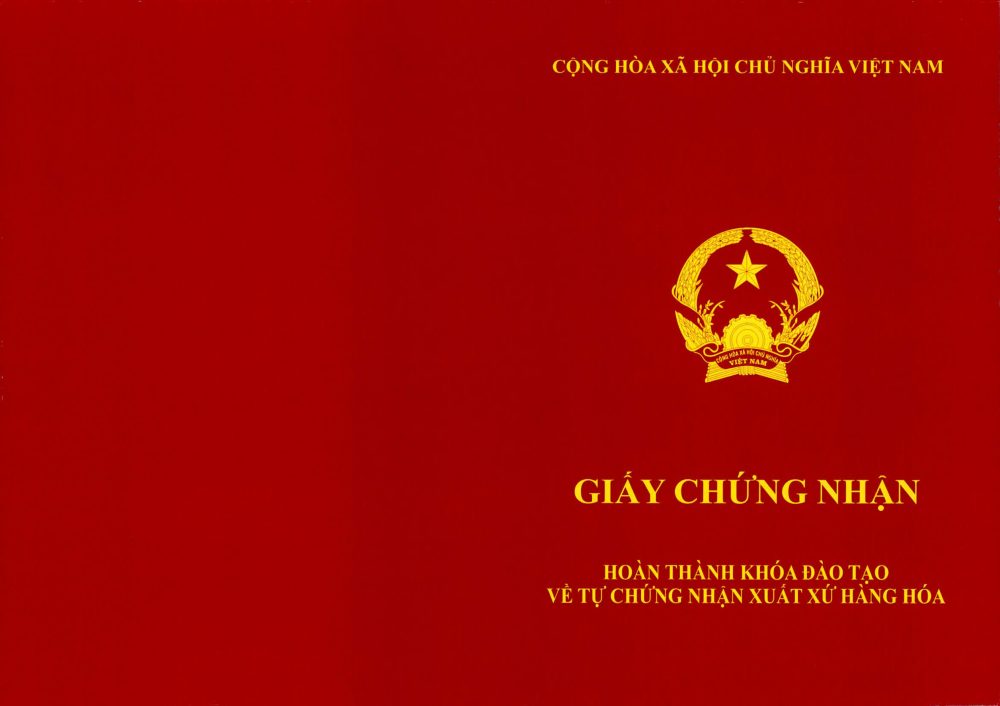
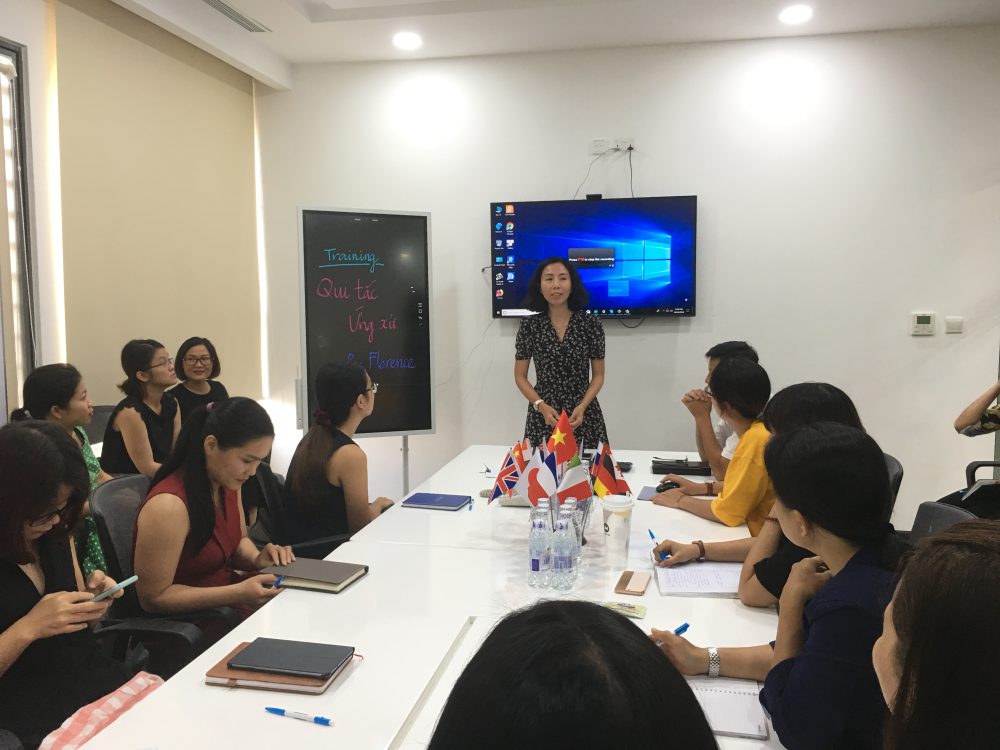
Self-issue Certificate of Origin (self-issue C/O) has become a new trend in the process of international economic integration of Vietnam. Self-issue C/O is no longer unfamiliar for developed economies, but it is still in the pilot stage for developing economies like Vietnam and some ASEAN members before being applied as a formal mechanism, which will be used paralelly with current popular C/O issuing mechanism.  The outstanding advantage of self-issue C/O is the proactiveness: the proactiveness in term of time, cost and human resources in the process of completing documents for export/import.  According this new mechanism, instead of applying for C/O to agencies authorized by the Ministry of Industry and Trade (MoIT),  Vietnam enterprise now can self-issue certificates of origin for their own goods. This improvement can increase enterprise’s reputation to foreign business partners as well as saving time, cost, human resources, etc, therefore increasing the competitiveness of products which will be exported to markets where Vietnam/ASEAN already had FTA. In order to implement this mechanism, Vietnam enterprises need to be fully equipped with knowledge about the FTAs, export-import activities, especially the rules of origin and HS code which are applied to each export product, so that the determination of the origin of goods can be most accurate, avoiding negative effects on granting of preferential tariffs in countries importing goods from Vietnam.  We are ready to assist our clients on self-issuing C/O With the mission of providing the best service quality and supportiveness to our clients, Vantage’s staffs constantly improve our professional skill, especially knowledge in export-import field as well as updates on law and regulations of Vietnam Government.  Our staffs had completed the training course on self-issuing C/O under ATIGA which held by the  Ho Chi Minh City International Integration Support Center (CIIS). This is a marvelous training course in providing: in-depth knowledges related to rules of origin of goods and its importance in FTAs, specific regulations and guidelines on procedures for self-issue C/O form D under ATIGA which are stipulated in Circular 28/2015/TT-BCT dated 28/08/2015 and Circular 27/2017/TT-BCT dated 06/12/2017 by MoIT; information about self-issue C/O mechanism  for beneficiary countries within the framework of the Generalized System of Preferences (GSP); typical examples and comparisons about the rules of origin of some FTAs, as well as practices and guidelines on applying the rules of origin under ATIGA to enjoy tariff preferences. If you have any concern about self-issue C/O in Vietnam or need more related advices, please contact our Customs Broker Expert: Ms.Theresa/Email: ...

15/11/2018

View More

Vantage News

Vantage Logistics Corporation Achieves ISO 9001:2015 Certification

Vantage Logistics is proud to announce that we are now ISO 9001:2015 certified. To become ISO 9001:2015 certified, Vantage Logistics underwent an evaluation process that included: quality management system development, a management system documentation review, pre-audit, initial assessment, and clearance of non-conformances, all of which work to identify corrective actions that eliminate non-conformance to the quality management standard. Vantage Logistics’ decision to become ISO 9001:2015 certified is a proactive one that not only anticipates the demands of our customers, but also demonstrates a commitment to providing quality products and services to all current and future customers. To maintain our certification, Vantage Logistics will perform audits to ensure compliance and to assess initiatives for continued improvement. This certification further strengthens our commitment to our customers and our Company Quality Policy: every customer is served as our unique customer. Our job at Vantage Logistics is To provide quality, timely and safe logistics service, Law compliance, To maintain and improve our Quality Management System of ISO 9001:2015, To train and ensure all employees understand and follow this quality policy.  We accomplish this by investing in and developing our employees’ abilities, by focusing on providing our customers premier and uniquely professional services and by continually improving our quality management systems. We would also like to take this opportunity to extend our sincere thanks to our customers and suppliers for their continued commitment and loyalty. Vantage Logistics will always strive to exceed their high expectations. With our goals focused on the emphasis of quality assurance and innovative production, we look forward to bringing the business to new heights in the months and years to come....

20/07/2018

View More

Vantage News

Preparing For The SOLAS Container Weight Verification Requirement

With effective from July 1st, 2016, the International Maritime Organization (IMO) will enforce globally the Safety of Life at Sea (SOLAS) Convention requirements regarding the verification of the gross weight of packed containers. Vessel carriers will not load containers without having a VGM. As Shippers, you will be responsible for the verification of the packed container’s weight and run the risk of missing an intended sailing if the Verified Gross Mass (VGM) documentation compliance is ignored. We will provide every Shipper with a VGM document to fill out and return to us by a specified date. We will then submit to the vessel and terminal operators the exact VGM that is provided to us by the Shipper. Any variance or discrepancy in the VGM will be the responsibility of the Shipper and Vantage Logistics will not be held liable for any fines assessed due to this discrepancy. What are the Shipper’s responsibilities? The Shipper (that is the party listed on the Bill of Lading or sea waybill) is RESPONSIBLE for providing the VGM document to us BEFORE vessel loading date. The VGM document will include container number, tare weight of container (this is stenciled on every container!), and total weight of all cargo loaded – including any dunnage (securing) materials (such as skids, bracing, etc). The weight amounts are to be totaled as the Gross Container Weight. The VGM document must be signed by the Shipper The scale used for weighing your cargo has to be calibrated / certified in accordance with local/national rules (and must be verifiable by you if weight is brought into question by carrier). How is Verified Gross Mass (VGM) calculated? There are two permissible methods prescribed by IMO that Shippers may use to determine the container weight of a packed container; Method 1: Weighing the entire container after it has been packed using calibrated and certified weighing equipment. If a weighbridge is used, you must subtract the weight of the truck, chassis and fuel to get the weight of the packed container. Method 2: Weighing all the contents of the container (including pallets, packing material, etc.) and adding it to the container tare weight that is written on the door of the container. Cargo must be weighed using calibrated and certified weighing equipment. No estimates are allowed in either method. Will the port accept containers without the VGM? Origin ports in Viet Nam: there is no clear instruction from Viet Nam Ministry of Transportation yet. International ports: most of them will not accept. What about less than container load (LCL) shipments and containers that are not loaded by the Shipper? A VGM submission is required for all ocean shipments. The responsibility for providing the carrier the VGM for the container remains with the Shipper. However, if consolidator do the LCL consolidation, they will weigh the cargo and provide the VGM to the vessel operator. Reference:  WSC IMO Requirement for Container Weight Verification WSC Guidelines for Implementing SOLAS Container Weight Verification Requirement Contact us for more information: ...

10/06/2016

View More
1 … 13 14 15 16 17