MARKET UPDATES

vlc-news-philippines-cancels-rice-import-permit-15102026

Market updates

Philippines Cancels Permit for Controversial 12,480-Metric-Ton Rice Shipment from Viet Nam

The Philippine Department of Agriculture (DA) said it had ordered the cancellation of the Sanitary and Phytosanitary Import Clearance (SPSIC) for a 12,480-metric-ton rice shipment from Viet Nam before the vessel arrived. The case involves reported discrepancies in rice specifications and an expired import contract, highlighting the risks that can arise when shipping schedules do not align with import requirements in the destination market. 1. Developments at the Port of Arrival According to the Philippine Department of Agriculture (DA) and the Philippine News Agency (PNA), the vessel MV Tay Son 2, carrying 12,480 metric tons of rice from Viet Nam, arrived at the Port of Davao on September 14, 2026. According to these sources, the vessel’s captain refused to submit the shipment for inspection by the Philippine Bureau of Plant Industry (BPI). On September 17, 2026, the vessel departed Davao before the matter had been resolved. Philippine authorities subsequently prevented the cargo from being unloaded at another location and brought the vessel to the Port of General Santos before ordering it to return to Davao for further handling. 2. Rice Specifications and Import Requirements The case involves two issues: reported discrepancies in rice specifications and the status of the import contract and permit. 2.1. Reported Discrepancy in Rice Specifications The importer, Planters Product, Inc. (PPI), reported a discrepancy between the purchase order and the specifications communicated for the shipment: Specifications under the purchase order: 25% broken rice Reported specifications for the shipment: 5% broken rice In agricultural trade, the percentage of broken grains is an important commercial specification. However, the discrepancy remains based on information reported by the importer and has not been confirmed by an official inspection, as the physical inspection process was not completed. 2.2. Expired Contract and Canceled Import Permit In addition to the rice specifications, the delivery timeline and the status of the import documentation were also highlighted by the DA: Estimated time of arrival (ETA): July 2026 Actual arrival: Mid-September 2026 According to the DA, the import contract had expired and the SPSIC had been canceled before the vessel arrived. The vessel’s arrival also coincided with the period when the Philippines was preparing for the wet-season rice harvest. According to published information, import policy during this period was also linked to efforts to limit downward pressure on domestic palay prices. Operational Note: Even when goods meet quality requirements, a shipment may still face customs clearance difficulties if it fails to meet import requirements or if the relevant permit is no longer valid. 3. Proposed Measures for Handling the Shipment According to published information, the Bureau of Customs of the Philippines (BOC) was still considering the final course of action for the shipment. The proposed measures included: Proposed Measure Proposing Authority / Status Return to the Country of Origin The BPI was reported to have recommended returning the shipment to Viet Nam. Seizure and Penalties The DA proposed considering seizure of the shipment and the application of penalties under relevant regulations, subject to the competent authority’s findings and decision. Final Decision The BOC was reviewing the official course of action for the shipment. 4. Conclusion The controversial rice shipment in the Philippines highlights how international trade depends not only on product quality and contractual terms but also on shipping schedules, the validity of import documentation, and regulatory requirements in the destination market. When these elements are no longer aligned, shipments already in transit may face unexpected complications during arrival and customs clearance. Vantage Logistics will continue to provide updates on notable developments in logistics, import-export activities, and international supply chains, offering businesses additional insight into factors that may affect global trade. Contact Vantage Logistics for tailored transport solutions and competitive quotations. Please provide details on cargo type, market, origin, destination, and estimated timeline.   Vantage Logistics Corp – South East Asia (S.E.A) Logistics Provider One-Stop Shop For Integrated Logistics Services Head Office Viet Nam – Suite 6.01, Floor 6th, Block A, RiverGate Residence, 151-155 Ben Van Don, Khanh Hoi Ward, HCMC, Viet Nam Branch Thailand, Laos, Cambodia, Malaysia, Indonesia, Singapore Contact Us Email in**@*****om.vn Hotline +84-909-026-261 Website https://vantage-logistics.com Send your shipment enquiry today and receive a tailored transport plan from the Vantage Logistics team.

15/10/2026

View More
vlc-news-asean-east-asia-trade-15102026

Market updates

ASEAN–East Asia Trade Reaches USD 1.4 Trillion, Up 13.7% in 2025

According to preliminary data from the ASEAN Secretariat, two-way trade between ASEAN and its three East Asian partners (China, Japan, and South Korea) reached USD 1.4 trillion in 2025, representing a 13.7% year-on-year increase. Notably, China–ASEAN trade continued its upward trajectory in the first seven months of 2026, underscoring a sustained expansion in cross-regional trade volumes worth monitoring. 1. Regional Trade Volume and Foreign Direct Investment (ASEAN+3) Trade and investment flows between ASEAN and its three East Asian partners maintain a substantial footprint. In 2025, Foreign Direct Investment (FDI) inflows from China, Japan, and South Korea into ASEAN totaled USD 44.8 billion. Key ASEAN–East Asia Trade & Investment Indicators Indicator Value Growth / Share ASEAN – (China, Japan, South Korea) Trade in 2025 USD 1.4 Trillion Up 13.7% vs 2024 FDI from 3 East Asian Partners into ASEAN in 2025 USD 44.8 Billion Accounted for 18.2% of total ASEAN FDI China – ASEAN Trade (First 7 Months of 2026) USD 744.41 Billion Up 24.7% year-on-year The scale of merchandise trade and investment capital highlights the vital economic linkage between East Asia and Southeast Asia. However, assessing actual freight demand requires a granular evaluation of specific commodity structures, export-import markets, and active transport corridors. 2. Direct Impacts on Transport Networks and Logistics Infrastructure Expanding trade volumes underscore the critical role of regional transport connections. Depending on industry-specific cargo characteristics and delivery requirements, flexible logistics solutions are being actively deployed: Intra-Asia Ocean Freight Connections: For multi-leg shipments, vessel schedule reliability, transit times, and feeder network connectivity are pivotal factors for supply chain managers. Major gateway hubs such as Shanghai, Ningbo, Busan, and Yokohama maintain dense feeder linkages with Southeast Asian ports within ocean carrier networks Integrated Logistics and Multimodal Transport: Depending on lead-time sensitivity, combining ocean freight, Cross-Border Trucking, and inland warehousing offers expanded routing options. Real-world operational efficiency hinges heavily on border crossing clearance times, transit schedules, and the coordination capability of the logistics operator Rules of Origin (C/O) and Customs Compliance: When leveraging Free Trade Agreements such as RCEP, AKFTA, or AJCEP, enterprises must accurately determine rules of origin and prepare compliant documentation to qualify for preferential tariffs. Duty exemption eligibility depends on the specific conditions of each product line and destination market 3. Monitoring Southeast Asian Trade Dynamics and Logistics Connectivity Expanding trade and investment flows reflect an increasingly integrated economic relationship between East Asia and Southeast Asia. This growth in cross-border trade creates momentum for expanding logistics connectivity, helping strengthen supply chain coverage across the region.   Contact Vantage Logistics for tailored transport solutions and competitive quotations. Please provide details on cargo type, market, origin, destination, and estimated timeline. Vantage Logistics Corp – South East Asia (S.E.A) Logistics Provider One-Stop Shop For Integrated Logistics Services Head Office Viet Nam – Suite 6.01, Floor 6th, Block A, RiverGate Residence, 151-155 Ben Van Don, Khanh Hoi Ward, HCMC, Viet Nam Branch Thailand, Laos, Cambodia, Malaysia, Indonesia, Singapore Contact Us Email in**@*****om.vn Hotline +84-909-026-261 Website https://vantage-logistics.com Send your shipment enquiry today and receive a tailored transport plan from the Vantage Logistics team.

15/10/2026

View More

Market updates

SINGAPORE STRENGTHENS PRODUCT SAFETY CONTROLS: WHAT VIETNAMESE EXPORTERS NEED TO KNOW

Singapore is strengthening its product safety controls through two key regulations: the Consumer Protection (Safety Requirements) Regulations (CPSR) and the Consumer Goods (Safety Requirements) Regulations (CGSR). For exporters, these requirements go beyond product compliance. They can also affect delivery schedules, logistics costs, and supply chain reliability. 1. Singapore Strengthens Product Safety Requirements According to information published by Vietnam’s Ministry of Industry and Trade, Singapore applies two main regulatory frameworks for product safety. – CPSR: Covers 33 categories of controlled goods, including electrical and electronic products, household appliances, and gas appliances. Products within scope must meet applicable safety requirements, complete registration, and carry the SAFETY Mark before being supplied or sold in Singapore. – CGSR: Covers general consumer goods such as toys, clothing, furniture, and sports equipment, which must comply with the relevant safety standards. Non-compliant products may be subject to sales restrictions or recalls. Businesses that violate applicable requirements may also face penalties. For exporters, checking compliance requirements before shipment is essential. Addressing documentation or registration issues early can help avoid costly adjustments after cargo has already left the port of origin. 2. Potential Impact on Southeast Asia’s Trade and Logistics Singapore plays an important role in Southeast Asia’s trade and logistics network. Tighter product safety controls may require exporters, importers, and distributors to review their procedures for placing goods on the Singapore market. Several potential risks deserve attention: – Delivery delays: Incomplete documentation or missing certificates may affect cargo acceptance and delivery schedules. – Additional logistics costs: Delays in resolving compliance issues may lead to storage, port handling, or additional transportation costs. – Disrupted distribution plans: Late deliveries can affect inventory planning, distribution schedules, and commitments to business partners. These requirements do not automatically apply across all ASEAN markets. However, they highlight the importance of understanding the specific regulations of each destination country when planning regional trade and distribution. 3. What Should Vietnamese Exporters Prepare? For Vietnamese businesses exporting to Singapore, compliance checks should take place before shipment arrangements are finalized. Exporters should determine whether their products fall under CPSR or CGSR, verify the applicable safety standards and registration requirements, and clarify responsibilities with their Singaporean importers. Documentation preparation should also be factored into the shipping schedule. If an issue is discovered only after cargo arrives at the destination port, businesses may need to manage several challenges simultaneously, including delivery delays, additional costs, and changes to distribution plans. A reliable shipping plan therefore involves more than selecting the right route or sailing schedule. It also requires anticipating potential obstacles before the cargo reaches its destination. 4. Managing Risks Through Early Planning Not every risk in international shipping can be eliminated, but many disruptions can be reduced through early preparation. Reviewing cargo information, documentation, shipping schedules, and destination requirements helps all parties make better-informed decisions. For shipments to Singapore, close coordination among exporters, importers, agents, and logistics providers helps maintain visibility over shipment readiness, address changes, and adjust plans when necessary. At Vantage Logistics, international transportation planning takes into account the practical requirements of each shipment and the coordination needed among relevant parties. This approach helps businesses manage potential disruptions and maintain better control over delivery schedules. As market requirements evolve, careful preparation does more than protect an individual shipment. It also helps businesses maintain reliable supply chains and build lasting partnerships across international markets.

15/10/2026

View More
vlc-news-apec-2027-17092026 (3)

Market updates

GREEN BUILDINGS IN PHU QUOC & THE COMPLIANT IMPORT EQUATION

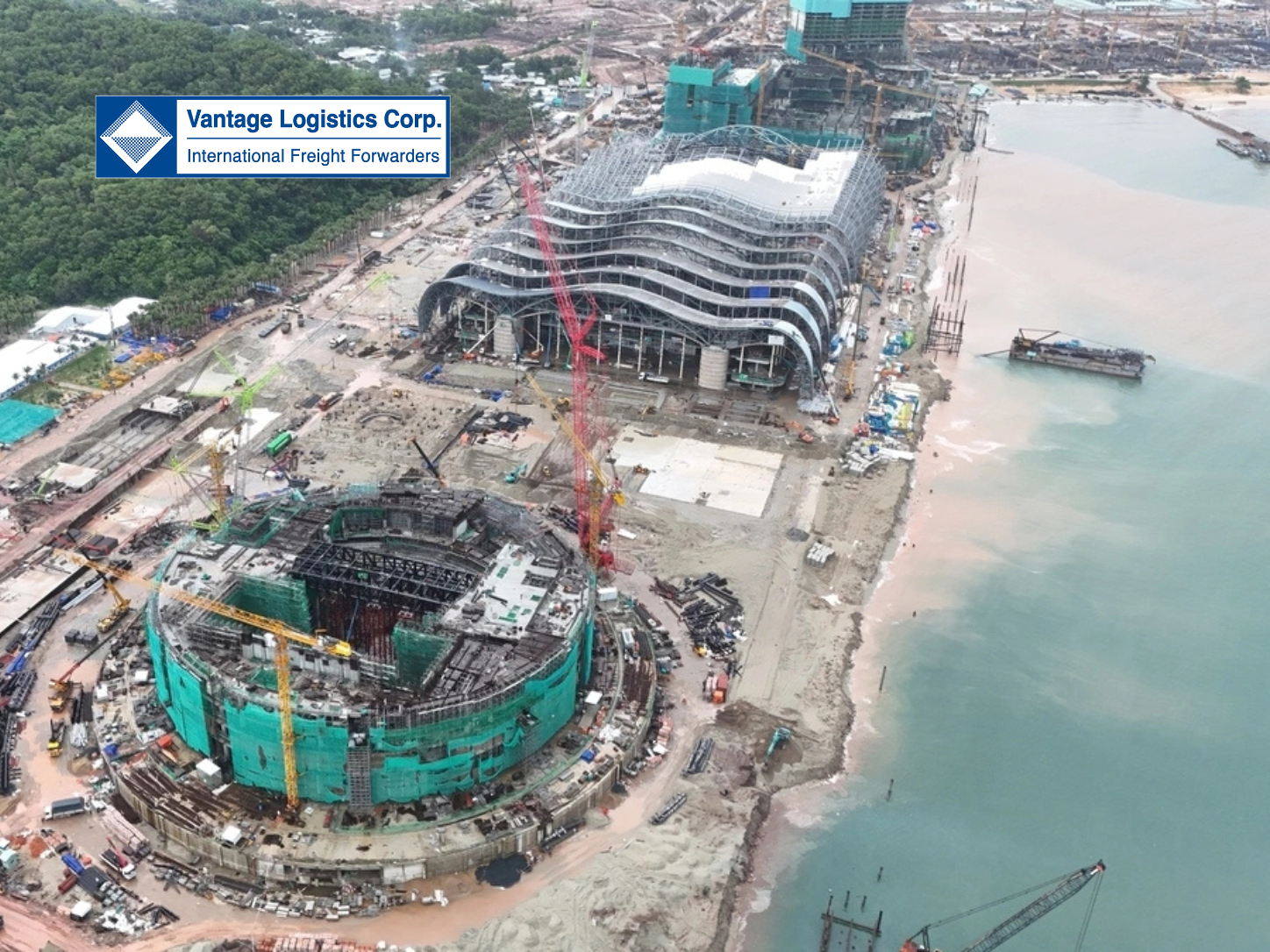
Navigating Tariff Policies and Customs Clearance for Energy-Efficient Materials and Equipment Serving APEC 2027 Infrastructure projects serving the APEC 2027 Summit in Phu Quoc face not only rigorous completion deadlines but also surging demand for energy-efficient equipment and sustainable operational technologies. Across key developments – from the international convention center and airport expansion to premium resort complexes – energy conservation and operational efficiency have become central priorities during project preparation. However, selecting the right equipment is only the initial step. Because the majority of specialized engineering components must be procured internationally, delivering cargo to jobsites on schedule requires developers and contractors to address multiple regulatory and logistical hurdles simultaneously: tariff classification, specialized statutory controls, rules of origin documentation, and island delivery logistics. Aerial view of Phu Quoc City (Image: Internet) From Advanced Technologies to Port Bottlenecks Unlike conventional construction commodities, materials and equipment deployed in sustainable developments encompass a broad and technically complex spectrum: solar panels, power inverters, Battery Energy Storage Systems (BESS), central HVAC systems, dry-type transformers, and high-performance low-E glass. In customs import documentation, commercial designations such as “green equipment” or “energy-saving technology” carry no legal weight in determining Harmonized System (HS) codes. Tariff classification and regulatory policy must be established strictly upon product composition, engineering specifications, operational principles, intended functions, and applicable trade statutes. Without rigorous pre-procurement reviews prior to sales contract execution, importers frequently face significant bottlenecks upon cargo arrival: HS Classification for Multi-Function Equipment: Units integrated with digital controllers or automated power management systems require extensive technical documentation to establish the correct HS code –  the legal baseline determining applicable duties and import policies Technical Standards and Specialized Inspections: Depending on specific line items, equipment may be subject to mandatory energy efficiency testing, energy labeling registration, or quality conformity inspections under ministerial regulations at the time of import Validity of Proof of Origin (C/O): To qualify for preferential tariff rates under relevant Free Trade Agreements (FTAs), importers must align with suppliers on the exact compliant certificate form, ensuring complete consistency across the Certificate of Origin, Commercial Invoice, and Bill of Lading Post-Clearance: Mobilizing Technical Cargo to the Island Once initial border clearance is completed at gateway ports such as Cai Mep or Cat Lai, the subsequent transport leg to Phu Quoc requires synchronized planning: Designated Storage Pending Inspection Results: For shipments requiring technical lab testing prior to final clearance, businesses can coordinate authorized storage protocols – moving cargo to approved project sites or designated facilities in compliance with customs supervision regulations Safety Protocols for Batteries & Storage Systems (BESS): For lithium-ion cells and energy storage modules, technical data including battery chemistry, capacity ratings, packaging configurations, Safety Data Sheets (SDS), and hazardous cargo documentation must be provided early to determine proper declaration, packaging, dangerous goods (DG) booking, and marine stowage requirements Site Receiving and Unloading Schedules: Aligning barge arrival windows with internal island road access and on-site lifting capacity is critical to maintain continuous discharging operations and protect sensitive electronic components from harsh marine environments Vantage Logistics: Bridging Import Compliance and Jobsite Delivery​ From high-capacity MEP (Mechanical, Electrical, and Plumbing) packages to standalone specialized units, the core requirement remains consistent: establishing compliant import policies, preparing comprehensive regulatory files, and executing a transport schedule aligned with overall project milestones. With over 24 years of expertise in international shipping and capital project logistics, Vantage Logistics assists clients in navigating operational and regulatory complexities: Pre-Import HS Code & Regulatory Audits: Reviewing technical catalogues, engineering datasheets, and trade compliance files to accurately determine HS codes, specialized policy requirements, and eligibility for preferential tariff treatments Specialized Inspection Coordination: Structuring filing dossiers and liaising with accredited testing bodies to manage quality inspections, conformity certifications, energy efficiency compliance, and approved conditional storage protocols Integrated Port-to-Jobsite Logistics: Seamlessly connecting port customs clearance, inland drayage, coastal barging, and last-mile delivery to Phu Quoc jobsites, while supervising specialized packing, weather-protection, and heavy lifting for delicate engineering assets By connecting customs compliance directly with specialized transport engineering, Vantage Logistics enables project owners and contractors to maintain operational certainty, delivering technical equipment to Phu Quoc safely, compliantly, and on schedule. Are you planning the import of MEP packages, energy systems, or technical equipment for projects in Phu Quoc? Contact the Vantage Logistics team for early regulatory reviews, tariff optimization, and engineered site delivery solutions.   Contact Vantage Logistics for tailored transport solutions and competitive quotations. Please provide details on cargo type, market, origin, destination, and estimated timeline. Vantage Logistics Corp – South East Asia (S.E.A) Logistics Provider One-Stop Shop For Integrated Logistics Services Head Office Viet Nam – Suite 6.01, Floor 6th, Block A, RiverGate Residence, 151-155 Ben Van Don, Khanh Hoi Ward, HCMC, Viet Nam Branch Thailand, Laos, Cambodia, Malaysia, Indonesia, Singapore Contact Us Email in**@*****om.vn Hotline +84-909-026-261 Website https://vantage-logistics.com Send your shipment enquiry today and receive a tailored transport plan from the Vantage Logistics team....

17/09/2026

View More
vlc-news-apec-2027-17092026

Market updates

PHU QUOC INFRASTRUCTURE & THE OOG LOGISTICAL CHALLENGE: MOBILIZING HEAVY-LIFT CARGO FOR APEC 2027

Moving Thousand-Tonne Steel Structures Across the Sea for APEC 2027 As preparations for the APEC 2027 Summit gain momentum, Phu Quoc is undergoing an aggressive infrastructure transformation. Key works include the expansion of Phu Quoc International Airport, the upgrading of arterial transport corridors, and the construction of international convention complexes and high-capacity hospitality facilities. This construction surge requires a steady influx of heavy machinery, equipment, and structural modules. For EPCs and project contractors, one strategic question must be addressed early in the planning phase: How do we transport oversized steel structures, high-voltage transformers, and heavy construction plant from overseas or domestic fabrication yards to island jobsites – strictly on spec and on schedule? Behind large-scale infrastructure projects lies the logistical challenge of delivering equipment, machinery and structural components to the jobsite under the right conditions and within the required timeframe (Image: Internet) The Island Logistics Bottleneck: Major Capital Projects vs. Marine Constraints Unlike mainland projects where hydraulic multi-axle trailers move smoothly along contiguous national highway networks, island project logistics presents a dual challenge of natural operating limits and constrained port infrastructure. Marine Routes & Berthing Windows: Deploying heavy-deck barges to Phu Quoc requires precise assessment of seasonal swell, prevailing winds, tide windows, channel depths, and draft constraints at the point of discharge. These hydrographic factors directly dictate vessel selection, sailing schedules, permissible arrival drafts, and roll-off or lift-off operations Reception & Handling Limitations: Few landing points on the island are rated for heavy-lift and out-of-gauge (OOG) cargo. Factors such as quay deck load-bearing capacity, quayside crane ratings, laydown footprint, and apron access must be surveyed in advance. Depending on cargo specifications, solutions may range from specialized flat-top barges and Ro-Ro (Roll-on/Roll-off) ramps to heavy-lift Lo-Lo (Lift-on/Lift-off) or engineered beach landings The Last-Mile Route to Site: Once discharged at the port or landing point, cargo must navigate the island’s overland road network. Pavement widths, tight turning radii, steep gradients, bridge weight ratings, overhead clearances beneath low-hanging power and telecommunication lines, and local traffic diversions must be fully assessed before cargo departs the staging yard. A route accessible to standard commercial freight can easily prove impassable for a multi-axle transport convoy Engineered Project Logistics by Vantage: From Blueprint to Jobsite To mitigate these operational and commercial risks, Vantage Logistics provides an integrated Door-to-Jobsite Delivery framework that turns complex multimodal movements into a strictly managed engineering process: Multi-Tier Field & Route Surveys: Comprehensive assessments covering hydrographic soundings, landing-head stability, overhead wire clearances, turn radiuses, bridge structural integrity, and jobsite access gates to engineer the optimal transport route Engineered Transport & Handling Plans: Synchronized deployment of ocean-going vessels, flat-top barges, hydraulic platform trailers (THP/SL modular trailers), and high-capacity mobile cranes, engineered specifically to cargo dimensions, center of gravity, and site constraints Regulatory Clearances & Traffic Management: Proactive coordination with Maritime Port Authorities, the Department of Transport, utility operators, and local administrations to secure special over-dimensional permits, coordinate temporary utility line lifting, and execute off-peak night moves to prevent public traffic disruption Delivering Execution Certainty for APEC 2027 For capital projects tied to non-negotiable diplomatic deadlines like APEC 2027, schedule integrity is critical. A delay in the arrival of a single critical-path module risks a cascading delay across the entire construction sequence. Solving the heavy-lift logistics equation for Phu Quoc is both a measure of technical rigor and a clear demonstration of domestic supply chain capabilities – ready to execute complex transport engineering for high-stakes international infrastructure. Planning an upcoming project shipment to Phu Quoc? Contact Vantage Logistics to consult on transport engineering, route feasibility studies, and integrated jobsite delivery schedules.   Contact Vantage Logistics for tailored transport solutions and competitive quotations. Please provide details on cargo type, market, origin, destination, and estimated timeline. Vantage Logistics Corp – South East Asia (S.E.A) Logistics Provider One-Stop Shop For Integrated Logistics Services Head Office Viet Nam – Suite 6.01, Floor 6th, Block A, RiverGate Residence, 151-155 Ben Van Don, Khanh Hoi Ward, HCMC, Viet Nam Branch Thailand, Laos, Cambodia, Malaysia, Indonesia, Singapore Contact Us Email in**@*****om.vn Hotline +84-909-026-261 Website https://vantage-logistics.com Send your shipment enquiry today and receive a tailored transport plan from the Vantage Logistics team....

17/09/2026

View More
vlc-news-garmen-sourcing

Market updates

U.S. Garment Sourcing Realignment: Viet Nam Solidifies Market Share Amid Supply Chain Divergence

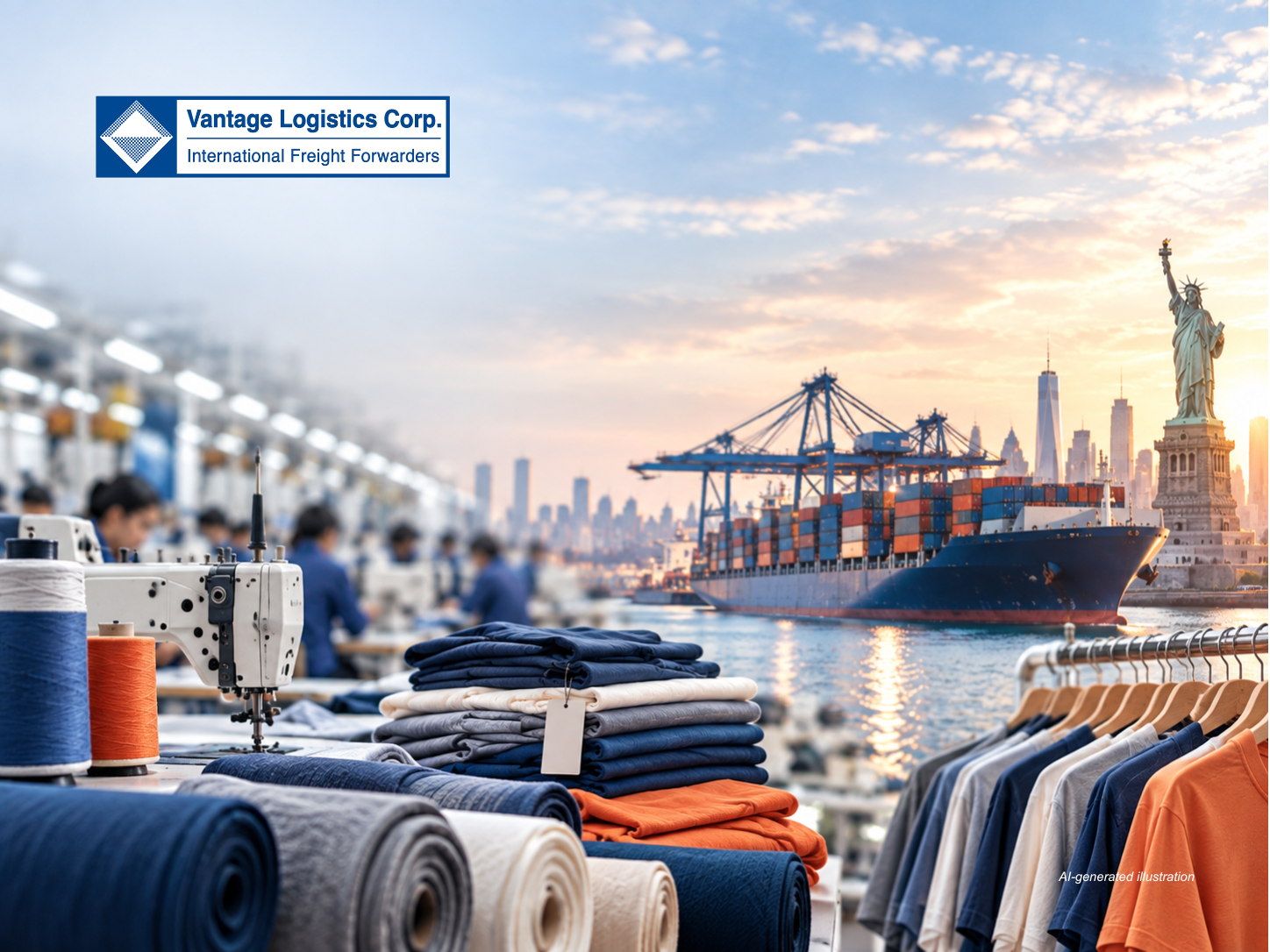
Recent data from the Office of Textiles and Apparel (OTEXA) for the first seven months of the year reveals a clear structural divergence across Asian garment suppliers exporting to the United States. While legacy hubs face notable pullbacks, emerging Southeast Asian alternatives are expanding their footprint, and Viet Nam continues to command significant volume. Shifting Sourcing Dynamics Across Asia Sharp declines in China and South Asia: China saw the steepest contraction, with export value plunging 34.11% year-on-year to $4.55 billion (down from $6.91 billion). South Asia followed suit: India dropped 25.65% to $2.45 billion, while Pakistan dipped 5.44% to $1.27 billion. Rising domestic overhead, limited raw-material versatility, and extended ocean transit times continue to weigh heavily on regional competitiveness. Momentum builds in Cambodia and Indonesia: Cambodia posted double-digit growth of 10.89% ($2.62 billion), absorbing redirected volume in low-to-mid-tier categories – predominantly basic woven apparel and activewear. Meanwhile, Indonesia gained 3.10% ($2.74 billion), reinforcing its role as a reliable manufacturing base for mid-market collections. Viet Nam preserves scale and premium positioning: Despite a marginal dip of 0.68% year-on-year, Viet Nam recorded $9.37 billion in shipments – maintaining an expansive volume lead over regional peers. Industry analysts note that Viet Nam remains the primary alternative to China for complex, high-value orders, spanning technical garments, performance sportswear, and specialized synthetic fabrications. Key Catalysts Behind the Shift Synthetic Fiber (MMF) Ecosystem: China’s downscaling has created a significant void in man-made fiber (MMF) and technical apparel. Viet Nam and Cambodia benefit from well-integrated MMF supply ecosystems capable of meeting this demand, unlike traditional hubs in Bangladesh or India that remain heavily skewed toward cotton-based knitwear. Maritime Connectivity and Turnaround Times: U.S. buyers are placing a premium on lead-time reliability. Direct deep-sea shipping lanes from Southeast Asia to the U.S. minimize transshipment touchpoints and port congestion risks, offering far greater scheduling certainty than long-haul routes out of South Asia. Strategic De-risking: Ongoing tariff exposure and geopolitical friction are driving global brands to transition from single-market reliance to tiered sourcing networks, assigning production based on actual national manufacturing strengths. Supply Chain Implications Rather than a simple one-to-one relocation of volume away from China, current order flows indicate a nuanced allocation based on manufacturing specialization. For global retailers and logistics operators, a geographically diversified footprint mitigates supplier concentration risks, but elevates operational friction. Successfully navigating this landscape requires robust multi-origin coordination, agile lead-time management, multi-country consolidation, and end-to-end provenance tracking to clear rigorous customs and origin-compliance thresholds.   Contact Vantage Logistics for tailored transport solutions and competitive quotations. Please provide details on cargo type, market, origin, destination, and estimated timeline. Vantage Logistics Corp – South East Asia (S.E.A) Logistics Provider One-Stop Shop For Integrated Logistics Services Head Office Viet Nam – Suite 6.01, Floor 6th, Block A, RiverGate Residence, 151-155 Ben Van Don, Khanh Hoi Ward, HCMC, Viet Nam Branch Thailand, Laos, Cambodia, Malaysia, Indonesia, Singapore Contact Us Email in**@*****om.vn Hotline +84-909-026-261 Website https://vantage-logistics.com Send your shipment enquiry today and receive a tailored transport plan from the Vantage Logistics team....

16/09/2026

View More
vlc-news-garmen-sourcing

Market updates

U.S. Garment Sourcing Realignment: Viet Nam Solidifies Market Share Amid Supply Chain Divergence

Recent data from the Office of Textiles and Apparel (OTEXA) for the first seven months of the year reveals a clear structural divergence across Asian garment suppliers exporting to the United States. While legacy hubs face notable pullbacks, emerging Southeast Asian alternatives are expanding their footprint, and Viet Nam continues to command significant volume. Shifting Sourcing Dynamics Across Asia Sharp declines in China and South Asia: China saw the steepest contraction, with export value plunging 34.11% year-on-year to $4.55 billion (down from $6.91 billion). South Asia followed suit: India dropped 25.65% to $2.45 billion, while Pakistan dipped 5.44% to $1.27 billion. Rising domestic overhead, limited raw-material versatility, and extended ocean transit times continue to weigh heavily on regional competitiveness. Momentum builds in Cambodia and Indonesia: Cambodia posted double-digit growth of 10.89% ($2.62 billion), absorbing redirected volume in low-to-mid-tier categories – predominantly basic woven apparel and activewear. Meanwhile, Indonesia gained 3.10% ($2.74 billion), reinforcing its role as a reliable manufacturing base for mid-market collections. Viet Nam preserves scale and premium positioning: Despite a marginal dip of 0.68% year-on-year, Viet Nam recorded $9.37 billion in shipments – maintaining an expansive volume lead over regional peers. Industry analysts note that Viet Nam remains the primary alternative to China for complex, high-value orders, spanning technical garments, performance sportswear, and specialized synthetic fabrications. Key Catalysts Behind the Shift Synthetic Fiber (MMF) Ecosystem: China’s downscaling has created a significant void in man-made fiber (MMF) and technical apparel. Viet Nam and Cambodia benefit from well-integrated MMF supply ecosystems capable of meeting this demand, unlike traditional hubs in Bangladesh or India that remain heavily skewed toward cotton-based knitwear. Maritime Connectivity and Turnaround Times: U.S. buyers are placing a premium on lead-time reliability. Direct deep-sea shipping lanes from Southeast Asia to the U.S. minimize transshipment touchpoints and port congestion risks, offering far greater scheduling certainty than long-haul routes out of South Asia. Strategic De-risking: Ongoing tariff exposure and geopolitical friction are driving global brands to transition from single-market reliance to tiered sourcing networks, assigning production based on actual national manufacturing strengths. Supply Chain Implications Rather than a simple one-to-one relocation of volume away from China, current order flows indicate a nuanced allocation based on manufacturing specialization. For global retailers and logistics operators, a geographically diversified footprint mitigates supplier concentration risks, but elevates operational friction. Successfully navigating this landscape requires robust multi-origin coordination, agile lead-time management, multi-country consolidation, and end-to-end provenance tracking to clear rigorous customs and origin-compliance thresholds.   Contact Vantage Logistics for tailored transport solutions and competitive quotations. Please provide details on cargo type, market, origin, destination, and estimated timeline. Vantage Logistics Corp – South East Asia (S.E.A) Logistics Provider One-Stop Shop For Integrated Logistics Services Head Office Viet Nam – Suite 6.01, Floor 6th, Block A, RiverGate Residence, 151-155 Ben Van Don, Khanh Hoi Ward, HCMC, Viet Nam Branch Thailand, Laos, Cambodia, Malaysia, Indonesia, Singapore Contact Us Email in**@*****om.vn Hotline +84-909-026-261 Website https://vantage-logistics.com Send your shipment enquiry today and receive a tailored transport plan from the Vantage Logistics team....

16/09/2026

View More
vlc-news-us–china-supply-chain-realignment-16092026 (1)

Market updates

U.S.–China Supply Chain Realignment in H1 2026: Strategic Opportunities for Manufacturers in Viet Nam

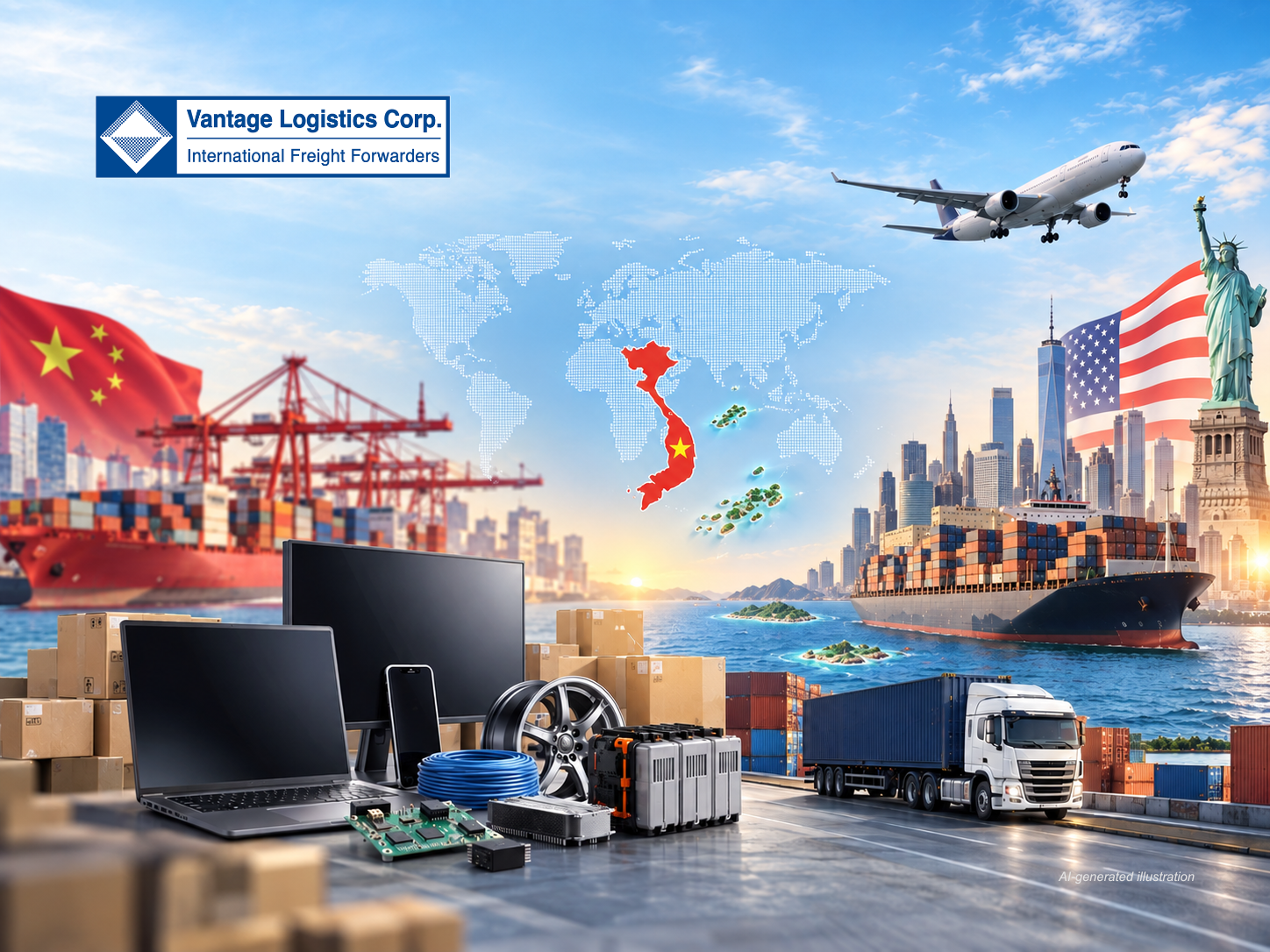
U.S. imports from China fell 23% year-over-year in the first half of 2026, according to the latest U.S. Census Bureau trade data analyzed by ImportGenius. However, supply chain de-risking and decoupling are unfolding unevenly across sectors. This structural shift is accelerating sourcing diversification and opening significant inroads for manufacturers based in Viet Nam. 1/ The U.S.–China Trade Landscape: Which Sectors Are Decoupling? Trade data from H1 2026 indicates that American buyers are aggressively pursuing “China Plus One” strategies, though with clear sectoral divergence: Sectors experiencing pronounced Chinese supply contraction: Laptops: China’s import share plunged from 13.23% to 5.99% Telecommunications & Networking Equipment: Down from 10.00% to 4.20% Computer Monitors: Contracted sharply from 52.89% to 28.35% Computer Parts & Accessories: Dropped from 34.56% to 23.31% Other Key Categories: Lithium-ion storage batteries dropped over 20%, electrical wiring fell 17.5%, aluminum wheels declined 12%, and gas cooking appliances decreased by more than 32% Overall, China now accounts for under 50% of total U.S. imports across the broader computer and peripheral hardware sector. To offset this deficit, U.S. procurement teams are nearshoring and friendshoring toward alternative manufacturing hubs, with Mexico and Vietnam capturing the largest share of displaced volume. Categories where China retains entrenched market dominance: Conversely, China maintains a near-monopolistic grip – holding over 90% of U.S. import share – on select product lines. These are heavily concentrated in juvenile products such as child safety seats (93%–97%), baby strollers (94.5%), and children’s picture books (90%). Critical agrochemicals and industrial compounds also remain deeply dependent on Chinese output, notably Glyphosate (100%) and Glufosinate (95.3%) 2/ Operational Implications for Manufacturers in Viet Nam While the reallocation of U.S. purchase orders presents robust tailwinds for Vietnam’s consumer electronics, precision engineering, and supporting industries, capitalizing on this wave requires navigating key supply chain bottlenecks: Managing Two-Way Supply Chain Interdependencies: Vietnam’s export manufacturing remains tightly coupled with upstream intermediate goods and raw materials from China. Maintaining reliable On-Time, In-Full (OTIF) delivery to North America hinges on seamless synchronization between intra-Asia inbound freight and transpacific outbound flows Heightened Rules of Origin (ROO) Scrutiny: As direct shipments from China drop, U.S. Customs and Border Protection (CBP) is intensifying audits to intercept illegal transshipment and circumvention. Manufacturers must maintain auditable bills of materials (BOM), verifiable input-output ratios, and robust customs documentation to establish legitimate substantial transformation and local value-added (LVC) criteria Transpacific Freight Volatility and Equipment Imbalances: Spikes in outbound cargo volumes to U.S. East and West Coast ports periodically trigger spot-rate spikes and local equipment deficits, particularly 40-foot high-cube (40HC) container shortages during peak shipping seasons 3/ End-to-End Logistics Solutions from Vantage Logistics for Global Enterprises To help enterprises mitigate volatility and capture emerging trade flows, Vantage Logistics delivers end-to-end supply chain and freight forwarding solutions: Ocean & Air Freight Forwarding: Direct service contracts connecting major Vietnamese export gateways with primary North American ports, backed by guaranteed space allocations during seasonal demand surges. Integrated China–Vietnam–U.S. Corridors: End-to-end management of inbound component flows from Chinese manufacturing clusters into Vietnam, matched seamlessly with outbound distribution into North American retail and distribution networks. Trade Compliance & Customs Brokerage: Comprehensive support covering tariff classification, rules-of-origin verification, and Certificate of Origin (C/O) documentation to ensure frictionless customs clearance and regulatory compliance.   Contact Vantage Logistics for tailored transport solutions and competitive quotations. Please provide details on cargo type, market, origin, destination, and estimated timeline. Vantage Logistics Corp – South East Asia (S.E.A) Logistics Provider One-Stop Shop For Integrated Logistics Services Head Office Viet Nam – Suite 6.01, Floor 6th, Block A, RiverGate Residence, 151-155 Ben Van Don, Khanh Hoi Ward, HCMC, Viet Nam Branch Thailand, Laos, Cambodia, Malaysia, Indonesia, Singapore Contact Us Email in**@*****om.vn Hotline +84-909-026-261 Website https://vantage-logistics.com Send your shipment enquiry today and receive a tailored transport plan from the Vantage Logistics team....

16/09/2026

View More
vlc-news-swift-logistics-Tiktok-(1)

Market updates

TIKTOK ECOSYSTEM COMMITS NEARLY $1B TO LOGISTICS IN HO CHI MINH CITY: A CATALYST FOR SUPPLY CHAINS AND US MARKET EXPANSION FOR VIETNAMESE ENTERPRISES

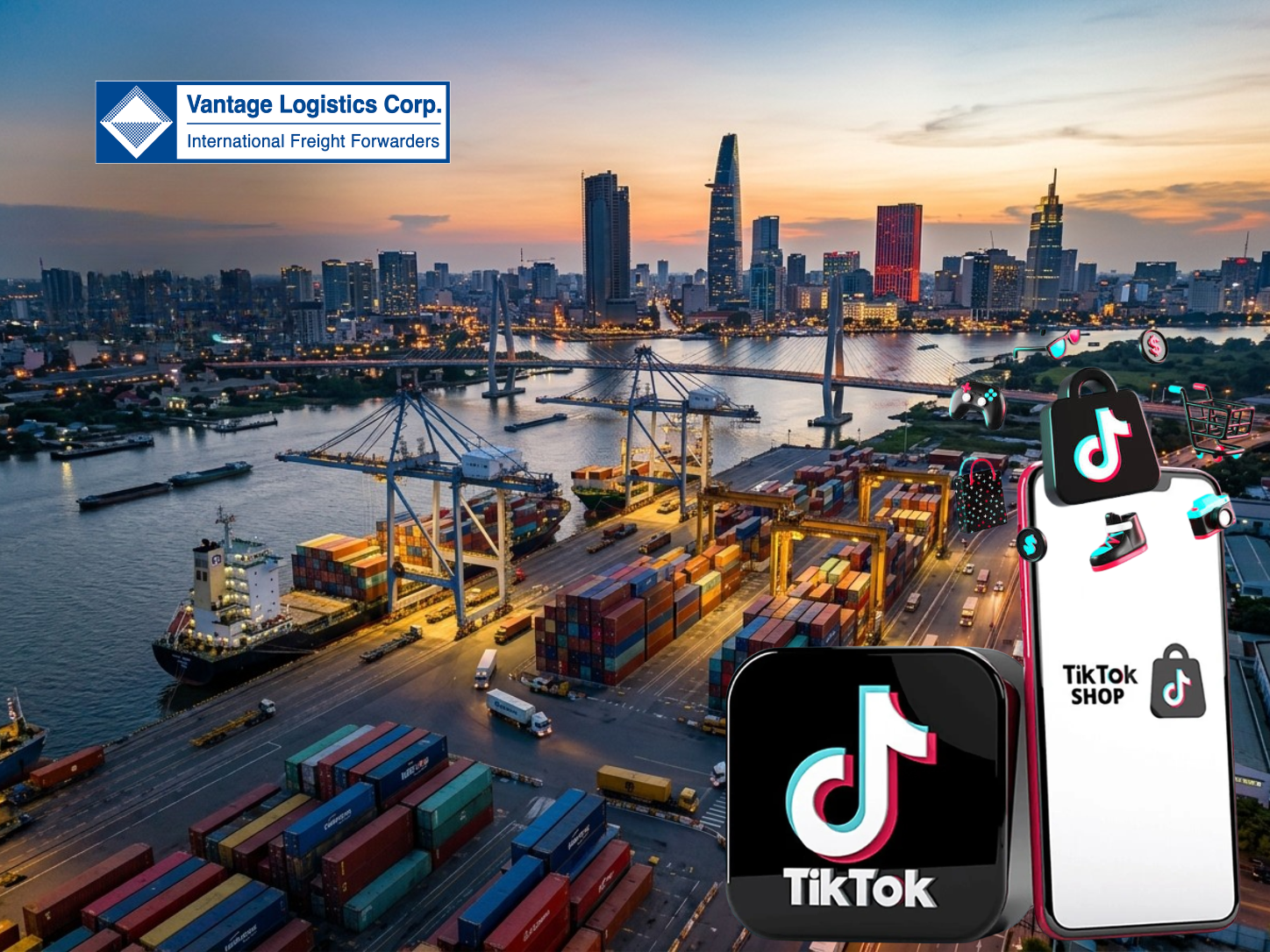
TikTok’s expanding direct investment footprint in Ho Chi Minh City marks a major turning point for Vietnam’s logistics infrastructure and cross-border e-commerce landscape. From the perspective of an integrated logistics service provider, Vantage Logistics delivers an in-depth breakdown of the project’s scope alongside actionable supply chain solutions tailored for domestic e-commerce sellers. 1/ Inside the $980M Swift Logistics Project in Ho Chi Minh City Following the licensing of TikTok Shop Vietnam ($125M) in early 2026, the People’s Committee of Ho Chi Minh City officially granted an Investment Registration Certificate to Tokgistic Pte. Ltd. (Singapore) to execute the Swift Logistics Co., Ltd. project. Total Registered Capital: VND 25,850.44 billion (approx. USD 980 million). Capital Structure: Investor equity contribution stands at USD 196 million (20%), with the remaining USD 784 million (80%) to be mobilized according to project development milestones. Operational Term: 50 years, with commercial operations scheduled to commence in November 2026. Ecosystem Footprint: Total registered investment by the TikTok-affiliated ecosystem in HCMC now exceeds USD 1.105 billion (combining TikTok Shop and Swift Logistics). Operating Model: Swift Logistics is licensed for postal services, express delivery, market research, and management consultancy. The company will function as a contract manager and solution integrator, outsourcing physical transportation and warehousing operations to domestic third-party logistics (3PL) partners. The project aligns with the broader development strategy of the Vietnam International Financial Centre in Ho Chi Minh City (VIFC-HCMC), designed to handle an annual volume of 1 to 2 billion parcels and support digital trade transactions surpassing USD 10 billion per year. 2/ Impact on the Logistics Market and B2B Digital Commerce The emergence of Swift Logistics introduces a dual catalyst to Vietnam’s supply chain ecosystem: Accelerated Order Fulfillment: Strategic partnerships with established 3PLs optimize first-mile consolidation and last-mile delivery, substantially curbing cancellation rates and delivery delays. Data Standardization & Infrastructure Upgrades: A scalable e-commerce supply chain requires deep tech integration between digital platforms and carriers to safeguard buyer-facing Service Level Agreements (SLAs). Ecosystem Synergy: Harmonizing digital commerce, logistics orchestration, and digital payments (TikTok Payment) creates a closed-loop ecosystem, reducing hidden operational overhead for merchants. 3/ Vantage Logistics: End-to-End Solutions for TikTok Shop US & Global Sellers Capitalizing on the rapid evolution of cross-border e-commerce, Vantage Logistics delivers a comprehensive logistics ecosystem engineered to help Vietnamese enterprises scale sustainably on TikTok Shop US and global online marketplaces: International Freight (Ocean & Air): Flexible multi-modal options (LCL/FCL, Air Express, Air Cargo) designed to optimize freight costs and transit times across peak shopping seasons. Dedicated Vietnam–US trade lanes (serving US main ports and inland hubs) ensure secured space allocations and reliable capacity commitments. Warehousing & Fulfillment Services: High-standard domestic warehouse facilities seamlessly connected to US and regional fulfillment hubs. Value-added services include labeling, kitting, and strict quality control (QC) compliant with rigid TikTok Shop US operational standards. Customs Brokerage & Cross-Border Compliance: Expert consultancy on HS code classification, tariff valuation, and fast-track formal customs clearance for high-demand product categories, including FMCG, textiles, wooden furniture, and handicrafts. Integrated return merchandise authorization (RMA) management mitigates reverse logistics costs for online sellers. Vantage Logistics remains committed to providing transparent, data-driven, and cost-optimized supply chain solutions – empowering Vietnamese businesses to build a durable competitive edge in global digital trade.   Contact Vantage Logistics for tailored transport solutions and competitive quotations. Please provide details on cargo type, market, origin, destination, and estimated timeline. Vantage Logistics Corp – South East Asia (S.E.A) Logistics Provider One-Stop Shop For Integrated Logistics Services Head Office Viet Nam – Suite 6.01, Floor 6th, Block A, RiverGate Residence, 151-155 Ben Van Don, Khanh Hoi Ward, HCMC, Viet Nam Branch Thailand, Laos, Cambodia, Malaysia, Indonesia, Singapore Contact Us Email in**@*****om.vn Hotline +84-909-026-261 Website https://vantage-logistics.com Send your shipment enquiry today and receive a tailored transport plan from the Vantage Logistics team....

16/09/2026

View More
vlc-news-vn-import-policy

Market updates

Viet Nam Import Policies 2026: Key Regulations Businesses Should Review Before Importing Goods

Vietnam’s import policies in 2026 have seen several important updates covering foreign trade management, customs procedures, specialized inspections and taxation. Notably, a number of new regulations effective from September 2026 directly affect prohibited imports, used goods, and second-hand machinery and production lines. Businesses should review import requirements before signing contracts and booking transportation. Early checks help ensure the right documentation is prepared, tax liabilities are estimated in advance, and the risk of container detention and demurrage (DEM/DET) costs is reduced when goods arrive in Viet Nam. 1/ Import Management Framework Changes from September 2026 Effective 05/09/2026, Decree No. 292/2026/ND-CP officially replaces Decree No. 69/2018/ND-CP and provides detailed guidance on the implementation of the Law on Foreign Trade Management. It serves as a key legal basis for determining whether goods are prohibited from import, subject to licensing requirements, tariff quotas or other foreign trade management measures. On the same date, Circular No. 48/2026/TT-BCT also came into effect, specifying lists of prohibited used consumer goods and vehicles, goods subject to tariff quotas, and several related procedures. Practical recommendation: Before importing, businesses should correctly identify the HS code and review the applicable import policy, particularly for product lists and procedures updated from 05/09/2026. 2/ Customs: New Regulations on Goods Classification from 15/09/2026 Customs procedures, inspection and supervision of imported and exported goods continue to be governed by Decree No. 167/2025/ND-CP (effective from 15/08/2025). Key areas include: Electronic processing of customs documents and records Application of risk management in customs inspection and supervision Regulations applicable to Authorized Economic Operators Procedures for processing, export production and export processing enterprises (EPEs) Effective 15/09/2026, Circular No. 85/2026/TT-BTC on the classification and analysis of imported and exported goods for classification purposes officially takes effect. HS classification should be based on the actual nature of the goods, their characteristics, composition, function and technical documentation, rather than relying solely on the commercial product name. Discrepancies in HS codes, customs value, origin or declared information may result in requests for clarification, additional documentation, physical inspection or adjustments to tax liabilities, depending on the specific case. 3/ Import Duties: Check HS Codes, Origin and FTA Preferences There is no single import duty rate applicable to all goods. The applicable rate depends on the HS code, actual origin and relevant tariff schedule: New FTA opportunity (CEPA): 2026 marks the implementation of the Vietnam–UAE Comprehensive Economic Partnership Agreement under Decree No. 143/2026/ND-CP, which sets out the special preferential import tariff schedule for 2026–2027. Businesses should note that goods purchased from or shipped from the UAE are not automatically considered UAE-origin goods. To qualify for CEPA preferential tariff rates, the goods must satisfy the applicable rules of origin and origin documentation requirements under the Agreement. 8% VAT reduction policy: The reduced VAT rate continues to apply until 31/12/2026 under Decree No. 174/2025/ND-CP for eligible goods and services. 4/ Specialized Inspections: Identify Requirements Before Goods Arrive in Vietnam Goods permitted for import are not necessarily eligible for immediate customs clearance if they are subject to specialized inspections: For imported food products: Decree No. 46/2026/ND-CP is currently suspended under Resolution No. 15/2026/NQ-CP. During this period, Decree No. 15/2018/ND-CP and related guidance remain applicable. Food safety inspection list under the Ministry of Industry and Trade: Circular No. 28/2026/TT-BCT (effective from 17/07/2026) applies to products such as alcoholic beverages, soft drinks, processed milk and vegetable oils. Practical recommendation: The required documentation and processing time for specialized inspections depend on the type of goods and the applicable inspection method. Businesses should identify the requirements and prepare the necessary documents before the goods arrive in Vietnam to reduce waiting time and potential port-related costs. 5/ New Regulations for Used Machinery and Equipment Used machinery imported for production purposes is not assessed solely based on its used condition but must also meet applicable technical requirements: Prohibited goods: Circular No. 48/2026/TT-BCT specifies certain used consumer goods and vehicles that are prohibited from import. Regulations for used production machinery: Governed by Circular No. 56/2026/TT-BKHCN of the Ministry of Science and Technology (effective from 05/09/2026). Equipment age: Calculated from the year of manufacture to the year of import, with a general limit of no more than 10 years. Certain types of equipment are subject to different age limits under Appendix I of the Circular. Technical requirements: The goods must also comply with applicable requirements on safety, energy efficiency and environmental protection. Practical recommendation: Before purchasing used machinery, businesses should request the seller to provide the year of manufacture, model, serial number, technical specifications and manufacturer documentation to support equipment age verification and inspection where required. 6/ Note for Import Plans from 2027 On 23/08/2026, the National Assembly issued Law No. 11/2026/QH16, amending and supplementing a number of provisions of the Law on Customs. The Law will take effect on 01/03/2027. Therefore, shipments handled during 2026 will continue to follow the current customs legal framework. Businesses with long-term import plans extending into 2027 should continue monitoring implementing Decrees and Circulars to prepare for upcoming changes in customs procedures and management. 7/ Integrated Import Solutions with Vantage Logistics Coordinating international transportation, customs procedures and domestic delivery through a single point of contact helps businesses reduce coordination steps, limit information discrepancies and gain better control over their delivery plans: Licensed Customs Brokerage Agent (Decision No. 2314/QD-TCHQ): Vantage Logistics supports HS code review, import policy checks and import documentation, while acting on behalf of cargo owners to complete customs procedures within the authorized scope. Multimodal International Freight: Through a global agency network across major manufacturing markets in Asia, Europe and North America, Vantage Logistics provides stable space availability even during peak seasons. Specialized Inspections: Support in preparing documentation and coordinating procedures for goods subject to complex specialized management requirements. Warehousing & Domestic Trucking: Warehousing, bonded warehousing and dedicated trucking services connect ports and airports with warehouses, factories and major industrial zones nationwide based on each customer’s delivery plan. Is your business preparing to import goods into Vietnam and looking to review import requirements before signing a contract? Send your Packing List, Commercial Invoice or Technical Catalogue to Vantage Logistics for support in reviewing HS codes, import policies and suitable transportation options. Sources: Government of Vietnam, Ministry of Industry and Trade, Ministry of Finance, Ministry of Science and Technology. Information is updated based on regulations effective as of September 2026.   Contact Vantage Logistics for tailored transport solutions and competitive quotations. Please provide details on cargo type, market, origin, destination, and estimated timeline. Vantage Logistics Corp – South East Asia (S.E.A) Logistics Provider One-Stop Shop For Integrated Logistics Services Head Office Viet Nam – Suite 6.01, Floor 6th, Block A, RiverGate Residence, 151-155 Ben Van Don, Khanh Hoi Ward, HCMC, Viet Nam Branch Thailand, Laos, Cambodia, Malaysia, Indonesia, Singapore Contact Us Email in**@*****om.vn Hotline +84-909-026-261 Website Send your shipment enquiry today and receive a tailored transport plan from the Vantage Logistics team....

15/09/2026

View More
vlc-news-hs-code-compliance-15092026 (4)

Market updates

CIRCULAR 85/2026/TT-BTC TAKES EFFECT: BUSINESSES MUST STANDARDISE PRODUCT DATA AND MASTER HS CODE COMPLIANCE

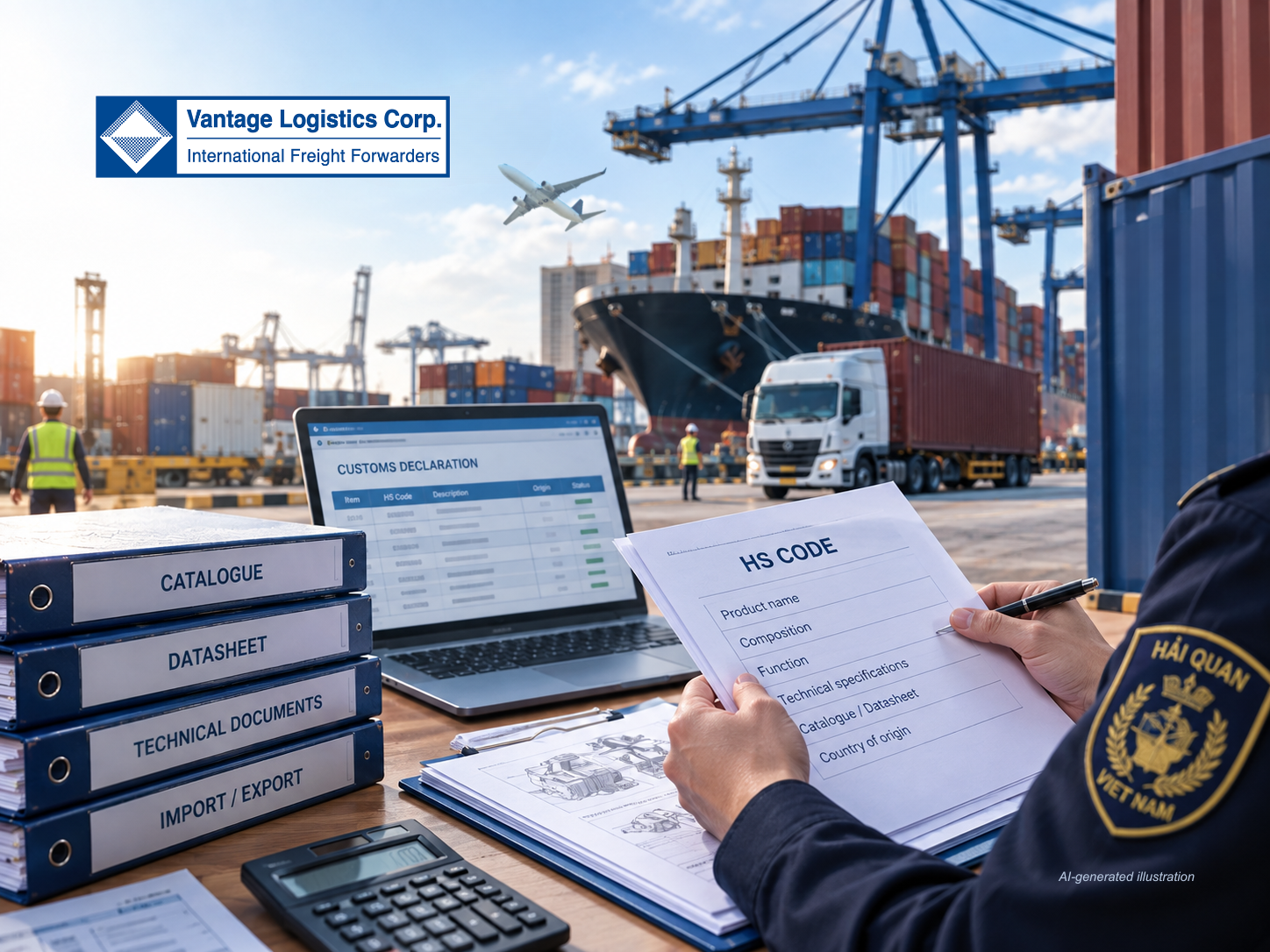
Effective 15 September 2026, Circular 85/2026/TT-BTC officially replaces Circulars 14/2015/TT-BTC and 17/2021/TT-BTC. The updated regulation introduces stricter requirements for the analysis, classification, and HS code determination of import and export cargo in Viet Nam. To mitigate customs clearance delays and avoid extra operational costs, traders should focus on three critical requirements: 1/ Standardise Technical Data at the Sourcing Stage Look beyond commercial names: HS code classification must reflect the actual physical and technical characteristics of the goods, rather than relying solely on invoice descriptions. Maintain complete technical documentation: Importers and exporters must systematically archive catalogues, datasheets, chemical compositions, structural specifications, intended uses, and manufacturing processes. These records are essential for determining correct HS codes and presenting evidence during customs audits. Align internal workflows: Synchronise communication across procurement, technical, and logistics teams, as well as overseas suppliers, to ensure consistent data declaration prior to customs filing. 2/ Key Updates for Machinery and Equipment (Chapters 84, 85, and 90) Streamlined administrative procedures: Circular 85 abolishes the requirement to register equipment lists and deductibility tracking sheets for combination machines and functional units imported synchronously in a single shipment. Flexibility for unassembled machinery: For complete machinery imported in knocked-down or disassembled states, businesses can submit classification dossiers up until the time of filing the customs declaration for the first consignment. 3/ Essential Rules for Sampling and Analysis Results Flexible sampling protocol: If the declarant is absent, customs officers may draw samples in the presence of representatives from the shipping line, port operator, or local authority, reducing waiting times. Extended sample retention: The retention period for samples subject to appeals or disputes is extended up to a maximum of 120 days from the notification date of results. Scope of classification results: Analytical and classification results under Circular 85 are used exclusively for HS code determination. They cannot serve as grounds for quality control or food safety inspections. Partnering with Vantage Logistics Incorrect HS classification can lead to clearance delays, administrative fines, and unnecessary demurrage fees. Vantage Logistics provides professional customs consultancy to help businesses review technical dossiers, standardise commodity data, and ensure full compliance under the latest regulatory framework.   Contact Vantage Logistics for tailored transport solutions and competitive quotations. Please provide details on cargo type, market, origin, destination, and estimated timeline. Vantage Logistics Corp – South East Asia (S.E.A) Logistics Provider One-Stop Shop For Integrated Logistics Services Head Office Viet Nam – Suite 6.01, Floor 6th, Block A, RiverGate Residence, 151-155 Ben Van Don, Khanh Hoi Ward, HCMC, Viet Nam Branch Thailand, Laos, Cambodia, Malaysia, Indonesia, Singapore Contact Us Email in**@*****om.vn Hotline +84-909-026-261 Website https://vantage-logistics.com Send your shipment enquiry today and receive a tailored transport plan from the Vantage Logistics team....

15/09/2026

View More
vlc-news-vn-import-sourcing-map-14092026 (3)

Market updates

VIETNAM’S 2025 IMPORT SOURCING MAP: CHINA LEADS, ASIA REMAINS THE REGIONAL BACKBONE

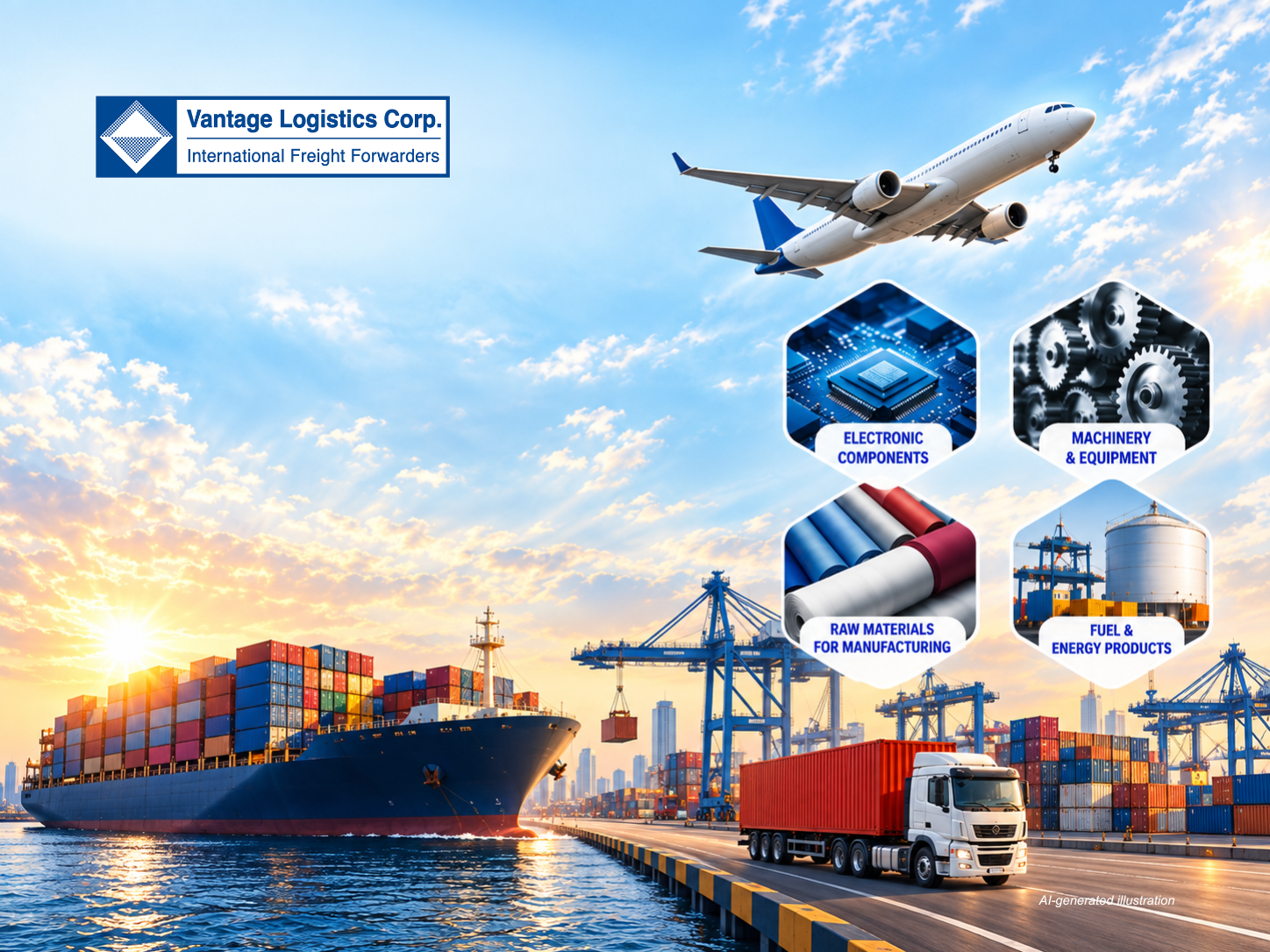
In 2025, Vietnam’s merchandise imports totaled approximately USD 455 billion, climbing nearly 20% year-on-year. Asia remained the predominant supplying region, accounting for 82.6% of national inbound turnover. Capital flows remained heavily concentrated in machinery, electronic components, and production inputs feeding export manufacturing. The 2025 sourcing landscape reflected clear supply chain specialization: China sustained its dominant leadership, Northeast Asian hubs anchored high-tech segments, and intra-ASEAN partners fulfilled specialized industrial inputs and energy commodities. I. China: The Primary Engine for Industrial Machinery and Manufacturing Inputs China remained Vietnam’s largest trading partner, supplying USD 186.0 billion in goods – up 29.0% year-on-year and representing 40.8% of aggregate national imports. Inbound flows from China played a decisive role across processing and assembly sectors: Machinery, Equipment, and Technology: China served as the primary supplier of industrial machinery, mechanical equipment, and tooling molds for manufacturing plants across Viet Nam Electronic Components: China held an overwhelming share of computer parts, printed circuit boards (PCBs), semiconductor devices, and telecommunications components feeding tech export assembly lines Industrial Intermediates: China supplied high volumes of rolled fabrics, garment and footwear accessories, virgin plastic resins, and baseline chemicals Consistent material flows originating from key industrial clusters in Guangdong, Zhejiang, Jiangsu, and Shanghai remained essential to sustaining uninterrupted operations across northern and southern industrial parks. II. Northeast Asian Partners: High-Tech Integration and Advanced Materials Alongside China, Northeast Asian economies supplied critical high-precision components and specialized industrial materials: South Korea (USD 60.5B – 13.3% Share): Vietnam’s second-largest import source, expanding 12.8%. Shipments centered on high-value components, including memory chips, display panels, semiconductor components, and optical equipment feeding major multinational tech campuses Taiwan (USD 33.0B – 7.3% Share): Posted notable 28.9% growth, driven by virgin plastic polymers, specialty chemicals, precision machine tools, and high-spec technical fabrics for export apparel lines Japan (USD 24.7B – 5.4% Share): Increased 15.2% year-on-year. Procurement focused on precision machinery, industrial electrical equipment, automotive components, and high-grade alloy steel plates and coils servicing precision engineering, construction, and shipbuilding III. Intra-ASEAN Supply Chains: Specialization in Raw Materials and Energy Imports from ASEAN reached USD 52.6 billion, up 19.5% and capturing 11.6% of Vietnam’s total inbound trade. Despite operating within a single regional free trade framework, individual member states demonstrated distinct sourcing roles: Indonesia: Served as an anchor for heavy industrial inputs and power generation. Coal represented the single largest commodity by value (supplying thermal power plants and cement manufacturing), followed by iron, steel, and base metals Singapore: Functioned as the primary regional refined fuel gateway. Inbound shipments centered on petroleum products and refined oil derivatives feeding domestic transport networks and industrial utilities Malaysia and Thailand: Supplied manufacturing raw materials alongside consumer-packaged goods. Shipments centered on plastic polymers, industrial chemicals, automotive/motorcycle spare parts, processed foods, dairy products, and confectionery Cambodia: Provided cross-border raw agricultural commodities. Trade was dominated by in-shell raw cashews for domestic shelling and re-export, supplemented by natural rubber and dried cassava IV. Corridor Logistics and Customs Transit Dynamics Optimizing freight operations across major inbound corridors requires aligning transport modes with commodity characteristics: 1/ China – Viet Nam Corridors: Balancing Cost and Velocity Ocean Freight: Transit times from Shanghai or Ningbo to Hai Phong range from 2 to 4 days, and to Ho Chi Minh City (Cat Lai and Cai Mep ports) from 4 to 6 days. Ocean transport offers optimal unit economics for raw materials, heavy machinery, and high-volume containerized freight Cross-Border Trucking: Linehaul trucking via Huu Nghi, Tan Thanh (Lang Son), or Mong Cai (Quang Ninh) reaches industrial zones across Bac Ninh, Bac Giang, Vinh Phuc, and Hai Phong within 24 to 48 hours. This channel is suited for urgent semiconductor parts and precision molds, though shippers must coordinate border clearance schedules to avoid bottleneck delays during peak inspection cycles 2/ Northeast Asia Corridors (South Korea, Taiwan, Japan): High-Value Handling Containerized ocean freight from Busan, Incheon, or Kaohsiung requires 5 to 8 days, while sailings from Tokyo or Yokohama take 7 to 10 days For semiconductors, integrated circuits, and sensitive electronics, scheduled air freight via Noi Bai (HAN) or Tan Son Nhat (SGN) remains the standard routing to mitigate vibration risks, maintain temperature-controlled environments, and meet tight assembly lead times 3/ Intra-ASEAN Routes: Leveraging Short-Sea Corridors and Preferential Tariffs Feeder sailings from Singapore, Port Klang (Malaysia), or Laem Chabang (Thailand) to Vietnam offer short ocean transit times of 3 to 5 days Regulatory compliance centers on verifying Certificate of Origin documents (C/O Form D) to secure 0% preferential tariffs. Inaccurate documentation risks customs holds, triggering port storage and container demurrage/detention charges V. Supply Chain Management Priorities For 2026 Trade and sourcing patterns in 2025 point toward three operational priorities for inbound supply chains: Maintain Multimodal Routing Flexibility: Establish standby routing protocols across short-sea, cross-border trucking, and international rail to pivot cargo when primary lanes experience rate spikes or space crunches Audit Upstream Traceability at Procurement: Expanding supply chain due diligence and green frameworks in destination markets (such as the EU and US) require importers to mandate emission metrics and origin verification from overseas suppliers at the initial contracting phase Secure Advance Equipment and Space Commitments: Plan shipping schedules 1 to 2 weeks ahead on Northeast Asian routes to buffer against container equipment shortages and peak-season general rate increases Data Sources: Ministry of Industry and Trade, Vietnam Import-Export Report 2025; General Department of Vietnam Customs.   Contact Vantage Logistics for tailored transport solutions and competitive quotations. Please provide details on cargo type, market, origin, destination, and estimated timeline. Vantage Logistics Corp – South East Asia (S.E.A) Logistics Provider One-Stop Shop For Integrated Logistics Services Head Office Viet Nam – Suite 6.01, Floor 6th, Block A, RiverGate Residence, 151-155 Ben Van Don, Khanh Hoi Ward, HCMC, Viet Nam Branch Thailand, Laos, Cambodia, Malaysia, Indonesia, Singapore Contact Us Email in**@*****om.vn Hotline +84-909-026-261 Website https://vantage-logistics.com Send your shipment enquiry today and receive a tailored transport plan from the Vantage Logistics team....

14/09/2026

View More
1 … 4 5 6 7 8 … 23