 LOGIN
LOGIN 
 VN
VN
 Sea Freight
  Air Freight
  Intermodal
  Customs Brokerage
  Project Logistics
  Warehouse Services
  Trucking
  Insurance
  Logistics Infrastructures
  Consulting & Assistance
  NVOCC
NVOCC  Barge & Coastal Feeder
  GSA / PCSA Airlines
  Perishable / Refrigerated Logistics
  Dangerous Good Logistics
  Oil & Gas Logistics
  Offshore Services
  Rice Logistics
  Global Sales Logistics
  Parcel / Courier Logistics
  Cross-Docking & End-To-End Warehousing
  On Board Courier
  Buying Agent
As major import markets like the United States, the EU, and Australia increase their requirements for traceability, supply chain transparency, and electronic records, data is becoming just as critical as product quality.
For exporters, data standardization not only ensures compliance but also minimizes operational risks, controls logistics costs, and maintains competitiveness in the international market.
Data: The Essential Driver of Modern Export Competitiveness
For years, production capacity and pricing were considered the deciding factors for an exporter’s competitiveness. However, the global trade landscape is changing rapidly.
Regulatory authorities and importers in the US, the EU, and Australia increasingly require businesses to provide continuous data across the entire supply chain – from raw material sourcing and manufacturing to transportation, warehousing, and electronic import documentation. This trend means data is no longer merely an internal management tool; it has become an integral part of international trade compliance.
A single minor discrepancy between a commercial invoice, packing list, bill of lading, or customs declaration can lead to:
- Delayed customs clearance at the destination port
- Additional inspections by regulatory authorities
- Unexpected demurrage and detention (DEM/DET) charges
- Risk of fines or import rejections
- Supply chain disruptions and damaged credibility with trade partners
In this environment, data processing speed and information accuracy are becoming just as vital as the physical speed of cargo transportation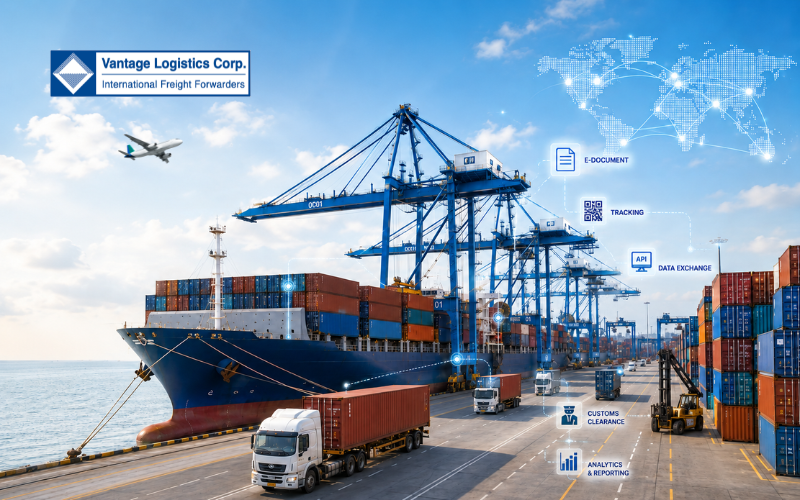
Risks Arising from Lack of Data Synchronization
Many exporters have already implemented separate management systems for production, warehousing, and documentation. However, data often remains fragmented across different departments and stakeholders.
Production details stay at the factory, transportation data rests with the freight forwarder, while customs declarations are handled by the import-export department or a customs broker. When these information flows are not synchronized, businesses face significant vulnerabilities:
- Information discrepancies between commercial documents and transport records
- Difficulties in retrieving data during unexpected audits by authorities
- Delays in resolving issues that arise at the port
- Increased operational and compliance costs
For sectors such as seafood, food, agriculture, and consumer goods – where traceability requirements are exceptionally strict – these data gaps can directly impact market access.
Operational Data Standardization: Key Business Benefits
For exporters, investing in data standardization is no longer a long-term option; it is an immediate operational necessity. A standardized data system delivers tangible business value:
- Shortened customs clearance times due to accurate documentation from the start
- Reduced unexpected costs from document errors or non-compliance
- Mitigated DEM/DET risks and lower warehousing or storage fees
- Enhanced corporate reputation among international clients and partners
- Greater capability to expand into markets with high technical barriers to entry
Vantage Logistics’ Solutions for Data Standardization
In the modern trade environment, logistics is no longer just about moving goods from point A to point B. Vantage Logistics supports exporters in building transparent, synchronized logistics data platforms, turning strict compliance requirements into a distinct competitive advantage.
- Input Data Review: Verify consistency between commercial documents (Invoice, Packing List) and compliance requirements of the destination market (C‑TPAT, ISO, customs regulations).
- Document Digitalization: Convert paper records into electronic formats to ensure seamless, real‑time data flow among Shippers, Forwarders, Carriers, and regulatory authorities.
- Integrated Data Connectivity: Guarantee that information streams across all supply chain stakeholders remain consistent and transparent before customs clearance.
Vantage Logistics – Accompanying Businesses in Building Transparent, Sustainable Supply Chains
As traceability and data transparency become global trade standards, standardizing logistics data forms the foundation for sustainable export growth.
With over 24 years of experience in international freight forwarding, customs clearance, document management, and supply chain coordination, Vantage Logistics helps businesses control their data from end to end, reducing operational risks and boosting export efficiency.
Vantage Logistics does more than move cargo. We help businesses transport accurate, transparent, and reliable data throughout the entire supply chain
Contact Vantage Logistics for tailored transport solutions and competitive quotations.
Please provide details on cargo type, market, origin, destination, and estimated timeline.
| Vantage Logistics Corp – South East Asia (S.E.A) Logistics Provider
One-Stop Shop For Integrated Logistics Services |
|
| Head Office | Viet Nam – Suite 6.01, Floor 6th, Block A, RiverGate Residence,
151-155 Ben Van Don, Khanh Hoi Ward, HCMC, Viet Nam |
| Branch | Thailand, Laos, Cambodia, Malaysia, Indonesia, Singapore |
| Contact Us | |
| in**@*****om.vn | |
| Phone | +84-28 382 67312 |
| Hotline | +84-909-026-261 |
| Website | https://vantage-logistics.com |
Send your shipment enquiry today and receive a tailored transport plan from the Vantage Logistics team.



 Vantage News

