RESOURCE

Market updates

SINGAPORE STRENGTHENS PRODUCT SAFETY CONTROLS: WHAT VIETNAMESE EXPORTERS NEED TO KNOW

Singapore is strengthening its product safety controls through two key regulations: the Consumer Protection (Safety Requirements) Regulations (CPSR) and the Consumer Goods (Safety Requirements) Regulations (CGSR). For exporters, these requirements go beyond product compliance. They can also affect delivery schedules, logistics costs, and supply chain reliability. 1. Singapore Strengthens Product Safety Requirements According to information published by Vietnam’s Ministry of Industry and Trade, Singapore applies two main regulatory frameworks for product safety. – CPSR: Covers 33 categories of controlled goods, including electrical and electronic products, household appliances, and gas appliances. Products within scope must meet applicable safety requirements, complete registration, and carry the SAFETY Mark before being supplied or sold in Singapore. – CGSR: Covers general consumer goods such as toys, clothing, furniture, and sports equipment, which must comply with the relevant safety standards. Non-compliant products may be subject to sales restrictions or recalls. Businesses that violate applicable requirements may also face penalties. For exporters, checking compliance requirements before shipment is essential. Addressing documentation or registration issues early can help avoid costly adjustments after cargo has already left the port of origin. 2. Potential Impact on Southeast Asia’s Trade and Logistics Singapore plays an important role in Southeast Asia’s trade and logistics network. Tighter product safety controls may require exporters, importers, and distributors to review their procedures for placing goods on the Singapore market. Several potential risks deserve attention: – Delivery delays: Incomplete documentation or missing certificates may affect cargo acceptance and delivery schedules. – Additional logistics costs: Delays in resolving compliance issues may lead to storage, port handling, or additional transportation costs. – Disrupted distribution plans: Late deliveries can affect inventory planning, distribution schedules, and commitments to business partners. These requirements do not automatically apply across all ASEAN markets. However, they highlight the importance of understanding the specific regulations of each destination country when planning regional trade and distribution. 3. What Should Vietnamese Exporters Prepare? For Vietnamese businesses exporting to Singapore, compliance checks should take place before shipment arrangements are finalized. Exporters should determine whether their products fall under CPSR or CGSR, verify the applicable safety standards and registration requirements, and clarify responsibilities with their Singaporean importers. Documentation preparation should also be factored into the shipping schedule. If an issue is discovered only after cargo arrives at the destination port, businesses may need to manage several challenges simultaneously, including delivery delays, additional costs, and changes to distribution plans. A reliable shipping plan therefore involves more than selecting the right route or sailing schedule. It also requires anticipating potential obstacles before the cargo reaches its destination. 4. Managing Risks Through Early Planning Not every risk in international shipping can be eliminated, but many disruptions can be reduced through early preparation. Reviewing cargo information, documentation, shipping schedules, and destination requirements helps all parties make better-informed decisions. For shipments to Singapore, close coordination among exporters, importers, agents, and logistics providers helps maintain visibility over shipment readiness, address changes, and adjust plans when necessary. At Vantage Logistics, international transportation planning takes into account the practical requirements of each shipment and the coordination needed among relevant parties. This approach helps businesses manage potential disruptions and maintain better control over delivery schedules. As market requirements evolve, careful preparation does more than protect an individual shipment. It also helps businesses maintain reliable supply chains and build lasting partnerships across international markets.

15/10/2026

View More
vlc-news-shipping-container-guide-13102026

Logistics

A GUIDE TO SHIPPING CONTAINER TYPES: DIMENSIONS, CAPACITY AND TECHNICAL SPECIFICATIONS

Choosing the right shipping container depends on the cargo’s dimensions, characteristics, weight and handling requirements. Understanding container specifications helps businesses determine the most suitable equipment and plan cargo loading more effectively. This guide provides a quick reference to 12 container types, covering their dimensions, internal volume and key weight specifications. Key Considerations When Selecting a Shipping Container Check the internal dimensions: Use the container’s internal dimensions to calculate the available loading space. Compare the cargo’s length, width and height against the usable internal dimensions, allowing for the clearance needed for loading and unloading Understand payload and gross weight limits: Payload refers to the maximum cargo weight a container is designed to carry, while maximum gross weight includes both the container’s tare weight and the cargo. For inland transportation, also check the applicable vehicle weight limits and road regulations along the planned route Inspect the container before loading: Check the container’s exterior, floor and doors for damage or signs of water ingress. For refrigerated containers, verify that the refrigeration unit is operating properly and that the required temperature can be maintained for the cargo Note: Specifications may vary by container model and manufacturer. Always check the equipment plate on the assigned container before loading.   Contact Vantage Logistics for tailored transport solutions and competitive quotations. Please provide details on cargo type, market, origin, destination, and estimated timeline. Vantage Logistics Corp – South East Asia (S.E.A) Logistics Provider One-Stop Shop For Integrated Logistics Services Head Office Viet Nam – Suite 6.01, Floor 6th, Block A, RiverGate Residence, 151-155 Ben Van Don, Khanh Hoi Ward, HCMC, Viet Nam Branch Thailand, Laos, Cambodia, Malaysia, Indonesia, Singapore Contact Us Email in**@*****om.vn Hotline +84-909-026-261 Website https://vantage-logistics.com Send your shipment enquiry today and receive a tailored transport plan from the Vantage Logistics team.

13/10/2026

View More
vlc-news-cross-border-logistics-10102026

Vantage News

VANTAGE LOGISTICS – INTEGRATED CROSS-BORDER TRANSPORT SOLUTIONS IN THE MEKONG REGION

Connecting supply chains across Viet Nam, Cambodia, Laos, and Thailand through synchronized maritime-road corridors and cross-border transit customs. In manufacturing and international trade, moving raw materials, components, and finished goods across Mekong countries requires a balance between delivery speed and logistics costs. Compared to sea freight, cross-border trucking reduces transit times significantly. However, the most critical operational challenges involve transit customs procedures and differing axle-load regulations across jurisdictions. A minor documentation discrepancy at the border or an axle-load calculation error can cause border congestion and incur substantial truck demurrage fees. Vantage Logistics delivers integrated Cross-Border Logistics solutions, combining multimodal connectivity, strict regulatory compliance, and localized operational management: 1. Flexible Transport Configurations Tailored to project budgets, delivery schedules, and vehicle circulation regulations across each market, Vantage Logistics deploys adaptable transport options: Border Transshipment (Back-to-Back Trucking): Coordinating cargo transfers or prime mover swaps at key border checkpoints (such as Moc Bai / Bavet and Lao Bao / Dansavanh) to optimize operating costs when vehicles are restricted from operating deep into the destination country Direct Cross-Border Trucking: Providing vehicles with valid international road transport permits and logbooks, ensuring seamless door-to-door delivery from dispatch facility to consignee warehouse Cross-Border Axle-Load Compliance: Calculating and distributing cargo weight in strict accordance with national regulations across Viet Nam, Cambodia, and Laos, preventing fines or forced offloading at border weigh stations Bonded Trucking: Managing cargo transit under customs supervision with intact customs seals from seaports to export border checkpoints or designated bonded facilities 24/7 GPS Tracking: Delivering real-time vehicle positioning to monitor route progress, milestone checkpoints, and actual on-site delivery 2. Transit Customs Clearance & GMS Framework Expertise Synchronizing documentation workflows to maintain uninterrupted cross-border cargo flow: Multilateral Transport Frameworks (GMS & Bilateral Agreements): Assisting clients in completing applications for cross-border transport permits and logbooks under the Greater Mekong Subregion (GMS) Cross-Border Transport Agreement and bilateral road transport pacts between Viet Nam, Cambodia, and Laos Pre-Arrival Document Synchronization: Closely coordinating between documentation teams in Viet Nam and our Phnom Penh branch office / localized partner networks to cross-check transit declarations and commercial invoices before vehicles arrive at the border, minimizing wait times at border checkpoints Transit Customs Clearance via Viet Nam: Managing customs transit declarations for international shipments moving through Viet Nam’s major seaports (Cat Lai, Cai Mep, Hai Phong, Da Nang) to Cambodia, Laos, and vice versa Quarantine & Tariff Consultation: Representing cargo owners in specialized inspections (phytosanitary and veterinary quarantine) at international border gates; advising on HS code classification and verifying the validity of Certificate of Origin (C/O Form D) under the ATIGA framework to ensure applicable tariff preferences Proof of Delivery (POD) Management: Collecting, reviewing, and delivering official POD documents endorsed by customs authorities at both borders for tax finalization, while providing advisory support on local road tolls and regional fiscal requirements 3. Multimodal Transport Connectivity Beyond road transport, Vantage Logistics bridges cross-border corridors with international ocean freight loops to expand regional reach: Regional Export Gateway Support: Facilitating overland cargo movement from Cambodia and Laos to Viet Nam’s major seaport hubs, connecting regional exports with mainline ocean carriers bound for global destinations Project Cargo & Heavy Machinery Coordination: Mobilizing specialized equipment in coordination with our in-house Project Logistics technical team for oversized/overweight machinery, industrial plant equipment, and temporary import/re-export shipments 4. Commercial Value for Businesses Transit Time Optimization: Reducing transit time on key corridors – such as Viet Nam to Cambodia within 1–2 days (compared to 5–8 days by sea) – securing continuous raw material flow for manufacturing lines Cost Efficiency: Delivering substantial cost savings compared to air freight while meeting rapid delivery requirements across diverse cargo categories Direct Localized Presence: Backed by 5 branch offices in Viet Nam (Ho Chi Minh City, Ha Noi, Hai Phong, Da Nang, Qui Nhon) and an established branch office in Phnom Penh, Cambodia, Vantage Logistics ensures rapid problem resolution and on-site support without reliance on third-party intermediaries Looking for an optimal transport solution between Viet Nam, Cambodia, Laos, and Thailand? Contact Vantage Logistics for routing advice and tailored quotations.   Contact Vantage Logistics for tailored transport solutions and competitive quotations. Please provide details on cargo type, market, origin, destination, and estimated timeline. Vantage Logistics Corp – South East Asia (S.E.A) Logistics Provider One-Stop Shop For Integrated Logistics Services Head Office Viet Nam – Suite 6.01, Floor 6th, Block A, RiverGate Residence, 151-155 Ben Van Don, Khanh Hoi Ward, HCMC, Viet Nam Branch Thailand, Laos, Cambodia, Malaysia, Indonesia, Singapore Contact Us Email in**@*****om.vn Hotline +84-909-026-261 Website https://vantage-logistics.com Send your shipment enquiry today and receive a tailored transport plan from the Vantage Logistics team.

10/10/2026

View More

Blog

The Case of “Con Cung” and The Importance Of Choosing A Right Customs Clearance Service Provider

23/08/2018 From the case of  “Con Cung” Mom and Baby Shopping System Con Cung JSC is one of the largest supermarket chains for mom and baby in Viet Nam. Founded in 2011, Con Cung has specialized in distributing mom and children’s products such as clothing, food, milk, diapers… The company operates 346 retail stores in Vietnam, including 313 Con Cung shops and 33 Toy City stores and focuses on the Ho Chi Minh city and the South market. In 2017, the sales of Con Cung reached over $43 million. In the past days, many of paper and internet newspaper, together with some internet socials, have continously put on public that Con Cung has cheated on the origin of goods, which is a serious violation of the law and regulations on production and business activities. However, The Ministry of Industry and Trade (MoIT), through their Dedicated Inspection team have just officially announced their inspection result. The result clarified that Con Cung did not commit any violation in law of protecting the interest of consumers, product quality and origin, and Con Cung has all the legal and valid import dossiers in compliance with  import regulations and the origin of goods. The incident started from a complaint from a customer in HCM City, who claimed that he bought a fabric product from Con Cung with the label “Made in Thailand” “looked like a replaced one”. Journalists and Market Surveillance Agency of HCM City immediately paid big attention to this case. While the investigation was still under conduction, the situation had became more and more noisy and complicated,  with various  rumours and many contradict opinions poured into the incident, making Con Cung to face a business crisis with lot of negative impact not only on income but also on reputation. Being one of the reputable professional logistics and customs clearance service provider in Vietnam, Vantage Logistics was contracted by Con Cung for customs clearance service. One of the reasons we won Con Cung’s trust is that we always comply with laws and regulations, and proactively consult our clients how to improve their documents and business actitivities to the highest level of compliance. And in this crisis, Vantage Logistics proved that Con Cung had made the right choice. During the whole investigation process, our team have always been closely working with Con Cung’s team, providing all the proofs and documents, all necessary advice related to customs law and regulations. With all the legal compliance that Con Cung and Vantage did for all the import shipments, the investigation conclusion could not be anything else except that Con Cung did not commit any violation in law of protecting the interest of consumers, product quality and origin. To the lesson learned from the importance of choosing right customs clearance service provider. As we know, Customs procedures for each export/import item are different, and various from country to country. It is really complicated and needs comprehensive knowledge to do it properly. Customs procedures often include regulations, circulars, and documents which are intergral with different ministries and authorities, can result in confusion and difficulties for businesses; moreover, the process of Customs clearance of goods must go through many steps from the preparing and checking documents, filing on-line declaration, submission of dossiers at Customs border gates, procedures of goods inspection, procedures of proving product origin, labeling, value of goods…  To ensure all steps in compliance is not easy at all. It requires deep and updated knowledge of Customs regulations and procedures. Accuracy in preparing customs documents is also significant. Mistakes can lead not only to delay in the whole customs clearance process, but also to penalty and bad marks in import/export history records with customs. And of course, timeliness. Moreover, the completion of customs procedures in compliance with laws and regulations is not only important at the time the goods are exported/imported but also is a decisive factor in proving that a business is genuine and honest with its customers and Con Cung is a concrete case study. Therefore, choosing a professional and expererienced Customs clearance service provider plays a very important role for businesses in international trading; and businesses need to consider carefully while choosing their long-termed service provider. I think key points to choose Customs clearance service provider are: Professionally proficient Compliance Clear and effective standard working procedure High performance Supportive and providing added values to customers Vantage Logistics with more than 15 years of working in providing logistics and Customs clearance services, has been doing with our best effort to provide the most effective solutions for our customer as our motto – compliance, quick and effectiveness. And the case of Con Cung has again proven it.  ...

23/08/2018

View More

Market updates

Opportunities In The Waste-To-Energy Sector In Vietnam

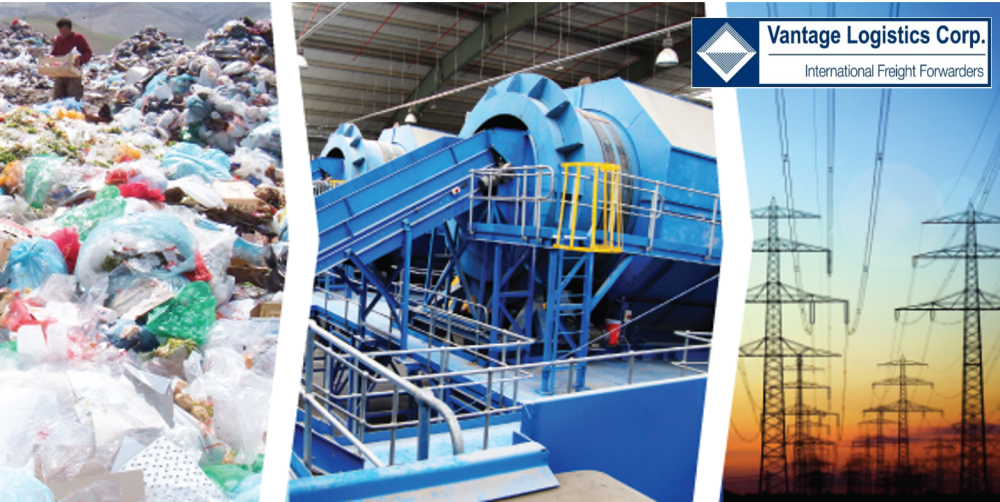
Waste-to-energy sector Currently, Viet Nam annually generates over 28 million tonnes of waste, with 76% of it being disposed in landfills. Waste-to-energy solutions can not only process solid wastes but also generate energy. Viet Nam can produce around 1 billion kWh in 2020, and 6 billion kWh in 2050 from waste. The government has set targets for the collection, reuse, and recycling of waste. By 2020, it aims to collect and treat 90% of urban solid waste, with 85% of it being recycled and reused. ​Growing energy demandEnergy demand in Viet Nam is predicted to grow over 10% by 2020, and another 8% by 2030. To manage the growing demand, the government has implemented numerous policies in the clean energy sector in the past five years, including those focusing on waste-to-energy solutions. The potential for energy generated from biomass and solid waste is around 2000 MW and 320 MW respectively. However, current installed capacity is much less at 352 MW and 2.4 MW for biomass and solid wastes respectively. Major waste-to-energy projects In February 2018, the Asian Development Bank and China Everbright International Limited signed a US$100 million loan agreement to construct waste-to-energy plants in Mekong Delta, that will not only treat solid wastes but also supply electricity to the national grid. It is the first public-private partnership project in the sector.Last year, in April 2017, Viet Nam’s first industrial waste-to-energy plant was set up in Ha Noi, with equipment from Japan’s Hitachi Zosen Corporation. It can process 75 tonnes of waste per day and generate 1.93 MW of energy. A total of US$29 million was invested in the project, with US$22.5 million being non-refundable aid from Japan’s New Energy and Industrial Technology Development Organization (NEDO), a governmental organization that focuses on research and development of industrial technology in new energy solutions. In the same month, the Go Cat plant became operational in Ho Chi Minh City, which has already treated 500 tons of industrial waste and generated seven megawatts for the national grid. Future projects are focusing on increasing the number and capacity of waste-to-energy plants in Hanoi, Ho Chi Minh City, and Mekong Delta. Some of the major investors include Hitachi Zosen Corporation, Watrec Ltd, and Trisun Green Energy Corporation. Opportunities Viet Nam plans to reduce greenhouse gas emissions by 5% by 2020, 25% by 2030, and 45% by 2050. With the rise in urbanization and electricity consumption, clean energy offers an environmental-friendly solution to meet the growing demand. Local firms lack the technical expertise and capital, and this presents an opportunity for investors. Some of the opportunities are in: Machinery/Equipment – collection and sorting equipment, waste processing equipment, and incinerators; Technical expertise – processing and recycling technologies, waste management solutions, plant design and engineering solutions; Funding and financing – investing capital in upcoming and existing plants, and working with engineering firms and municipal governments. Logistics consultant, shipping and logistics services to project owners, EPCs, vendors Government policies The Viet Nam government has implemented numerous policies for domestic as well as foreign firms involved in waste-to-energy projects. The major regulations are mentioned in Decision 31/2014/QD-TTg, Circular 32/2015/TT-BCT, and Decree 118/2015/ND-CP. Decision 31 – stipulates the supporting mechanism or development of power generation projects using solid waste; Circular 32 – deals with the development of grid-tied generation projects using solid wastes and provides a model electricity sale contract for projects using solid wastes in Viet Nam; and Decree 118 – deals with investment incentives and schemes in various sectors including construction of concentrated solid waste treatment zones and collection, treatment, recycling, and reuse of waste. The feed-in-tariff for power generation projects using solid waste is 10.05US cents per kWh (direct burning) and 7.28 U.S. cents per kWh (burning of gases from landfills). Incentives include tax holidays, exemption of import duties for equipment, land rent exemptions, and low-interest loans. Conclusion Although the potential of solar and wind energy is much higher than solid wastes in Viet Nam, waste-to-energy projects have a two-fold benefit: It helps in generating energy and the processing of waste, which has grown exponentially in urban Viet Nam....

06/08/2018

View More

Market updates

Automotive Industry In Vietnam – The Need Of Supporting Industries

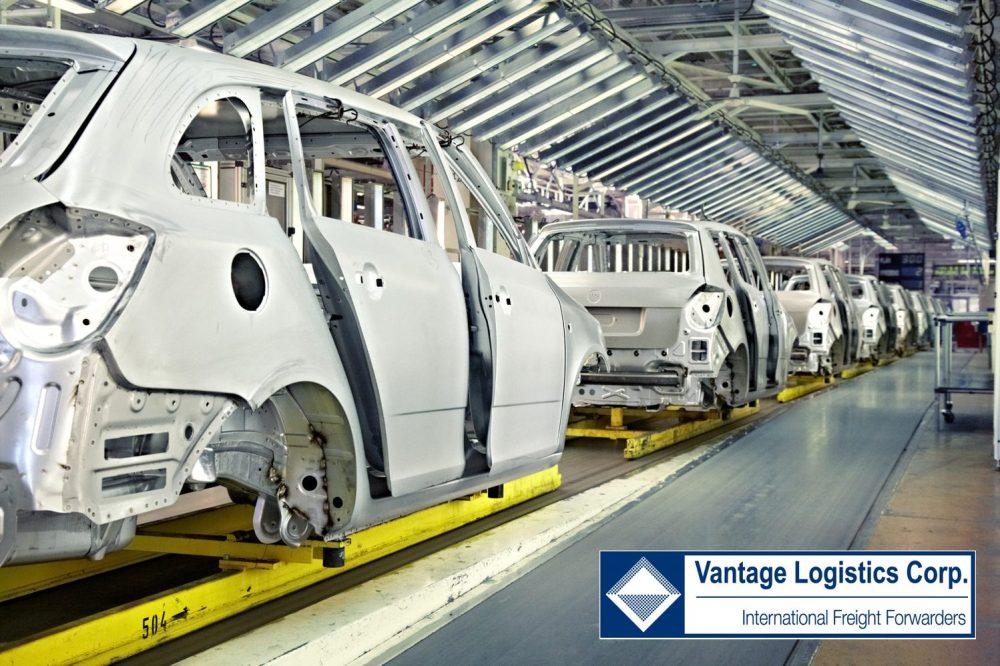
Automotive Industry In Vietnam: Viet Nam today is emerging as one of the most potential consumer markets in the world, although the car ownership rate of the Vietnamese people is quite low – only 23 vehicles per 1,000 people, while the equivalent in Thailand is 204 vehicles per 1,000 people, and the minimum in developed countries is 400 vehicles per 1,000 people. However, with rising incomes, estimated at more than US$3,000 per head by 2021, combined with increasingly improved infrastructure and attractive demographic characteristics, it will be the premise for the Vietnamese automobile market’s purchasing power, which is expected to grow strongly in future. 2017 272,750 vehicles were sold, down 10% compared to 2016. Segment wise, passenger, commercial, and special-use vehicles decreased by 15%, 2%, and 12% respectively. Sales of imported cars grew by 9%. Domestically assembled cars decreased by 19%. Car manufacturers had predicted the decrease in sales, as consumers were waiting for car import tariffs to reduce to 0% in early 2018, in line with the tariff schedules of ASEAN Trade in Goods Agreement. 2018 In the first five months in 2018, 103,746 vehicles were sold, down 6% compared to the same period last year. Segment wise, sales of passenger cars grew by 6% while commercial and special-purpose vehicles declined by 19% and 37% year-on-year respectively Sales of imported cars decreased by 46% while domestically assembled vehicles grew by 10% during the same period. By the end of 2018, overall sales are predicted to grow by 6.8% year-on-year, including commercial and passenger cars The 46% decline in sales of imported cars was due to the delay by manufacturers in fulfilling conditions and procedures of Decree No.116/2017/ND-CP (Decree 116), which stipulated conditions on production, assembly, import, warranty, and maintenance of vehicles. In the first two months of 2018, no units were imported into Vietnam. Post-2018 Growth And Potential Between now and 2025, the domestic automobile manufacturing industry is predicted to grow by 18.5%, and 13.5% between 2025 and 2035, with output reaching 531,600 units by 2025 and 1.76 million units by 2035. Car sales are predicted to grow 22.6% by 2025, and 18.5%, after 2025. The double-digit growth in production and sales are largely based on the growth in the middle class, GDP, and disposable income. With the current passenger vehicle density in Vietnam at 16 per 1,000 people, which is much lower than Thailand, Malaysia, or Indonesia, there is ample room for growth in the industry Need for supporting industries In order to attract investment from domestic and foreign manufacturers, enterprises have proposed to reduce import tax on raw materials for component manufacturers in Vietnam. In the long-term, Vietnamese Government will have mechanisms and policies to attract investment from multinational corporations to invest in large-scale projects in Vietnam. Particular focus is on brands and vehicles that do not have production centers in ASEAN, in order to facilitate the participation of domestic firms in the multinational automobile chain  Vietnam Automotive Industry Highlights VinFast Manufacturing and Trading Company, a member of property developer Vingroup, partners with global auto part suppliers. The company has allocated 70ha of land to Phase 1 of the project in the north of Hai Phong city for part supplies and supports maximum efforts in infrastructure and implementation procedures. These are the parameters that prove the company will have a large demand for components and spare parts and establish long-term international partnerships. According to industry representatives, with the vision of large-scale production and international standards, VinFast will have many potential customers. Some suppliers have expressed their desire for a long-term cooperation with VinFast through setting up of component factories in the project complex in Hai Phong...

23/07/2018

View More

Vantage News

Vantage Logistics Corporation Achieves ISO 9001:2015 Certification

Vantage Logistics is proud to announce that we are now ISO 9001:2015 certified. To become ISO 9001:2015 certified, Vantage Logistics underwent an evaluation process that included: quality management system development, a management system documentation review, pre-audit, initial assessment, and clearance of non-conformances, all of which work to identify corrective actions that eliminate non-conformance to the quality management standard. Vantage Logistics’ decision to become ISO 9001:2015 certified is a proactive one that not only anticipates the demands of our customers, but also demonstrates a commitment to providing quality products and services to all current and future customers. To maintain our certification, Vantage Logistics will perform audits to ensure compliance and to assess initiatives for continued improvement. This certification further strengthens our commitment to our customers and our Company Quality Policy: every customer is served as our unique customer. Our job at Vantage Logistics is To provide quality, timely and safe logistics service, Law compliance, To maintain and improve our Quality Management System of ISO 9001:2015, To train and ensure all employees understand and follow this quality policy.  We accomplish this by investing in and developing our employees’ abilities, by focusing on providing our customers premier and uniquely professional services and by continually improving our quality management systems. We would also like to take this opportunity to extend our sincere thanks to our customers and suppliers for their continued commitment and loyalty. Vantage Logistics will always strive to exceed their high expectations. With our goals focused on the emphasis of quality assurance and innovative production, we look forward to bringing the business to new heights in the months and years to come....

20/07/2018

View More

Market updates

The Age Of Renewable Energy

VLC Energy News – July 2018 Renewable Energy In Vietnam Vietnam is among the emerging renewable energy markets in South East Asia, offering many opportunities for investment in clean energy, in particular, wind and solar. The country has a population of 95.5 million and its energy demand is forecasted to grow by 13% annually over the next four years with an energy policy that includes renewables in the mix. According to the country’s revised Power Development Master Plan VII, Vietnam needs investment in the power sector amounting to $150 billion for the period up to 2030 in order to keep up with the nation’s annual growth of 10-12%. The renewable energy sector is considered a priority for investment with contributions set at 7% by 2020 and 10% by 2030New Regulatory Framework to Bolster Growth of Vietnam’s Solar Energy Sector From October 2017, the circular No. 16/2017/TT-BCT of the Ministry of Industry and Trade (MOIT) on the Development of Solar Power Projects and the Power Purchase Agreement Form Applicable to Solar Power Projects officially came into force. CREATOR: gd-jpeg v1.0 (using IJG JPEG v62), quality = 100 Incentives for Investors This FIT rate of 9.35 US cents/kWh (excluding VAT) for grid-connected solar power projects is available for 20 years to projects which reach commercial operation before 30 June 2019. Any residual electricity generated by rooftop solar projects will be purchased by EVN at the same FIT for a 20 year term, provided that the project reaches commercial operation before 30 June 2019. Solar project investors will benefit from tax exemptions on raw materials and supplies imported for project purposes, corporate income tax relief, and an exemption from land rental fees within the first three years of commencing commercial operation. Industry Highlights Vietnam’s biggest solar power plant built in Ninh Thuan The construction of Vietnam’s biggest solar power plant with capacity of 168 MWp and total investment of roughly 4.4 trillion VND (US$194 million) commenced in the south central province of Ninh Thuan, which covers 186 hectares in My Son commune, Ninh Son district. Once operational in June 2019, the plant will supply over 200 million kWh of electricity to the national power grid annually. Ninh Thuan receives special attention from investors as it has big advantages for renewable energy development with the average wind speed of 7-8m/s and 2,800 hours of sunshine every year This plant is the fourth of its kind to start construction in Ninh Thuan this year. It is expected to provide electricity for nearly 200,000 households and generate jobs for over 200 local workers. Local authorities asked the investor to speed up the implementation of project and ensure quality, labour safety, and environmental sanitation. Besides, they pledged to create the most favorable conditions according to legal regulations to support the investor to put the plant into operation as scheduled, he affirmed.Quang Tri approves two wind, solar power projects The provincial authorities signed decisions approving two wind and solar power projects with total investment of over 2.7 trillion VND (US$120 million). Under Decision No.1250/QD-UBND, Tan Hoan Cau Corporation was allowed to carry out Huong Hiep 1 wind power plant project in Huong Hiep commune, the mountainous district of Dakrong. The central locality is calling for investment in 17 solar power projects with a total capacity of more than 930MW to be built on about 1,400 ha. With 12 wind turbines, the plant has a total capacity of 30MW, generating more than 126 million kWh of electricity per year on a site of nearly 8ha. The project costs over 1.55 trillion VND, valid for 50 years. The plant is being built from June 2018 to December 2020.  Under Decision No.1247/QD-UBND, the Licogi 13 JSC was allowed to build LIG-Quang Tri solar power plant in Gio Hai and Gio Thanh communes, Gio Linh district with a designed capacity of 49.5 MWp, generating 67,960 MWh of electricity each year. Costing 1.2 trillion VND, the project will be implemented from June 2018 to June 2019, using 58ha of land. Tay Ninh draws over 14.3 trillion VND in solar power projects The southwestern province of Tay Ninh has granted investment licenses to five solar power projects worth over 14.3 trillion VND (US$629.9 million) in Duong Minh Chau and Tan Chau districts. The plants with a combined capacity of 560 MWp will be built on 20,620 hectares in the area of Dau Tieng reservoir. Their construction is set to commence at the end of this year. The Dau Tieng 1 and 3 solar power plants are designed with the same capacity of 150 MWp and have respective investment of over 3.9 trillion VND (US$171.7 million) and 3.6 trillion VND (US$158.5 million). The Dau Tieng 2 solar power plant worth over 4.9 trillion VND (US$215.8 million) has a capacity of 200 MWp. Three projects were invested by Dau Tieng Tay Ninh Energy Joint Stock Company. The other projects were invested by Tri Viet Tay Ninh Joint Stock Company and Bach Khoa A Chau Tay Ninh Joint Stock Company with the same capacity of 30 MWp and investment of over 760 billion VND (US$33.4 million).In recent years, the Dau Tieng reservoir has played an important role in providing water for agriculture, industry and local daily activities. It holds great potential for solar energy production. Conclusion According to the Government’s targets, solar power is expected to become the main renewable energy source in the future, with installed capacity to be increased from 6-7 MW by the end of 2017 to 850 MW by 2020 (1.6% of the country’s power generation) and 12,000 MW by 2030 (3.3% of the country’s power generation). Vietnam is among countries that enjoy the most sunlight in the world, with the Central Highlands and south central regions recording between 2,000 and 2,600 hours of sunshine every year, reported the Vietnam Clean Energy Association. Average solar radiation is 150 kcal/sq.m, about 2,000 to 5,000 hours per year....

09/07/2018

View More

Market updates

U.S Steel Tariffs On Viet Nam And Its Opportunities

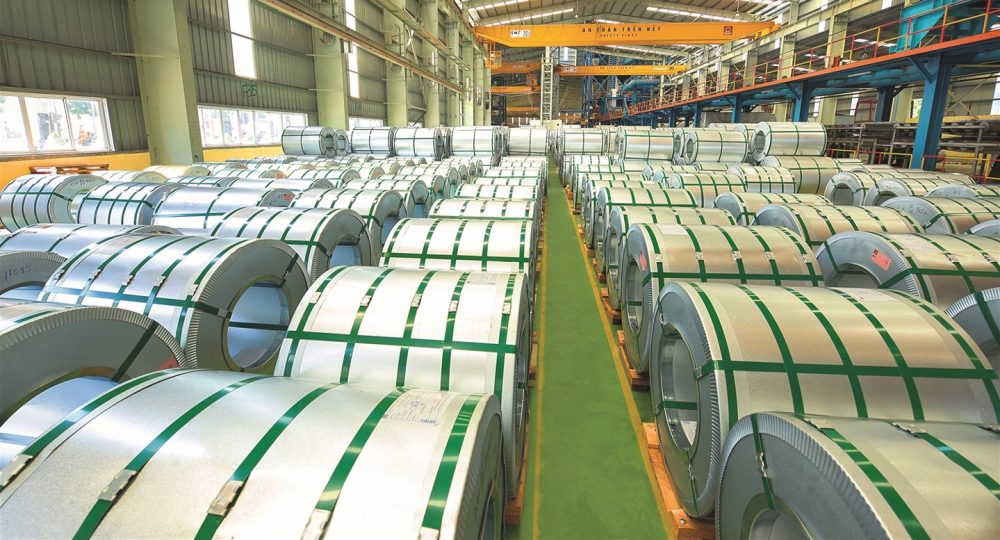
U.S Steel Taffis On Viet Nam: Its Impact And Best Practices  From May 2018, U.S imposed a 25% tariff on steel imports and a 10% tariff of aluminum imports under Section 232 of the Trade Expansion Act of 1962 citing national security issues. Commerce Department increased import duties on steel products specifically from Viet Nam which originated from China as they evaded anti-dumping and anti-subsidy rules. Viet Nam ranks as the 12th largest exporter of steel to the U.S, the rise in tariffs will impact its steel industry. Vietnam – U.S steel trade U.S, the second largest steel export market for Viet Nam after ASEAN, accounted for 11.1% of the total steel exports in 2017. However, steel imports from Viet Nam accounted for only 2% of the total U.S imports in 2017. 2017 exports The top three exports from Viet Nam to the U.S. are the cold-rolled coil (CRC), hot-dipped galvanized coil (HDG), and other metallic-coated coils. CRC exports grew from 33,199 tonnes in 2015 to 155,169 tonnes in 2017, while HDG’s volumes grew from 292 tonnes in 2014 to 124,799 tonnes in 2017. Other metallic-coated flat steel exports grew from 181 tonnes in 2013 to 130,440 tonnes in 2017. 2018 exports In the first two months of 2018, Viet Nam steel exports to the U.S doubled compared to same period last year to 124,600 tonnes worth US$104.2 million. Impacts According to new tariff, corrosion resistant steel (CORE) from Viet Nam, which originated in China, will face anti-dumping duties of 199.43% and countervailing duty duties of 39.05%. Cold-rolled steel imports will face anti-dumping duties of 199.76% and countervailing duties of 256.44%. The rise in tariffs will affect the local manufacturers, but the impact on the overall economy will be minimal. In 2017, the U.S accounted for 11.1% of Viet Nam’s steel exports, but steel accounted for less than 2% of Viet Nam’s total exports. However, the tariff rise will increase competition for local firms, especially in the domestic market. Conclusion With the rise in U.S tariffs, Vietnamese firms will need to diversify its export markets and product portfolio to minimize losses. Moreover, local firms have to invest in technology, increase their product quality, and reduce production costs if it wants to access new markets or support domestic industries. Best practices while exporting to the U.S. With the new tariffs in place, exporters and importers should take certain measures to avoid unnecessary penalties. – Ensuring the HS classification is correct: Exporters and Importers should be clear about the HS classification codes that a product has in the U.S, as U.S customs sometimes inquire about the technical details and manufacturing process to ensure that the correct HS codes are applied. – Declaration of the customs value: Parties need to thoroughly check the contracts, purchase orders, and invoices to ensure that the customs value declared is correct to avoid attracting civil customs penalties. – Avoid transshipment. Opportunities To U.S Market Actually, Viet Nam is a not major market for US steel and aluminum imports (less than 2% of total U.S steel import volume). Although the rise in tariffs will impact the steel industry in Viet Nam, but Vietnamese economist believe that, it will not have a major effect on the overall economy.  Besides, this impact may lead to a result that Vietnamese firms will focus on other sectors which have higher export value and strong growth in U.S market, such as: footwear (12.79%), textiles (8.85%), seafood (8.16%), coffee and tea (8.01%), wood products (3.27%)… To Other Markets (AU/EU/ASIA…) According to Viet Nam Steel Association (VSA), the major export markets for Vietnamese steel are ASEAN, EU, South Korea, India, Taiwan, and Australia. With the U.S tariffs in place, local firms have an opportunity to focus on the other  markets to offset the reduction in U.S exports.  With numerous FTAs already in effect, and FTAs such as the European Union-Viet Nam Free Trade Agreement (EVFTA) and Comprehensive and Progressive Agreement for Trans-Pacific Partnership (CPTPP) currently  under ratification, Viet Nam will have increased access to new markets. According to the World Steel Association, steel demand will continue to grow globally in 2018 and Vietnamese firms would focus on the new markets that will open up once the all the FTAs are in place. Growth in Steel Demand EU: 1.4% Other Europe: 5.2% NAFTA: 1.2% CIS: 3.8% Central and South America: 4.7% Africa: 3.3% Middle East: 4.8% Asia: 1.2% ASEAN: 6.8% Vantage Logistics In Action In order to quick response with market’s rapidly changing, and offering the most optimized logistics solutions  as well, Vantage Logistics has built up a dedicated and well-trained team of highly experienced and professional individuals, facilities, technology, processes, policies… to meet every single need of clients and partners. Our tailored logistics solutions: International Air Freight International Sea Freight Project Logistics Ship/NVOCC Agencies Customs Brokerage Warehouse & Distribution E-commerce Logistics Consulting & Assistance, and more. Contact us: ...

02/07/2018

View More

Blog

Advice from Expert: Marine Insurance – Not Only For Your Cargo

DID YOU KNOW? >> Last year 2017 about 170,000,000 containers were shipped around the world >> An average of 1,582 containers are lost at sea each year. In 2013 total 5,578 containers lost, including 4,293 containers lost in MOL Comfort’s sinking >> Every two or three days, there is a ship run aground somewhere If your cargo value is low, and just an average 1,582 containers lost in transit per year, is it worth to spend money to buy insurance? Your real lost could be much more than just the cost of your cargo. Not many shippers know that, in maritime law, when you ship your cargo on a vessel, you are actually binded into a kind of “joint venture” with the shipping line and other shippers who have cargo on that voyage. And if the vessel gets into trouble; is lost at sea, needs salvaging, or has to dump containers overboard to save the ship; then you and other shippers with cargo on board proportionally share these costs. Per maritime law, ship owners are able to pass the bulk of their risk on to the shippers who use their service by a precedent called the “general average principle”. Simply put the “general average principle” is where all parties in a sea venture proportionally share any losses resulting from a voluntary sacrifice of part of the ship or cargo to save the whole in an emergency. Even if the loss of your cargo might not be worth that much, your share of the cost for a voyage mishap could be huge. The term “loss” in the “general average principle” applies to any loss on the voyage.  So even if your container or cargo is safe and sound on the vessel, you may still being asked to contribute towards the loss of other shipper’s container. This is based on the principle that the other shipper’s cargo was sacrificed to save not only the vessel, but your cargo as well. Potential “general average” scenarios include: Where the vessel runs agrounded in bad weather causing delays; you may be liable for a proportion of the ship damage, salvage costs and damage to other shippers goods Where other shipper’s cargo is dumped overboard to save the voyage but yours is salvaged; if a “general average” is declared by the Ship’s Master, you would have to put up a cash bond or your Insurance puts up a guarantee before your goods would be released. By not taking out marine insurance you are taking the risk that the loss of your cargo worth thousands could end up costing you hundreds of thousands. >>> Advice from Florence Lam and insurance partner, contact at: ...

19/05/2018

View More
1 … 38 39 40 41 42 43