RESOURCE

vlc-news-philippines-cancels-rice-import-permit-15102026

Market updates

Philippines Cancels Permit for Controversial 12,480-Metric-Ton Rice Shipment from Viet Nam

The Philippine Department of Agriculture (DA) said it had ordered the cancellation of the Sanitary and Phytosanitary Import Clearance (SPSIC) for a 12,480-metric-ton rice shipment from Viet Nam before the vessel arrived. The case involves reported discrepancies in rice specifications and an expired import contract, highlighting the risks that can arise when shipping schedules do not align with import requirements in the destination market. 1. Developments at the Port of Arrival According to the Philippine Department of Agriculture (DA) and the Philippine News Agency (PNA), the vessel MV Tay Son 2, carrying 12,480 metric tons of rice from Viet Nam, arrived at the Port of Davao on September 14, 2026. According to these sources, the vessel’s captain refused to submit the shipment for inspection by the Philippine Bureau of Plant Industry (BPI). On September 17, 2026, the vessel departed Davao before the matter had been resolved. Philippine authorities subsequently prevented the cargo from being unloaded at another location and brought the vessel to the Port of General Santos before ordering it to return to Davao for further handling. 2. Rice Specifications and Import Requirements The case involves two issues: reported discrepancies in rice specifications and the status of the import contract and permit. 2.1. Reported Discrepancy in Rice Specifications The importer, Planters Product, Inc. (PPI), reported a discrepancy between the purchase order and the specifications communicated for the shipment: Specifications under the purchase order: 25% broken rice Reported specifications for the shipment: 5% broken rice In agricultural trade, the percentage of broken grains is an important commercial specification. However, the discrepancy remains based on information reported by the importer and has not been confirmed by an official inspection, as the physical inspection process was not completed. 2.2. Expired Contract and Canceled Import Permit In addition to the rice specifications, the delivery timeline and the status of the import documentation were also highlighted by the DA: Estimated time of arrival (ETA): July 2026 Actual arrival: Mid-September 2026 According to the DA, the import contract had expired and the SPSIC had been canceled before the vessel arrived. The vessel’s arrival also coincided with the period when the Philippines was preparing for the wet-season rice harvest. According to published information, import policy during this period was also linked to efforts to limit downward pressure on domestic palay prices. Operational Note: Even when goods meet quality requirements, a shipment may still face customs clearance difficulties if it fails to meet import requirements or if the relevant permit is no longer valid. 3. Proposed Measures for Handling the Shipment According to published information, the Bureau of Customs of the Philippines (BOC) was still considering the final course of action for the shipment. The proposed measures included: Proposed Measure Proposing Authority / Status Return to the Country of Origin The BPI was reported to have recommended returning the shipment to Viet Nam. Seizure and Penalties The DA proposed considering seizure of the shipment and the application of penalties under relevant regulations, subject to the competent authority’s findings and decision. Final Decision The BOC was reviewing the official course of action for the shipment. 4. Conclusion The controversial rice shipment in the Philippines highlights how international trade depends not only on product quality and contractual terms but also on shipping schedules, the validity of import documentation, and regulatory requirements in the destination market. When these elements are no longer aligned, shipments already in transit may face unexpected complications during arrival and customs clearance. Vantage Logistics will continue to provide updates on notable developments in logistics, import-export activities, and international supply chains, offering businesses additional insight into factors that may affect global trade. Contact Vantage Logistics for tailored transport solutions and competitive quotations. Please provide details on cargo type, market, origin, destination, and estimated timeline.   Vantage Logistics Corp – South East Asia (S.E.A) Logistics Provider One-Stop Shop For Integrated Logistics Services Head Office Viet Nam – Suite 6.01, Floor 6th, Block A, RiverGate Residence, 151-155 Ben Van Don, Khanh Hoi Ward, HCMC, Viet Nam Branch Thailand, Laos, Cambodia, Malaysia, Indonesia, Singapore Contact Us Email in**@*****om.vn Hotline +84-909-026-261 Website https://vantage-logistics.com Send your shipment enquiry today and receive a tailored transport plan from the Vantage Logistics team.

15/10/2026

View More
vlc-news-asean-east-asia-trade-15102026

Market updates

ASEAN–East Asia Trade Reaches USD 1.4 Trillion, Up 13.7% in 2025

According to preliminary data from the ASEAN Secretariat, two-way trade between ASEAN and its three East Asian partners (China, Japan, and South Korea) reached USD 1.4 trillion in 2025, representing a 13.7% year-on-year increase. Notably, China–ASEAN trade continued its upward trajectory in the first seven months of 2026, underscoring a sustained expansion in cross-regional trade volumes worth monitoring. 1. Regional Trade Volume and Foreign Direct Investment (ASEAN+3) Trade and investment flows between ASEAN and its three East Asian partners maintain a substantial footprint. In 2025, Foreign Direct Investment (FDI) inflows from China, Japan, and South Korea into ASEAN totaled USD 44.8 billion. Key ASEAN–East Asia Trade & Investment Indicators Indicator Value Growth / Share ASEAN – (China, Japan, South Korea) Trade in 2025 USD 1.4 Trillion Up 13.7% vs 2024 FDI from 3 East Asian Partners into ASEAN in 2025 USD 44.8 Billion Accounted for 18.2% of total ASEAN FDI China – ASEAN Trade (First 7 Months of 2026) USD 744.41 Billion Up 24.7% year-on-year The scale of merchandise trade and investment capital highlights the vital economic linkage between East Asia and Southeast Asia. However, assessing actual freight demand requires a granular evaluation of specific commodity structures, export-import markets, and active transport corridors. 2. Direct Impacts on Transport Networks and Logistics Infrastructure Expanding trade volumes underscore the critical role of regional transport connections. Depending on industry-specific cargo characteristics and delivery requirements, flexible logistics solutions are being actively deployed: Intra-Asia Ocean Freight Connections: For multi-leg shipments, vessel schedule reliability, transit times, and feeder network connectivity are pivotal factors for supply chain managers. Major gateway hubs such as Shanghai, Ningbo, Busan, and Yokohama maintain dense feeder linkages with Southeast Asian ports within ocean carrier networks Integrated Logistics and Multimodal Transport: Depending on lead-time sensitivity, combining ocean freight, Cross-Border Trucking, and inland warehousing offers expanded routing options. Real-world operational efficiency hinges heavily on border crossing clearance times, transit schedules, and the coordination capability of the logistics operator Rules of Origin (C/O) and Customs Compliance: When leveraging Free Trade Agreements such as RCEP, AKFTA, or AJCEP, enterprises must accurately determine rules of origin and prepare compliant documentation to qualify for preferential tariffs. Duty exemption eligibility depends on the specific conditions of each product line and destination market 3. Monitoring Southeast Asian Trade Dynamics and Logistics Connectivity Expanding trade and investment flows reflect an increasingly integrated economic relationship between East Asia and Southeast Asia. This growth in cross-border trade creates momentum for expanding logistics connectivity, helping strengthen supply chain coverage across the region.   Contact Vantage Logistics for tailored transport solutions and competitive quotations. Please provide details on cargo type, market, origin, destination, and estimated timeline. Vantage Logistics Corp – South East Asia (S.E.A) Logistics Provider One-Stop Shop For Integrated Logistics Services Head Office Viet Nam – Suite 6.01, Floor 6th, Block A, RiverGate Residence, 151-155 Ben Van Don, Khanh Hoi Ward, HCMC, Viet Nam Branch Thailand, Laos, Cambodia, Malaysia, Indonesia, Singapore Contact Us Email in**@*****om.vn Hotline +84-909-026-261 Website https://vantage-logistics.com Send your shipment enquiry today and receive a tailored transport plan from the Vantage Logistics team.

15/10/2026

View More

Market updates

SINGAPORE STRENGTHENS PRODUCT SAFETY CONTROLS: WHAT VIETNAMESE EXPORTERS NEED TO KNOW

Singapore is strengthening its product safety controls through two key regulations: the Consumer Protection (Safety Requirements) Regulations (CPSR) and the Consumer Goods (Safety Requirements) Regulations (CGSR). For exporters, these requirements go beyond product compliance. They can also affect delivery schedules, logistics costs, and supply chain reliability. 1. Singapore Strengthens Product Safety Requirements According to information published by Vietnam’s Ministry of Industry and Trade, Singapore applies two main regulatory frameworks for product safety. – CPSR: Covers 33 categories of controlled goods, including electrical and electronic products, household appliances, and gas appliances. Products within scope must meet applicable safety requirements, complete registration, and carry the SAFETY Mark before being supplied or sold in Singapore. – CGSR: Covers general consumer goods such as toys, clothing, furniture, and sports equipment, which must comply with the relevant safety standards. Non-compliant products may be subject to sales restrictions or recalls. Businesses that violate applicable requirements may also face penalties. For exporters, checking compliance requirements before shipment is essential. Addressing documentation or registration issues early can help avoid costly adjustments after cargo has already left the port of origin. 2. Potential Impact on Southeast Asia’s Trade and Logistics Singapore plays an important role in Southeast Asia’s trade and logistics network. Tighter product safety controls may require exporters, importers, and distributors to review their procedures for placing goods on the Singapore market. Several potential risks deserve attention: – Delivery delays: Incomplete documentation or missing certificates may affect cargo acceptance and delivery schedules. – Additional logistics costs: Delays in resolving compliance issues may lead to storage, port handling, or additional transportation costs. – Disrupted distribution plans: Late deliveries can affect inventory planning, distribution schedules, and commitments to business partners. These requirements do not automatically apply across all ASEAN markets. However, they highlight the importance of understanding the specific regulations of each destination country when planning regional trade and distribution. 3. What Should Vietnamese Exporters Prepare? For Vietnamese businesses exporting to Singapore, compliance checks should take place before shipment arrangements are finalized. Exporters should determine whether their products fall under CPSR or CGSR, verify the applicable safety standards and registration requirements, and clarify responsibilities with their Singaporean importers. Documentation preparation should also be factored into the shipping schedule. If an issue is discovered only after cargo arrives at the destination port, businesses may need to manage several challenges simultaneously, including delivery delays, additional costs, and changes to distribution plans. A reliable shipping plan therefore involves more than selecting the right route or sailing schedule. It also requires anticipating potential obstacles before the cargo reaches its destination. 4. Managing Risks Through Early Planning Not every risk in international shipping can be eliminated, but many disruptions can be reduced through early preparation. Reviewing cargo information, documentation, shipping schedules, and destination requirements helps all parties make better-informed decisions. For shipments to Singapore, close coordination among exporters, importers, agents, and logistics providers helps maintain visibility over shipment readiness, address changes, and adjust plans when necessary. At Vantage Logistics, international transportation planning takes into account the practical requirements of each shipment and the coordination needed among relevant parties. This approach helps businesses manage potential disruptions and maintain better control over delivery schedules. As market requirements evolve, careful preparation does more than protect an individual shipment. It also helps businesses maintain reliable supply chains and build lasting partnerships across international markets.

15/10/2026

View More

Vantage News

Vantage Logistics continues to accompany the Vietnam Off-Road Racing Team at the Rainforest Challenge (RFC) 2024

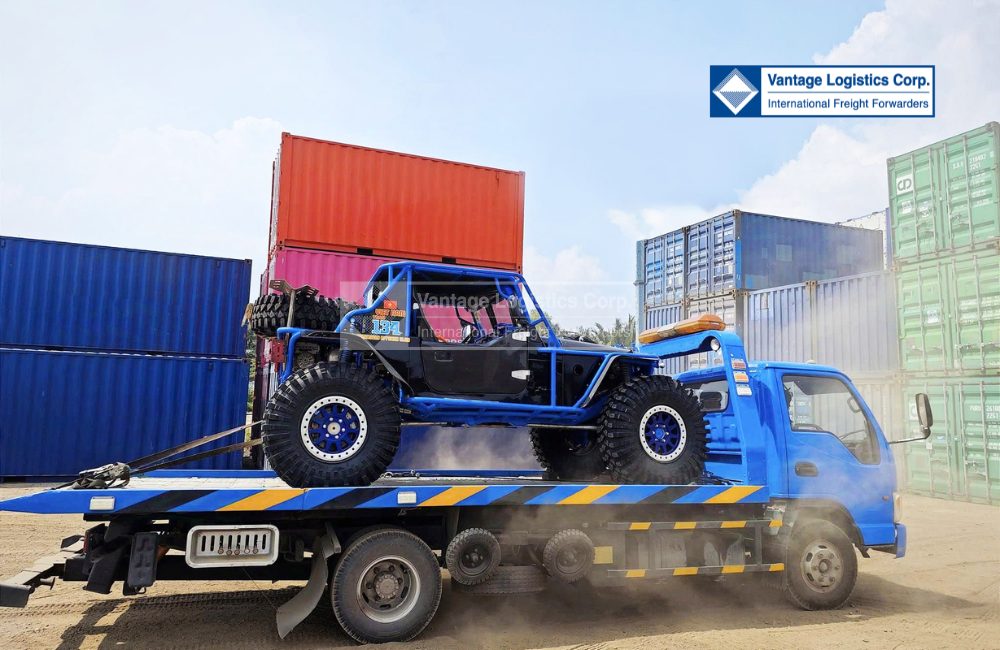
Vantage team has worked tirelessly to provide fast and optimized solutions, collaborating closely with relevant parties to complete all exit procedures and transportation arrangements. This support highlights VLC’s expertise in international event logistics and reinforces its reputation in handling a wide range of import-export cargo services. Vantage Logistics (VLC) is proud to continue its partnership with Team RFC Viet Nam at the Rainforest Challenge (RFC) Grand Final 2024 – one of the world’s top five most challenging off-road competitions. This year’s event will take place from 29/11 to 09/12 in Perak, Malaysia, attracting approximately 40 teams from over 30 countries. The Rainforest Challenge is not just a test of strength and exceptional skills but also a challenge for seamless teamwork in rugged terrain and extreme weather conditions. This year, Team RFC Vietnam is competing with three professional teams: 108 Redline Racing Team 126 Garage NK 134 Binh Duong Off-Road Club In addition, a support vehicle will accompany the journey. The teams are currently completing formalities at the depot to prepare for their departure to Malaysia. Vantage Logistics as the official partner of Team RFC Vietnam, Vantage Logistics is responsible for managing the entire customs clearance and transportation process, ensuring the timely delivery of competition vehicles, support vehicles, equipment, and accessories to Malaysia. The VLC team has worked tirelessly to provide fast and optimized solutions, collaborating closely with relevant parties to complete all exit procedures and transportation arrangements. This support highlights VLC’s expertise in international event logistics and reinforces its reputation in handling a wide range of import-export cargo services. The RFC Grand Final 2024 is not only a stage for showcasing passion and skill but also an opportunity for Vantage Logistics and Team RFC Vietnam to promote the country’s image through outstanding achievements. Let’s wish Team RFC Vietnam great success in this year’s competition! (Photo source: from RFC Vietnam and Mr. Ho Ka): See more photos:    ...

03/12/2024

View More

Vantage News

Vantage Logistics’ Commitment To The 17 Global Sustainable Development Goals (17 SDGs)

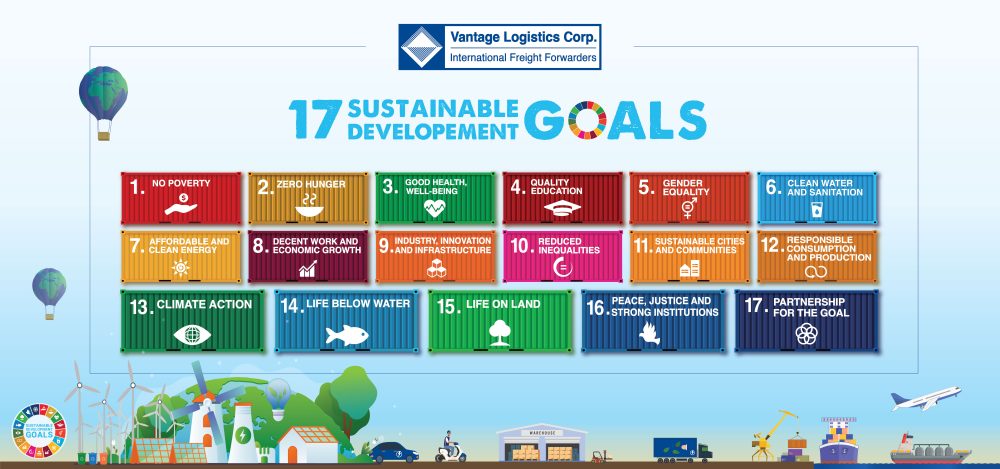
The Sustainable Development Goals (SDGs) are global objectives designed to encourage all nations to work together to eradicate poverty, protect the planet’s climate and environment, and ensure that all people everywhere enjoy peace and prosperity. This is also the United Nations’ call to action, urging Viet Nam and other member states to join hands in achieving these shared objectives. With a strong commitment to sustainable development from 2015 to 2030, Vantage aligns its business operations with the 17 United Nations Sustainable Development Goals (SDGs), reflecting its social responsibility and desire to drive positive change. The Sustainable Development Goals (SDGs) are global objectives designed to encourage all nations to work together to eradicate poverty, protect the planet’s climate and environment, and ensure that all people everywhere enjoy peace and prosperity. This is also the United Nations’ call to action, urging Vietnam and other member states to join hands in achieving these shared objectives. The 17 Sustainable Development Goals (17 SDGs) Goal 1: No Poverty End poverty in all its forms everywhere 2. Goal 2: Zero Hunger End hunger, achieve food security, improve nutrition, and promote sustainable agriculture 3. Goal 3: Good Health And Well-Being Ensure healthy lives and promote well-being for all at all ages 4. Goal 4: Quality Education Ensure inclusive and equitable quality education and promote lifelong learning opportunities for all 5. Goal 5: Gender Equality Achieve gender equality and empower all women and girls 6. Goal 6: Clean Water & Sanitation Ensure availability and sustainable management of water and sanitation for all 7. Goal 7: Affordable and clean energy Ensure access to affordable, reliable, sustainable, and modern energy for all. 8. Goal 8: Decent work and economic growth Promote sustained, inclusive, and sustainable economic growth, full and productive employment, and decent work for all 9. Goal 9: Industry, innovation and infrastructure Build resilient infrastructure, promote inclusive and sustainable industrialization, and foster innovation 10. Goal 10: Reduced inequalities Reduce inequality within and among countries 11. Goal 11: Sustainable cities and communities Make cities and human settlements inclusive, safe, resilient, and sustainable 12. Goal 12: Responsible consumption and production Ensure sustainable consumption and production patterns 13. Goal 13: Climate action Take urgent action to combat climate change and its impacts 14. Goal 14: Life below water Conserve and sustainably use the oceans, seas, and marine resources for sustainable development. 15. Goal 15: Life on land Protect, restore, and promote sustainable use of terrestrial ecosystems, sustainably manage forests, combat desertification, halt and reverse land degradation, and halt biodiversity loss. 16. Goal 16: Peace, justice and strong institutions Promote peaceful and inclusive societies for sustainable development, provide access to justice for all, and build effective, accountable, and inclusive institutions at all levels 17. Goal 17: Partnerships for the goals Strengthen the means of implementation and revitalize the global partnership for sustainable development Vantage Chooses Sustainable Development for a Sustainable Future Vantage Logistics is committed to building a sustainable future, not only for business benefits but also for the prosperity and development of the community. We firmly believe that sustainable development is the key to creating enduring, stronger, and better values for the world....

18/11/2024

View More

Vantage News

PREVENTING FRAUD AND BOOSTING CREDIBILITY IN THE LOGISTICS SECTOR WITH FMC LICENSE

In the increasingly dynamic and competitive logistics market, with over 4,000 companies operating in Viet Nam, choosing partners with full international licenses is critical. Freight forwarders (FWDs) especially need to exercise caution with providers lacking FMC licensing to avoid risks that could negatively impact both reputation and operational success. Recently, fraud in the logistics industry has been on the rise, particularly along the Viet Nam–U.S. shipping route. Common scams offered shipping rates up to USD 500 to USD 1,500 USD below market rates, attracting numerous businesses while posing significant legal and financial risks. These suspiciously low-cost providers typically lack proper licensing from the U.S. Federal Maritime Commission (FMC), leading to substantial losses for companies. In the increasingly dynamic and competitive logistics market, with over 4,000 companies operating in Viet Nam, choosing partners with full international licenses is critical. Freight forwarders (FWDs) especially need to exercise caution with providers lacking FMC licensing to avoid risks that could negatively impact reputation and operational success. Trusted Partner in Logistics Vantage Logistics is one of the first logistics companies in Vietnam to attain FMC licensing (#023190), enabling the company to issue legal bills of lading and directly book with international shipping lines. This certification not only ensures Vantage’s legal compliance but also builds trust with global partners, particularly in U.S.-bound cargo. With transparency and strict adherence to international regulations, Vantage has solidified its position within the global supply chain. From 2021 to 2022, Vantage partnered with the Viet Nam Logistics Business Association (VLA) to host a series of seminars on container export shipping to the U.S. under FMC regulations. In these sessions, Florence Lam, CEO and Vice President of Vantage Logistics, shared detailed insights into the benefits, processes, and requirements needed to secure an FMC License. This practical guidance has helped companies prepare their documentation efficiently while opening doors to safely and legally access the U.S. market  In these sessions, Florence Lam, CEO and Vice President of Vantage Logistics, shared detailed insights into the benefits, processes, and requirements needed to secure FMC License FMC License Role FMC licensing is not only a legal requirement but also serves as a “passport” for logistics companies seeking to establish credibility on the international stage. To ensure safe, transparent transactions, especially for exports to the U.S., Vantage Logistics recommends that businesses entrust their goods only to companies with a valid, maintained FMC license, a history of compliance, and clear operational processes. Such precautions help minimize the risk of fraud, ensuring all transactions comply with the law and providing peace of mind in shipping. Recommendations for Freight Forwarders (FWDs) The recent fraud cases in the logistics sector serve as a critical warning. Vantage Logistics advises freight forwarders to thoroughly assess potential partners, especially those offering unusually low rates. Choosing reliable, certified partners not only safeguards a business’s interests but also helps avoid unnecessary financial and reputational damage. Vantage Logistics Operating Principles At Vantage Logistics, compliance and transparency are fundamental values embedded in all operations. We are committed to ensuring that all services are built on a foundation of full transparency and compliance with legal and international standards. Vantage’s team of experts undergoes continuous training, staying updated on the latest international shipping regulations, especially FMC requirements for U.S.-bound shipping. With a commitment to creating a safe and reliable logistics environment, Vantage Logistics will continue to support Vietnamese businesses. We are always ready to share our expertise and provide solutions to help local companies improve their competitiveness, boost exports, and promote sustainable logistics development in Viet Nam. > See Detail: We are Federal Maritime Commission (FMC) RegisteredContact us at: Phone: +84-28-38267312 – Hotline: +84-909 026 261 Email: in**@*****om.vn Head Office: Room 06.01, Tower A, Rivergate, 151-155 Ben Van Don, District 4, HCMC  ...

26/10/2024

View More

Market updates

Goods Throughput at Vietnam Seaports by 2023 and Forecast to 2030

Goods Throughput Seaports By 2023 had reached 756.8 million tons, an increase of 5% compared to the same period in 2022, of which container cargo estimated at 24.7 million TEUs 1.Viet Nam’s seaport infrastructure As of October 2023, Viet Nam had 296 ports with a total berth length of approximately 107 km. Currently, international gateway ports have been established in the northern and southern regions; they can successfully accommodate container ships of up to 145,000 DWT at the Lach Huyen terminal (Hai Phong) and up to 214,000 DWT at the Cai Mep terminal (Ba Ria – Vung Tau). Additionally, large-scale dedicated terminals associated with industrial zones, integrated steel mills, petrochemical refineries, and coal-fired power centers can handle ships up to 200,000 DWT, liquid cargo up to 150,000 DWT (product tankers), and crude oil tankers up to 320,000 DWT. In fact, most of Vietnam’s import and export goods were transported by sea. The Vietnamese seaport system has been able to accommodate the world’s largest vessels, attracting 40 major shipping lines globally to operate within its network. Chart 1: Statistics of goods through the seaports as of November 2023. Source: Vietnam Maritime Administration  Chart 2: Statistics of goods through the seaports by category as of November 2023. Source: Vietnam Maritime Administration 2. Scale and quality of Viet Nam seaport By 2023, the total volume of goods through Vietnam’s seaports had reached 756.8 million tons, an increase of 5% compared to the same period in 2022, of which container cargo estimated at 24.7 million TEUs. The number of domestic waterway vehicles through reached 351.8 thousand, up 2%. Passengers passing through the seaport reached 7.04 million, up 17% compared to 2022. Chart 3: Goods through the seaports from 2019 to 2023. Source: General Statistics Office According to statistics from the United Nations Conference on Trade and Development, in 2023, the fleet flying the Vietnamese flag ranked 3rd in ASEAN and 22nd in the world. Additionally, the World Bank announced the Container Port Performance Index (CPPI), in which Cai Mep International Container Port ranked 12th out of 348 container ports worldwide. As of December 2023, Vietnam had 1.449 ships registered in the national ship registry, with a total tonnage of over 13.7 million tons and a total capacity of over 7.2 million GT. Of these, there were 977 transport ships with a total tonnage of over 11.1 million tons and a total capacity of over 6.6 million GT. According to the leadership of the Vietnam Maritime Administration, the number of Vietnamese sea vessels decreased compared to 2022, but their total volume and tonnage increased. The average age of the shipping fleet is 16.6 years. By 2030, the port system is expected to handle between 1.330 and 1.612 million tons of cargo (an increase of approximately 190 million tons). The volume of international transshipment containers is projected to reach about 4.1 million TEUs. Chart 4: Forecast for seaport capacity (2030). Source: Ministry of Transport Forecast of adjusted demand for goods through seaports in 2030. (Updated)...

23/05/2024

View More

Market updates

Vietnam’s Supply Chain Situation in Q1/2024

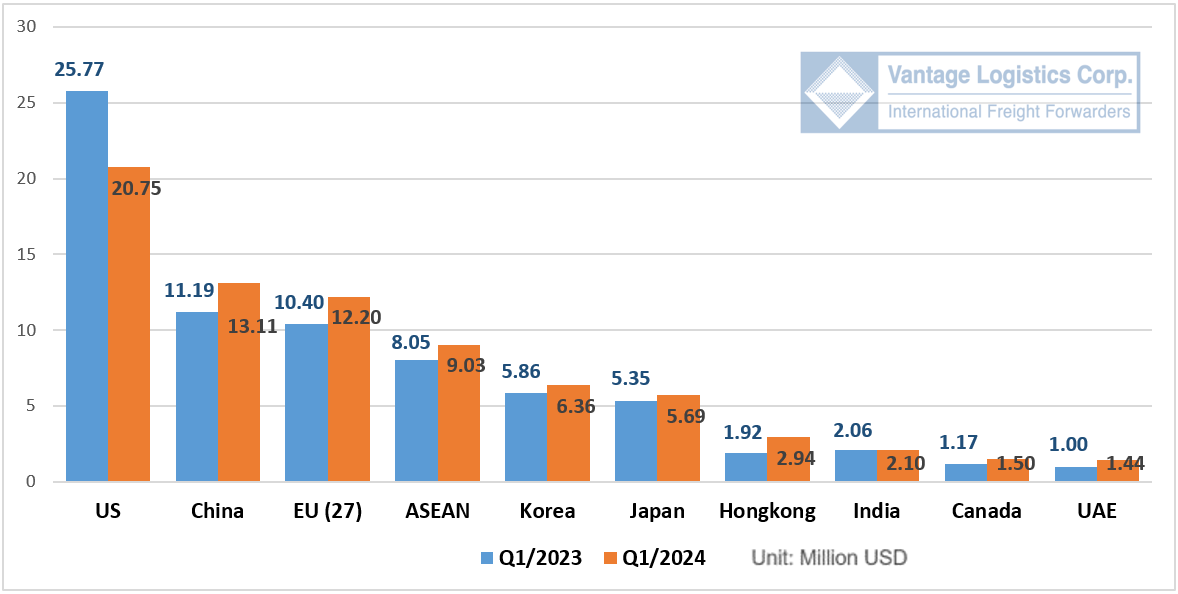
In the first quarter of 2024, Vietnam’s total trade turnover reached $178.04 billion, up 15.5% compared to the same period last year. Exports increased by 17% and imports increased by 13.9%. The goods balance of trade showed a surplus $8.08 billion. The export turnover in March 2024 was estimated at $34.01 billion, which represents a 37.8% increase from the previous month. Overall, for Q1/2024, the export turnover was approximately $93.06 billion, up 17% compared to the same period last year. Of which, the domestic sector contributed $25.21 billion to this figure, up 26.2%, accounting for 27.1% of the total export turnover; the foreign-invested sector (including crude oil) reached $67.85 billion, up 13.9%, accounting for 72.9%. In Q1/2024, there were 16 export commodities with a turnover exceeding $1 billion, accounting for 82.1% of the total export turnover (including 4 items exceeding $5 billion, accounting for 52.7%). The import turnover for March 2024 was estimated at $31.08 billion, up 33,4% from the previous month. Overall, for Q1/2024, the import turnover was estimated at $84.98 billion, up 13.9% compared to the same period last year. Of which, the domestic economic sector contributed $29.7 billion, up 14.4%, the foreign-invested sector contributed $55.28 billion, up 13.6%. In Q1/2024, there were 17 import commodities with a turnover exceeding $1 billion, accounting for 76.1% of the total import turnover (with 2 items over $5 billion, accounting for 40.3%). The preliminary goods balance of trade for February showed a surplus of $1.38 billion; the two-month surplus of $5.15 billion; and the estimated surplus of March was $2.93 billion. Overall, for Q1/2024, the goods trade balance was estimated to have a surplus of $8.08 billion (compared to a surplus of $4.93 billion in the same period last year). Of which, the domestic economic sector had a trade deficit of $4.49 billion, while the foreign-invested sector (including crude oil) had a surplus of $12.57 billion. During the first quarter of 2024, Vietnam witnessed significant growth in its supply chain, with notable increases in global export activities. In Q1/2024, the growth in the manufacturing sector was 6.98%, which not only contributed to GDP growth but also boosted exports, with export growth reaching 18%. The import and export turnover reached $178.04 billion, up 15.5% compared to the same period last year, of which, the export turnover reached $93.06 billion, up 17% and the import turnover reached $84.98, up 14%. Specifically, in the Europe-Americas region, the export turnover for Q1/2024 reached $45 billion, up 21.6%, with a trade surplus of $34 billion. Key Export Markets It is noteworthy that Vietnam’s export market diversification. In the first quarter of 2024, Vietnam expanded and strengthened trade relations with many countries and territories worldwide. Key markets like the USA, China, Europe, and ASEAN countries continued to be significant destinations for Vietnamese exports. Chart 1: 10 largest export markets of Vietnam in Q1/2023 and Q1/2024 – Source General Department of Custums According to the General Department of Customs, in Q1/2023, exports to the US market contributed the most to the increase in Vietnam’s export value. However, the export value to the US in Q1/2024 reached $25.77 billion, up 24.2%, corresponding to an increase of $5.02 billion compared to the same period last year. Following the USA, the EU (27 countries) was the second largest contributor to the increase in our export value, reaching $12.2 billion, up 17.4%, corresponding to an increase of $1.8 billion compared to the same period last year. Fastest Growing Commodity Groups According to data from the Ministry of Industry and Trade, the value of Vietnam’s exports in the first quarter of 2024 reached record highs, with significant growth compared to the same period last year. Major export commodities such as textiles, electronics, consumer electronics, and agricultural products saw notable increases, positively contributing to the country’s total export volume. Chart 2: 10 largest export commodity groups of Vietnam in Q1/2023 and Q1/2024 Specifically, the group of agricultural, forestry, and seafood products reached $9.9 billion, up 26.1% compared to the same period in 2023, accounting for 10.6% of the total export turnover. The group of processed industrial, including components, computers, and electronic equipment, reached $82.02 billion, accounting for 88.1% of the total export turnover and increasing by 16.1% compared to the same period in 2023. The group of exports of fuel and mineral products in Q1/2024 reached $1.18 billion, up 10.8% compared to the same period in 2023....

10/05/2024

View More

Vantage News

Successfully executed a series of operations Loading Rice into Containers export to Malaysia at Sai Gon – Hiep Phuoc Port

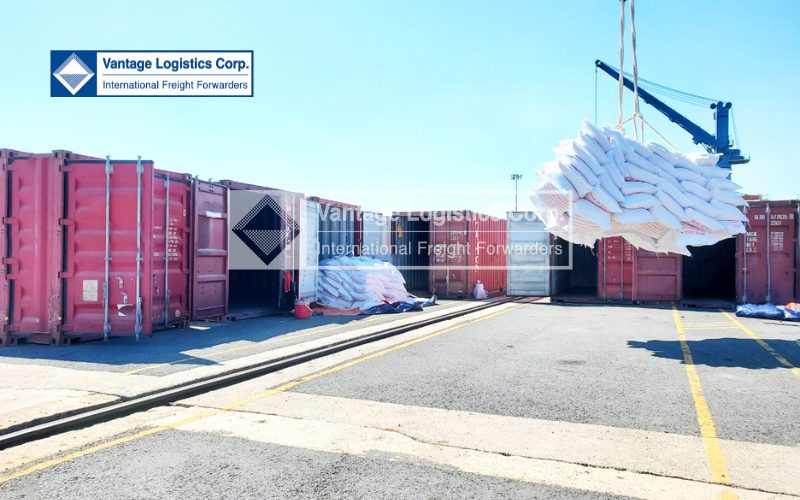
Theo According to information from Vantage, on April 19, 2024, Rice was Loading at Sai Gon – Hiep Phuoc Port. The Rice batch will be transported to Pasir Gudang Johor Port, Malaysia on April 30, 2024. As of April 19, 2024, at Sai Gon – Hiep Phuoc port, Vantage team has successfully executed a series of operations including Coordinating empty containers to the Port, Loading Rice into Containers, Crane-lifting Rice Containers onto the vessel for transportation. With careful supervision, this rice loading order marked a significant in comprehensive Rice solutions for transportation from the Mekong Delta region. Wharf – Sai Gon Hiep Phuoc According to information from Vantage, on April 19, 2024, Rice was Loaded into containers at Sai Gon – Hiep Phuoc Port. The Rice batch will be transported to Pasir Gudang Johor Port, Malaysia on April 30, 2024. The deployment process was carried out professionally and effectively. Coordinating Empty Containers to Sai Gon – Hiep Phuoc Port Vantage has organized and accurately coordinated empty containers to the Port, facilitating the rice loading process to proceed smoothly according to the schedule. Supervising the Loading Rice into Empty Containers On April 19, 2024, rice barges gathered on the wharf of Sai Gon-Hiep Phuoc Port and were supported by cranes to lift the rice batch onto the yard warehouse for Loading. With a team of workers ready to load rice into 20-feet containers (equivalent to 27 tons/container), ensuring quality and safety during transportation. Crane-lifting Containers onto the Vessel After completing the loading process, the rice containers were lifted onto the vessel for transportation. With meticulousness and professionalism throughout the process, ensured that the rice would be safely and on time. Vantage is not only the commercial representative of ports and barge units in the Mekong Delta region but also a strategic connection with shipping lines. Vantage’s solution creates a centralized logistics chain for receiving, loading rice, and connecting ports from the Mekong Delta to export points worldwide. Comprehensive Solution and Safe Process Management With diverse services, Vantage provides synchronized logistics solutions from management, and suppervising to export procedures, ensuring goods are transported safely and efficiently. The rice loading process is carried out carefully and professionally, ensuring quality and safety for the goods. Commitment to Always Be Ready Vantage is not only a reliable partner in all situations but also commits to always providing flexible solutions in urgent situations such as port congestion in Ho Chi Minh City.   With a commitment to continuous improvement,  partners with businesses, the community, and the Western region to provide long-term safe, and effective export solutions, contributing to sustainable development in Vietnam’s agriculture and exports....

26/04/2024

View More

Market updates

90-DAY “TARIFF PAUSE” FROM DONALD TRUMP – VIETNAM FLEXIBLY RIDES THE NEW TRADE WAVE

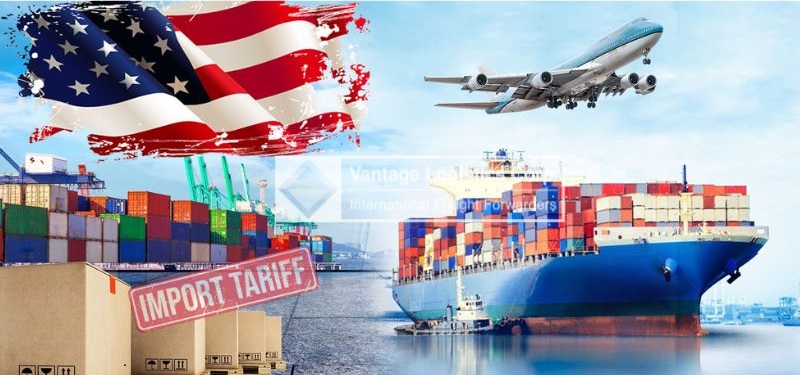
This suspension is not only a tactical move in the context of U.S. domestic politics but also serves as a test for countries to reshape supply chain structures, enhance internal capacities, and expand non-U.S. markets. For Vietnam, the next 90 days are not only a “golden time” to seize export opportunities, but also a test of policy responsiveness, bilateral negotiation capabilities, and positioning in the international trade landscape Proactive Directions for Vietnam Amid Global Trade Turbulence Less than half a day after the retaliatory tariffs initiated by U.S. President Donald Trump officially came into effect for 180 trade partners—including Vietnam—he unexpectedly announced a 90-day suspension. This move offers a “valuable pause” amid global trade tensions, creating a short-term opportunity for countries—especially developing economies like Vietnam. This suspension is not only a tactical move in the context of U.S. domestic politics but also serves as a test for countries to reshape supply chain structures, enhance internal capacities, and expand non-U.S. markets. For Vietnam, the next 90 days are not only a “golden time” to seize export opportunities but also a test of policy responsiveness, bilateral negotiation capabilities, and positioning in the international trade landscape. Vietnam is expected to proactively build flexible response scenarios to strengthen production capacity, manage supply chain risks, and promote export market diversification strategies: 1. Increasing Imports from the U.S. – A Sign of Political Goodwill Vietnam is expected to increase imports of certain strategic goods from the U.S. to demonstrate goodwill in bilateral trade relations: Proceeding with the purchase of 50 Boeing aircraft worth over USD 10 billion between Vietnamese airlines and U.S. partners, based on previously signed MOUs. Increasing imports of agricultural products such as soybeans, corn, pork, and wheat — according to the General Department of Customs, import value from the U.S. rose 18% in Q1/2024. Boosting LNG (liquefied natural gas) imports from the U.S. to secure energy supply. However, given Vietnam’s relatively modest GDP per capita, this is only a short-term, reactive solution that may not sustain a long-term trade balance. 2. Tax Incentives for U.S. Goods The Vietnamese government is considering reducing or exempting import tariffs on certain U.S. goods to support bilateral trade flow: Energy, liquefied gas, and electrical equipment — to aid energy transition. High-tech machinery, medical devices, and semiconductors — to serve manufacturing and healthcare industries. Functional foods and imported pharmaceuticals — to stabilize prices and diversify supply sources. These measures aim to create a more favorable trade environment with the U.S. amid ongoing tariff pressure. 3. Strengthening Origin Control (C/O) – Compliance to Sustain Export Markets In the long term, Vietnam is expected to tighten control over the origin of goods to prevent trade fraud and third-country transshipment. Enhancing standards and transparency in origin labeling is not only a requirement from the U.S. but also a condition for Vietnamese goods to remain competitive in major markets. Particularly for key export sectors like wood (with over USD 10.8 billion in exports to the U.S. in 2023), seafood, textiles, and electronics, Vietnam is tightening C/O issuance and control processes, promoting traceability to minimize risks of trade defense investigations or tariff impositions. 4. Developing Raw Material Industries – Attracting Investment, Reducing Import Dependence Facing pressure to restructure supply chains, Vietnam is actively attracting investment into supporting industries to reduce import dependency and increase production autonomy. This is a significant opportunity for both domestic and international investors, with various incentive policies expected soon. Development of yarn, fabric, and dyes for the textile industry, which exports over USD 18 billion to the U.S. Encouraging investment in microchips and components to meet demand from factories in provinces like Bac Giang and Bac Ninh. Supporting industries: Localities such as Long An, Quang Nam, and Hai Phong… are being zoned for industrial clusters to welcome a new wave of investment. In the context of volatile trade policies, Vantage Logistics stands alongside businesses with: Consulting on sourcing from Southeast Asia to diversify supply chains. Comprehensive logistics services: international transport – customs declaration – C/O control. Support in optimizing export-import processes to comply with new U.S. regulations and relevant FTAs. Contact us now for solutions tailored to your business’s new trade strategy....

10/04/2024

View More

Market updates

Viet Nam’s Export and Import 2023

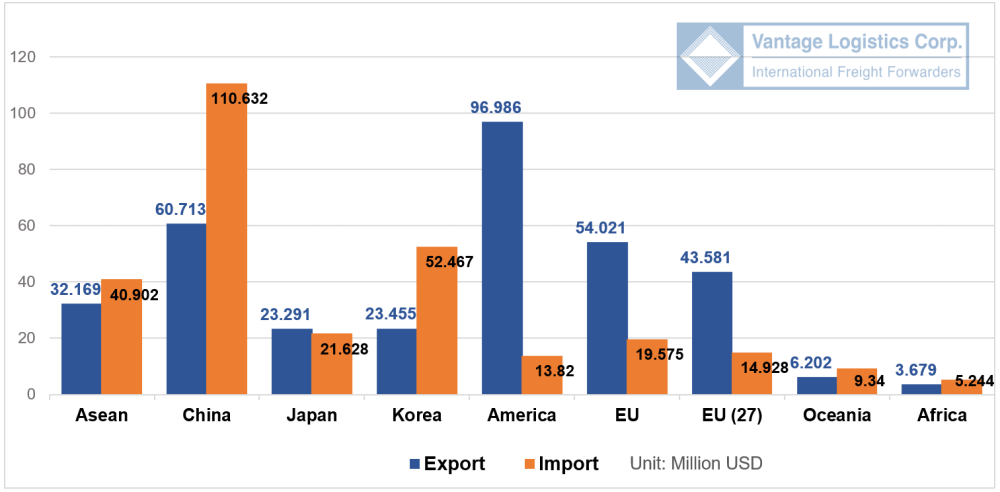
Vietnam’s total export value reached 354.67 billion USD, down 4.6%, equivalent to a decrease of 16.63 billion USD compared to the previous year. In particular, the export of goods by FDI enterprises in 2023 will reach 257.21 billion USD, down 6% (corresponding to a decrease of 16.42 billion USD) compared to 2022. 1. Overview: In 2023, Vietnam’s total import-export value of goods will reach 638 billion USD, down 6.6% (equivalent to a decrease of 92.2 billion USD) compared to 2022. Of which, the export value is 354.67 billion USD, decreased by 4.6%, equivalent to a decrease of 15.8 billion USD; Import value was 327.5 billion USD, down 8.9%, equivalent to a decrease of 31.4 billion USD. The trade balance of goods in 2023 will reach 28 billion USD. The General Department of Customs recorded the total import and export value of enterprises with foreign direct investment (FDI) to 466.27 billion USD, down 8% (equivalent to a decrease of 40.56 billion USD) compared to 2022. In particular, the export of goods of FDI enterprises in 2023 will reach 257.21 billion USD, down 6% (corresponding to a decrease of 16.42 billion USD) compared to 2022. Chart 1: Main export and import markets of goods in 2023 – Source General Department of Customs 2. Viet Nam import and export in 2023 Vietnam’s total import-export turnover with the Asia-Africa region is estimated at 458 billion USD, down 6.7% compared to 2022. The value of imports and exports between Vietnam and other continents are: America: 137.67 billion USD, down 10.6%; Europe: 73.6 billion USD, down 4.1%; Oceania: 15.54 billion USD, down 11.5%. Chart 2: Proportion of increase/decrease in Import and Export of goods compared to 2022 (%) 3.    Vietnam’s export of goods in 2023 Vietnam’s total export value reached 354.67 billion USD, down 4.6%, equivalent to a decrease of 16.63 billion USD compared to the previous year. Of which, machinery, equipment, tools, and other spare parts decreased by 2.62 billion USD; footwear of all kinds decreased by 3.66 billion USD; textiles and garments decreased by 4.27 billion USD; computers, electronic products, and components decreased by 5.61 billion USD; seafood decreased by 1.95 billion USD… Chart 3: Vietnam’s Largest Export Commodity Group 2023 Vietnam’s main export commodity groups in 2023: Phones and accessories: Exports reached 52.38 billion USD, down 9.7% compared to 2022. Of which, exports of this product group to the Chinese market reached 16.87 billion USD, an increase of 3.7%; America reached 7.9 billion USD, down 33.5%; EU reached 7.2 billion USD, up 7.5%; Korea reached 3.51 billion USD, down 30.5%… compared to the previous year. Computers, electronic products & components: Exports to the US reached 17.2 billion USD, up 6.8% over the previous year; China reached 13.5 billion USD, up 9.8%; EU reached 6.5 billion USD, down 14%; Hong Kong reached 5.54 billion USD, down 5.8%… Textiles and garments: Exports to the US reached 14.47 billion USD, down 16.7%; EU reached 3.86 billion USD, down 13.8%; Korea reached 3.05 billion USD, down 7.9%. Japan reaches 4.06 billion USD, equivalent to 2022. Footwear of all kinds: Exports reached 20.24 billion USD, down 15.3% (equivalent to a decrease of 3.66 billion USD) compared to the previous year. Exports to key markets such as the US reached 7.16 billion USD, down 25.5%; EU reached 4.91 billion USD, down 18.1%; China reached 1.87 billion USD, an increase of 9.4%… compared to the previous year. Wood and wood products: In the past year, exports of wood and wood products to the US market reached 7.31 billion USD, down 15.6% and accounting for 54% of the country’s total export value of this product group. Seafood products: Exports to the US reached 1.56 billion USD, down 26.9% (corresponding to a decrease of 57 million USD); Japan reached 1.52 billion USD, down 11.2% (equivalent to a decrease of 19 million USD); China reached 1.34 billion USD, down 15% (corresponding to a decrease of 23 million USD) and the EU reached 952 million USD, down 27.1% (corresponding to a decrease of 348 million USD) compared to the previous year. Vegetables and fruits: The export value of this product group reached 5.6 billion USD, an increase of 66.7% (equivalent to an increase of 2.24 billion USD) compared to the previous year. In 2023, exports will increase mainly due to a sudden increase in durian fruit exports (HS code 0810.60.00). Durian exports reached 2.1 billion USD, up to 1.82 billion USD compared to 288 million USD the previous year. Of which, mainly exported to China with 2.03 billion USD, accounting for 99.4% of the country’s total export value of this product group. Rice: The total amount of rice exported reached 8.1 million tons and the value reached 4.68 billion USD, an increase of 35.3% over the previous year. ASEAN is the main export market for Vietnamese rice, accounting for 61% of the country’s total rice exports. Specifically, rice exports to ASEAN reached 4.9 million tons, up 24% over the previous year. In addition, Vietnamese rice exports to other markets such as China reached 917 thousand tons, an increase of 8%; Ghana reached 587 thousand tons, an increase of 32.9% over the previous year. 4.    Vietnam’s import of goods in 2023 The total value of imported goods reached 326.37 billion USD, down 9.2% compared to 2022. Of these, the sharpest decrease was phones and components down 12.38 billion USD, and machinery, equipment, tools, and spare parts down 3.56 billion USD. billion USD; Automobile components and spare parts decreased by 1.73 billion USD; fabrics of all kinds decreased by 1.69 billion USD. However, computers, electronic products, and components are the only product group with an import increase of over 1 billion USD with a value of 87.96 billion USD, an increase of 6.1 billion USD compared to 2022. Chart 4: Vietnam’s Largest Import Commodity Group 2023 Vietnam’s main import commodity groups in 2023: Computers, electronic products, and components: Import value reached 88 billion USD, up 7.4% over the previous year. Mainly imported from markets: Korea reached 28.75 billion USD, up 23.9%; China reached 23.41 billion USD, down 2.7%; and Taiwan reached 10.18 billion USD, down 8%… compared to 2022. Fuel (including coal, crude oil, petroleum of all kinds, and liquefied petroleum gas): Imported 74.92 million tons of fuel, down 29.6% and reaching a value of 24.2 billion USD, down 4.7% over the year. 2022. Of which, coal of all types is 51.16 million tons, an increase of 61.4%, crude oil is 11.19 million tons, an increase of 9.7%; Petroleum of all kinds is 10.05 million tons, an increase of 13.3%; liquefied petroleum gas was 2.52 million tons, an increase of 27.9%. Mainly from countries: Australia reached 19.9 million tons, up 17.6%; Indonesia reached 19.35 million tons, an increase of 86.3%, Russia reached 4.37 million tons, an increase of 93% compared to 2022. Raw materials and accessories serving the textile, garment, leather, and shoe industries (including cotton, textile fibers, fabrics of all kinds, and raw materials for textiles, garments, leather, and shoes): Total import value reached 21.4 billion USD, down 14%, equivalent to a decrease of 3.9 billion USD compared to 2022. China is the largest market supplying this group of goods to Vietnam, accounting for 50%, with 12.75 billion USD, down 9.3% compared to 2022. Taiwan with 1.94 billion USD, down 25.4%; Korea with 2.18 billion USD, down 13.9%; United States with 1.32 billion USD, down 26.2%.. Phones and components: Import value reaches 8.75 billion USD, down 58.5% compared to 2022. China is the largest market supplying these two product groups with a value of 7.29 billion USD, down 9.5%; followed by the Korean markets with 524 million USD, down 95.4%; India with 74 million USD, an increase of 8 times compared to 2022. Completely Built-Up Car: The number of imported all types is 118,942 units, down 31.5% compared to 2022. Cars with over 9 seats, in 2023, Vietnam will only import 40 cars. Imported CBU cars of all types mainly originate from Thailand and Indonesia, accounting for 75% of the country’s total imports. Of which Thailand is 53,942 units, down 18.1%; Imports from Indonesia are 42,676 units, down 41.3% compared to 2022. Wheat, corn, soybeans, and animal feed: Imports of this product group are 10.55 billion USD, down 10%, equivalent to a decrease of 1.17 USD compared to last year. Mainly imported wheat, corn, soybeans, and animal feed from main markets: Brazil reached 2.83 billion USD, up 18.4%; Argentina reached 2.31 billion USD, down 38.3%, the US reached 1.36 billion USD, up 4.2% compared to 2022. Iron and steel of all kinds: Imported 15.78 billion USD of iron and steel of all kinds and products, down 8.9% compared to 2022. Of which, iron and steel products of all kinds reached 13.33 million tons, up 14.1% in volume but Because the unit price decreased by 23.3%, the import value only reached 10.43 billion USD, down 12.5% compared to the previous year. Mainly from markets: China reached 9.1 billion USD, up 9.1%; Japan reached 1.86 billion USD, down 19.2% and Korea reached 1.79 billion USD, down 16.3%. Source: General Department of Customs, Ministry of Industry and Trade...

05/04/2024

View More

Vantage Events

Vantage Logistics participated in the international exhibition at the World Breakbulk Expo in Shanghai on March 25-26, 2024.

After participating in the exhibition on March 25 and 26, 2024, Vantage Logistics garnered attention at WBX 2024, one of the major events in the global logistics and transportation industry. Vantage Logistics with more than 22 years of experience providing various international transportation services, and developing comprehensive logistics services. World Breakbulk Expo, short for WBX, is an international exhibition of the logistics and transportation industry, focusing on the themes of project cargo and traditional breakbulk in various sectors (industrial, oil and gas, steel, construction, mining, etc.) held annually at the Shanghai World Expo Exhibition and Convention Center (SWEECC). After participating in the exhibition on March 25 and 26, 2024, Vantage Logistics garnered attention at WBX 2024, one of the major events in the global logistics and transportation industry. Vantage Logistics with more than 22 years of experience providing various international transportation services, and developing comprehensive logistics services. With more than 350 employees and an extensive network of operations. In particular, in addition to the core of international transportation, domestic transportation, customs agents, logistics centers/river ports, barges, coastal transportation, warehousing and distribution, and Ship/ NVOCC Agencies…, Vantage also provides comprehensive project and bulk cargo solutions to shippers from a variety of sectors (industrial, oil and gas, steel, mining, construction, etc.) who need to transport by air, sea, road, etc. Vantage Logistics has attracted the attention of visitors and partners by introducing project and bulk cargo transportation services, demonstrating its capabilities in the industry.  Extensive office network, including 8 offices in major seaports and capitals of Vietnam including Ha Noi, Hai Phong, Nghe An, Nghi Son, Da Nang, Quy Nhon, Ho Chi Minh, Ba Ria -Vung Tau 2 offices in Cambodia are Phnom Penh, Sihanoukville Commercial sales agent/port operating for Ho Chi Minh-Sai Gon Hiep Phuoc port, Vinh Tan port, Ben Tre port, VIMC Hau Giang port… Connection and investment Logistics center/ Riverports/ Depot close to industrial zone serves for packing/labeling/storage/shifting to an international port nearby. Heavy lift equipment (SPMT, SPT, 4-6-8-10axle trailers) at trucking yard in Phu My seaport. Customs agent license continuously for many years, allowing Vantage Logistics to provide diverse and high-quality transportation services. Barge/coastal transportation within Viet Nam ports and Phnom Penh Port Cambodia.  Years of experience with team for vessel chartering from ASEAN to worldwide for both break bulk/ bulk/ project oversized heavy lifted cargo… Ms. Truong Thi Ngoc Thuy (Kathy) – Project Director of Vantage Logistics, shared: “We are honored to participate in WBX 2024, where we have the opportunity to introduce our transportation services to the international community. Our success at this exhibition is the result of our commitment to continuously improving the quality of services and the efficiency of our operating network”. Vantage Logistics continues strengthening its position as one of the region’s leading logistics service providers. Images recorded at the exhibition:...

03/04/2024

View More
1 … 30 31 32 33 34 … 43